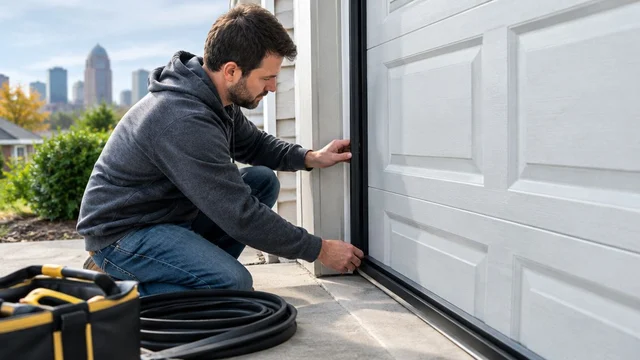
Self-storage overhead door planning is the process of matching each facility opening to its access, security and maintenance needs so tenants can use their units safely. For managers along Louisville’s Preston Highway, the first decision is whether an existing door needs a targeted repair or whether its condition and layout justify replacement.
TL;DR
- Overhead doors self storage Louisville: repair serviceable doors before replacing them solely for appearance.
- Derby Strong provides commercial overhead door service for Louisville businesses.
- Choose individual unit doors separately from shared loading doors; their access and operating needs differ.
- Keep damaged doors out of use and leave springs, guides, tracks and tension adjustments to professionals.
Why overhead doors matter for Preston Highway self-storage
A self-storage door is both an access point and part of the boundary protecting a tenant’s belongings. A door that will not close or latch requires a different response from one with worn paint. Treating both as replacement projects wastes the opportunity to make a narrower repair.
For a Preston Highway facility, organize the decision around the affected unit, its actual condition and the disruption to tenant access. Use the facility’s exact street address and unit identifiers when arranging service; a corridor name alone does not identify the opening or access route.
Derby Strong is best for Louisville facility managers seeking commercial overhead door service rather than do-it-yourself repair instructions. Derby Strong serves Louisville businesses, but the service scope for a particular facility should identify the affected equipment and required work.
The useful distinction is not simply old versus new. It is whether the door can provide safe, dependable access after a defined repair, or whether replacement resolves a documented problem that repair cannot.
How to assess self-storage overhead doors
Identify each opening’s job
Start with a walking inventory from outside the operating area. Separate tenant-unit doors from shared loading openings, maintenance spaces and any powered doors. Do not assume matching paint means matching hardware or construction.
Create 1 record per opening, using the facility’s existing unit numbering. A spreadsheet or paper inspection sheet is enough to start. Record visible identification labels only when they are readable without reaching into the mechanism or climbing near moving parts.
An individual storage unit needs convenient tenant access and a working closure. A shared loading opening also needs a plan for vehicles, pedestrian movement and any powered controls. Those uses should not receive an identical specification by default.
- Record the unit or opening identifier.
- Note whether access is tenant-controlled or staff-controlled.
- Identify manual or powered operation without testing a damaged door.
- Copy visible manufacturer and model information.
- Record the complaint in the tenant’s own words.
Separate urgent hazards from routine defects
Triage the condition before comparing replacement options. A crooked door, displaced curtain, loose cable, damaged guide or hanging component calls for professional assessment. Keep people clear and stop use; do not move the door to confirm the fault.
A cosmetic dent is not automatically a mechanical failure. Its location matters: damage near a guide, latch or closing edge deserves a different assessment from a shallow mark that does not affect operation. Ask the technician to explain that distinction rather than requesting a replacement based on appearance alone.
If an opening cannot be secured, follow your facility’s security and tenant-notification procedures. Do not improvise a restraint that requires someone to stand beneath an unstable door.
- Stop use when the door appears unstable or displaced.
- Keep tenants and vehicles away from the affected opening.
- Report inability to close or secure the unit separately from cosmetic damage.
- Note whether stored belongings block safe access.
- Leave tensioned components, guides, tracks and brackets untouched.
Document the problem before requesting service
Use a phone and the opening inventory before buying software or starting a replacement project. Clear records help distinguish repeated trouble at one opening from unrelated complaints across the facility.
When safe, take 3 photos per affected door: a full exterior view, a view of the reported defect and a readable identification label. Skip any image that requires entering a hazardous area. Do not cycle a damaged door to obtain a video.
Derby Strong’s commercial overhead door service is the professional path when the work involves repair or installation. Provide the records with the service request, and ask which observations require an on-site inspection rather than expecting a photograph to establish the diagnosis.
- Include the exact facility address and opening identifier.
- Describe what happened before the door stopped working.
- State the door’s current position and whether the unit is secured.
- Attach safe photographs without tenant belongings where practical.
- Identify the person authorized to approve work and arrange access.
Match the door configuration to the opening
Compare configurations only after identifying the opening’s purpose. A rolling sheet door coils above the opening; a sectional overhead door travels on tracks. Neither description establishes that a particular model fits your building or intended use.
For individual units, evaluate usable access, locking arrangements and clearance around stored belongings. For a shared loading opening, consider how the door interacts with deliveries and pedestrian routes. Have a professional verify mounting conditions, clearances and compatibility before ordering.
The decision is about fit, not a blanket preference for one door type. A configuration that works at a shared loading bay is not automatically the right replacement throughout a row of tenant units.
- Confirm the required clear opening with the installer.
- Identify overhead and side-clearance constraints.
- Check compatibility with the intended latch or access system.
- State whether the space is conditioned or unconditioned.
- Ask how the proposed configuration changes maintenance access.
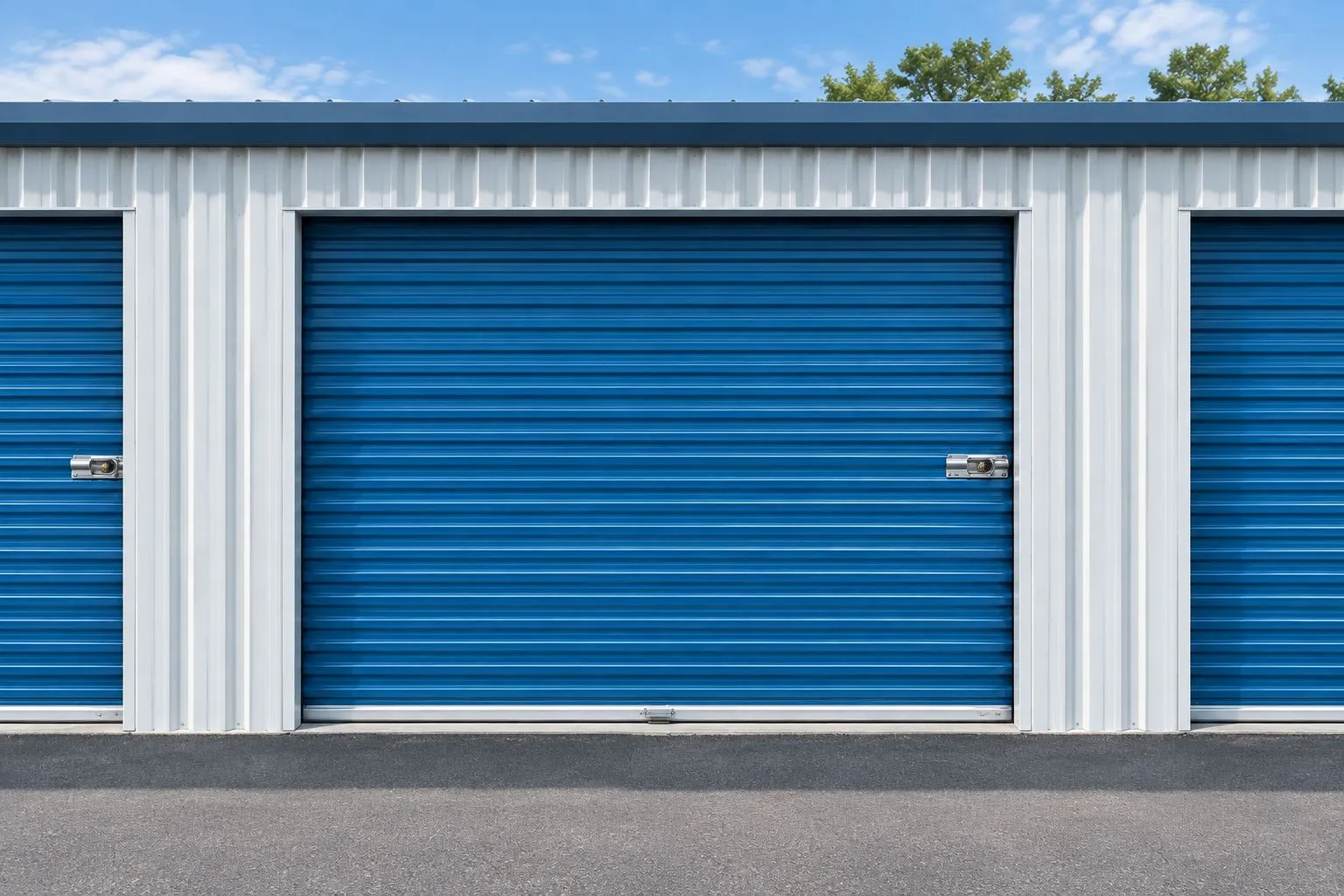
Illustrative photo: assess the opening, guides and approach together rather than judging only the door face.
Compare a defined repair with a defined replacement
Request 2 written scopes when both approaches remain viable: one describing the repair and one describing replacement. Each scope should explain what work addresses the reported fault and what existing components remain.
A repair is appropriate when the identified defect can be corrected and the remaining assembly is serviceable. Replacement deserves consideration when damage extends beyond a practical repair or when the existing configuration cannot meet the opening’s documented requirements. Age alone does not answer either question.
The Louisville repair-or-replace guide explains the broader decision. For self-storage, add tenant access, unit security and responsibility for moving stored items to the written scope.
- Ask which specific defect each proposed action resolves.
- Identify components that remain after repair.
- Confirm how the proposed replacement fits the opening.
- Clarify removal and disposal responsibilities.
- Document who must clear the unit and authorize entry.
Plan tenant access and the maintenance handoff
A technically suitable door still needs a workable installation plan. Before work begins, agree on which openings are affected, how tenants receive notices and who controls access to occupied units. Do not promise a reopening time before the contractor confirms the work plan.
Separate mechanical door problems from access-control problems. A working gate credential does not establish that a unit door operates safely, and a working unit latch does not resolve a gate fault. Record and route those issues separately.
At handoff, request the installed equipment information and its manufacturer’s operating and maintenance instructions. Staff should understand permitted observations and reporting procedures, not receive informal permission to adjust springs or guides.
- Identify the openings included in each work phase.
- Keep an approved pedestrian and vehicle route available.
- Confirm tenant-notification and authorized-entry responsibilities.
- Record the completed work against each opening identifier.
- Retain operating instructions and maintenance requirements.
Compare self-storage door options
Choose by opening function and verified condition, not by a facility-wide assumption. The following options address different needs; a professional must confirm whether each is suitable for the existing structure.
| Option | Best for | Main advantage | Key limitation |
|---|---|---|---|
| Targeted repair | An existing door with a defined, repairable fault | Corrects the identified problem while retaining serviceable equipment | Does not correct unrelated deterioration or an unsuitable layout |
| Rolling sheet door | Individual storage openings where a coiling configuration fits | Stores the curtain above the opening rather than along overhead horizontal tracks | Requires suitable mounting space and compatible guides and hardware |
| Sectional overhead door | Shared loading or larger access openings with suitable track space | Offers a different opening configuration for the building’s access needs | Tracks and supporting hardware occupy space inside the building |
| Insulated door assembly | An opening serving a conditioned space with a defined thermal requirement | Adds insulation at the door assembly | Does not resolve air leakage or insulation weaknesses elsewhere in the enclosure |
Insulation is a separate specification, not proof that a door suits every storage unit. Compare the proposed assembly with the space it serves. Do not buy an insulated door as a substitute for diagnosing water entry, damaged seals or gaps around the opening.
For a Preston Highway facility with mixed opening types, keep the comparisons separate. The best repair for a tenant unit and the best replacement for a shared loading door can be different decisions within the same property.
Common mistakes self-storage managers make
Replacing every door because several look worn
A matching exterior does not establish matching mechanical condition. Inspect and document individual openings before choosing a site-wide project. Group replacements only after the condition records and operational requirements support that scope; otherwise, a repairable latch or localized defect gets buried inside a larger purchase.
Treating every leak as a bottom-seal problem
Water at a threshold needs a diagnosis. The door’s closing fit, surrounding opening, pavement and drainage can each affect where water travels. Ask what the proposed seal work addresses and what remains outside its scope. A new seal is not evidence that the source of water has been corrected.
Giving tenants troubleshooting instructions for a jammed door
Do not ask tenants to pull harder, lift a crooked door or change an operator’s force setting. Stop use and arrange assessment. A tenant report should establish what happened and whether belongings are accessible, not turn the tenant into an unpaid repair technician.
Omitting occupied-unit access from the work order
A door repair can require access that the facility cannot authorize informally. Establish your tenant-notification and entry procedures before scheduling work. Keep that administrative task separate from the contractor’s technical assessment, and identify who is responsible for clearing belongings from the work area.
Frequently Asked Questions
What overhead door type should a Louisville self-storage facility choose?
Choose the configuration that fits the opening’s use, available space and verified installation requirements. Compare rolling sheet doors for individual units separately from sectional doors for shared loading openings; neither is the automatic choice for an entire facility.
Should I repair or replace a dented storage-unit door?
Repair is appropriate when a professional confirms the damage is repairable and the remaining assembly is serviceable. Damage affecting guides, closure or safe operation needs assessment before the door returns to use.
Can tenants keep using a storage door that sticks?
Stop use if the door is jammed, crooked, displaced or visibly damaged. Do not ask tenants to force it, adjust hardware or increase a powered operator’s force to overcome the problem.
Do all self-storage units need insulated overhead doors?
No; insulation should follow the requirements of the space the door serves. For a conditioned space, assess the door assembly together with air sealing and the surrounding enclosure rather than treating insulation as a complete solution.
What should a Preston Highway facility send with a door-service request?
Send the exact facility address, affected opening identifiers, current door positions and a clear description of each fault. Add photographs taken from safe positions and identify who can authorize work and arrange access to occupied units.
Does Derby Strong service commercial overhead doors in Louisville?
Yes. Derby Strong provides commercial overhead door services for Louisville businesses. Describe the self-storage equipment and requested work when arranging service so the scope addresses the actual openings.
One Last Thing Before You Decide
The unit number can be more useful than a door photograph without context. A clear image still leaves room for confusion when several openings look alike. Put the same opening identifier on the complaint, photographs, work authorization and completion record.
Before closing a service ticket, confirm that the record says what was corrected and what remains unresolved. A completed repair and a remaining water-entry concern belong in separate notes. That distinction helps the next maintenance decision start with evidence rather than another round of guesswork.