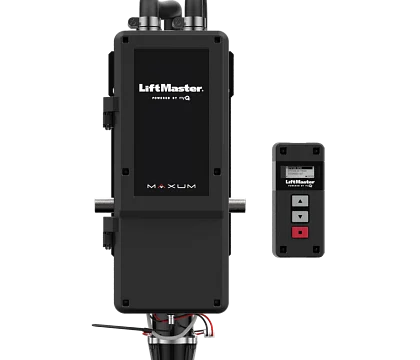
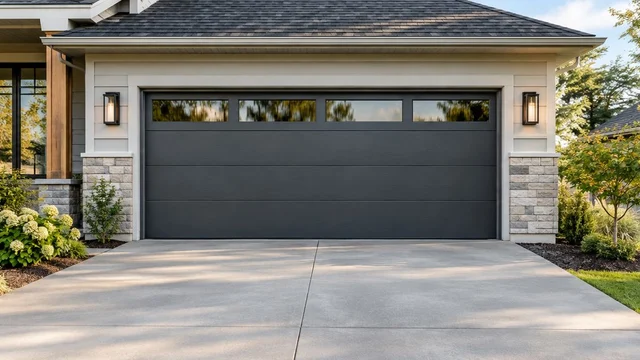
Best overall for a conditioned warehouse: an insulated sectional steel door. Best for limited ceiling space: a rolling steel door; best for frequent forklift traffic: a high-speed vertical door; best basic option for an unconditioned opening: an uninsulated sectional steel door. This guide compares those choices with fire-rated rolling doors for openings that require a rated assembly.
TL;DR
- Best commercial overhead door warehouse choice: insulated sectional steel for a conditioned loading bay, subject to clearance and duty requirements.
- Rolling steel doors suit openings where sectional tracks conflict with overhead equipment.
- High-speed vertical doors suit frequent forklift traffic; traffic controls and maintenance belong in the specification.
- Derby Strong provides commercial overhead door services for Kentucky businesses.
- Choose a fire-rated assembly when the opening requires one; an ordinary steel door is not a substitute.
Why This Matters for Your Door
A warehouse door is part of your workflow, not just an opening cover. The wrong configuration can interfere with overhead equipment, leave gaps around a conditioned space or put door movement across a busy forklift route.
Derby Strong is a commercial overhead door service option for warehouse owners in Louisville, Lexington and Northern Kentucky. Start with the opening and its operating requirements when discussing the job with Derby Strong, rather than choosing a door from a photograph.
Treat each warehouse as a separate site. A Louisville loading bay, Lexington storage building and Northern Kentucky distribution facility need their own measurements, traffic assessment and installation plan—not a city-name change on the same specification.
What makes the best commercial overhead door for a warehouse?
Use these criteria before comparing door types:
- Opening clearance: Check headroom, side room, backroom and conflicts with lights, pipes, sprinklers or equipment. The door must fit throughout its travel.
- Operating duty: Record how frequently the opening is used and how vehicles approach it. Specify the door, operator and controls for that workload.
- Environmental separation: Identify whether the door separates conditioned space from outdoors or separates indoor zones. Compare the complete assembly, including seals.
- Traffic safety: Define pedestrian routes, vehicle routes, visibility and activation methods. A remote control alone is not a traffic-management plan.
- Building requirements: Confirm structural support, electrical provisions and any required fire protection. These constraints can eliminate an otherwise attractive option.
- Serviceability: Ask what routine inspection requires and which components can be repaired. Replacement is not automatically the right answer for an existing door.
Commercial warehouse doors at a glance
| Door type | Best for | Standout feature | Key limitation |
|---|---|---|---|
| Insulated sectional steel | Conditioned exterior loading bays | Insulated panels with configurable track arrangements | Requires room for the selected track layout |
| Rolling steel | Openings with overhead space conflicts | Curtain coils above the opening instead of using horizontal sectional tracks | Barrel, hood and side guides still require clearance |
| High-speed vertical | Frequent forklift movement between zones | Faster opening and closing than conventional configurations, depending on specification | Requires careful traffic controls and duty matching |
| Uninsulated sectional steel | Unconditioned storage and occasional access | Straightforward sectional construction | Does not provide an insulated panel assembly |
| Fire-rated rolling | Openings requiring a fire-rated closure | Rated assembly selected for the opening requirement | Fire protection requirements govern selection and operation |
These are door categories, not interchangeable product specifications. Confirm the actual assembly and current manufacturer documentation before approving an order.
1. Insulated sectional steel: best for conditioned loading bays
An insulated sectional steel door uses connected panels that travel on tracks. The track arrangement determines how much of the door rises above the opening and how much travels into the building.
Best for: Exterior loading bays serving heated or cooled warehouse space. This is the default shortlist choice when thermal separation matters and the building has suitable clearance.
Insulated sectional steel pros
- Insulated panels address heat transfer through the door face.
- Different track arrangements let the design respond to the building’s available space.
- Sectional construction gives a technician the opportunity to assess individual damaged panels rather than assuming the entire door needs replacement.
Insulated sectional steel cons
- Tracks can conflict with overhead storage, lighting or other equipment.
- Insulated panels alone do not correct poor perimeter sealing or an uneven floor.
Compare panel insulation with whole-door performance rather than treating them as identical. Ask which assembly a published rating describes and whether glazing or other options change it. The garage door insulation guide provides background for that conversation; a commercial specification still needs to match your particular opening.
A frequently open insulated door does not maintain separation while it is open. Include operating habits and closing controls in the decision, not just the panel specification.
Verdict: Buy for a conditioned exterior bay when clearance, seals and operating duty all fit.
2. Rolling steel: best for overhead space conflicts
A rolling steel door has an interlocking curtain that coils around a barrel above the opening. It avoids the horizontal track arrangement used by conventional sectional doors, but it still needs space for the coil assembly and guides.
Best for: Warehouse openings where sectional tracks would interfere with equipment or usable overhead space.
Rolling steel pros
- The curtain stores above the opening rather than along horizontal tracks inside the building.
- The configuration suits openings where backroom is a deciding constraint.
- The opening can be specified around its security, exposure and operating requirements.
Rolling steel cons
- The barrel and hood need adequate headroom and suitable support.
- A rolling steel door is not automatically insulated, high-speed or fire-rated; each requirement needs an explicit specification.
Check the space above and beside the opening before treating a rolling door as the easy fit. Include the operator, access for maintenance and any equipment already attached to the wall.
The pictured configuration illustrates the space question, not a specific product or completed customer job.
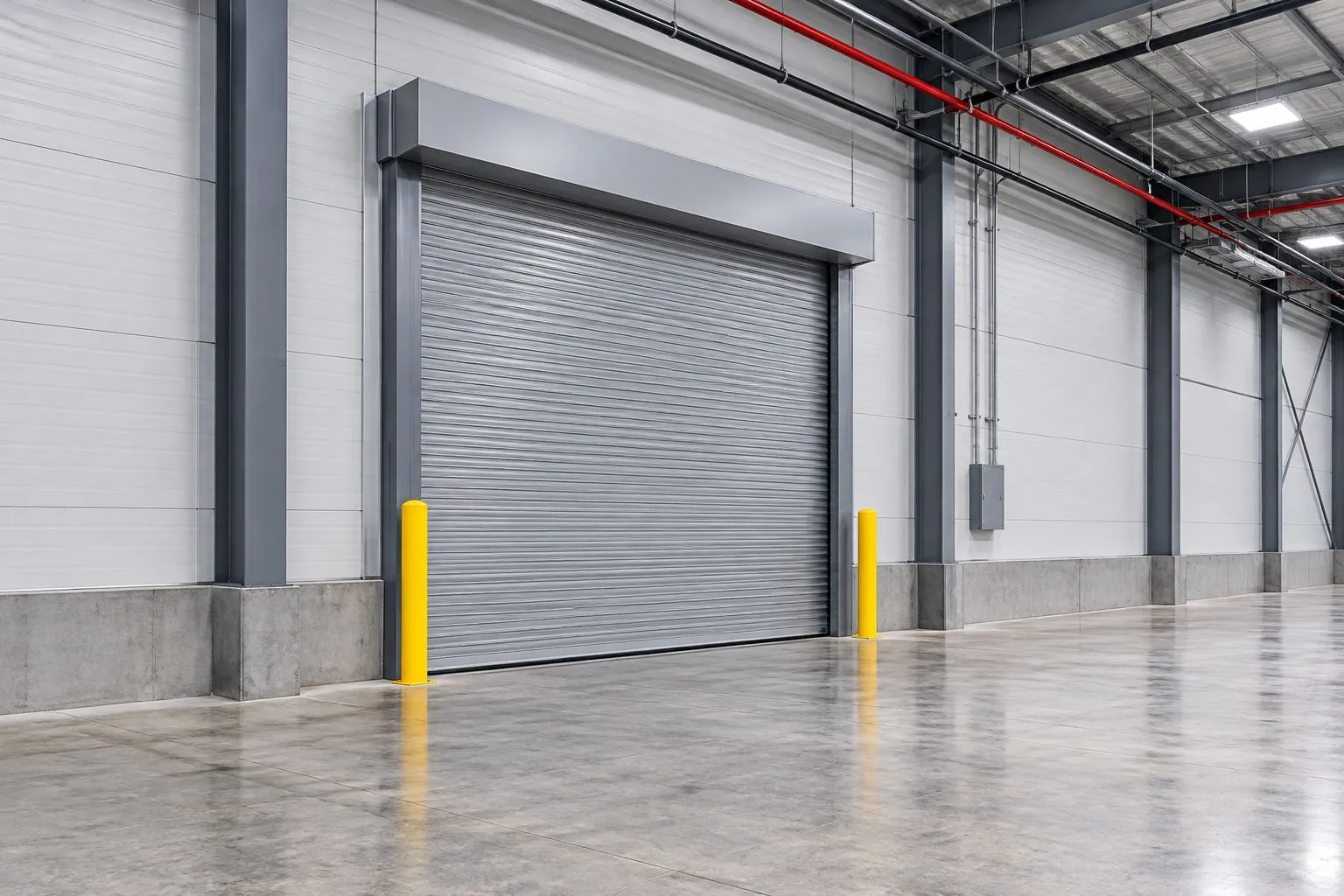
Illustrative photo: a rolling door still needs clearance around its hood and side guides.
Do not assume a damaged curtain is safe because it still moves. Bent guides, scraping or uneven travel require professional assessment before normal operation resumes.
Verdict: Buy when avoiding horizontal tracks solves a verified clearance conflict.
3. High-speed vertical doors: best for frequent forklift traffic
A high-speed vertical door is designed around frequent passage and shorter opening periods. Flexible-curtain and other configurations exist, so the specified assembly—not the category name—determines its suitability.
Best for: Frequently used warehouse passages where repeated opening and closing is a central operating requirement.
High-speed vertical door pros
- Faster movement can shorten the period an opening remains exposed.
- Activation options can be selected around vehicle approach and workflow.
- The category includes configurations intended for repeated traffic between warehouse zones.
High-speed vertical door cons
- Faster movement demands careful detection, activation and pedestrian planning.
- Exterior exposure, security needs and maintenance requirements must be checked for the actual assembly.
Map how forklifts reach the opening before selecting controls. Include turning approaches, loads that obstruct the driver’s view and pedestrians who cross the route. Do not let an automatic opening function stand in for a safe traffic layout.
Require current documentation for opening speed, operating duty, environmental suitability and protective devices. A category description cannot establish any of those specifications for a particular door.
Also ask what happens when the door loses power or develops a fault. Your operating plan must explain how the affected route is controlled, not encourage workers to bypass protective devices.
Verdict: Buy when frequent traffic justifies the configuration and its safety controls match the route.
4. Uninsulated sectional steel: best for unconditioned storage
An uninsulated sectional steel door uses hinged panels and tracks without an insulated panel assembly. It is a practical option when the opening does not need to separate heated or cooled space from outdoors.
Best for: Unconditioned warehouse storage with occasional vehicle access and suitable track clearance.
Uninsulated sectional steel pros
- The configuration addresses access without adding an insulation requirement the space does not need.
- Track layout can be assessed against the building’s interior arrangement.
- A technician can evaluate panel, hardware and operator condition separately on an existing assembly.
Uninsulated sectional steel cons
- It does not provide the thermal separation of an insulated panel assembly.
- Sectional tracks still occupy space inside or above the opening.
Do not label this the right choice solely because the warehouse is currently unconditioned. Check whether the use of the building is changing and whether the opening separates areas with different environmental requirements.
Weather sealing remains relevant even without insulation. Inspect visible daylight around a closed door from a safe position, and report damaged seals or water entry without adjusting tracks or brackets yourself.
An existing uninsulated door with an isolated repairable fault does not automatically need replacement. Ask for the fault diagnosis before comparing new-door configurations.
Verdict: Buy for genuinely unconditioned, lower-traffic access; skip when thermal separation is required.
5. Fire-rated rolling doors: best for required fire separation
A fire-rated rolling door is selected as a rated assembly for an opening that requires fire protection. An ordinary rolling steel door does not become fire-rated because its curtain is metal.
Best for: Openings identified as requiring a fire-rated closure by the applicable building requirements and project design.
Fire-rated rolling door pros
- A properly selected rated assembly addresses a requirement ordinary warehouse doors cannot replace.
- The rolling configuration avoids conventional horizontal sectional tracks.
- Documented inspection and testing requirements provide a defined service framework.
Fire-rated rolling door cons
- Required closing functions and related controls constrain how the opening can be used.
- The assembly needs qualified inspection and testing; an improvised repair can compromise its intended function.
Confirm the opening requirement before choosing the door. Coordinate the rated assembly, supporting construction, closing system and any required interfaces with the responsible building professionals.
Do not block a required closing path, disconnect a release mechanism or substitute components without approval. Routine warehouse access must work within the fire-protection design.
Verdict: Buy when the opening requires a rated assembly; skip as a substitute for a general-purpose door.
How these options were ranked
The ranking prioritizes fit to a distinct warehouse problem: conditioned exterior access, overhead clearance, frequent traffic, unconditioned storage or required fire separation. It does not claim field-test results or rank manufacturers.
Derby Strong provides commercial overhead door services. The useful next step is a site-specific assessment that checks the opening, existing assembly and workflow against the category you are considering.
Which warehouse overhead door should you choose?
Choose insulated sectional steel as your starting point for a conditioned exterior loading bay. Change that recommendation when clearance, traffic or a required fire rating points to another configuration.
Before approving replacement, give the service provider a concise operating brief:
- Current fault: Describe scraping, uneven movement, impact damage or control problems without repeatedly cycling the door to demonstrate them.
- Traffic pattern: Explain vehicle types, pedestrian crossings and how frequently the opening is used.
- Space constraints: Identify overhead equipment and changes planned near the opening.
- Environmental needs: State whether the opening separates conditioned space, outdoor exposure or distinct indoor zones.
- Repair question: Ask whether the fault can be repaired safely and whether the repaired assembly still suits its intended duty.
Keep people and vehicles clear of a damaged door. Springs, cables, tracks, brackets and other high-tension components are professional-only work; never force the door or increase operator force to overcome a fault.
Discuss your warehouse door
Explain the opening, traffic pattern and current fault before choosing repair or replacement.
Frequently Asked Questions
What is the best commercial overhead door for a conditioned warehouse?
An insulated sectional steel door is the default shortlist choice for a conditioned exterior warehouse bay when clearance and operating duty fit. Compare the complete assembly, seals and controls before selecting it.
Is a rolling steel door better than a sectional warehouse door?
A rolling steel door is better suited to an opening where horizontal sectional tracks create a space conflict. It still needs sufficient clearance and support for its barrel, hood, guides and operator.
Should a warehouse with frequent forklift traffic use a high-speed door?
A high-speed vertical door belongs on the shortlist when frequent forklift passage drives the opening’s requirements. Select its activation and protective devices around vehicle approaches and pedestrian routes, using current manufacturer documentation.
Does every Kentucky warehouse need an insulated overhead door?
No, an unconditioned storage opening does not automatically need an insulated door. Base the decision on what the opening separates, the building’s intended use and the required environmental performance.
Can an ordinary steel rolling door replace a fire-rated door?
No, an ordinary steel rolling door is not a substitute for a required fire-rated assembly. Confirm the opening requirement and coordinate the replacement with the responsible building professionals.
Should I repair or replace a damaged commercial overhead door?
Repair is appropriate when professional assessment establishes that the fault is repairable and the assembly remains suitable for its duty. Replacement belongs in the discussion when damage, configuration or operating requirements make the existing assembly unsuitable.
What can I check before arranging commercial door service?
Observe visible damage, perimeter gaps and clearance conflicts from a safe position, and record the symptoms. Do not cycle a visibly damaged door, handle high-tension components or change operator force to overcome resistance.
One Last Thing Before You Decide
A new door does not fix the reason forklifts keep hitting the opening. Before replacing an impact-damaged assembly, review the approach, sightlines and pedestrian route with the people who use it.
Fix the operating problem as well as the damaged door. Otherwise, the replacement inherits the same exposure.