New systems and upgrades
Gates, fences, operators, controls, safety devices, and credential systems, all planned as one job.
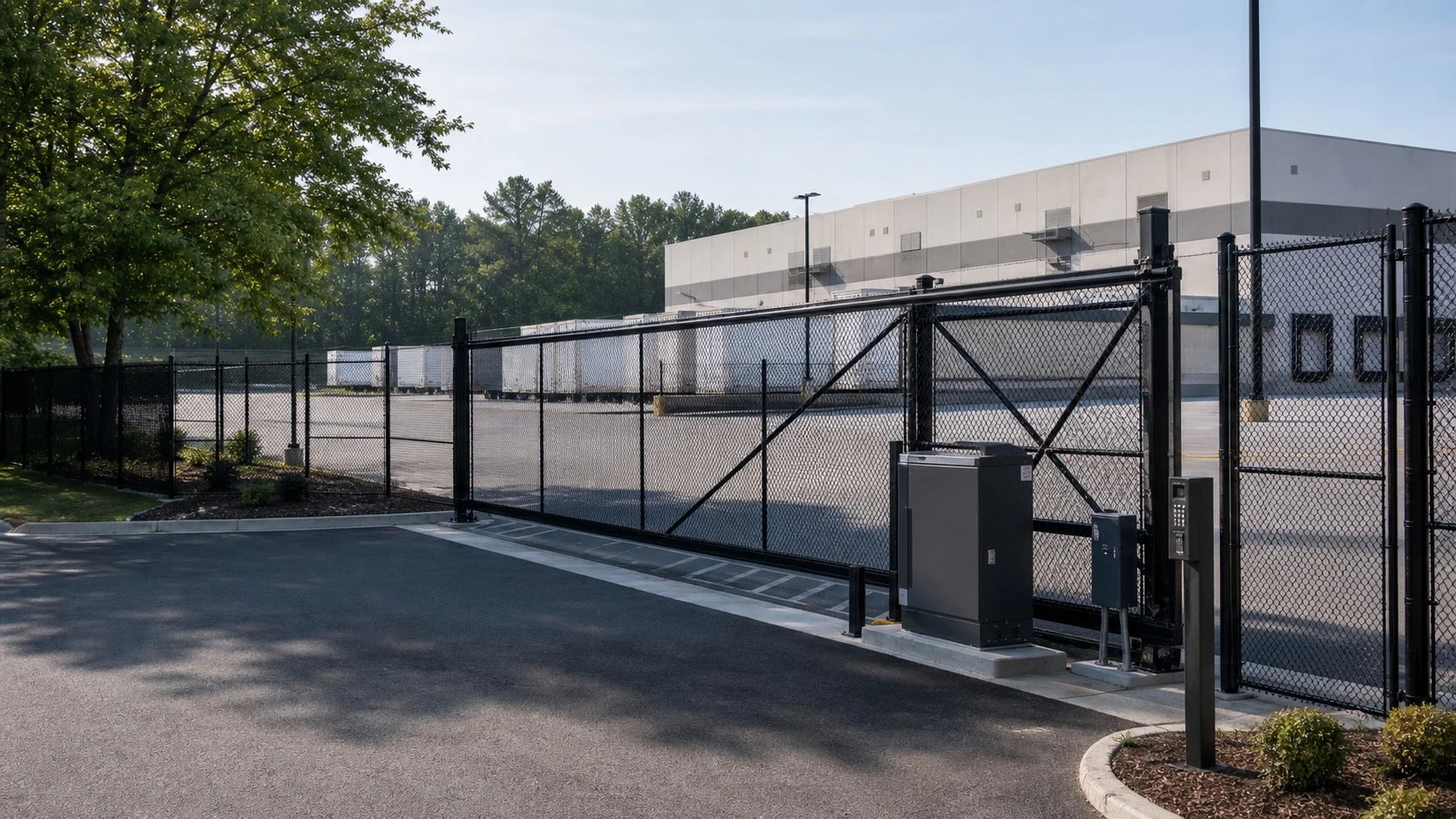
Commercial gates and fences for business sites across Louisville, Lexington and Northern Kentucky. We work on vehicle entrance gates, gate operators, access control and perimeter fencing. We handle new systems, repairs and planned maintenance for active sites.
Commercial gate, fence, operator and access control service for active sites across Louisville, Lexington and Northern Kentucky.




Commercial gates, fences and access
Commercial gates and fences do more than mark a property line. They steer trucks, staff, residents, vendors, and visitors. They also guard equipment, stock, parking, service yards, and restricted areas.
The right scope ties the fence line to the way the site runs each day. That means peak traffic times, duty cycle, credential rules, emergency access, foot traffic, power, safety devices, and who handles upkeep.
Gates, fences, operators, controls, safety devices, and credential systems, all planned as one job.
Impact damage, poor alignment, worn hardware, operator faults, old controls, fence damage, and access upgrades.
We inspect, adjust, and grease the gate and test its safety devices. Then we note its condition and rank repairs by need.
Commercial services
Installation and repair each have their own page. Here the focus stays on uptime, access rules, traffic, security risk, who owns upkeep, and how several entrances work together.

New vehicle and walk-in gates, sized to traffic, duty cycle, security, access rules, power, and emergency use.
Gate Installation
Blocked, unreliable, struck, off-track, or faulted gates, checked with site access and security risk in mind.
Gate Repair
New fence lines for the perimeter, equipment areas, and screens. Choose anti-climb, ornamental, chain-link, or welded-wire, and build in phases if needed.
Fence Installation
Storm and impact damage, breaks in the fence line, posts, fabric, panels, rails, gates, rust, and full section rebuilds.
Fence RepairSites we plan for
A storage yard gate may open a few times a day. A resident gate may run all day. They should not get the same hardware.
Truck lanes, wide openings, carrier access, shift changes, equipment built for heavy use, and secure yards.
Resident and guest entry, phone or video intercoms, credential turnover, walk-in access, and a gate that works every day.
Long access hours, keypad or phone credentials, audit needs, a clear view of the fence line, and repeatable gate operation.
After-hours lot control, barrier or slide gates, vehicle tags, free exit, and protection that does not block the view.
Foot traffic, service and emergency access, sports fencing, controlled parking, and tough materials that face the public.
Locked enclosures, high-security mesh or steel, tight control of credentials, clear sight lines for cameras, and protection for the equipment.
What site managers weigh
Pick the equipment once the daily routine is clear. Know who comes in, when traffic peaks, and what the fence protects. Decide how downtime is handled and who owns credentials and upkeep.
A failed entrance is judged by what it does to the site, not only by the part that broke.
Truck size and turning room, shift changes, carrier arrivals, queues, free exit, and heavy daily use shape the plan.
Access hardware has to work for the people who run it and use it every day.
How often to inspect depends on cycle count, site conditions, gate weight, security needs, and what the maker recommends.
The plan covers automatic gate safety, exit routes, accessible routes, fire access, and review by local officials.
Business sites often mix an outer fence, controlled openings, inside dividers, screens, and work planned for later.
What a commercial plan should cover
A good proposal says more than the size of the gate. It should make the daily routine clear and say who handles service.
Vehicle types, peak arrival times, opening speed, expected cycles, queue space, free exit, and a separate walking path.
Vehicle types, peak times, cycle count and queue space.
How the gate is built, with its weight, length, and travel. The operator type, power, backup use, controls, and room to service it.
Gate weight, length, operator type, power and backup.
Entrapment zones, monitored devices, warning devices, manual release, access for first responders, and review by local officials.
Entrapment zones, monitored devices and emergency access.
Who owns the credentials and manages users. Testing, service intervals, spare parts, service records, and the upgrade path.
Who owns credentials, testing, upkeep and records.
How we plan commercial work
Start by mapping vehicle lanes, walking paths, restricted areas, peak hours, credential groups, and what downtime does to the site.
Map lanes, restricted areas, peak hours and downtime impact.
Sort out who is responsible for each part. That covers the gate, fence, operator, access platform, utilities, property management, IT, security, electrical, civil work, and local review.
Note current equipment and who is responsible for what.
Security or access failures come first. They are kept apart from end-of-life upgrades, preventive work, new building work, and changes that can be phased in.
Separate urgent failures from planned upgrades and phases.
Your team keeps the operating steps, credential ownership, safety test results, service schedule, condition notes, and advice for future work.
Instructions, testing and maintenance records stay with you.
Customer reviews
Before you request service
We cover cantilever and tracked slide gates, single and double swing gates, and barrier arms. We also work on vertical pivot or lift systems, some bi-fold or specialty gates, walk gates, and turnstiles. The site layout and duty cycle decide the right type.
Often, yes. The site review finds the current platform, open relays or interfaces, the credential type, and the network and power path. It also checks fire or emergency rules and who will manage users once the system is live.
Galvanized or black-vinyl chain link is common. It gives practical security and you can see through it. Ornamental steel or aluminum suits sites that face the public. Welded-wire and tighter-mesh systems suit jobs that need a cleaner, more finished look or stronger anti-climb performance.
Yes. Stop running a gate that has been hit. Leave it off until the frame, posts, track or hinges, operator, safety devices, and fence joins are checked. Many systems can be repaired in sections. We compare a replacement when the structure, or a lack of parts, makes repair a poor use of money.
Yes. A planned visit can include a visual check, fastener and hardware checks, greasing, and alignment. We also review the operator and controls. The visit can cover battery and power checks and safety device tests. You get a written list of what is needed now and later.
Start with the property type, entrance photos, opening width, gate and fence type, and what is going wrong. Add rough cycle counts or traffic levels, how people get in, operating hours, and any drawings or vendor rules.
Yes. A commercial fence job can go beyond the outer fence line. It can include utility and equipment enclosures, stock cages, dumpster or service-area screens, fences between tenants, and controlled walk gates.
We review the gate, operator, and entrapment zones together. The plan should use properly listed equipment. It needs the monitored photo eyes, sensing edges, controls, guards, and placement that the system and local review call for.
Commercial project or service call
For a new project, send plans or rough sizes if you have them. For a repair, photos of the gate, operator, damage, and access-control equipment help us plan the first visit.