Comparing materials
We compare how long each one lasts, security, privacy, upkeep, looks, wind exposure, and budget before you choose.
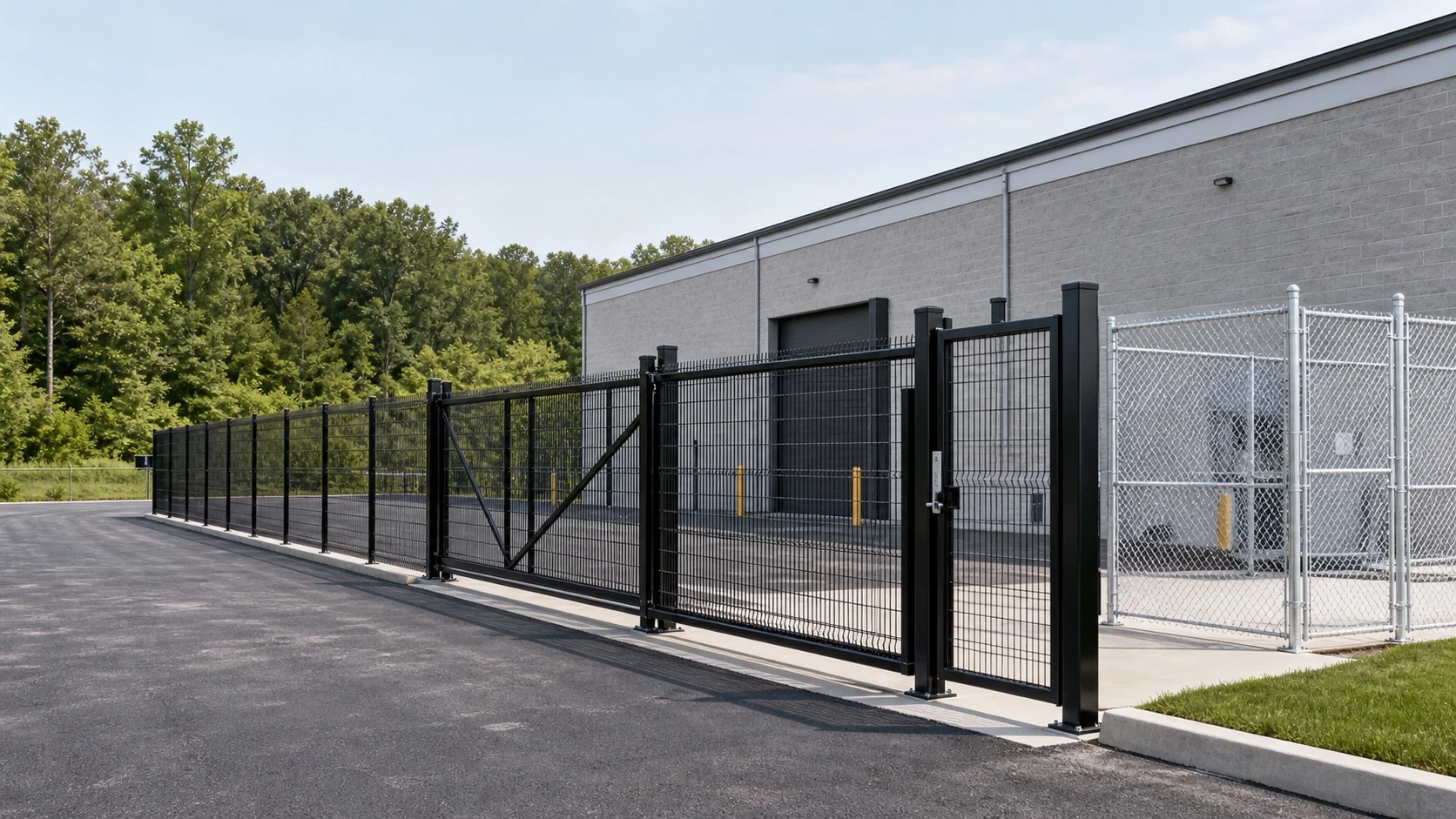
Fence installation for commercial and residential properties across Louisville, Lexington and Northern Kentucky. We install chain link, ornamental steel, vinyl, wood and welded-wire security fencing. Each fence is planned as one perimeter with its gates, posts and footings.
Fence installation across Louisville, Lexington and Northern Kentucky: chain link, ornamental, vinyl, wood and welded-wire security fencing.




One plan for the whole fence line
Fence installation starts with property lines, grade, drainage, and utilities. It also weighs privacy, security risk, gate locations, and how the property is used. A long chain-link perimeter, an ornamental street front, a backyard privacy fence, and an equipment enclosure are different jobs. Each needs its own posts, footings, spacing, materials, and upkeep plan.
Plan the fence together with its vehicle and walk gates. That prevents weak joins, undersized hinge posts, and awkward openings. It also avoids costly changes when automation or access control is added later.
We compare how long each one lasts, security, privacy, upkeep, looks, wind exposure, and budget before you choose.
Vehicle, walk, service, and automatic openings get the right posts, clearances, and joins.
We settle property lines, survey details, utility locates, grade changes, drainage, setbacks, and access early.
How the fence meets the gate
Hinge posts, latch posts, cantilever tails, and operator pads are sized before the line goes in. So are access pedestals, loop lanes, walking routes, and fence joins.

We plan the opening width, turning space, swing or slide travel, footings, readiness for automation, and fence joins together.
Gate Installation
Walk gates, double service openings, self-closing hardware, controlled access, and service routes match the fence.
Gate Operators & Access Control
We plan security levels, fleet access, screening, short-term phases, equipment protection, and who handles upkeep across the whole site.
Commercial Gates & FencesSecurity levels and site prep
Height and material are only the start. Mesh size, top treatments, post strength, impact protection, sight lines, and site prep decide how the fence performs.
Security fencing may be taller, with tighter mesh, anti-climb designs, or approved top treatments. Site risk and local rules decide.
Posts, operator cabinets, access pedestals, corners, and equipment zones may need to be kept away from vehicle paths.
Known property lines, easements, setbacks, corner sight lines, neighbors, and HOA or property manager review guide the layout.
Before digging, we plan around Kentucky 811 locates, private utility details, irrigation, lighting, drainage, pavement, and the planned post holes.
Stepping keeps panels level in steps. Racking follows the slope. Material, looks, bottom gaps, and gate locations shape the choice.
Fence height, wind area, soil, frost, end-post loads, gates, and standing water affect the footings and long-term alignment.
Fence types and materials
The strongest choice is the one matched to the real need. That is not always the heaviest or most costly material.
A flexible commercial fence you can see through. It comes in many specs, is practical to repair, and works with most gates.
A strong, finished-looking perimeter for commercial, institutional, multifamily, and public-facing sites.
A low-upkeep choice that resists corrosion. It suits sites where looks and a clear boundary matter more than high-impact security.
Rigid mesh panels give a clean profile, clear sight lines, and tighter openings than standard chain link.
Privacy and boundary fences for homes, multifamily areas, screening, and some commercial uses.
Short-term fencing for building sites, events, closed-off work areas, and properties waiting on permanent work.
Permits, order of work, and cost
Kentucky rules vary by city or county, height, placement, property use, pools, easements, and HOA rules. The proposal should also explain what drives the cost per linear foot.
Height, gauge, mesh, panels, picket profile, rails, coatings, privacy, security add-ons, and finish set the material and labor.
Height, gauge, panels, coatings and finish set the effort.
Slope, rock, soil, retaining walls, brush and trees, pavement, tear-out, haul distance, equipment access, and site repair affect daily progress.
Slope, rock, soil, tear-out and equipment access.
Terminal posts, braces, footings, frequent grade breaks, walk gates, vehicle gates, openings ready for automation, and enclosures add extra work.
Terminal posts, grade breaks and gate openings add work.
The schedule follows the survey, HOA or owner review, permits, and 811 locates. Then come material lead time, clearing, posts and cure time, the fence, gates, and final inspection.
Survey, permits, 811 locates and lead times set the schedule.
Fence installation steps
We confirm the property line details, material, height, gates, and grade method. Utilities, permits, HOA or owner approvals, and exclusions are settled too.
Confirm the line, material, height, gates and approvals.
We contact Kentucky 811 as needed, and the owner points out private lines. Then we plan clearing, tear-out, delivery, and equipment access.
Contact Kentucky 811 as needed and prep site access.
Terminal, corner, gate, and line posts go in first, to the project spec. Then come rails, fabric, panels, pickets, boards, or screening.
Set posts to spec, then rails, fabric, panels or boards.
We check gate movement, latches, joins, bottom gaps, tension, fasteners, and the finish. Then we clean up and go over any operating notes with the owner.
Check gate movement, latches, gaps and finish, then clean up.
Kentucky fence installation service area
The local page has contact details and service-area notes for each market. Check it before you plan the site walk.
Commercial fence lines, home privacy fences, ornamental boundaries, gates, and screening across Louisville.
Chain link, ornamental, wood, vinyl, welded wire, and controlled openings across Lexington.
Residential and commercial fence projects throughout Northern Kentucky.
Customer reviews
Before you request service
Daily progress depends on material, height, post spacing, soil, rock, and slope. Corners, gates, tear-out, equipment access, concrete needs, and weather matter too. A straight chain-link run with easy access may go faster than ornamental panels or a privacy fence. Sites with many grade changes take longer. The schedule should come from the measured scope, not a generic footage promise.
Well-chosen ornamental aluminum, galvanized or coated chain link, and quality steel panel systems can all last a long time. Each needs different care. Vinyl avoids painting but must be designed for wind and impact. Wood offers flexibility and privacy but needs more finish work and moisture care. Good installation and drainage matter as much as the material name.
A recent boundary survey is the clearest way to confirm the fence line. It matters most when markers are unclear, the fence runs near a property line, or an easement may apply. Derby Strong does not replace a licensed surveyor. The owner should provide reliable property line details before posts go in.
Before digging, we coordinate Kentucky 811 as needed. Public locates do not find every private line. Examples are irrigation, private electric, lighting, septic parts, and lines the owner put in. The owner must share what they know about private utilities. A separate private locate may be needed.
Often. We first record the height, color, coating, mesh size, gauge, and framework. We also note the panel size, picket profile, rail layout, board pattern, and age. An exact match depends on what is still made and how the old fence has weathered. If an exact match is not possible, the proposal should show the closest compatible transition.
Louisville rules depend on placement, zoning, corner sight lines, property use, and project details. Taller fences can trigger a permit review. Rules can change. Confirm the current Louisville Metro rules and any HOA or deed limits for your property before the fence goes in.
Fence installation planning
Bring a marked aerial photo or site plan, photos, rough fence length and height, and gate widths. The look you want and your security or privacy goal make the first talk far more useful.