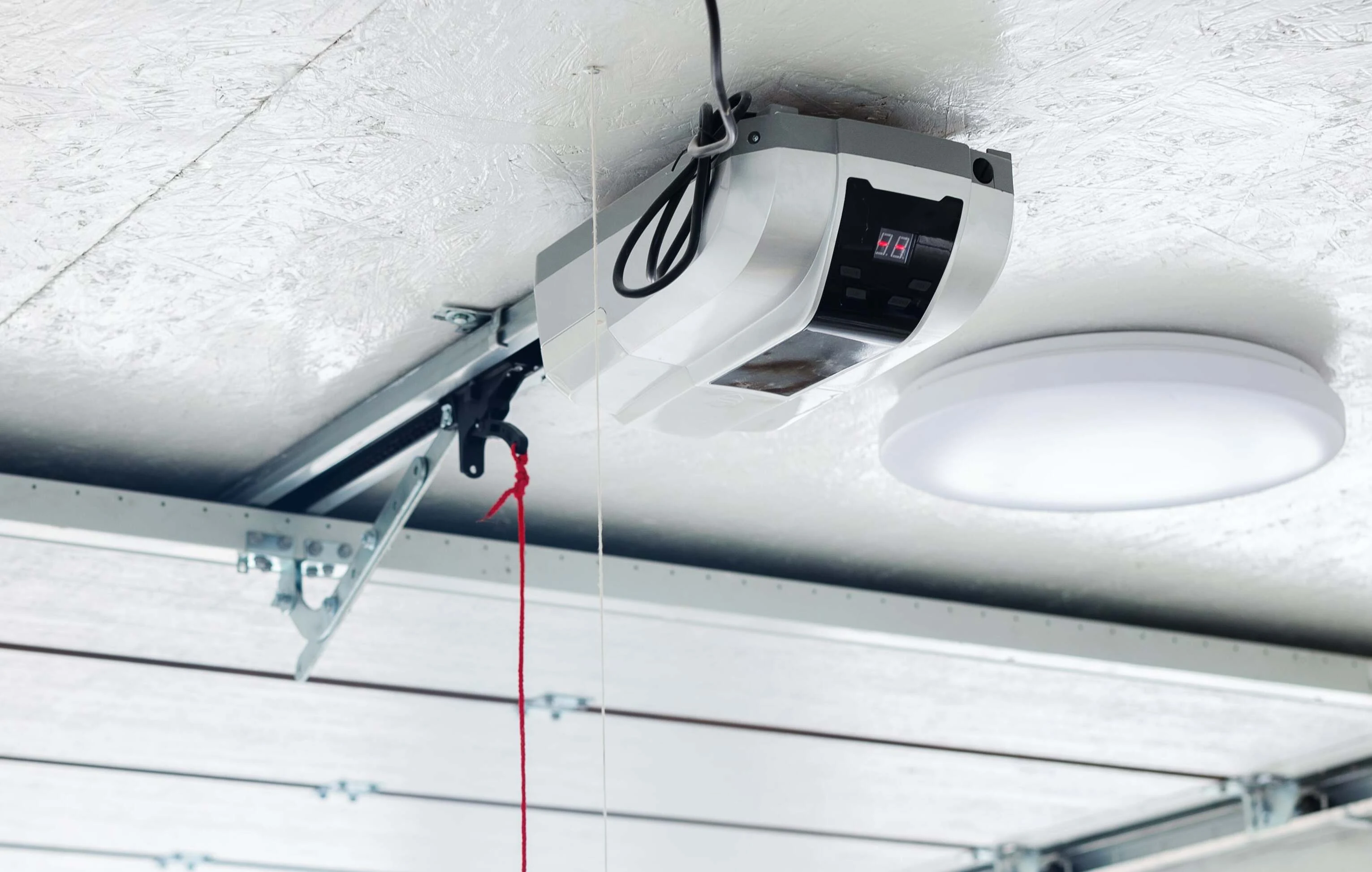
The quiet favorite
Belt drive
A steel-reinforced belt moves the door smoothly with very little noise or vibration—our most requested installation for attached garages and rooms near the garage.
Belt-drive openers: install & repair guide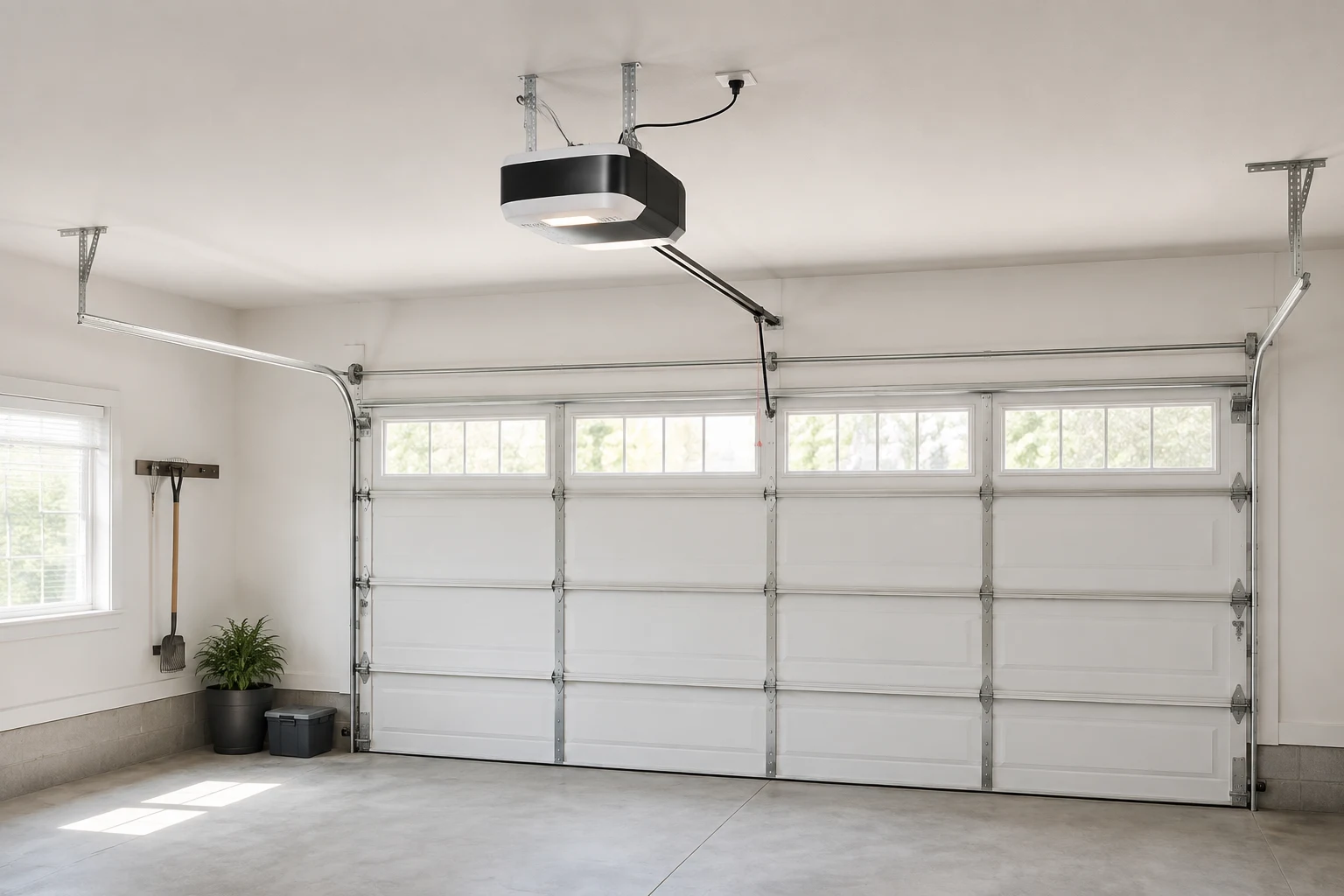
Garage door opener installation in Louisville, Lexington and Northern Kentucky means a belt-drive, chain-drive or wall-mount opener matched to your door, garage layout and budget. Every install includes old-opener removal, programming, myQ setup where supported and safety testing.
An opener matched to your door, with removal, programming and safety testing included.



Time for an upgrade?
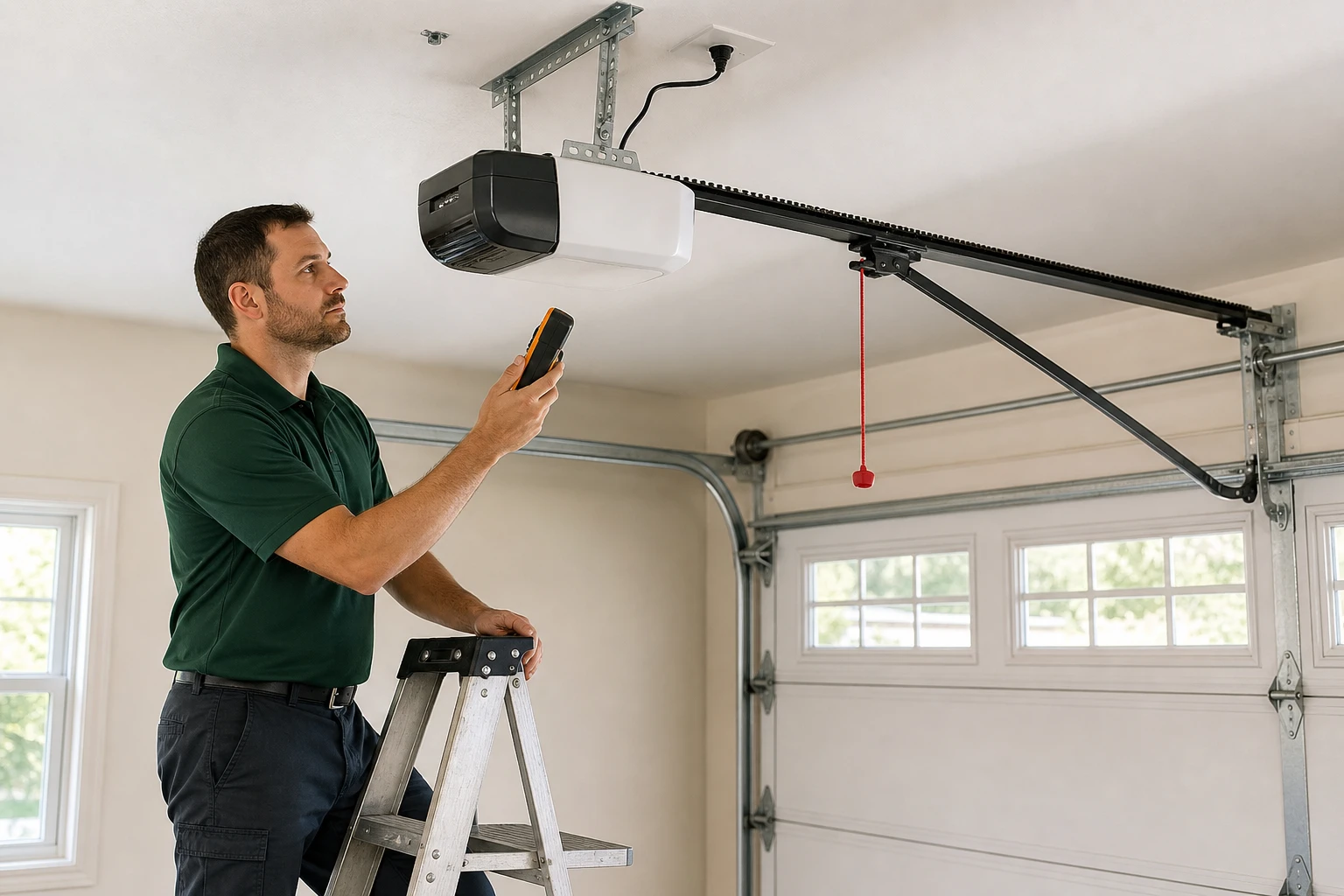
Before any opener goes up
A new opener is built to move a door the springs already balance. Before we hang new equipment, we test the door by hand—if it’s heavy, binding, or dropping, we fix that first so your new opener lasts the way it should.
Pick the style that fits your garage
The quiet favorite
A steel-reinforced belt moves the door smoothly with very little noise or vibration—our most requested installation for attached garages and rooms near the garage.
Belt-drive openers: install & repair guide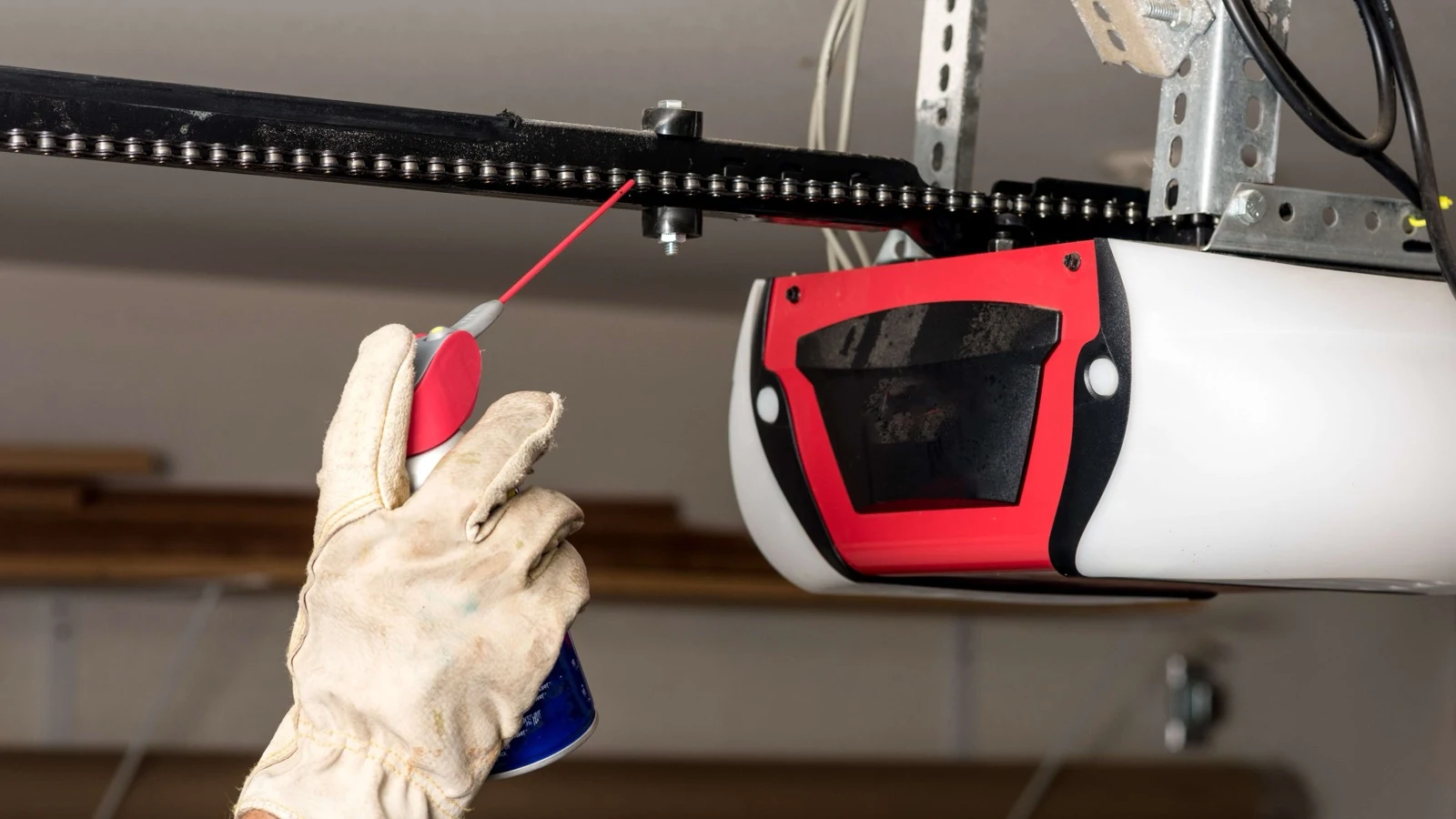
Durable and budget friendly
A heavy-duty chain delivers dependable daily lifting at a lower price point. It makes more mechanical sound than a belt, which matters less in detached garages.
Chain-drive openers: install & repair guide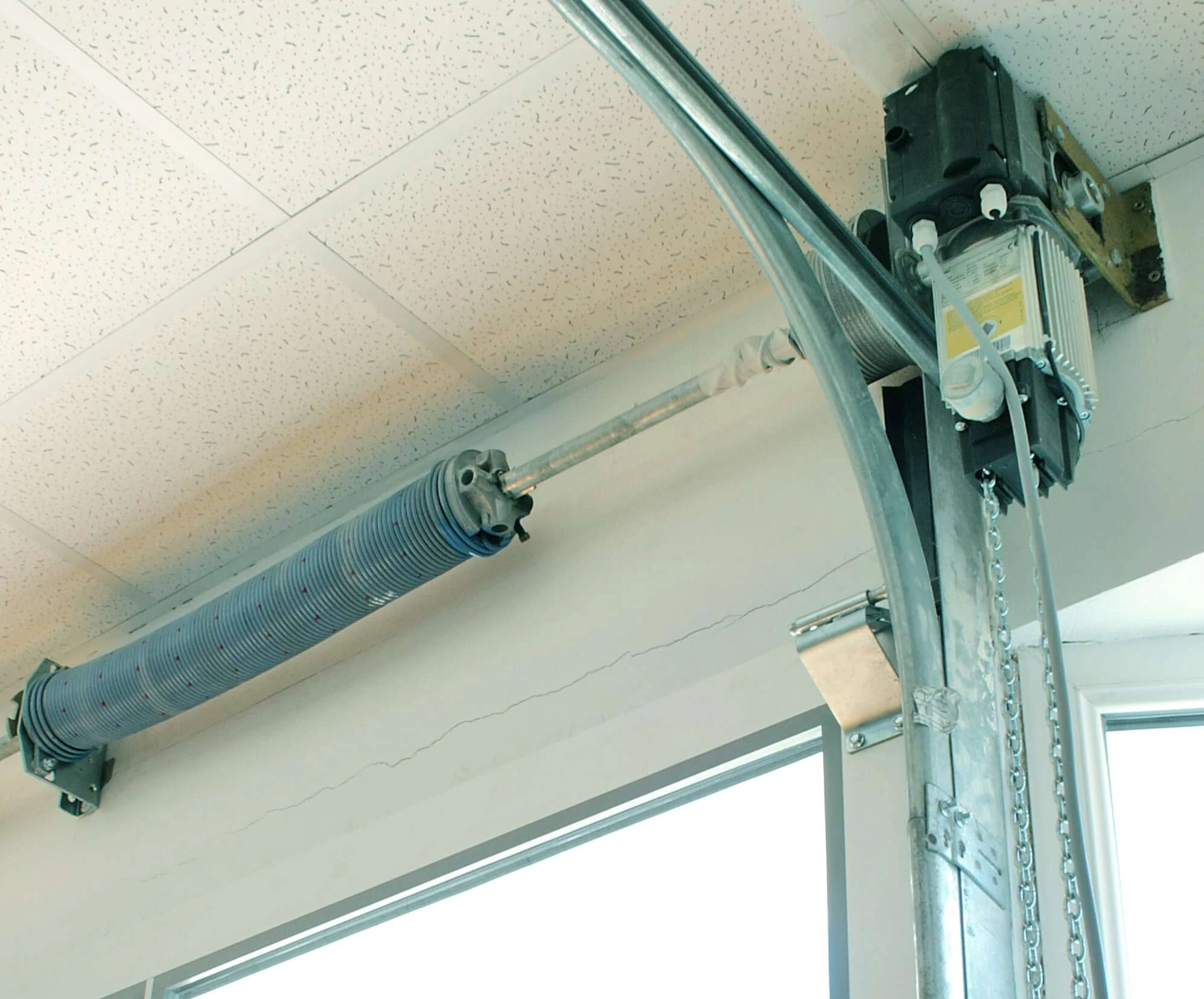
Frees the whole ceiling
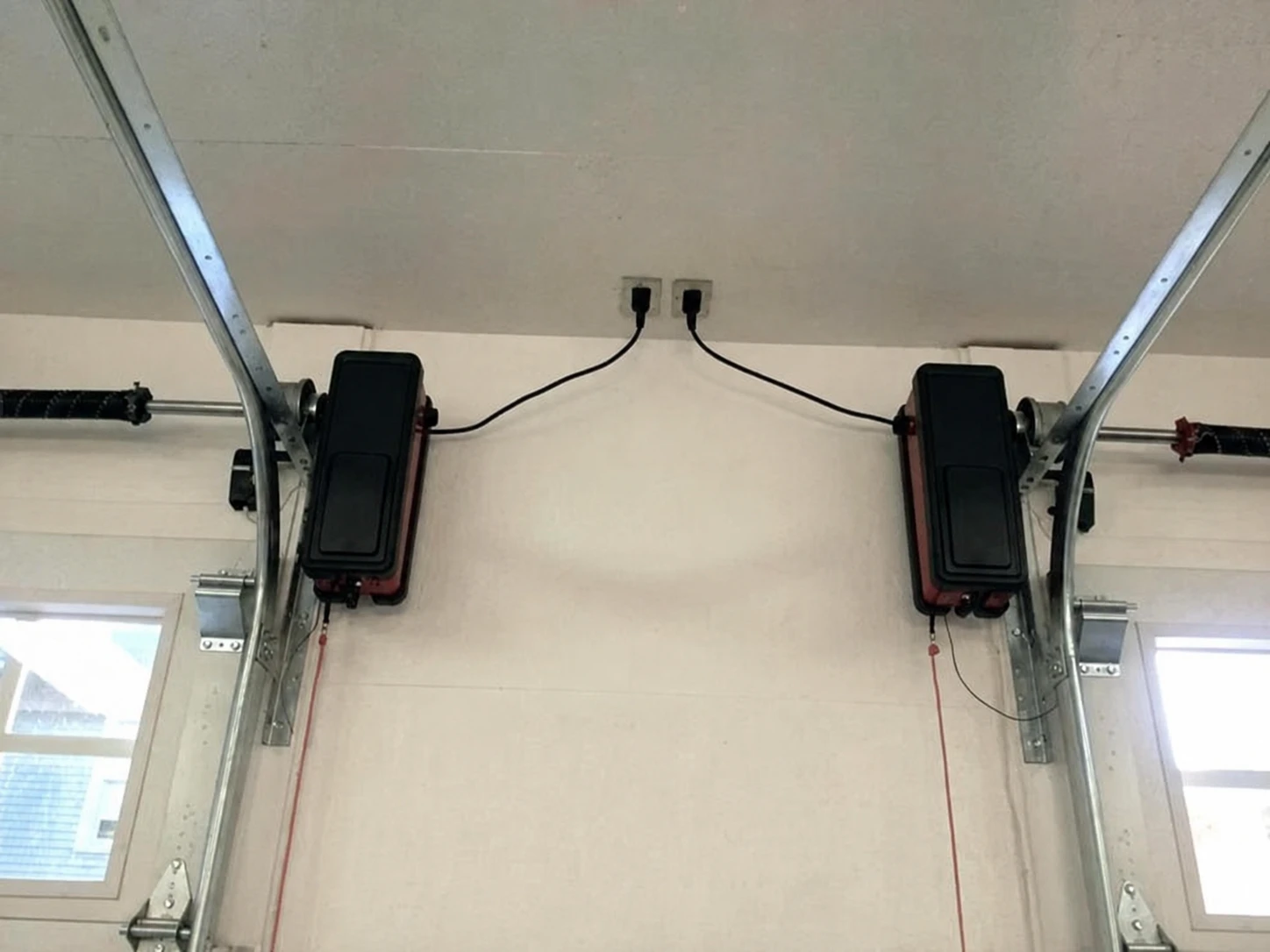
A side-mounted unit turns the torsion shaft directly—no center rail overhead. Great for storage lifts and finished ceilings, when the door and hardware qualify.
Wall-mount openers: install & repair guide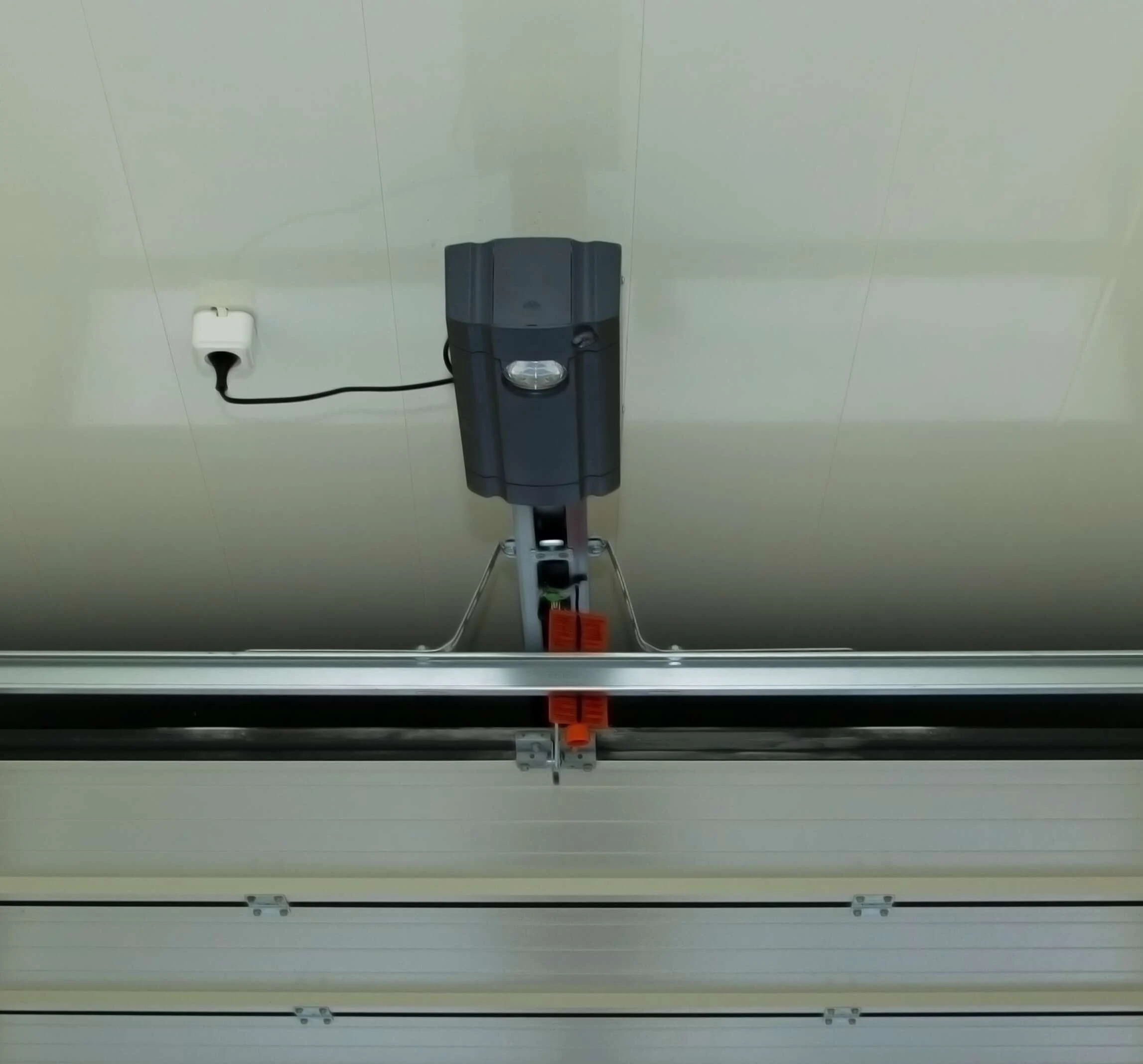
Easy upgrade path
Older screw-drive openers are fading from the market. When yours is ready to retire, we replace it with a quieter belt, chain, or wall-mount system matched to your door.
Screw-drive replacement guideWall-mount compatibility
How we help you choose
Bedrooms or living space beside or above the garage point strongly toward a quiet belt drive or wall-mount system. A detached garage makes a value-focused chain drive an easy choice.
Living space nearby points to a quiet belt or wall mount.
Door height, size, weight, insulation, spring system, and track geometry decide which openers qualify—and whether a taller door needs a rail extension or a wall-mount fits at all.
Door size, weight and springs decide which openers qualify.
DC motors run smoother and quieter and enable battery backup. If outages are a concern, we’ll steer you to models that keep the door working when the power is out.
DC motors run quieter and allow battery backup.
App control, cameras, lighting, keypads, extra remotes, and automatic locks each add cost. We help you pick the tier that fits how your household really uses the garage.
Pick the feature tier your household will actually use.
Not sure the old opener is done? If a repair is the smarter money, we’ll tell you. Our opener repair service covers sensors, remotes, gears, boards, and drive parts—and we quote both paths honestly.
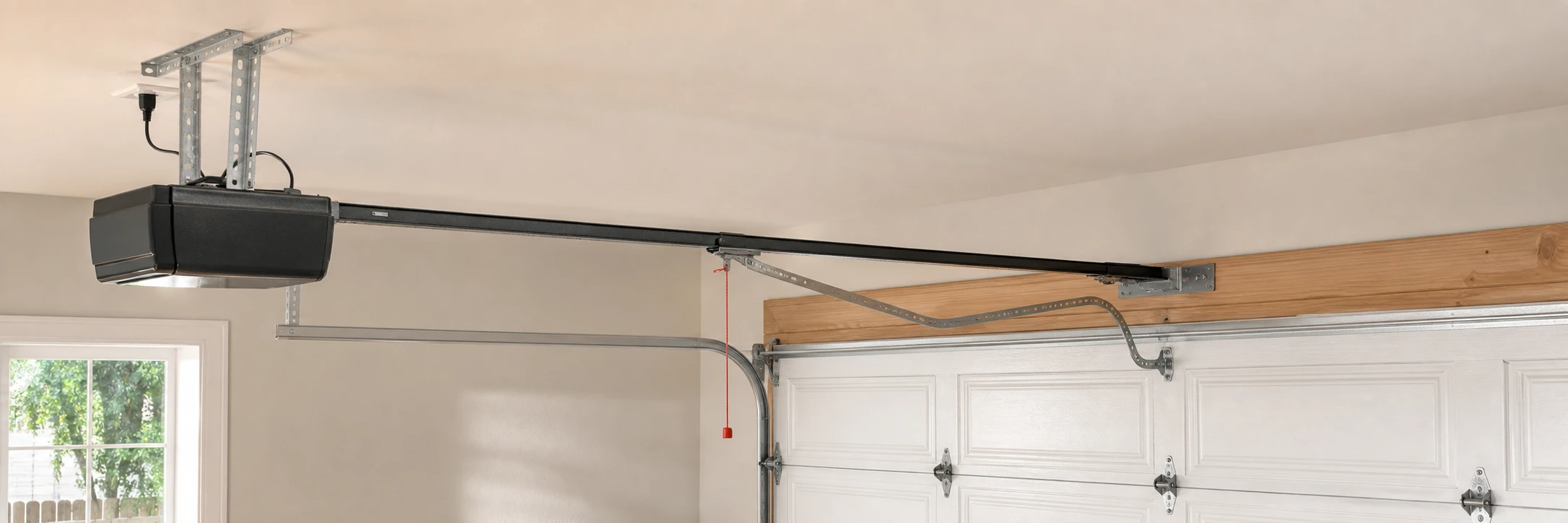
Installation, repair, and replacement guidance
We can install all major residential opener brands. LiftMaster and Chamberlain are the brands we install most often; the final choice depends on door compatibility, product availability, features, and homeowner preference.
 LiftMaster Most commonly installed & serviced Explore brand guide
  Chamberlain Most commonly installed & serviced Explore brand guide
  Genie Installation, repair & support Explore brand guide
  Craftsman Installation, repair & support Explore brand guide
  Overhead Door Installation, repair & support Explore brand guide
  Wayne Dalton Installation, repair & support Explore brand guide
  Linear Installation, repair & support Explore brand guide
  SOMMER Installation, repair & support Explore brand guide
 Common models we install
Chamberlain
Best for: Detached garages and value-focused installs
The same dependable chain platform, plus a backup battery that keeps the door working during power outages.
LiftMaster
Best for: Attached garages and quieter daily operation
A quiet belt drive with battery backup, an integrated camera, and bright dual LED lighting—a strong all-around upgrade.
Chamberlain
Best for: Premium smart features at a retail-line price
A retail belt-drive option with battery backup, myQ, a built-in camera, and bright lighting for a strong feature set.
LiftMaster
Best for: Qualifying garages that need clear ceiling space
A professional side-mounted opener for qualifying torsion-shaft doors—clears the ceiling and runs remarkably quietly.
Not sure which one fits? We narrow it to two or three compatible options and provide a written installed price. Exact models and availability can change. Compare all nine LiftMaster and Chamberlain examples.
Installation and pricing
We test door balance and springs, measure the door and rail run, and check power, clearance, and Wi-Fi signal—then recommend specific models with a clear written quote.
We test balance, measure and quote specific models.
We take down the old unit, rail, and brackets, and confirm the mounting points and outlet are ready for the new system. Old-equipment removal is part of the job.
We remove the old unit, rail and brackets.
The opener, rail, and trolley are mounted and secured, and the wall control, safety sensors, and any accessories are wired and connected for your garage layout.
Opener, rail, controls and sensors are mounted and wired.
Travel and force are set; photo eyes and contact reversal are tested; remotes, keypad, myQ, battery, camera, and lighting are configured—and we show you the manual release before we leave.
Travel, force and reversal are tested; controls programmed.
Customer reviews
Before you schedule
A standard professionally installed residential chain- or belt-drive opener typically falls between $550 and $850. Premium belt systems with cameras, battery backup, or advanced lighting commonly plan around $750–$1,000, while compatible wall-mount systems commonly plan around $1,000–$1,450. Final pricing depends on the opener model, rail and door height, accessories, mounting and power needs, old-unit removal, and any door work needed first.
Replacing an existing ceiling-mount opener typically takes two to four hours, including removal, mounting, wiring, programming, and safety testing. First-time installations, wall-mount conversions, taller doors needing rail extensions, and jobs that need electrical or door work can take longer. Nearly all residential installations finish the same day.
Derby Strong can install all major residential opener brands, including LiftMaster, Chamberlain, Genie, Craftsman, Overhead Door, Wayne Dalton, Linear, and SOMMER. LiftMaster and Chamberlain are the brands we install most often. We compare compatible models based on the door, garage layout, product availability, feature priorities, warranty, and budget.
Belt drive is usually the right call when the garage is attached or sits under bedrooms or living space—it’s noticeably smoother and quieter. Chain drive is durable, dependable, and typically less expensive, with more mechanical sound, which matters far less in a detached garage. Both are solid; the difference is mostly noise, feel, and price.
Wall-mount (jackshaft) openers need a properly balanced sectional door on a compatible torsion-shaft system, plus enough side clearance. Before recommending one, we verify the shaft, drums, track geometry, door size and weight, balance, and the manufacturer’s limits. Open ceiling space is a benefit—but not proof the door qualifies.
Less than you might think—the springs do the heavy lifting, and the opener moves a door that’s already balanced. The right choice depends on door construction, height, weight, and daily use. DC motors are often rated in HP equivalents for comparison. A bigger motor is never the fix for a heavy or unbalanced door; correcting the door comes first.
A complete installation includes a door and compatibility assessment, removal of the old opener, secure mounting of the new opener and rail, wiring of the wall control and safety sensors, travel and force programming, photo-eye and contact-reversal safety tests, programming of remotes, keypad, myQ, battery, camera, and lighting as applicable, a manual-release demonstration, and a clear explanation of the product and labor warranty.
Yes. Taking down and disposing of the old opener, rail, and brackets is a normal part of the installation, and your written quote states it up front. You won’t be left with an old motor sitting in the corner of the garage.
New openers include fresh remotes, and we program compatible existing accessories where the manufacturer supports them. In-car systems like HomeLink can usually be reprogrammed to the new opener—sometimes with a compatibility bridge for older vehicles. We handle programming and test every control before we leave.
Not always. If the existing opener is in good condition, has working safety sensors, and matches the new door’s weight and height, it can often stay. Many homeowners pair the projects anyway—a new insulated door can be heavier, and installing both at once means the whole system is set up, balanced, and tested together.
Most myQ features—app control, alerts, schedules—need a reliable 2.4 GHz Wi-Fi signal in the garage. Core opener operation never depends on a subscription. Some camera recording and video-storage features require a paid video plan; features vary by model.
Yes—on models that include it, the backup battery keeps operating the door locally during an outage, typically for dozens of cycles. It does not keep your Wi-Fi, myQ connection, or camera online if the internet is down. Backup batteries are replaceable and included only with selected models.
Some experienced DIYers do, but the risks are real: incorrect force and travel settings, mis-wired safety sensors, or a failed contact-reversal test can leave the door genuinely dangerous. Professional installation also catches door problems—worn springs, poor balance—that would shorten the new opener’s life, and it comes with a labor warranty. If you’ve already purchased an opener, ask us; we can often install customer-supplied units after confirming condition and compatibility.
Local installation help