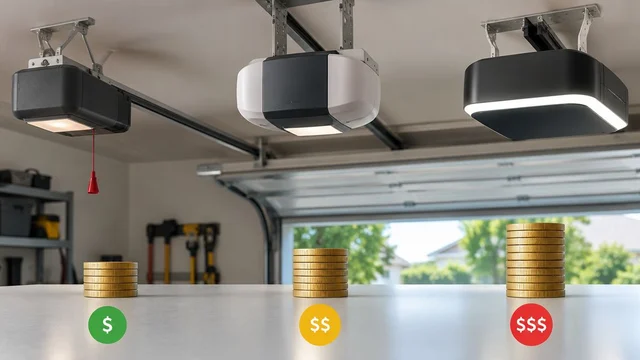
Choose LiftMaster if you want a professionally supplied garage door opener and installation; choose Chamberlain if you want to buy a retail opener and arrange installation separately. This LiftMaster vs Chamberlain garage door opener comparison focuses on buying routes, door compatibility and safe installation for Kentucky homeowners; Derby Strong provides opener service in Louisville, Lexington and Northern Kentucky.
TL;DR
- LiftMaster vs Chamberlain garage door opener: choose by installation route before comparing individual features.
- LiftMaster suits homeowners seeking a dealer-supplied opener and professional installation.
- Chamberlain suits homeowners who want a retail purchase with separately arranged installation.
- Neither brand fixes a damaged or unbalanced garage door; address mechanical faults before selecting an opener.
Why This Matters for Your Door
A garage door opener purchase has two separate parts: selecting suitable equipment and getting it installed correctly. Comparing brand names alone leaves out the door, available mounting space and who will handle the work.
The clearest brand-level difference is the buying route. LiftMaster focuses on professional distribution; Chamberlain offers homeowner-oriented retail openers. That distinction helps you decide where to start, but it does not establish a winner for every feature.
Choose the installation route first, then compare exact models. A quieter drive, battery backup or connected control only matters when the selected opener fits your door and supports the functions you need.
For a 2026 purchase, check current manufacturer documentation rather than relying on an older comparison or a familiar-looking product name. Manuals and compatibility information should decide the technical fit.
At a glance: LiftMaster vs Chamberlain
| Dimension | LiftMaster | Chamberlain |
|---|---|---|
| Best for | Homeowners seeking professional supply and installation | Homeowners seeking a retail purchase and control over installation arrangements |
| Purchase route | Professional dealer channel | Consumer retail channel |
| Installation planning | Fits a dealer-led equipment-and-installation purchase | Fits equipment selection followed by a separate installation decision |
| Door compatibility | Requires an exact-model and door assessment | Requires an exact-model and door assessment |
| Noise selection | Compare drive type, mounting and door condition | Compare drive type, mounting and door condition |
| Connected features | Check the selected model and accessory requirements | Check the selected model and accessory requirements |
| Standout distinction | Professional-channel purchasing | Retail-channel purchasing |
| Pricing model | Dealer quotation for the specified scope | Retail equipment purchase, with installation considered separately |
The table compares purchasing approaches, not interchangeable specifications. A claim about one opener does not automatically apply to every opener sold under the same brand.
LiftMaster is the better fit for a dealer-led installation
LiftMaster is the more direct starting point when you want a professional to assess the door, specify an opener and handle installation. You are choosing an installation process as well as equipment.
That route suits a homeowner who does not want to resolve mounting, rail selection or door suitability alone. It also gives you a clear opportunity to discuss existing faults before ordering an opener that cannot correct them.
Ask the installer to separate the proposed work into identifiable parts:
- The opener and its exact model designation.
- Rail, mounting and other installation requirements.
- Controls and accessories included in the proposal.
- Existing door repairs that must happen first.
- Final safety checks and operating instructions.
LiftMaster wins for the homeowner who wants professional selection built into the purchase. Its limitation is that a brand name still does not define the installation scope. Read the proposal rather than assuming every accessory or repair is included.
Do not assume a particular local company supplies a brand simply because it services garage door openers. Confirm the equipment offered and the work covered before booking.
Chamberlain is the better fit for a retail-first purchase
Chamberlain is the more direct starting point when you want to compare retail equipment yourself. You can select the opener before deciding whether to install it or hire a professional.
That separation is useful when you want control over the equipment purchase. It also creates an additional responsibility: you must confirm that the selected unit suits the door and that your installation arrangements cover the complete job.
Before buying, check the manufacturer’s documentation for:
- Supported door type and door-size requirements.
- Rail requirements for your opening.
- Mounting clearances and power requirements.
- Included controls and safety devices.
- Required accessories for the functions you expect.
Chamberlain wins for the homeowner who wants a retail-first buying process. The drawback is that buying the box does not settle installation, compatibility or existing door problems.
If you plan to hire an installer, discuss the proposed equipment before purchasing it. Confirm whether the installer accepts customer-supplied equipment and who handles equipment questions afterward. Neither point follows automatically from the brand name.
Neither brand wins on door compatibility without a model check
LiftMaster and Chamberlain both require an opener that matches the actual door and installation space. Brand preference cannot substitute for that assessment.
Start with the door, not the motor description. Door construction, dimensions, mounting space and operating condition all affect the selection. A replacement also needs an installation plan; do not assume existing rails, brackets or controls can be reused.
For an attached garage, identify overhead obstructions and the location of the power supply. For a detached garage, consider how you will regain access if powered operation is unavailable. Describe those constraints before equipment is selected.
You can safely prepare by recording the door’s visible condition and photographing the opener label from a secure position. Keep clear of moving parts and do not remove covers or loosen hardware.
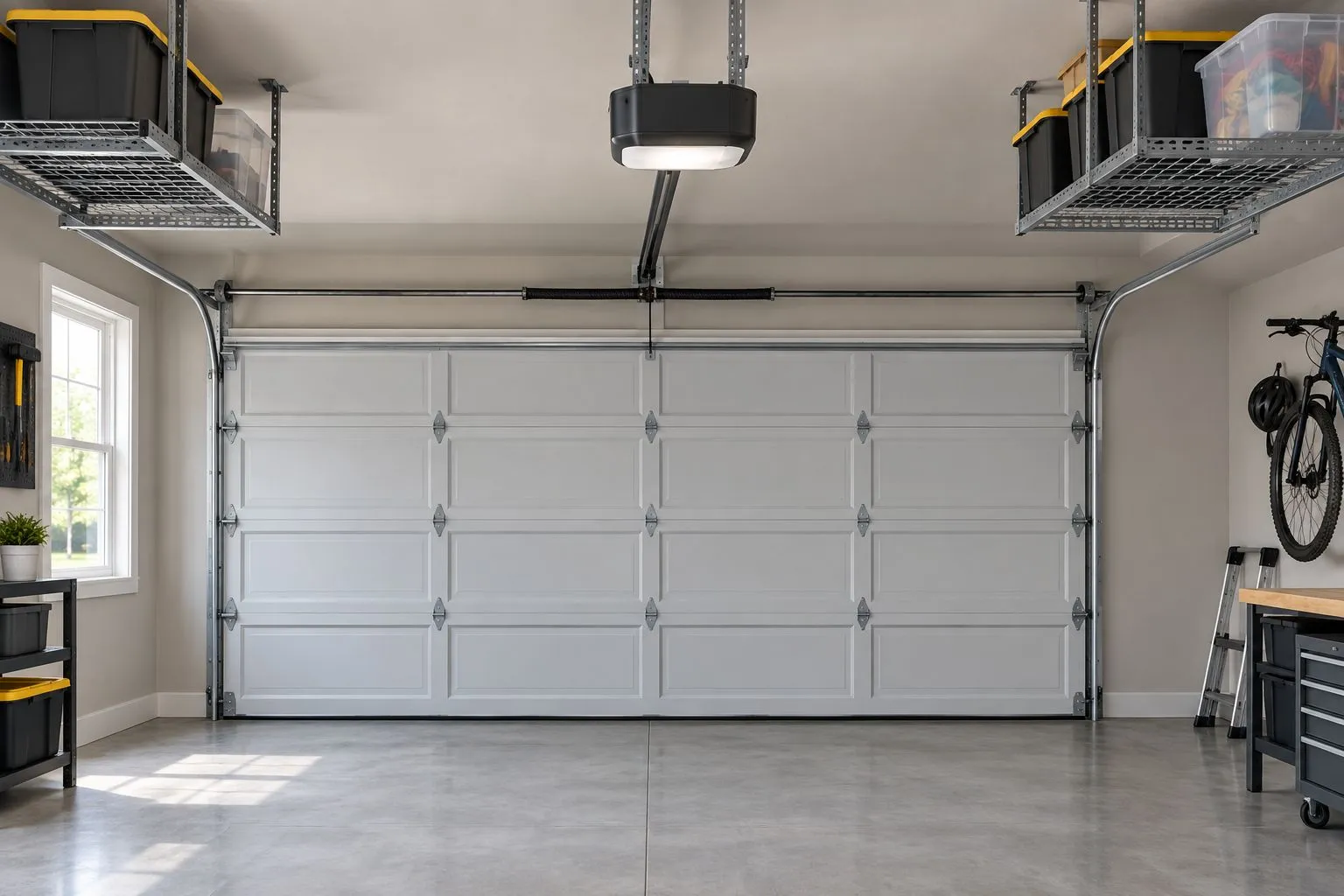
Illustrative photo, not a customer project: mounting space belongs in the opener decision.
Compatibility is a tie at brand level. The winning opener is the exact model whose installation requirements match your door—not whichever brand has the more persuasive box or brochure.
Neither brand guarantees a quieter garage
Noise requires a model-level comparison and a door-condition check. A brand name does not tell you how the completed installation will sound.
Belt-drive and chain-drive describe different drive arrangements. Compare those arrangements in the current product documentation, then consider the rest of the system: door movement, rollers, hardware and mounting can contribute noise independently of the opener.
For a garage beneath a bedroom or beside a living space, tell the installer where the noise is noticeable. Explain whether the sound occurs at startup, throughout travel or when the door reaches its stopping point. Those observations are more useful than calling the entire system loud.
Do not keep operating a door that scrapes, jerks, hangs unevenly or has visibly damaged hardware just to identify a sound. Stop using it and arrange professional assessment.
Noise is a tie until you compare specific models and the door itself. Replacing an opener without identifying the noise source risks leaving the original problem untouched.
Connected controls need an exact-model comparison
LiftMaster and Chamberlain both offer connected opener options, but the feature list belongs to the selected model. Do not treat connectivity as a blanket promise across either brand.
Decide what you actually want to do. Checking whether the door is open, receiving alerts and managing household access are different requirements. Verify each function in current manufacturer documentation, including any accessory, account or network requirements.
Use a short feature checklist rather than comparing vague descriptions:
| Your requirement | What to verify before choosing |
|---|---|
| Remote status checks | Whether the exact opener supports the desired status function |
| Remote operation | Required controls, setup and operating restrictions |
| Household access | Compatible remotes, keypads and account arrangements |
| Power-outage operation | Whether battery backup is included, supported or unavailable |
| Existing accessories | Explicit compatibility with the new equipment |
Neither brand wins connected features without an exact-model comparison. Choose the opener that supports your required functions, not the longest feature list.
If remote access matters because several people use the garage, plan access management during setup. Keep account credentials private and review who retains physical remotes or keypad access when household arrangements change.
Repair the door before asking either opener to move it
A new opener is not a repair for broken springs, damaged cables, distorted tracks or an unbalanced door. Those faults belong in the mechanical repair decision before the equipment comparison.
Stop operating the door if it hangs crooked, has a visibly loose cable or shows damaged spring or track hardware. Keep people and vehicles clear. Do not force the door, loosen brackets or increase opener force to overcome resistance.
Spring, cable, track, bracket and other high-tension work is professional-only. Do not disconnect an open or unstable door from the opener to experiment with its movement. A damaged door can move unexpectedly.
Derby Strong provides garage door repair and opener service for Kentucky homeowners who need the fault assessed before choosing equipment. Describe the symptoms without attempting to prove the diagnosis yourself.
Useful observations include:
- Whether the opener runs while the door stays still.
- Whether the door stops at a consistent position.
- Whether the door appears crooked or damaged.
- What the opener’s indicator lights show.
- Whether the problem started after an obstruction or impact.
A failed remote, an access-setting issue and a mechanical door fault call for different responses. Replace an opener when the diagnosis supports replacement—not merely because the door failed to open.
Pricing models: compare the complete work scope
LiftMaster and Chamberlain are easiest to compare financially when you separate equipment from installation. A dealer quotation and a retail equipment purchase are not equivalent scopes.
For a LiftMaster proposal, identify what the dealer includes in the quoted work. For a Chamberlain purchase, identify what comes with the equipment and what you must arrange separately. Neither route removes the need to address an existing door fault.
Use the same scope for both options:
| Scope item | Question to resolve |
|---|---|
| Equipment | Which exact opener and rail are specified? |
| Installation | Who mounts, connects, sets up and checks the system? |
| Accessories | Which remotes, keypads or other controls are included? |
| Door repairs | What mechanical work must happen before installation? |
| Handover | Who explains operation and completes safety checks? |
| Support | Who handles equipment questions and installation concerns? |
A combined installation proposal puts the specified work together. A retail purchase lets you choose equipment separately but requires you to assemble the remaining scope.
Compare complete proposals, not unlike purchases. There is no responsible brand-wide cost winner without matching the equipment, accessories and work required.
Final verdict: choose the buying route that fits you
Choose LiftMaster if you want a professionally managed purchase
LiftMaster is the better starting point for a homeowner who wants a dealer to assess compatibility, select equipment and install it. This profile fits someone who prioritizes a defined professional scope over choosing retail equipment independently.
Ask for the exact model, included accessories and required door work. Professional distribution is a buying-route advantage, not permission to skip those questions.
Choose Chamberlain if you want control over the retail purchase
Chamberlain is the better starting point for a homeowner who wants to select equipment through a retail channel and decide installation separately. This profile fits someone prepared to check compatibility before buying and establish who handles setup and support.
A retail purchase does not require you to undertake repairs yourself. Use professional installation whenever the work exceeds your skills, and keep high-tension door repairs professional-only.
| Dimension | Winner |
|---|---|
| Dealer-led equipment selection and installation | LiftMaster |
| Retail-first equipment selection | Chamberlain |
| Door compatibility | Tie; exact-model assessment required |
| Noise | Tie; model and door condition decide |
| Connected controls | Tie; required functions decide |
| Complete purchase scope | Neither automatically; compare equivalent work |
Frequently Asked Questions
Is LiftMaster better than Chamberlain for a Kentucky homeowner?
LiftMaster is the better starting point for a dealer-led purchase; Chamberlain is the better starting point for a retail-first purchase. Compare exact models against your door and installation requirements before choosing.
Are LiftMaster and Chamberlain garage door openers interchangeable?
Do not assume LiftMaster and Chamberlain equipment or accessories are interchangeable. Verify the exact opener, rail, controls and accessory compatibility in current manufacturer documentation.
Which is quieter, LiftMaster or Chamberlain?
Neither brand is automatically quieter. Compare the specific drive arrangement and assess door hardware and mounting, because noise can come from parts other than the opener.
Can I install a Chamberlain garage door opener myself?
Only undertake opener installation if you can meet the exact manufacturer’s instructions safely and the door is in sound operating condition. Spring, cable, track, bracket and high-tension repairs require professional service.
Should I replace my opener if the garage door will not open?
A door that will not open needs diagnosis before opener replacement. Access controls, opener faults and mechanical door damage require different solutions; do not force the door or increase opener force.
How should I compare LiftMaster and Chamberlain installation proposals?
Compare the same equipment and work scope, including the opener, rail, controls, installation and any required door repairs. Establish who handles equipment support and installation concerns for each option.
Who can assess a garage door opener problem in Louisville, Lexington or Northern Kentucky?
Derby Strong provides garage door repair and opener service in Louisville, Lexington and Northern Kentucky. Describe the symptoms and visible condition without attempting high-tension repairs or repeatedly operating a damaged door.
Image Source and Credits
Cover photo: Chamberlain B2215T product image, courtesy of The Chamberlain Group. Shown as an equipment reference for the retail-purchase path; not a Derby Strong installation and not an endorsement of every model.
One Last Thing Before You Decide
Before shopping, record the exact model of your existing opener and make a list of the controls you want to keep. Do not assume an old remote, keypad or rail will work with replacement equipment.
The best comparison starts with your door and ends with a complete installation plan. Brand choice belongs between those decisions—not ahead of them.