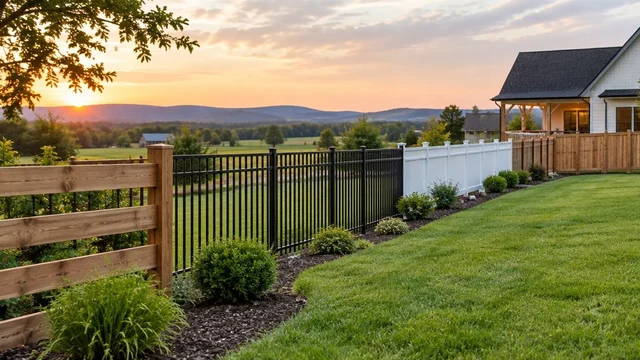
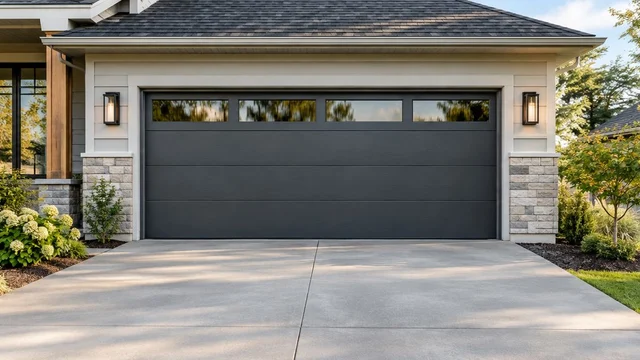
Best overall for enclosing a garage: a sectional overhead door. Best for a driveway with clear swing space: a swing gate. Best for an entrance with usable side space: a sliding gate. This guide separates garage doors from driveway gates so you can choose the right system for your Kentucky property.
TL;DR
- The best garage gate Kentucky homeowners choose depends on whether they need garage enclosure or driveway access control.
- Sectional overhead doors suit garage openings; swing and sliding gates suit driveway entrances.
- Choose cantilever gates when a ground-level track conflicts with the entrance surface or drainage.
- Derby Strong provides garage door and gate services for Kentucky homeowners and businesses.
Why This Matters for Your Door
A garage door closes a building opening. A driveway gate controls entry to the property. They solve different problems, even when both use powered operators and remote controls.
Buying the wrong type leaves the original problem unresolved. A driveway gate does not seal a garage against wind or rain, and a garage door does not control access at the property boundary.
Derby Strong is a service option for Kentucky homeowners and businesses needing garage door or gate work. Start with the opening and the access problem, not a preferred motor or decorative style. Derby Strong provides garage door repair, installation, opener service, and commercial overhead door, gate, and fence services.
What makes the best garage gate option?
Use these criteria before comparing designs. Appearance matters, but the system must fit and operate safely first.
- Opening purpose: Decide whether you need to enclose the garage, control driveway access, or manage a commercial entrance.
- Travel clearance: Account for the complete path of the door or gate, including parked vehicles and pedestrian routes.
- Ground and drainage: Check slopes, uneven paving, standing water, and debris along the proposed travel path.
- Access arrangements: Define who enters, how visitors request entry, and how authorized users get through during a power interruption.
- Safety provisions: Have the installer assess entrapment zones, protective devices, pedestrian access, and the correct operator application.
- Repairability: Ask how routine servicing, replacement parts, and access to the mechanism will work after installation.
A finish or control feature cannot compensate for insufficient clearance. If your actual concern is garage headroom, the low-ceiling garage door guide addresses a different decision from choosing an entrance gate.
Garage door and gate options at a glance
The order below starts with the garage-opening solution, then separates driveway gates by their physical requirements. It is not a claim that one design fits every property.
| Option | Best for | Standout feature | Key limitation |
|---|---|---|---|
| Sectional overhead door | Enclosing a garage | Opens upward into the garage | Needs a suitable track, headroom, and overhead layout |
| Swing gate | Driveways with unobstructed swing space | Gate leaves rotate around hinges | Needs a clear opening arc; slopes complicate the layout |
| Tracked sliding gate | Entrances with side space and suitable paving | Moves sideways along a ground track | Track condition and debris affect movement |
| Cantilever sliding gate | Entrances where a ground track is unsuitable | Travels without a track across the driveway | Needs side storage space and engineered support |
| Folding gate | Entrances with restricted conventional travel space | Articulated leaves fold as they move | More joints and pinch points require careful design |
1. Sectional overhead door: best for enclosing a garage
A sectional overhead door uses hinged panels that travel upward on tracks. It closes the garage opening rather than the driveway entrance. Choose this category when your problem is an exposed garage, a damaged existing door, or an unsuitable door layout.
Headroom, side room, ceiling obstructions, and the intended use of the garage all affect the installation. A door that fits the opening on paper still needs enough room for its tracks and operating equipment.
Sectional overhead door pros:
- Encloses the garage opening rather than merely restricting vehicle access.
- Keeps the door’s movement within the garage opening and overhead space.
- Supports decisions about glazing, insulation, and perimeter sealing.
Sectional overhead door cons:
- Tracks and equipment occupy interior space.
- Springs, cables, brackets, and related repairs require professional handling.
- Does not replace a driveway gate when boundary access is the real concern.
Best for: Homeowners and businesses that need a working closure at the garage itself.
Verdict: Buy for garage enclosure; skip as a substitute for driveway access control. If an existing door is repairable, assess the fault before committing to replacement.
2. Swing gate: best for driveways with clear opening space
A swing gate rotates around hinges at the entrance. A single leaf or paired leaves can serve different layouts, but both require a clear travel arc. The driveway must accommodate that movement without conflict with vehicles, structures, or pedestrian access.
A swing gate deserves consideration when the entrance has room for the leaves to move and vehicles to wait clear of them. On sloping ground, have the installer assess the geometry rather than assuming the gate can follow the driveway surface.
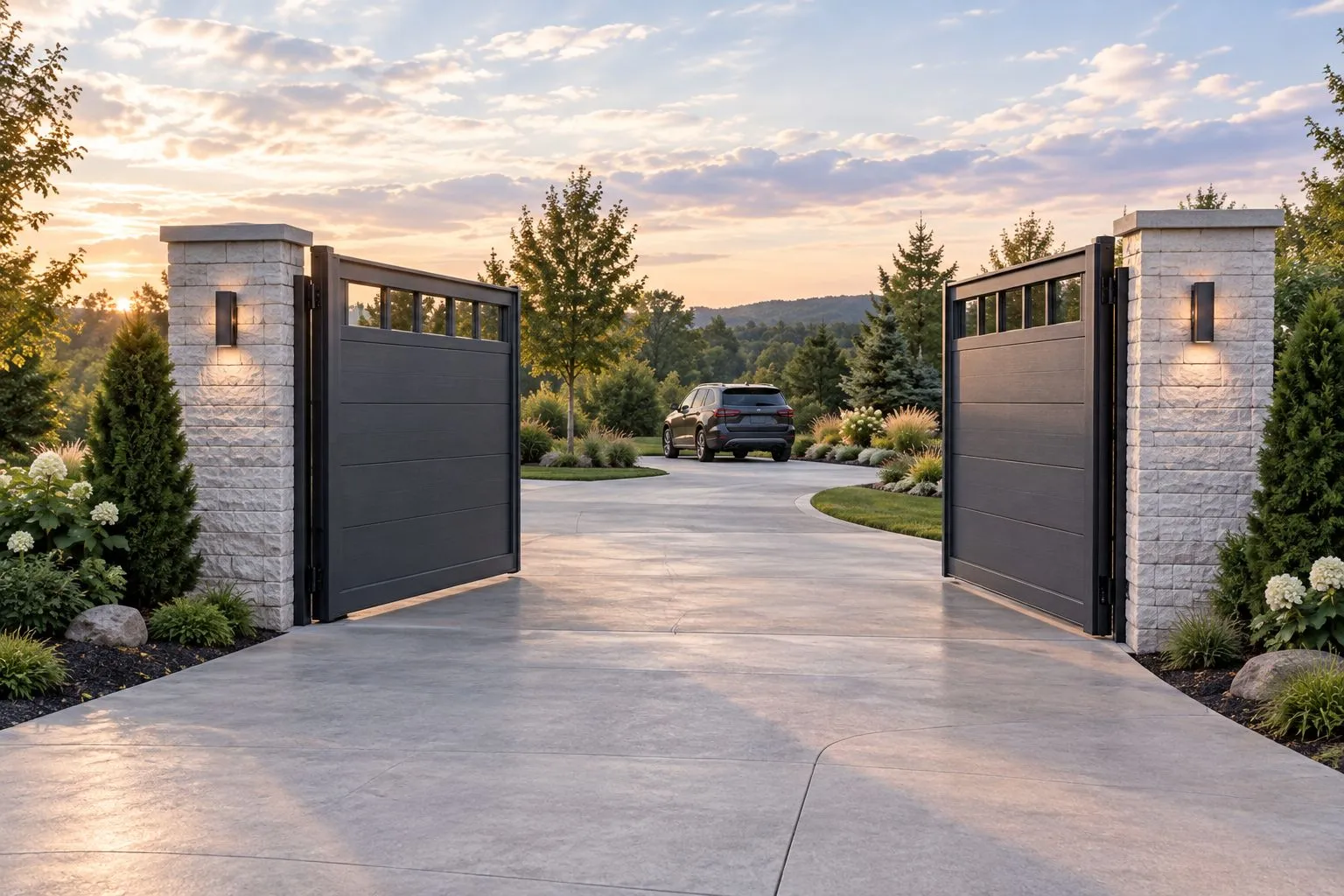
Illustrative photo: swing gates need clear space throughout the opening arc.
Swing gate pros:
- Offers a straightforward entrance layout where the swing arc is clear.
- Does not require a sliding track across the driveway.
- Can be considered for manual or powered operation, subject to the application.
Swing gate cons:
- Gate leaves occupy driveway space while moving.
- Slopes and vehicle waiting positions can restrict the layout.
- Wind loading and hinge support require assessment for the selected design.
Best for: Private driveway entrances with sufficient depth and a workable pedestrian route.
Verdict: Buy when the complete swing path is clear; skip when vehicles must wait inside it. Manual operation is worth considering when remote access is not necessary, but it does not remove the need for safe supports and movement.
3. Tracked sliding gate: best for suitable paving and side clearance
A tracked sliding gate moves sideways along a track at ground level. It avoids the broad opening arc of a swing gate, making it a different fit for entrances where driveway depth is constrained.
The trade-off is the track itself. Its alignment, supporting surface, and exposure to debris become part of the maintenance decision. You also need room beside the opening to accommodate the gate when it is open.
Tracked sliding gate pros:
- Avoids an inward or outward swing arc.
- Uses sideways travel to keep the entrance approach clear.
- Provides an option where the driveway surface can support an appropriate track.
Tracked sliding gate cons:
- Debris or damage at the track can interfere with travel.
- Requires suitable ground conditions and track installation.
- Still needs unobstructed side space for the open gate.
Best for: Driveway or business entrances with usable lateral space and a suitable paved track route.
Verdict: Buy when the surface and maintenance plan suit a ground track; skip when drainage or debris makes that route unsuitable. Do not choose a tracked gate solely because a swing gate will not fit.
4. Cantilever sliding gate: best where a driveway track is unsuitable
A cantilever gate travels sideways while its supporting arrangement keeps it off a track across the driveway. That distinction matters where the entrance surface, drainage, or debris makes a ground-level track undesirable.
Removing the driveway track does not remove structural requirements. The gate needs a suitable supporting assembly, foundations, and enough side space for its complete travel and counterbalancing section.
Cantilever sliding gate pros:
- Avoids a ground track across the vehicle entrance.
- Keeps the gate’s operating path out of a swing arc.
- Separates gate travel from the driveway’s running surface.
Cantilever sliding gate cons:
- Needs lateral space beyond the clear entrance opening.
- Support assemblies and foundations require proper design.
- Rollers, guides, and moving edges still create safety and maintenance obligations.
Best for: Entrances where lateral space is available but a driveway track is a poor fit.
Verdict: Buy when avoiding the ground track solves a defined site problem; hold until side clearance and support requirements are confirmed. A cantilever design is not automatically the right answer for every uneven driveway.
5. Folding gate: best for constrained entrance geometry
A folding gate uses articulated leaves that fold during opening. It is a specialist layout to consider when a conventional swing arc or full sliding run conflicts with the available space.
The exact movement depends on the chosen system. Folding does not mean clearance-free: hinges, leaf sections, guides, and operating equipment still need defined space. Ask for the proposed travel envelope before approving the design.
Folding gate pros:
- Provides another layout when standard swing or sliding travel is unsuitable.
- Divides movement between articulated leaf sections.
- Allows the entrance design to address a specific space constraint.
Folding gate cons:
- Additional joints create more components to inspect and service.
- Folding edges introduce pinch and entrapment zones.
- Site suitability depends on the particular system, not the category name alone.
Best for: Constrained entrances that need a professionally designed alternative to conventional gate movement.
Verdict: Hold until the installer demonstrates the full movement and safety plan. Skip a folding system selected only because it appears compact in a photograph.
How these options are ranked
This guide ranks layouts by opening purpose, clearance, surface conditions, access, safety, and repairability—not by unverified product performance. Each recommendation owns a different use case.
Sectional doors lead for garage enclosure. Swing gates suit clear opening arcs. Tracked sliding gates require a suitable track route; cantilever gates avoid that route but need engineered support. Folding gates address constraints that the simpler layouts cannot resolve.
Derby Strong’s garage door and gate services cover different types of work. The right service request identifies which opening needs attention and what is preventing safe, useful operation.
What to confirm before ordering
Give the installer a clear description of the property rather than selecting equipment from appearance alone. Keep observations ground-level and leave moving components untouched.
- Opening dimensions: Record visible opening width and height, stating whether your measurements use feet or inches.
- Travel space: Identify parked vehicles, walls, fences, landscaping, and storage near the proposed movement path.
- Surface conditions: Photograph the slope, track area, drainage route, and any visible damage.
- Access needs: Explain resident, employee, visitor, delivery, and pedestrian arrangements.
- Existing equipment: Provide readable photographs of accessible identification labels without removing covers or entering hazardous areas.
For a 2026 automated gate project, ask the installer to explain the applicable requirements of UL 325 for gate operators and ASTM F2200 for automated vehicular gate construction. These standards address different parts of the system; an operator specification alone does not establish that the complete installation is safe.
Arrange a separate pedestrian route rather than treating a vehicular gate as the routine walking entrance. Ask how manual access, power interruptions, and emergency access will be handled for your property.
Keep repair and replacement separate
A failed remote, damaged seal, or operator fault does not automatically justify replacing the entire door or gate. Have the failure identified before choosing a new layout.
Stop using a system that is off track, hanging unevenly, visibly damaged, or moving unpredictably. Keep people clear and arrange professional service. Do not force it, adjust spring tension, handle loose cables, or increase opener force to overcome resistance.
For gates, do not bypass protective devices or reach into hinges, rollers, guides, or folding joints. A working motor is not proof that the moving assembly is safe.
Which option should you choose?
Choose a sectional overhead door when you need to close the garage. Choose a swing gate for a driveway only after confirming its opening arc. Those are the default starting points, not universal winners.
Move to a tracked sliding gate when lateral space and paving support it. Choose cantilever travel when avoiding a ground track solves the site problem. Reserve folding systems for layouts that need their specific movement pattern.
For Derby Strong service planning, describe the entrance, the current fault, and the required access. That gives the assessment a defined problem to solve without forcing replacement.
Frequently Asked Questions
What’s the best garage gate Kentucky homeowners should choose?
A sectional overhead door is the starting choice for enclosing a garage; a driveway gate is the choice for controlling property access. For driveway gates, compare swing clearance, lateral space, ground conditions, and safe access before selecting a design.
Is a garage gate the same as a garage door?
No. A garage door closes a building opening, while a driveway gate controls entry to the property. Decide which opening needs protection before comparing equipment.
Is a sliding gate better than a swing gate?
A sliding gate is a better fit when sideways travel works but a swing arc does not. A swing gate fits entrances with clear opening space; neither design is best without assessing the site.
Can a gate be installed on a sloping driveway?
A sloping driveway needs a professional assessment of the gate’s movement and supporting structure. Do not assume a swing leaf will clear the rising ground or that a sliding track can follow an unsuitable surface.
Do I need an automatic gate?
You need automatic operation only when your access requirements justify it. Manual operation remains a category to consider, but the gate still needs safe movement, secure supports, and an appropriate access arrangement.
Should I replace a gate if the operator stops working?
An operator fault does not by itself justify replacing the gate. Have the controls, operator, protective devices, and moving assembly assessed before deciding between repair and replacement.
What should I do if my garage door or gate is stuck?
Stop operating the system and keep people away from its movement path. Do not force it, bypass safety devices, increase operating force, or work on springs, cables, tracks, brackets, or gate supports.
One Last Thing Before You Decide
Measure the space the system needs while moving, not just the opening it closes. A gate that fits between the posts can still conflict with a parked vehicle, a slope, or the space needed to store it when open.
Ask to see the proposed travel path on the site before approving the design. That is a more useful final check than choosing another decorative detail.