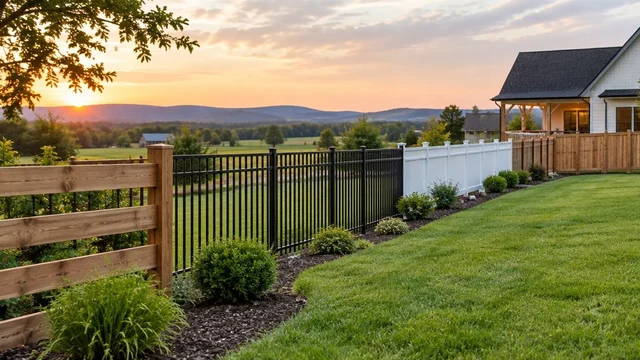
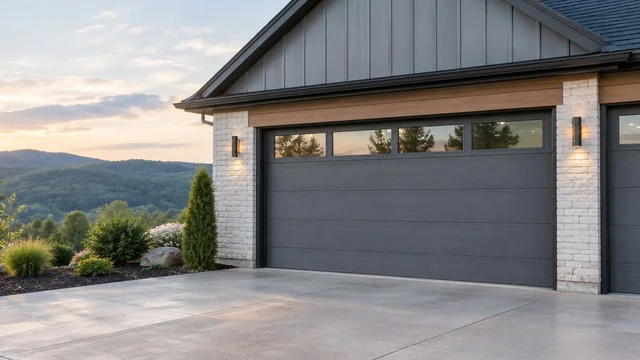
Best overall: white matched to your trim. Best for warm brick: greige. Best for a wood-look exterior accent: a wood-tone finish. The best garage door colors work with your home’s fixed materials, not against them; this guide ranks six options by the exterior each suits.
TL;DR
- The best garage door colors repeat an existing exterior tone; white is the default when it matches your trim.
- Choose greige for warm brick, charcoal for restrained contrast, and wood-tone finishes for a deliberate natural-looking accent.
- Black and muted green need stronger connections to the rest of your exterior than neutral colors do.
- Derby Strong provides garage door repair and installation for Kentucky homeowners considering a finish change.
Why This Matters for Your Door
A garage door is a large visual surface. A color that looks good on a small sample can dominate the front of your house when repeated across the whole door.
Separate the appearance decision from the condition decision. If your door operates correctly and its surface accepts refinishing under the manufacturer’s instructions, a different color does not automatically require a replacement. Derby Strong provides garage door repair and installation in Louisville, Lexington and Northern Kentucky.
Derby Strong is a fit for Kentucky homeowners who need garage door repair or installation alongside a finish decision. Choose the color after you understand whether you are keeping the existing door, replacing a damaged section or selecting a new door.
What makes the best garage door colors?
Use these criteria before choosing a favorite:
- Fixed-material match: Compare the color with brick, stone, roofing and siding that will stay.
- Visual priority: Decide whether the garage should blend into the house or become an accent.
- Trim connection: Repeat a compatible trim tone instead of introducing an unrelated white or gray.
- Door-style fit: Check how the finish looks across panels, windows and decorative hardware.
- Finish compatibility: Confirm that the coating or factory finish suits the actual door material.
- Upkeep expectations: Read the finish’s cleaning and care instructions before committing.
The ranking below is a design decision guide, not a measured performance comparison. Each option serves a different exterior; the first choice is not automatically right for every house.
Garage door colors and finishes at a glance
| Rank | Color or finish | Best for | Standout design feature | Key limitation |
|---|---|---|---|---|
| 1 | White | Homes with matching white trim | Repeats an existing light exterior detail | A mismatched white can look disconnected |
| 2 | Greige | Warm brick and earth-tone exteriors | Bridges beige and gray elements | Undertones need checking against masonry |
| 3 | Charcoal | Homes needing restrained dark contrast | Defines the door without the starkness of black | Can overemphasize a prominent garage |
| 4 | Wood-tone finish | Homes needing a natural-looking accent | Adds grain and visual warmth | Printed or coated wood effects vary in appearance |
| 5 | Black | Exteriors with an established black accent scheme | Creates a strong graphic connection | Becomes a dominant feature without supporting details |
| 6 | Muted green | Exteriors with an intentional earth-tone palette | Adds color without a bright accent | Requires a more deliberate palette match |
1. White: best garage door color for matching light trim
White is the default when your window trim, fascia or other substantial exterior details already use a compatible white. It gives the garage a clear relationship to the house rather than adding another color.
Match the undertone, not just the color name. A creamy door beside crisp white trim reads differently from a door that repeats the trim closely.
White pros:
- Connects the garage to existing white exterior details.
- Works as a quiet backdrop for contrasting hardware.
- Keeps the color decision simple when the trim match is clear.
White cons:
- An incompatible undertone can make matching trim look mismatched.
- A large white door can become a strong light-colored block against dark siding.
Best for: Homes with an established white-trim palette and owners who want a straightforward match.
Verdict: Buy white when it repeats your trim; skip an untested white selected from a screen.
2. Greige: best garage door color for warm brick
Greige combines beige and gray in a neutral color family. It is a useful starting point when warm masonry and cooler exterior details need a connecting tone.
The label alone does not tell you whether a sample fits. Compare the actual finish with both the brick faces and the mortar, because those surfaces contribute different colors to the exterior.
Greige pros:
- Connects warm and cool elements without a bold accent.
- Offers an alternative to stark white beside earth-tone masonry.
- Lets the brick remain the main visual feature.
Greige cons:
- Individual shades can lean pink, green or purple beside another material.
- A close but unsuccessful masonry match can look accidental.
Best for: Warm brick, beige stone and mixed neutral exteriors that need a quieter garage-door color.
Verdict: Buy greige after checking its undertone against brick and mortar; hold if the sample looks different beside each.
3. Charcoal: best garage door color for restrained contrast
Charcoal gives you a dark accent without choosing a fully black appearance. It makes sense when roofing, window frames or other fixed details already establish a compatible dark gray.
Use charcoal to connect those details, not simply to make the garage stand out. If the garage occupies much of the front elevation, check whether the darker door distracts from the entrance.
Charcoal pros:
- Repeats compatible dark roofing or exterior accents.
- Creates a defined contrast against light siding.
- Offers a less stark design choice than black.
Charcoal cons:
- Can pull attention toward a garage that is already visually prominent.
- Cool charcoal can conflict with strongly warm masonry.
Best for: Light exteriors with existing dark gray details and a clear reason for contrast.
Verdict: Buy charcoal when it connects established dark tones; skip it if contrast makes the garage overpower the entrance.
4. Wood-tone finish: best garage door finish for a natural-looking accent
A wood-tone finish introduces grain and a warmer visual texture. Consider it when the exterior already includes a wood-colored entry door, beams or other substantial natural-looking details.
Real wood and a wood-look finish are not the same material. Compare the underlying door construction and care requirements separately from the appearance; the garage door materials guide for Kentucky homes addresses that broader decision.
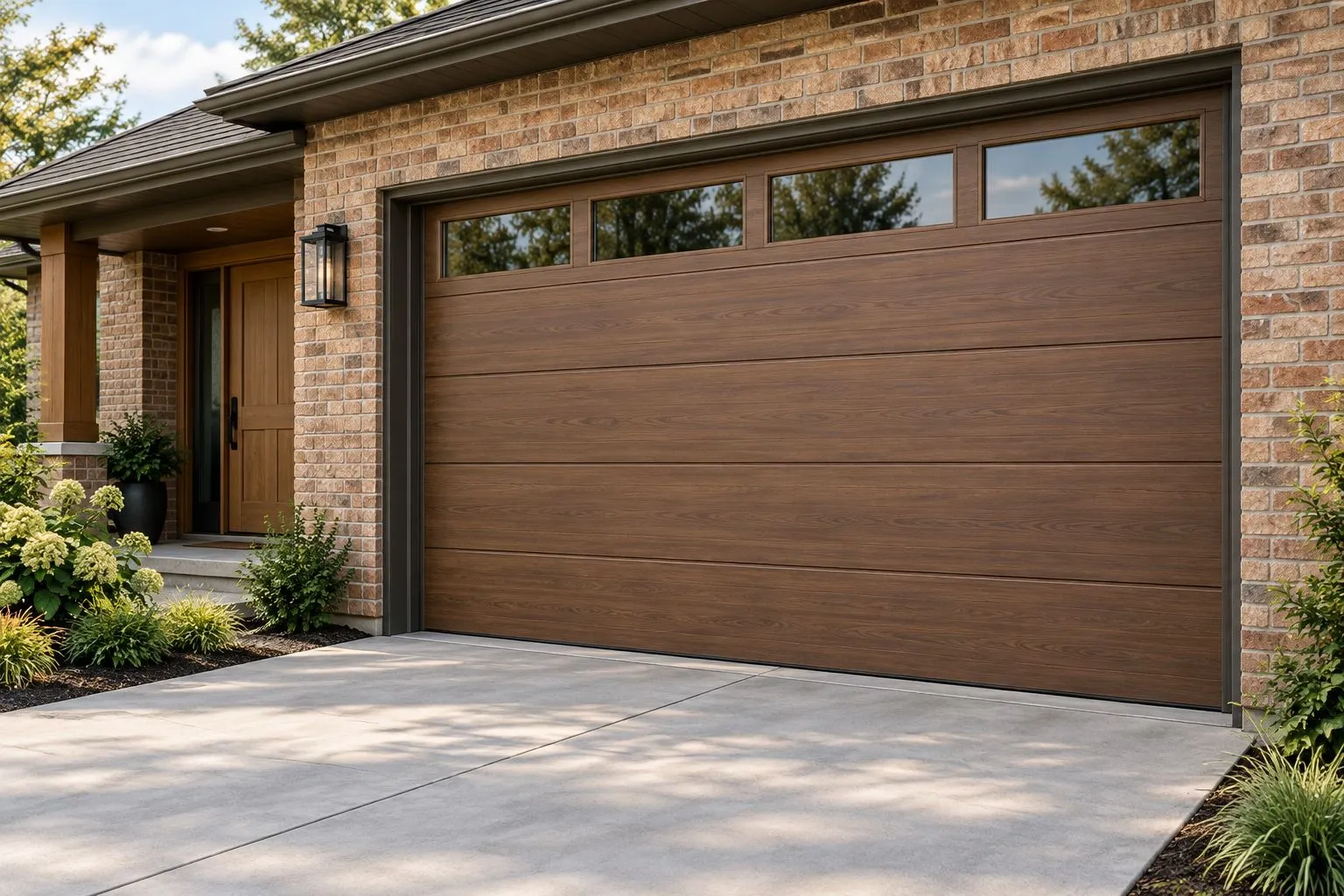
Illustrative photo: a wood-tone finish works best when it connects to another substantial exterior detail.
A sample should show the grain pattern as well as the color. Judge whether the pattern feels appropriate across a full door, rather than treating a small wood-colored swatch as the complete finish.
Wood-tone finish pros:
- Adds texture to an otherwise plain exterior.
- Connects with existing wood-colored architectural details.
- Creates an accent without relying on a bright paint color.
Wood-tone finish cons:
- Grain patterns and tones differ between finishes.
- Appearance alone does not establish the material’s care requirements.
Best for: Homes with a clear wood-tone reference and owners who want the garage to contribute texture.
Verdict: Buy a wood-tone finish after reviewing its grain and care instructions; hold if only a color thumbnail is provided.
5. Black: best garage door color for an established black accent scheme
Black creates a strong visual connection when substantial exterior elements already use black. Window frames or an entry door provide a more convincing reference than a small porch accessory.
Do not assume every door accepts a dark repaint. For an existing door, check the manufacturer’s coating and color restrictions before selecting black or another dark finish.
Black pros:
- Connects directly to an existing black exterior palette.
- Makes panel lines and the door outline part of the design.
- Provides a deliberate contrast against light siding or masonry.
Black cons:
- Can turn the garage into the exterior’s dominant feature.
- An existing door’s refinishing instructions can restrict the color choice.
Best for: Homes with substantial black details and owners who intentionally want a high-contrast garage.
Verdict: Buy black when the exterior already supports it and the door’s finish instructions permit it; skip black as an isolated trend choice.
6. Muted green: best garage door color for an earth-tone accent
Muted green is the accent choice for an exterior that already connects green with warm neutrals or natural-looking materials. Think about the permanent building palette first, rather than relying on seasonal planting to make the color fit.
Keep the intended effect clear. A subdued green that sits comfortably beside siding is a different decision from a saturated green intended to draw attention.
Muted green pros:
- Adds a distinct color beyond standard neutrals.
- Connects with an intentional earth-tone exterior palette.
- Lets you create an accent without choosing black.
Muted green cons:
- Requires closer coordination with siding, masonry and trim.
- A small sample can understate its effect across the entire door.
Best for: Owners with a deliberate earth-tone palette who want the garage to carry a controlled color accent.
Verdict: Buy muted green after reviewing it against the whole facade; hold if landscaping is its only connection to the house.
Choose the finish separately from the color
White, charcoal or brown does not tell you how a surface reflects light. Sheen and texture change how the same color reads across the door.
| Finish approach | Best for | Advantage | Limitation |
|---|---|---|---|
| Lower sheen | A quieter visual effect | Reduces the emphasis on reflected highlights | Requires checking the actual coating’s care instructions |
| Higher sheen | A deliberately polished appearance | Makes reflections part of the design | Surface unevenness can become more noticeable |
| Wood-grain texture | A textured architectural accent | Adds pattern as well as color | Grain must suit the scale and style of the door |
Use manufacturer samples and current finish documentation for the door you are considering. Do not assume that a household paint sheen name describes a factory coating exactly, or that a factory finish can be duplicated with ordinary exterior paint.
Check samples before you commit
Compare physical samples beside the garage opening in daylight and shade. Stand near the door to examine undertones, then move to the usual approach to the house to judge the overall effect.
Use these checkpoints:
- Trim match: Does the sample repeat or intentionally contrast with the trim?
- Masonry match: Does the color work beside both brick and mortar?
- Entrance priority: Does your attention still land where you want it?
- Finish compatibility: Does the manufacturer permit the proposed finish on this door?
For a commercial property, add the approved building palette and ownership requirements to the decision. A finish change should fit the premises, not just an isolated door.
Repaint or replace?
A color preference alone is not a reason to discard a serviceable door. Confirm the door’s condition and approved refinishing method before choosing between repainting and replacement.
Ask Derby Strong to assess operational problems separately from cosmetic concerns. A binding door, damaged cable, displaced track or spring problem needs professional attention; paint does not address any of those faults.
Do not remove brackets, cables, springs or track components to paint around them. Never force a damaged door or increase opener force to overcome resistance. Keep finish work within the manufacturer’s instructions and leave high-tension components to a professional.
How the colors are ranked
White leads as a trim-matching default, not as a universal winner. The remaining choices each solve a different design problem: warm masonry, restrained contrast, wood-like texture, strong black accents or an earth-tone color accent.
The order reflects those use cases and the criteria above. It does not claim customer preference data, resale gains or field testing.
Which garage door color should you choose?
Choose a white that matches your trim if you want the simplest starting point. Move to greige when warm masonry needs a softer neutral, or charcoal when an existing dark palette calls for controlled contrast.
Choose wood-tone, black or muted green only when you can name the exterior detail each will connect to. Your final choice should work on the actual door material, with a finish you are prepared to maintain.
Frequently Asked Questions
What’s the best garage door color for curb appeal?
White matched to existing trim is the simplest default for curb appeal. Greige, charcoal, wood-tone finishes, black and muted green serve different exterior palettes; compare physical samples before deciding.
Should my garage door match my front door?
Your garage door does not have to match your front door. It should connect to the wider exterior palette without taking attention away from the entrance unless that contrast is intentional.
What garage door color works with red brick?
Start by comparing white, greige and compatible darker neutrals against the actual brick and mortar. Red brick contains different undertones, so a color name alone does not establish a match.
Is black a good garage door color?
Black is a good design choice when substantial exterior details already establish a black accent scheme. For repainting, confirm that the existing door manufacturer’s instructions permit the selected dark coating.
Can I paint my existing garage door instead of replacing it?
You can consider repainting when the door is serviceable and its manufacturer permits the proposed refinishing method. Have operational damage assessed separately, and do not remove high-tension hardware for painting.
Is a wood-look garage door the same as a wood garage door?
No, a wood-look finish describes appearance rather than the underlying door material. Check the construction, finish documentation and care instructions instead of assuming it behaves like real wood.
Should I choose a matte or glossy garage door finish?
Choose a lower sheen for a quieter visual effect or a higher sheen when reflections are part of the intended appearance. Compare the actual finish sample and follow its cleaning and care instructions.
Do I need approval before changing my garage door color?
Check applicable association rules, ownership requirements and property restrictions before changing the color. Confirm any required approval before ordering a door or starting refinishing work.
One Last Thing Before You Decide
Match the undertone before matching the name. Two samples described as white can create visibly different relationships with the same trim, so keep the sample beside the house rather than judging it alone.