Best overall: insulated steel. Best for natural wood detail: solid wood. Best for daylight: aluminum-framed glass. The best garage door material for your Kentucky home depends on how you use the garage, what maintenance you will accept and whether the existing door actually needs replacement.
TL;DR
- Insulated steel is the best garage door material for homeowners prioritizing practical upkeep and construction choices.
- Solid wood suits homeowners who want natural grain and accept regular finish maintenance.
- Aluminum-framed glass suits daylight-focused garages, but glazing determines privacy and thermal performance.
- Derby Strong provides garage door repair and installation in Louisville, Lexington and Northern Kentucky.
Why This Matters for Your Door
A garage door material affects more than curb appeal. It changes what deteriorates, how you maintain the exterior and which damage deserves repair rather than replacement. Insulation, windows, seals and installation still matter: a material name does not describe the whole door.
Derby Strong is a fit for homeowners in Louisville, Lexington and Northern Kentucky who need garage door repair or installation. Before choosing a replacement material, separate an appearance problem from a mechanical fault. A noisy roller, failed opener or worn bottom seal does not automatically justify replacing the door.
If your existing door is structurally sound, start with repair. If you are comparing a traditional appearance against easier upkeep, the wood vs. steel garage door guide for Louisville homes addresses that specific decision.
What makes the best garage door material?
Use these six criteria before comparing finishes or panel patterns:
- Maintenance: Decide whether you will regularly inspect and renew a finish, or prefer routine cleaning and damage checks.
- Garage use: An attached garage, workshop and detached storage garage do not have identical insulation needs.
- Damage behavior: Compare dents, corrosion, moisture damage, cracking and broken glazing—not just appearance when new.
- Construction: Check the exterior skin, backing, insulation and reinforcement. Material alone leaves these unanswered.
- Property fit: Confirm opening dimensions, headroom, appearance restrictions and the proposed operating system.
- Repairability: Ask whether a damaged section, glass pane or exterior component can be replaced independently.
There is no universal material winner for every property. Insulated steel takes the default position because it offers a practical combination of finish choices, insulation configurations and manageable upkeep. The remaining materials win when you have a distinct priority that steel does not satisfy as directly.
Garage door materials at a glance
| Material | Best for | Standout characteristic | Key limitation |
|---|---|---|---|
| Insulated steel | Practical everyday use | Steel skins with an insulated core in selected constructions | Dents and coating damage need attention |
| Solid wood | Authentic natural grain | Real wood texture and traditional detailing | Requires finish upkeep and moisture management |
| Aluminum-framed glass | Daylight-focused garages | Glazed panels within a metal frame | Privacy, heat transfer and glass damage require careful specification |
| Fiberglass-faced construction | A nonmetal exterior face | Fiberglass surface, sometimes with molded wood texture | Impact repair and finish aging depend on the construction |
| Wood-look composite construction | Wood appearance without a solid-wood exterior | Engineered exterior components in selected designs | Composite is a broad label, not a single maintenance standard |
These are material categories, not endorsements of particular models. Use current manufacturer documentation to confirm the exact construction, cleaning instructions, thermal ratings and repair options for any door you consider.
1. Insulated steel: best garage door material for everyday use
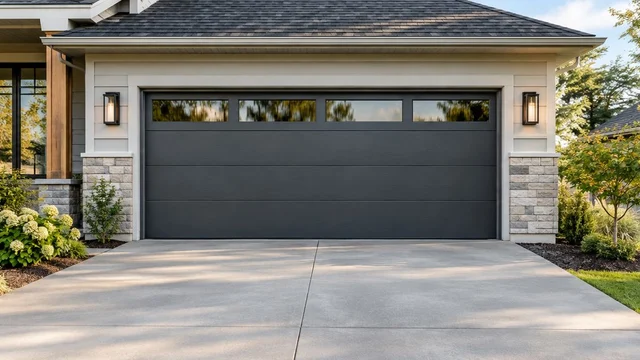
Insulated steel is the default recommendation when you want a conventional residential door with practical upkeep. Depending on the construction, insulation sits behind an exterior steel skin or between exterior and interior skins. Panel patterns and finishes are separate choices from the underlying material.
Do not treat all steel doors as equivalent. A single-layer door has 1 steel skin; a typical two-layer construction combines an exterior skin with insulation across 2 layers; a typical three-layer construction adds an interior skin across 3 layers. Confirm those details in the proposed door’s documentation rather than relying on a sales label.
Insulated steel pros:
- Offers insulated constructions for garages where thermal separation matters.
- Provides different panel styles without requiring a solid-wood exterior.
- Does not require the same wood-finish maintenance routine as natural timber.
- Lets you compare clearly defined skin, backing and insulation specifications.
Insulated steel cons:
- Impacts can dent the skin and damage individual sections.
- Exposed steel at scratches or damaged edges can corrode.
- Insulation does not compensate for gaps around the opening or unsuitable glazing.
Best for: Homeowners who want a practical replacement without committing to natural-wood upkeep.
Ask the installer to explain the complete construction, not just call the door insulated. A replacement also needs correctly matched springs and an assessment of the existing opener. Never increase opener force to overcome a heavy, binding or damaged door.
Verdict: Buy insulated steel as the default, after confirming construction and fit.
2. Solid wood: best garage door material for natural detail
Solid wood suits a home where authentic grain and traditional detailing are central to the design. Paint or stain affects appearance, but neither removes the need to protect the wood from moisture. Inspect the finish, edges and joints according to the manufacturer’s maintenance instructions.
Wood deserves a deliberate upkeep decision. If you want the appearance but will postpone refinishing, compare a wood-look alternative before ordering.
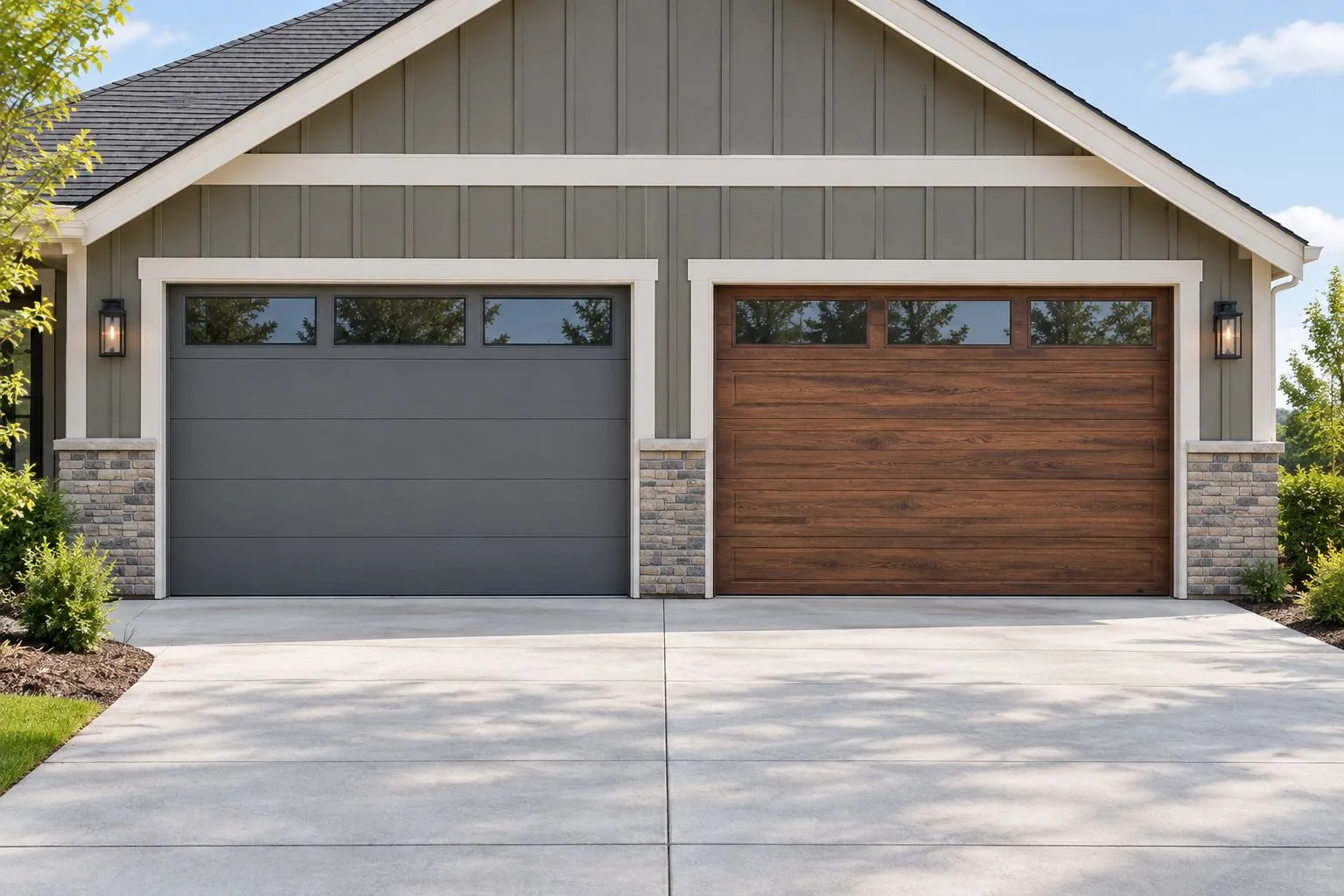
Illustrative photo: natural wood grain is an appearance choice that comes with finish upkeep.
Solid wood pros:
- Provides genuine grain rather than a printed or molded imitation.
- Suits traditional detailing where the material itself matters.
- Allows finish choices when permitted by the specific door manufacturer.
Solid wood cons:
- Finish deterioration leaves wood more exposed to moisture.
- Moisture can contribute to swelling, distortion or decay.
- Door weight must be accounted for in the spring and operating system.
Best for: Homeowners who value natural material and will maintain its protective finish.
Before ordering, ask how the door is built. Solid wood, wood panels over a frame and engineered wood components are not interchangeable descriptions. Also ask which surfaces need finishing and how the manufacturer directs you to maintain them.
Verdict: Buy solid wood for authentic detail; skip it if finish maintenance is a deal-breaker.
3. Aluminum-framed glass: best garage door material for daylight
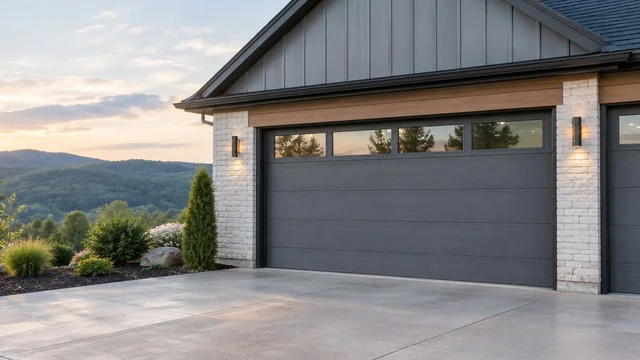
Aluminum-framed glass doors place glazing within a metal frame. They suit homeowners who want daylight and a visibly different exterior, rather than a conventional solid panel. Glass selection is part of the material decision, not a finishing detail to leave until installation.
Compare privacy with the garage lights on as well as off. Obscured glazing changes visibility, but it does not automatically provide the same privacy as an opaque door.
Aluminum-framed glass pros:
- Introduces daylight through the door itself.
- Provides a distinct framed-glass appearance.
- Uses an aluminum frame that does not rust like steel.
Aluminum-framed glass cons:
- Glazing affects privacy and heat transfer.
- Glass can break, and replacement requires the correct specification.
- Aluminum still needs suitable cleaning and protection from incompatible chemicals.
Best for: A daylight-focused garage where you have explicitly considered privacy and thermal performance.
Ask for documentation covering glazing type, safety glazing, frame construction and any thermal break. Do not assume a full-view door is well insulated because the glass is described as insulated; compare the rated door assembly where that information is provided.
Verdict: Buy for daylight and appearance; hold until glazing and privacy are resolved.
4. Fiberglass-faced construction: best for a nonmetal exterior face
Fiberglass-faced doors use a fiberglass exterior surface as part of a larger assembly. Some designs use molded texture to suggest wood grain. The backing, frame and insulation remain separate specifications that you need to examine.
This distinction matters because a fiberglass face does not make every component corrosion-proof. You still need to understand the frame, hardware and maintenance requirements.
Fiberglass-faced construction pros:
- The fiberglass surface itself does not develop steel rust.
- Molded textures provide an alternative to a smooth metal face.
- Offers another material route when you do not want natural wood.
Fiberglass-faced construction cons:
- Impacts can crack or damage the exterior surface.
- Finish aging and acceptable refinishing methods vary by manufacturer.
- A damaged face does not necessarily have a simple cosmetic repair.
Best for: Homeowners who specifically want a fiberglass exterior and have verified its care and repair requirements.
Request the actual cleaning and finish instructions before choosing fiberglass. Do not apply a generic wood or metal care routine to a surface that calls for different treatment.
Verdict: Hold until the exact construction and repair options are clear.
5. Wood-look composite: best for engineered wood appearance
Wood-look composite doors use engineered exterior materials or overlays to create a wood-style appearance. The underlying door can use a different structural material. That means you should compare the complete assembly rather than assuming the exterior describes everything behind it.
Composite is a category label, not a promise of maintenance-free ownership. The material formulation, finish and installation details determine its care requirements.
Wood-look composite pros:
- Creates wood-style detailing without a solid-wood exterior.
- Separates decorative appearance from the underlying door construction.
- Provides an alternative for homeowners unwilling to maintain natural timber.
Wood-look composite cons:
- Different composite formulations require different care.
- Exterior overlays add components whose attachment and condition need inspection.
- Repairing damaged decorative pieces depends on the specific design.
Best for: Homeowners who want a wood-style exterior but prefer an engineered material.
Check a physical sample before deciding. Ask what the exterior is made from, whether repainting is permitted and how a damaged overlay is repaired. A convincing photograph does not answer those questions.
Verdict: Buy only after confirming the exterior material, maintenance and repair method.
Check the garage before choosing the material
Your property’s constraints can eliminate an otherwise appealing door. Measure the opening from a safe position and record visible obstructions, but leave spring, track, cable and bracket adjustments to a professional. Do not remove hardware to obtain a measurement.
Derby Strong provides garage door installation and repair across Louisville, Lexington and Northern Kentucky. The useful starting point is your opening, existing door condition and intended garage use—not a recommendation based solely on the city name.
Before discussing installation, prepare these details:
- Garage use: Explain whether you park, store equipment or spend time working inside.
- Existing damage: Photograph dents, finish failure and visible gaps without touching moving components.
- Opening constraints: Identify low ceilings, shelves, lights or other obstructions.
- Appearance restrictions: Check any applicable HOA or property rules before selecting the exterior.
- Access needs: Explain how you normally enter the garage and whether the opener has existing faults.
For an attached garage, ask about the complete thermal boundary. The door, perimeter seals, bottom seal and glazing all contribute. Insulation does not turn an unconditioned garage into conditioned living space.
A material change also does not automatically require a new opener. Compatibility depends on the new door, its balance and the existing operator’s requirements. Keep the current equipment decision separate until those facts are assessed.
How these materials were ranked
This ranking prioritizes practical upkeep, construction choices and suitability for ordinary residential use. It is a material-selection guide, not a product test or a measured comparison of particular doors.
Steel takes the default slot. Wood wins on authentic grain, aluminum-framed glass on daylight, fiberglass on its nonmetal face and composite on engineered wood-style detailing. None replaces the need to compare the proposed door’s current manufacturer documentation.
Which garage door material should you choose?
Choose insulated steel if you are undecided and want a practical starting point. Choose solid wood when authentic grain justifies the upkeep. Choose aluminum-framed glass when daylight is a deliberate design requirement, not an afterthought.
Fiberglass and composite deserve a closer specification review because their category names leave important construction details unanswered. Ask Derby Strong to assess the existing door and opening before you commit to replacement. Keep a repairable door when repair addresses the actual problem.
Frequently Asked Questions
What is the best garage door material for a Kentucky home?
Insulated steel is the practical default for a Kentucky homeowner who wants construction choices and manageable upkeep. Solid wood, aluminum-framed glass, fiberglass and composite suit more specific appearance or material priorities.
Is a steel garage door better than a wood garage door?
Steel is the better choice when you prioritize upkeep over authentic wood grain. Wood is the better fit when natural detail matters enough to justify regular finish maintenance.
Does an insulated garage door keep the garage warm?
An insulated garage door reduces heat transfer through the door, but it does not heat the garage. Perimeter gaps, glazing, the rest of the building enclosure and any heating system also affect the result.
Is a glass garage door private enough for a home?
A glass garage door’s privacy depends on the glazing and lighting conditions. Review an appropriate sample and consider visibility when the garage interior is lit before choosing glass.
Are composite garage doors maintenance-free?
Composite garage doors are not automatically maintenance-free. Follow the specific manufacturer’s cleaning, finish and inspection instructions, and confirm how decorative components are repaired.
Can I keep my opener when changing garage door materials?
You can keep an opener only if it is suitable for the replacement door and operating system. Have the installer check compatibility and door balance; never increase opener force to overcome a mechanical fault.
Should I replace my garage door because it has surface damage?
Surface damage alone does not establish that the entire door needs replacement. Have the affected sections and underlying condition assessed, especially when damage extends to joints, tracks, cables or mounting points.
One Last Thing Before You Decide
A wood-look door is not necessarily made from wood, and an insulated door is not necessarily insulated across every component. Ask for the construction description before approving the appearance. That short document tells you more about the material you are buying than a finish name does.