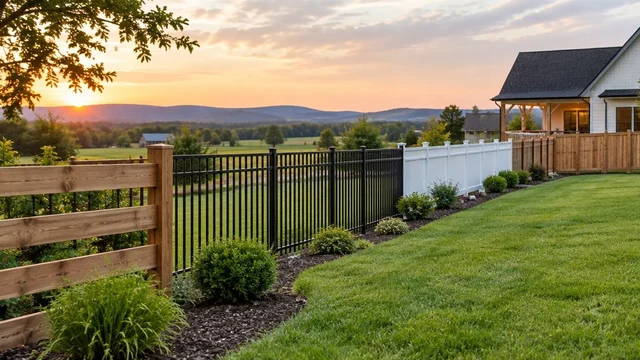
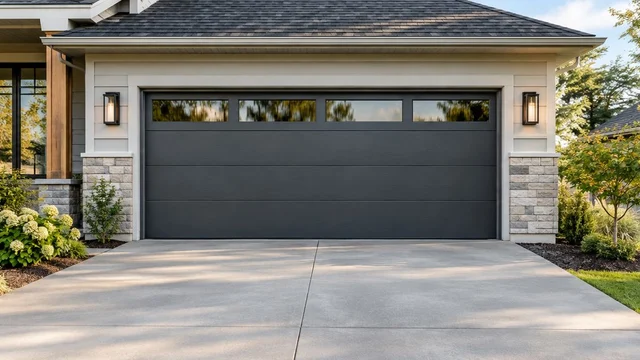
Steel garage doors fit Louisville homeowners who want less finish maintenance; wood fits homeowners who prioritize real-wood appearance and accept regular finish care. Neither material guarantees insulation, quiet operation or reliable opening: those depend on the specific door construction, hardware, opener and installation. Choose the material after checking your garage opening, exposure and maintenance expectations—not from a sample alone.
TL;DR
- Wood vs steel garage doors Louisville: choose steel for less finish upkeep, wood for authentic wood appearance.
- Compare insulation, construction and hardware separately; door material alone does not establish performance.
- Repair a sound existing door when the fault is limited to a serviceable component.
- Derby Strong provides garage door repair and installation for Louisville homeowners seeking professional service.
Why This Matters for Your Door
A garage door is a large moving assembly, not just an exterior finish. A material choice that looks right can still disappoint if the door construction, opening clearance or maintenance demands do not fit your property.
For a Louisville homeowner, the useful comparison is between specific proposed doors and the condition of the existing system. Derby Strong provides garage door repair and installation in Louisville. Professional service is the right route for spring, cable, track and high-tension hardware work.
Use this 2026 guide to narrow the material choice, then verify the proposed door against current manufacturer documentation. Do not assume that every steel door has the same construction or that every wood door requires identical care.
Wood vs steel garage doors for Louisville homes: which fits?
Steel is the practical starting point for homeowners prioritizing lower finish upkeep. Wood is the better fit when genuine wood grain and architectural detail outweigh the extra care. Both need an appropriate operating system and routine inspection.
| Decision factor | Wood garage door | Steel garage door |
|---|---|---|
| Best for | Homeowners prioritizing authentic wood appearance | Homeowners prioritizing less finish maintenance |
| Appearance | Natural grain; appearance depends on species, finish and construction | Painted or textured surfaces; some designs imitate wood |
| Finish upkeep | Needs inspection and finish renewal according to manufacturer instructions | Needs cleaning and inspection for coating damage or corrosion |
| Damage concerns | Moisture-related deterioration, movement and finish failure | Dents, damaged coatings and corrosion |
| Insulation | Depends on the specific assembly | Depends on the specific assembly |
| Operating hardware | Must match the door’s actual weight and configuration | Must match the door’s actual weight and configuration |
| Main limitation | More demanding finish care | Metal damage and wood-look surfaces do not reproduce real wood grain |
The table compares materials, not named products. Ask for the exact proposed construction before treating any feature as included. Insulation, windows, reinforcement and interior surfaces all belong in that comparison.
Start with the existing door, not the replacement display
Identify why you are considering a new door. Appearance dissatisfaction, damaged sections, recurring operating faults and air leakage are different problems; they do not automatically require the same solution.
A broken opener does not establish that the door needs replacing. Likewise, a new door will not resolve an unsuitable opener installation or an unaddressed opening problem. Have the fault diagnosed before choosing a material to solve it.
Wood: best for authentic appearance and planned finish care
Choose wood when the material itself is part of the result you want. Real grain, stain appearance and wood detailing are legitimate reasons to select it, particularly when you want the garage door to relate to other visible wood elements on the house.
The trade-off is care. Wood finishes need inspection, and exposed or deteriorating areas need attention under the manufacturer’s instructions. A finish that has failed is not merely an appearance issue when it allows moisture to reach vulnerable surfaces.
- Strength: genuine wood appearance rather than an imitation texture.
- Strength: a material choice suited to homeowners who value wood detailing.
- Limitation: ongoing finish care is part of ownership.
- Limitation: moisture damage and movement require assessment, not just repainting.
Ask which surfaces require finishing and how the manufacturer handles edges, joints and concealed surfaces. Do not assume the visible face is the only area that matters. If you do not want to organize refinishing work, choose a different material rather than hoping maintenance will be optional.
Steel: best for less finish upkeep
Choose steel when you want a painted exterior without the same wood-finishing commitment. Steel offers a practical route to different panel styles and surface treatments, but the exact options depend on the proposed door.
Less finish maintenance does not mean no maintenance. Coating damage can expose metal, and dents can affect more than appearance if a section or joint no longer moves correctly. Use the manufacturer’s cleaning and touch-up instructions rather than a generic treatment.
- Strength: less demanding finish upkeep than a real-wood door.
- Strength: designs can provide a painted finish or a wood-look alternative.
- Limitation: dents and coating damage need attention.
- Limitation: an imitation finish is not the same visual material as real wood.
Do not judge steel quality from its outer surface alone. Compare the section construction, reinforcement and interior backing. A sales sample showing color and texture cannot establish how the complete door will operate or perform.
Why the right material varies by Louisville property
Your house and ownership priorities determine which trade-off matters most. Evaluate these factors before accepting a material recommendation:
- Exterior appearance: decide whether authentic wood grain is essential or whether a painted or wood-look surface meets your goal.
- Exposure: inspect where water reaches the opening and where existing finishes show deterioration.
- Garage use: distinguish an attached garage from a detached storage space when discussing insulation and sealing.
- Maintenance commitment: decide who will inspect finishes and arrange necessary care.
- Opening constraints: check headroom, side clearance and obstructions before selecting hardware or door configuration.
- Existing condition: separate repairable operating faults from structural section damage or widespread deterioration.
There is no need to assign the same answer to every Louisville home. A homeowner preserving a particular exterior appearance faces a different decision from someone replacing a damaged utility door. Give the installer your priorities in that order, rather than asking for a material recommendation without context.
Compare insulation and sealing separately from material
A steel label does not tell you whether a door is insulated. A wood label does not establish the thermal performance of the complete assembly either. Ask for the proposed door’s documented construction and the scope of any published performance value.
If a quote includes an R-value, establish what that value describes. A section value and a whole-door performance measure are not interchangeable. Compare like-for-like documentation rather than treating the largest printed figure as a complete answer.
Weather sealing deserves its own inspection. Bottom seals, perimeter seals and the condition of the opening affect how well the closed door meets surrounding surfaces. An uneven floor or damaged opening can complicate sealing regardless of door material.
If your complaint is a draft, diagnose the gap before replacing the door. A seal problem and an insulation problem call for different work. Ask what the proposed repair or replacement will address and which conditions will remain.
Check the opening and operating system before ordering
The door must fit more than the visible width and height. Track layout, available headroom, side clearance and opener arrangement affect the installation. Shelving, lights and stored items can also obstruct the space needed by moving components.
Have a professional record the opening conditions and specify the matching hardware. Do not reuse springs or assume the existing opener is suitable solely because it operated the old door. A change in construction can change the requirements of the system.
You can safely prepare by clearing access and taking photographs from the floor. Leave spring selection, cable work, bracket changes and track adjustments to the installer. Keep people away from an uneven, unstable or visibly damaged door.
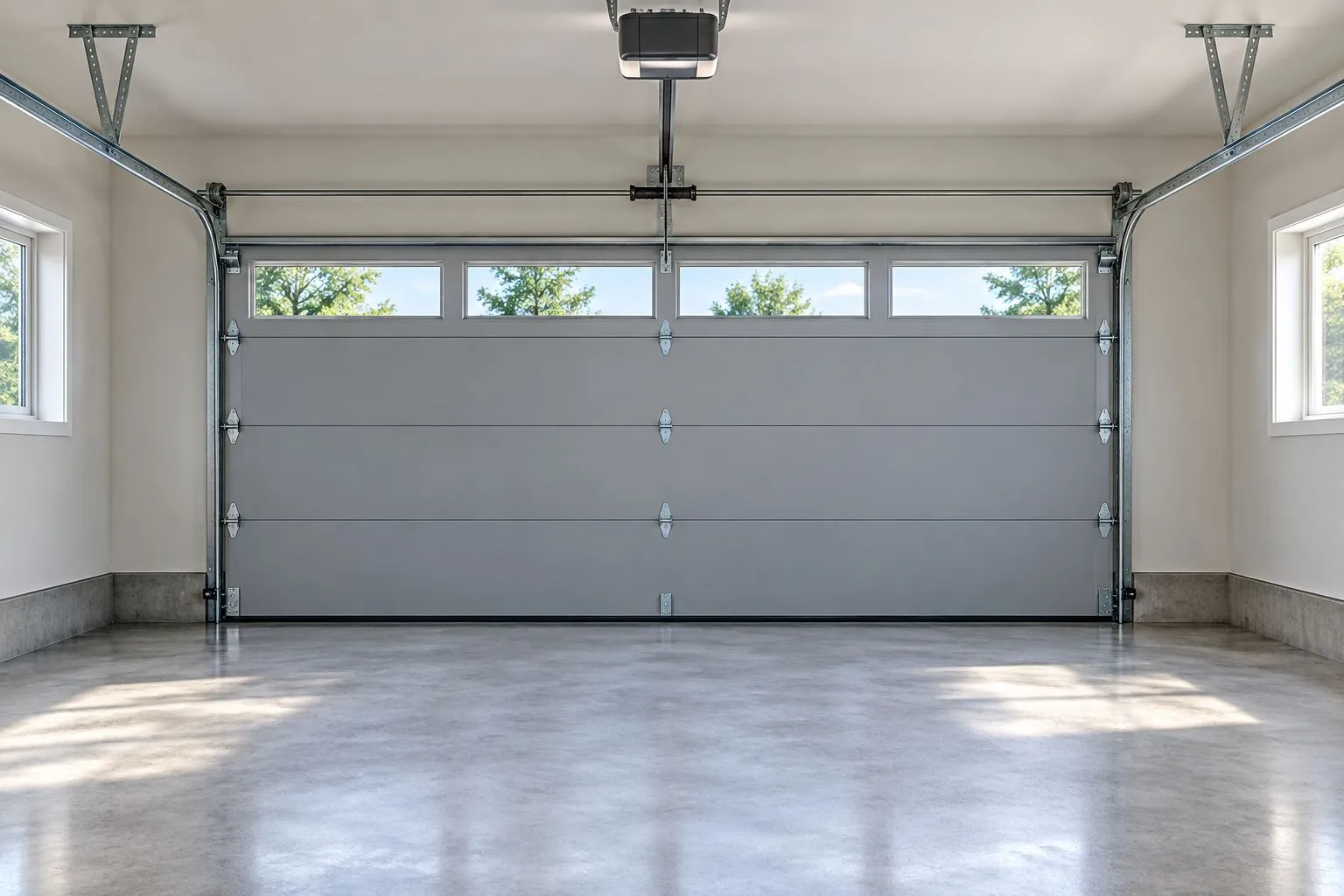
Illustrative photo, not a Derby Strong project: clear access helps a professional assess the opening and hardware.
Compare complete proposals, not just door faces
A useful proposal identifies the door construction and the work included in the installation. Material is only part of that description. Without a clear scope, two attractive samples can conceal very different assemblies and installation requirements.
Ask each installer to identify:
- The exact door manufacturer and construction being proposed.
- The finish and its current care instructions.
- The insulation specification, if insulation is included.
- The windows and reinforcement included in the selected configuration.
- The track, spring and opener work included or excluded.
- Any opening or floor condition that the installation will not correct.
Keep the comparison tied to written specifications. Product options change, so use current documentation rather than an old brochure or a remembered model feature. Ask about warranty terms directly; do not assume that a material name establishes coverage.
Should you repair the existing door instead?
Keep a serviceable door when a targeted repair resolves the actual problem. Material replacement is not a necessary response to every failed opener, worn seal or damaged component.
| Existing condition | Appropriate next step | Best for |
|---|---|---|
| Door appears sound but opener operation is unreliable | Diagnose the opener and door operation separately | Homeowners avoiding unnecessary door replacement |
| Draft occurs at a visible perimeter gap | Inspect seals and opening conditions | Homeowners addressing air leakage |
| Localized finish damage without obvious structural damage | Assess finish repair under manufacturer guidance | Homeowners preserving a usable door |
| Significant section damage or widespread deterioration | Assess repair feasibility against replacement | Homeowners needing a dependable long-term repair decision |
| Door is crooked, unstable or has a loose cable | Stop operation and arrange professional assessment | Homeowners facing a safety concern |
Repair has a limit: it must restore safe, dependable operation, not merely make the door look better. Replacement also has a limit: it should address a documented condition or ownership goal, not substitute for diagnosis.
How do you prepare for a professional assessment?
Start with observations you can make without touching moving or tensioned parts. A useful description helps the technician distinguish the finish question from the operating problem.
- Describe the concern. Note whether you dislike the appearance, see deterioration, feel drafts or experience an operating fault.
- Photograph safely. Capture the exterior, interior face and visible damage from a stable position on the floor.
- Record behavior. Describe noises or uneven movement you have already observed; do not repeatedly operate a damaged door to reproduce them.
- Clear access. Move vehicles and stored items only when you can do so without passing beneath an unstable door.
- State priorities. Explain whether authentic wood, lower upkeep, insulation or preserving the existing door matters most.
Do not loosen brackets, straighten tracks, adjust springs or pull a release on a door that appears unstable. Do not increase opener force to overcome binding. A damaged door needs assessment, not more force.
Is a wood-look steel garage door a good compromise?
A wood-look steel door is a useful option when you want a wood-style exterior without real-wood finish care. Its limitation is appearance: a printed or textured surface does not reproduce the material character of actual wood.
Inspect a current sample in daylight before choosing. Compare color, texture and how the design relates to the house; do not rely only on a small screen image.
Will a new wood or steel door work with your existing opener?
Compatibility requires an assessment of the proposed door and existing opener installation. Material alone cannot answer the question, and an opener that worked with the old door is not proof that the new assembly is appropriate.
Ask the installer to document whether the opener can remain and what related work is required. The door must be correctly balanced; the opener must not compensate for a mechanical fault.
What should you ask Derby Strong before choosing a material?
Ask Derby Strong to separate the repair diagnosis from the replacement comparison. Explain your Louisville property’s constraints, then request the proposed construction, finish-care requirements and installation scope.
A useful decision answers both questions: why this door material fits your priorities, and what work makes the complete system suitable for your opening. Avoid choosing solely from appearance or a general claim about steel versus wood.
Frequently Asked Questions
What’s better for a Louisville home, a wood or steel garage door?
Steel is the practical starting point for lower finish upkeep; wood fits homeowners who prioritize authentic wood appearance. Compare the specific construction, opening conditions and maintenance requirements before choosing.
Does a steel garage door need maintenance?
Yes, a steel garage door needs cleaning and inspection for coating damage, corrosion and operating faults. Follow the manufacturer’s care instructions and leave high-tension hardware work to a professional.
Are wood garage doors automatically better insulated?
No, wood alone does not establish a garage door’s insulation performance. Compare documented assembly specifications and check weather sealing separately.
Can I keep my garage door opener when replacing the door?
Keep the existing opener only after a professional assesses its suitability for the proposed door and installation. Door balance, hardware and opener requirements must be considered together.
Should I replace a garage door because its bottom seal leaks?
A leaking bottom seal does not automatically require door replacement. Have the seal, door alignment and floor conditions assessed before deciding on the repair.
Can I fix a crooked garage door before comparing replacement options?
Do not attempt spring, cable, track or bracket repairs on a crooked garage door. Stop operating it and arrange professional assessment; do not force it or increase opener force.
Does Derby Strong install garage doors in Louisville?
Derby Strong provides garage door repair and installation for Louisville homeowners. Describe the existing door’s condition and your material priorities when discussing professional service.
One Last Thing Before You Decide
Before selecting a new finish, photograph the existing door from inside the garage as well as outside. The exterior records the appearance you want to change; the interior helps document construction, visible damage and surrounding constraints.
Choose the finish you want to live with, but approve the complete operating system—not just the door face. That distinction keeps a wood-versus-steel decision focused on your home rather than a display sample.