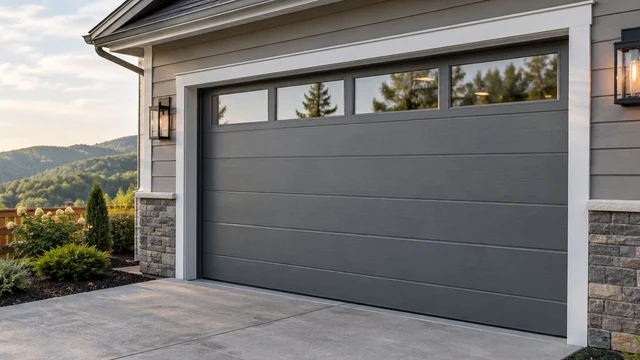
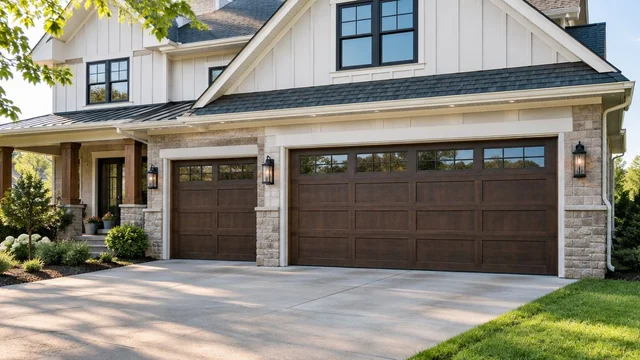
Best overall: raised-panel. Best for traditional character: carriage-house. Best for a minimalist exterior: flush-panel. For Louisville homes, the best garage door style matches the house’s architecture without sacrificing privacy, maintenance needs or a safe installation; this guide compares five styles by those decisions.
TL;DR
- Best garage door style Louisville verdict: raised-panel is the default for a conventional exterior.
- Choose carriage-house garage doors for traditional detailing and flush-panel doors for a minimalist facade.
- Full-view glass suits daylight-focused garages, but glazing needs a deliberate privacy decision.
- Derby Strong provides garage door installation in Louisville; confirm fit and specifications before choosing a design.
Why This Matters for Your Door
A garage door can occupy a large part of the front elevation. Choosing from an isolated product photo misses the relationship between the door, windows, entry and roofline. Start with a photograph of your whole house, not a close-up of the garage.
Separate appearance from the reason you are considering replacement. A noisy opener, worn weather seal or damaged component does not automatically call for a new door. Use the guide to repairing or replacing your garage door in Louisville before making a cosmetic problem into a larger project.
What makes the best garage door style?
Use these criteria before choosing a panel pattern:
- Architectural fit: Repeat the house’s existing shapes and level of detail rather than introducing a competing design.
- Privacy and daylight: Decide what you want visible from outside before choosing windows or large glass sections.
- Maintenance: Separate the door’s style from its material and finish. A wood-look surface is not the same maintenance decision as real wood.
- Garage use: Parking, storage and workspace use create different requirements for light, privacy and thermal performance.
- Installation fit: Have a professional confirm opening dimensions, overhead clearance, track layout and opener compatibility.
- Documented specifications: Compare the actual door construction, glazing, finish care and thermal data—not assumptions based on appearance.
Choose the style from the exterior; choose the specifications from how you use the garage. A traditional-looking door can have contemporary construction, and a modern-looking door does not automatically provide better insulation.
Garage door styles at a glance
| Rank and style | Best for | Standout design feature | Key limitation |
|---|---|---|---|
| 1. Raised-panel | Conventional homes needing a balanced default | Repeated panels add moderate detail | Can feel too busy on a deliberately minimalist facade |
| 2. Carriage-house | Homes with traditional detailing | Decorative divisions and optional hardware | Too many accents can compete with the house |
| 3. Flush-panel | Minimalist or contemporary exteriors | Flat surface with restrained detailing | Broad, plain sections make finish choice especially important |
| 4. Recessed-panel | Homes with framed, understated trim | Inset panels create a quieter traditional pattern | Panel proportions need to relate to nearby windows and trim |
| 5. Full-view glass | Contemporary garages prioritizing daylight | Large glazed sections within a visible frame | Privacy and thermal performance need careful review |
These are design categories, not specific products. Material, insulation, glazing and hardware vary within each category. Ask for current manufacturer documentation for the exact door under consideration.
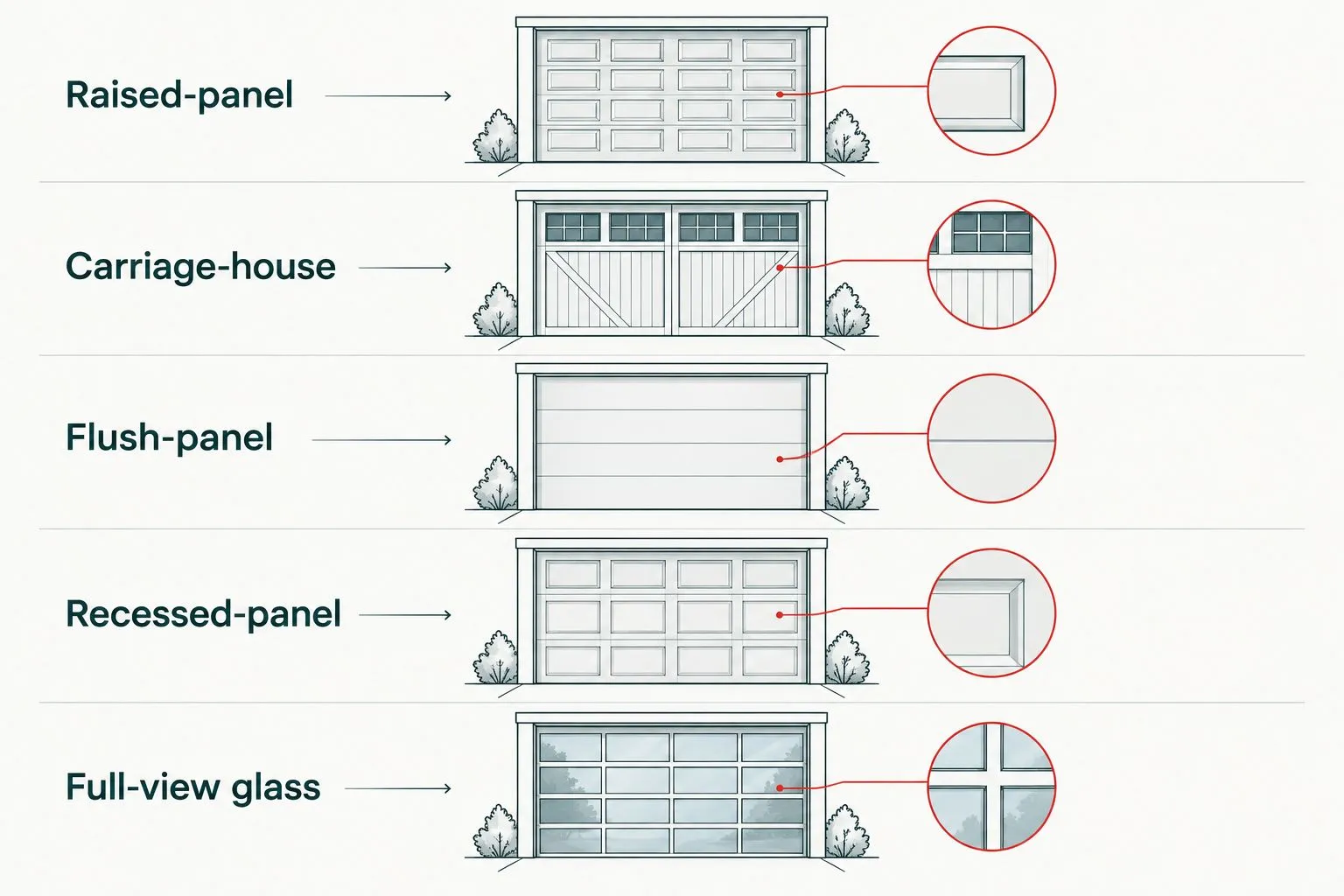
Illustrative comparison: panel pattern and glazing change the appearance, not the installation requirements.
1. Raised-panel: best garage door style for a balanced default
Raised-panel doors use repeating panels that stand proud of the surrounding surface. That pattern adds definition without requiring decorative hinges, handles or extensive glazing. For a Louisville house with conventional trim and no strong contemporary design language, this is the simplest starting point.
Look at the proportions rather than choosing the first familiar pattern. Shorter and longer panel arrangements produce different rhythms across the opening. View the proposed pattern against the entire facade, particularly when the garage sits beside the entry.
Raised-panel pros:
- Adds visible detail without relying on decorative hardware.
- Gives you a straightforward starting point for a conventional exterior.
- Lets you consider a solid door before deciding whether windows are necessary.
Raised-panel cons:
- Repeated panels can conflict with a very spare exterior.
- Panel pattern alone tells you nothing about insulation or construction.
- A familiar design still needs a deliberate color and proportion choice.
Best for: Homeowners who want the door to fit the house without becoming its main visual feature.
Verdict: Buy if you want a balanced default and the pattern fits your facade. Do not select it solely because it resembles the existing door.
2. Carriage-house: best garage door style for traditional character
Carriage-house styling borrows the appearance of older hinged carriage doors. Modern sectional versions can travel overhead while using decorative divisions, handles or hinges to suggest that traditional form. Confirm how the proposed door operates; the appearance does not establish the mechanism.
Choose the degree of decoration before choosing accessories. A pronounced panel pattern, window grille and ornamental hardware can each add character, but combining all of them can crowd the front of the house. Start with the door pattern and add only what supports it.
Carriage-house pros:
- Provides a distinct traditional design direction.
- Lets you coordinate decorative divisions with existing exterior trim.
- Can create carriage-door character without choosing an actual swing-out arrangement.
Carriage-house cons:
- Decorative hardware can look misplaced on a simple contemporary home.
- Several competing accents can make the facade feel busy.
- Carriage-house styling does not establish the material or upkeep requirements.
Best for: Louisville homeowners whose houses already use traditional trim, framed openings or other deliberate decorative details.
Verdict: Buy when traditional character is the goal. Skip if the appeal depends on adding ornament that appears nowhere else on the house.
3. Flush-panel: best garage door style for minimalist exteriors
Flush-panel doors have flat faces rather than raised or recessed decorative panels. They suit a design where broad surfaces, clean edges and limited ornament matter more than a traditional panel pattern. Section joints remain part of the actual door, so inspect the proposed elevation rather than assuming a completely uninterrupted surface.
Color and finish become more prominent when the panel face is plain. Compare a physical sample with the siding, brick or trim in daylight. A small digital swatch is not enough to judge a large, street-facing surface.
Flush-panel pros:
- Keeps the garage elevation visually restrained.
- Avoids decorative hardware when the house does not need it.
- Gives contemporary exterior lines room to remain the focus.
Flush-panel cons:
- A plain surface can feel disconnected from ornate surrounding trim.
- Finish mismatch is harder to disguise with decorative detail.
- A flat face does not guarantee any particular thermal performance.
Best for: Homeowners with minimalist or contemporary exteriors who want the garage door to recede visually.
Verdict: Buy when restraint is intentional. Hold until you have reviewed a finish sample and the visible section layout.
4. Recessed-panel: best garage door style for understated framing
Recessed-panel doors use inset panels surrounded by framing. They provide a traditional pattern with a different visual depth from raised-panel designs. Choose this style when the house already has framed details but does not need carriage-style ornament.
Check the width of the framing and the shape of the inset panels. A door with broad frames makes a different statement from one with finer borders. The useful comparison is with nearby window proportions and trim—not with another door viewed in isolation.
Recessed-panel pros:
- Adds structure without requiring ornamental hardware.
- Offers a framed alternative to projecting raised panels.
- Supports an understated traditional design direction.
Recessed-panel cons:
- Poorly matched panel proportions can compete with nearby windows.
- The framed pattern is not the right choice for every minimalist house.
- Recessed styling does not tell you whether the door is wood, steel or another material.
Best for: Homes where framed trim matters, but a heavily decorated garage door would be excessive.
Verdict: Buy if the inset pattern echoes the house’s existing proportions. Hold if you have not compared it with a raised-panel alternative on the same facade image.
5. Full-view glass: best garage door style for daylight-focused garages
Full-view doors use large glazed sections within a frame. They make daylight a central part of the design rather than a small optional detail. That can suit a contemporary garage used as a workspace, provided the glazing matches your privacy needs.
Do not treat clear, tinted and obscured glazing as interchangeable. Review the exact glass specification and its appearance from both sides. The Louisville guide to choosing private garage door windows helps separate light admission from visibility into the garage.
Full-view glass pros:
- Makes daylight a defining feature of the garage.
- Creates a distinct contemporary appearance.
- Gives glazing choice a central role in the design.
Full-view glass cons:
- Clear glazing exposes stored items and interior activity.
- Large glass areas require a specific thermal-performance review.
- Glass and visible framing add cleaning considerations.
Best for: Contemporary homes where daylight is a priority and the homeowner has resolved privacy and thermal requirements.
Verdict: Hold until you have reviewed glazing samples and current specifications. Skip clear glass when concealing the garage interior is a requirement.
Check the whole facade before ordering
Photograph your Louisville home from a normal street-view position. Include the garage, entry, adjacent windows and roofline. Compare proposed door elevations at that scale; details that look appealing close up can dominate the whole house.
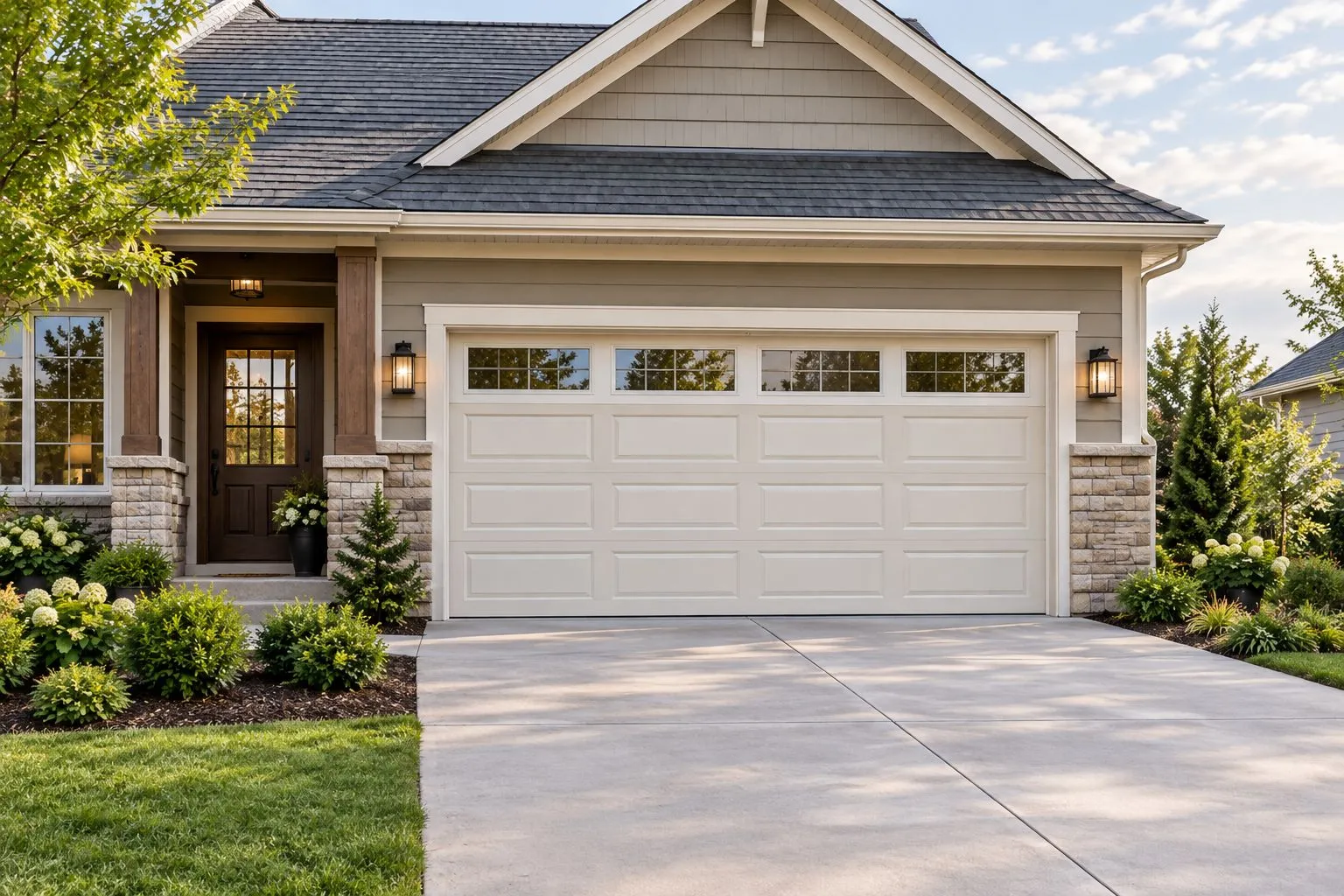
Illustrative photo, not a Derby Strong project: compare the door with the entire facade.
Keep the comparison focused. Review one traditional option and one simpler alternative before adding more designs. If the home is subject to an architectural review process, check its requirements before committing to a color, glazing arrangement or door pattern.
Then separate your choices into appearance, construction and installation. Derby Strong provides garage door installation for Louisville homeowners; a design selection still needs a professional assessment of the opening and operating system.
Confirm fit without attempting high-tension repairs
A new style does not resolve an unsuitable track arrangement or a damaged lifting system. Ask the installer to check overhead clearance, side clearance, door weight, track needs and whether the existing opener is appropriate for the proposed door.
You can safely prepare photographs of the closed door, surrounding trim and visible interior layout from a clear standing position. Note shelves, lighting or stored items near the overhead travel area. Leave spring, cable, track and bracket work to a professional.
Do not force a crooked or damaged door, loosen hardware or increase opener force to overcome a fault. If cables appear loose, a spring appears broken or the door has left its track, stop operating it and arrange professional service.
How these styles were ranked
Raised-panel ranks first as a design default because it offers moderate detail without requiring a strong decorative theme. Each remaining style owns a different decision: traditional character, minimalism, understated framing or daylight.
This is a design guide, not a product test or a claim that one construction suits every Louisville garage. The final choice depends on the actual facade, current manufacturer specifications and professional installation assessment.
Which garage door style should you choose?
Choose raised-panel if you are undecided and your home has a conventional exterior. Choose carriage-house for deliberate traditional character, flush-panel for minimalism, recessed-panel for quieter framing, or full-view glass when daylight justifies the privacy trade-off.
Derby Strong provides garage door repair and installation for Louisville homeowners choosing whether to keep an existing door or install a different style. If the current door suits the house and its problem is repairable, keep repair in the decision rather than forcing replacement.
Frequently Asked Questions
What is the best garage door style for a Louisville home?
Raised-panel is the default recommendation for a Louisville home with a conventional exterior. Choose a different style when the house has a clear traditional or contemporary design direction, or when daylight is the main priority.
Are carriage-house garage doors better than raised-panel doors?
Carriage-house doors are better for a deliberate traditional look, not automatically better in construction or performance. Raised-panel doors offer a less decorated starting point; compare actual materials and specifications separately.
Should I choose a flush-panel door for a brick house?
Choose a flush-panel door based on the whole facade, not brick alone. A restrained brick exterior can support a plain door, while elaborate trim can call for more framing or panel detail.
Does garage door style determine insulation?
Garage door style does not determine insulation. Compare the exact door construction and current manufacturer thermal data, including the effect of any glazing.
Can a carriage-house door open overhead?
A sectional carriage-house door can open overhead despite its hinged-door appearance. Confirm the operating configuration of the specific door rather than relying on decorative handles or hinges.
Are full-view glass garage doors private?
Full-view glass doors require an intentional glazing choice to provide privacy. Clear glass exposes the interior; review the specific obscured glazing and its appearance under interior lighting before ordering.
Do I need a new opener when I change garage door styles?
A style change does not automatically require a new opener. Have a professional assess the proposed door’s weight, dimensions, operating system and compatibility with the existing opener.
Should I replace my garage door just because it looks dated?
A dated appearance alone does not establish that replacement is necessary. Compare the condition of the existing door, repair options and the design change you actually want before deciding.
One Last Thing Before You Decide
Decorative carriage-door handles do not tell you where a sectional door should be pulled or how it operates. Choose ornament for appearance, then follow the installed door’s operating instructions. The best-looking option still has to work safely in your garage.