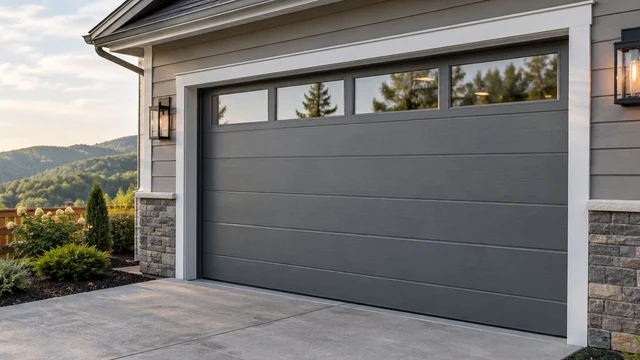
Best overall: raised-panel garage doors for a traditional exterior. Best for carriage-house character: carriage-style doors. Best for contemporary homes: flush-panel doors. For a Lexington home, choose the door’s pattern from the house’s architecture, then check opening fit, privacy and upkeep before choosing a finish.
TL;DR
- Best garage door style Lexington: raised-panel is the default for traditional homes, not every exterior.
- Carriage-style doors suit traditional detailing; flush-panel doors suit clean, contemporary lines.
- Full-view glass prioritizes daylight, but privacy and whole-door thermal specifications need careful review.
- Derby Strong provides garage door installation in Lexington; choose appearance separately from installation requirements.
Why This Matters for Your Door
A garage door occupies a visible part of your home’s exterior. A pattern that looks good in a showroom can compete with your front entrance, window trim or roofline when installed.
Start with the house, not the catalog. If your property has an association, check whether HOA approval for a new garage door in Lexington applies before committing to a design. Approval requirements are property-specific; a style recommendation does not establish permission.
Derby Strong is a fit for Lexington homeowners who need garage door installation alongside a style decision. The useful distinction is between what looks right and what fits safely: appearance does not determine track clearance, spring requirements or opener compatibility.
What makes the best garage door style for Lexington homes?
Use these criteria to narrow your choices before comparing decorative details:
- Architectural fit: Repeat the house’s existing lines rather than introducing an unrelated pattern.
- Visual balance: Decide whether the garage should draw attention or sit behind the front entrance visually.
- Privacy and daylight: Judge windows by what someone outside can see, not just their catalog appearance.
- Upkeep: Compare the actual material and finish. A wood-look door and a wood door are different purchases.
- Opening fit: Have the opening, side clearance, overhead clearance and opener arrangement checked professionally.
- Documented performance: Compare current specifications for the exact door, glazing and construction you select.
Take 3 reference photos: a straight-on view, a wider view including the entrance, and an interior view showing overhead space. These are decision aids, not substitutes for installation measurements. Keep people clear of the door’s travel path when taking them.
Garage door styles at a glance
The order below starts with an adaptable traditional choice, then separates the alternatives by a distinct design need. These are style categories, not named products or manufacturer recommendations.
| Style | Best for | Standout design feature | Key limitation |
|---|---|---|---|
| Raised-panel | Traditional homes needing a familiar default | Defined rectangular panels | Can look busy beside detailed exterior trim |
| Carriage-style | Homes needing carriage-house character | Divided-door appearance and optional decorative hardware | Decorative elements can compete with the house |
| Flush-panel | Contemporary homes with clean lines | Flat, uninterrupted face | Offers little traditional detailing |
| Recessed-panel | Transitional homes needing restrained detail | Inset panels and quieter relief | Panel proportions still need careful selection |
| Full-view glass | Homes where daylight leads the decision | Broad glazed sections in a frame | Privacy and thermal performance require close review |
Style does not settle material, insulation or operating method. A carriage-style sectional door can have an overhead operation despite its swing-door appearance, while a flush face alone tells you nothing about insulation.
1. Raised-panel: best for a traditional exterior
Raised-panel garage doors use projecting panel shapes to create a familiar rectangular pattern. They provide definition without requiring decorative hinges or a carriage-house theme.
Choose the panel proportions against the entire facade. Shorter, repeated panels create more visual breaks; longer panels create fewer. Neither is automatically better, and the same pattern can read differently across a wider opening.
Raised-panel pros:
- Gives traditional exteriors a recognizable panel pattern.
- Adds detail without relying on decorative hardware.
- Lets you evaluate panel shape separately from window placement.
Raised-panel cons:
- Repeated rectangles can compete with busy trim or masonry patterns.
- A familiar design can look disconnected from a strongly contemporary house.
Best for: Lexington homeowners who want a conventional door that supports a traditional facade rather than becoming its focal point.
Compare the panel layout with nearby windows, but do not require an exact match. The goal is compatible proportions, not copying every rectangle on the house. Check the exact construction separately: a raised-panel appearance is not proof of a particular material or thermal rating.
Verdict: Buy raised-panel for a traditional exterior when you want the safest visual starting point.
2. Carriage-style: best for carriage-house character
Carriage-style garage doors borrow the appearance of divided swing doors. On a sectional version, panel lines, windows and decorative hardware create that look while the door travels overhead.
The strongest reason to choose carriage-style is a clear relationship with the house’s existing detailing. If the exterior already has prominent shutters, trim or traditional entry features, assess the door as part of that composition rather than adding every available ornament.
Carriage-style pros:
- Creates a clear traditional design statement.
- Uses panel divisions to suggest separate door leaves.
- Lets hardware and window choices refine the appearance.
Carriage-style cons:
- Decorative hinges and handles can make an already detailed facade too busy.
- A swing-door appearance does not establish how the selected door operates.
Best for: Lexington homeowners who specifically want carriage-house character, rather than simply a replacement door with more decoration.
Start with the panel pattern before selecting hardware. If the door looks right without added ornaments, keep that simpler version in the comparison. Ask how any proposed accessories attach and whether they are approved for the selected door; do not assume an accessory suits every construction.
Verdict: Buy carriage-style when the house supports its traditional character; skip it when ornament is the only reason.
3. Flush-panel: best for contemporary homes
Flush-panel garage doors have a flat face rather than raised or recessed panel shapes. Their appeal is restraint: the door contributes a broad surface instead of another repeated pattern.
This makes flush-panel a useful starting point when the house has clean geometry and limited decorative trim. The finish becomes especially important because there is less panel relief to break up the visible surface.
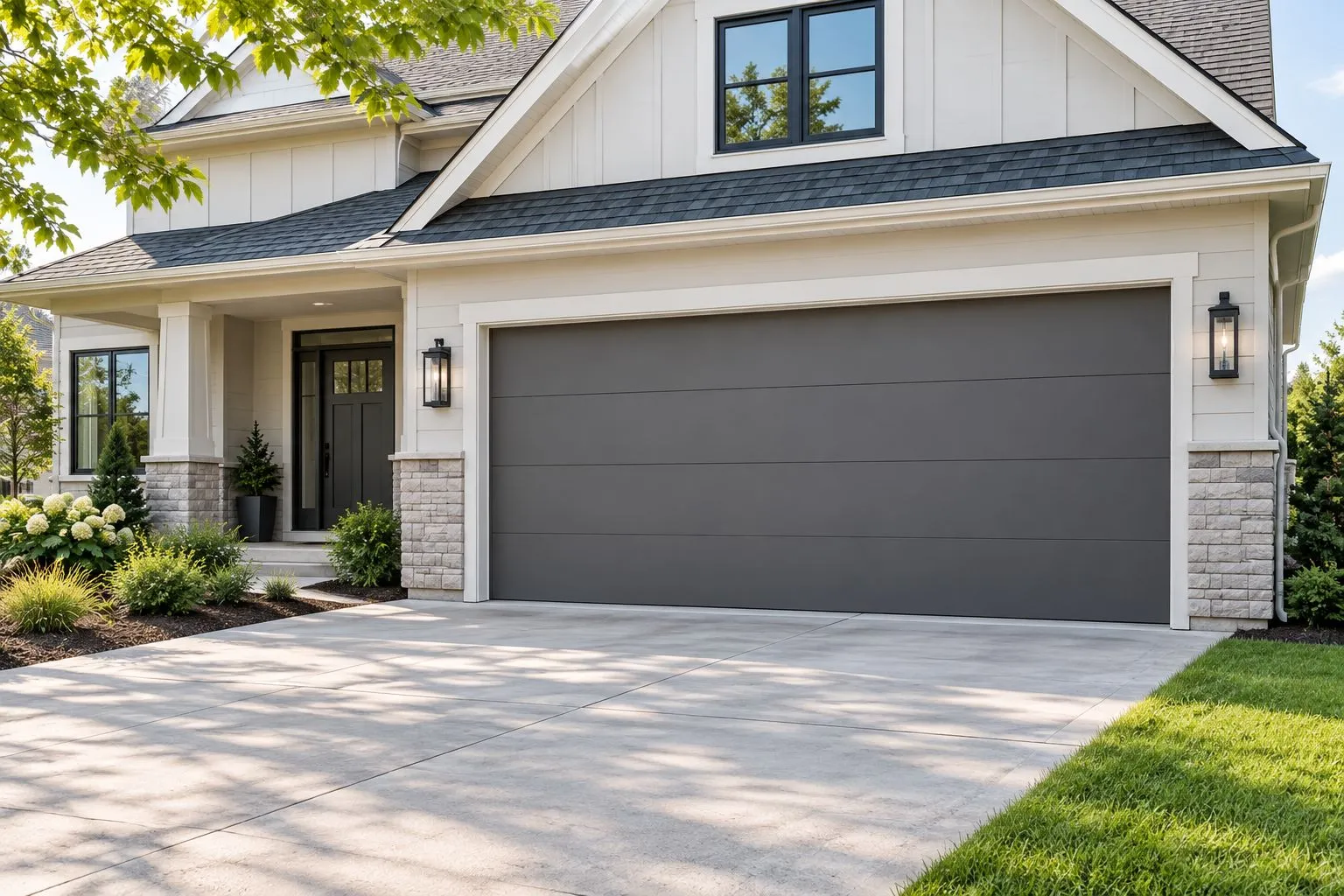
Illustrative photo: a flush face keeps the garage door’s pattern quiet beside clean exterior lines.
Flush-panel pros:
- Avoids adding a repeated panel pattern to the exterior.
- Supports a clean-lined architectural direction.
- Makes color and surface finish the main design decisions.
Flush-panel cons:
- Can look too plain beside strongly traditional detailing.
- Provides little relief to interrupt a large visible surface.
Best for: Lexington homeowners whose contemporary exterior needs a simple garage-door face, not carriage-house ornament.
Compare 2 finish samples beside the actual trim in daylight. Use physical samples when available rather than relying only on a screen. Treat this as a color decision, not a durability test; current finish documentation should explain the care requirements.
Verdict: Buy flush-panel for a clean-lined contemporary home; hold if the surrounding trim needs a more traditional pattern.
4. Recessed-panel: best for restrained transitional detail
Recessed-panel garage doors use inset areas within a surrounding frame. They offer visible structure without the projecting relief of raised panels or the ornament associated with carriage-style doors.
This is the middle option when a flat face feels too plain but a decorative carriage pattern feels too strong. Compare the width of the borders and the shape of the inset panels against the house’s trim.
Recessed-panel pros:
- Adds structure without requiring decorative hinges.
- Offers an alternative between flat and projecting panel faces.
- Lets panel proportions carry the design rather than accessories.
Recessed-panel cons:
- Inset panels still introduce a pattern that can compete with nearby details.
- Appearance alone does not establish material, insulation or maintenance needs.
Best for: Lexington homeowners seeking a restrained transition between traditional detailing and a simpler exterior.
Keep the comparison specific. Recessed-panel designs differ in border width and panel arrangement, so selecting the category is only the first step. Evaluate the exact door elevation at the size proposed for your opening, not a generic picture of a narrower door.
Verdict: Buy recessed-panel when you want quiet detail; hold until you have reviewed the exact panel proportions.
5. Full-view glass: best when daylight leads the decision
Full-view glass garage doors use broad glazed sections within a frame. Their design emphasis is transparency or filtered light rather than a solid panel pattern.
Choose this category only after deciding what the garage needs to conceal. Glazing selection changes the view, but a privacy description does not replace checking the specified glass and how the space appears when lit from inside.
Full-view glass pros:
- Brings daylight through a substantial glazed area.
- Creates a distinct alternative to solid-panel designs.
- Makes the glazing and frame part of the exterior composition.
Full-view glass cons:
- Clear glazing exposes garage contents to outside views.
- Whole-door thermal performance needs a specification check; appearance provides no answer.
- Glass care and privacy deserve attention beyond the initial design choice.
Best for: Lexington homeowners who prioritize daylight and have addressed visibility, garage use and thermal requirements.
Ask for documentation for the exact frame and glazing combination. Do not transfer a specification from a different configuration. If the garage stores items you prefer to conceal, establish the privacy requirement before selecting glass, including visibility when the interior is illuminated.
Verdict: Hold full-view glass until privacy and whole-door specifications are settled; buy only when daylight remains the priority.
How these styles were ranked
Raised-panel leads as a traditional default, not a universal winner. Carriage-style, flush-panel, recessed-panel and full-view glass each own a different decision: character, simplicity, restrained detail or daylight.
This ranking uses architectural fit, visual balance, privacy, upkeep and installation requirements. It does not rank unnamed manufacturers or treat decorative style as evidence of performance.
Check fit before choosing the final design
A style decision becomes useful only when the proposed door fits the property. Read the guide to measuring a garage door opening in Lexington, then leave final installation measurements and hardware selection to the professional handling the job.
- Exterior match: Compare the door elevation with the entrance, windows and trim.
- Privacy check: Establish what the garage must conceal before selecting glazing.
- Professional fit: Confirm opening dimensions, clearances, track arrangement and opener suitability.
- Written specification: Ask for 1 written specification identifying the selected design, material, finish, glazing and construction.
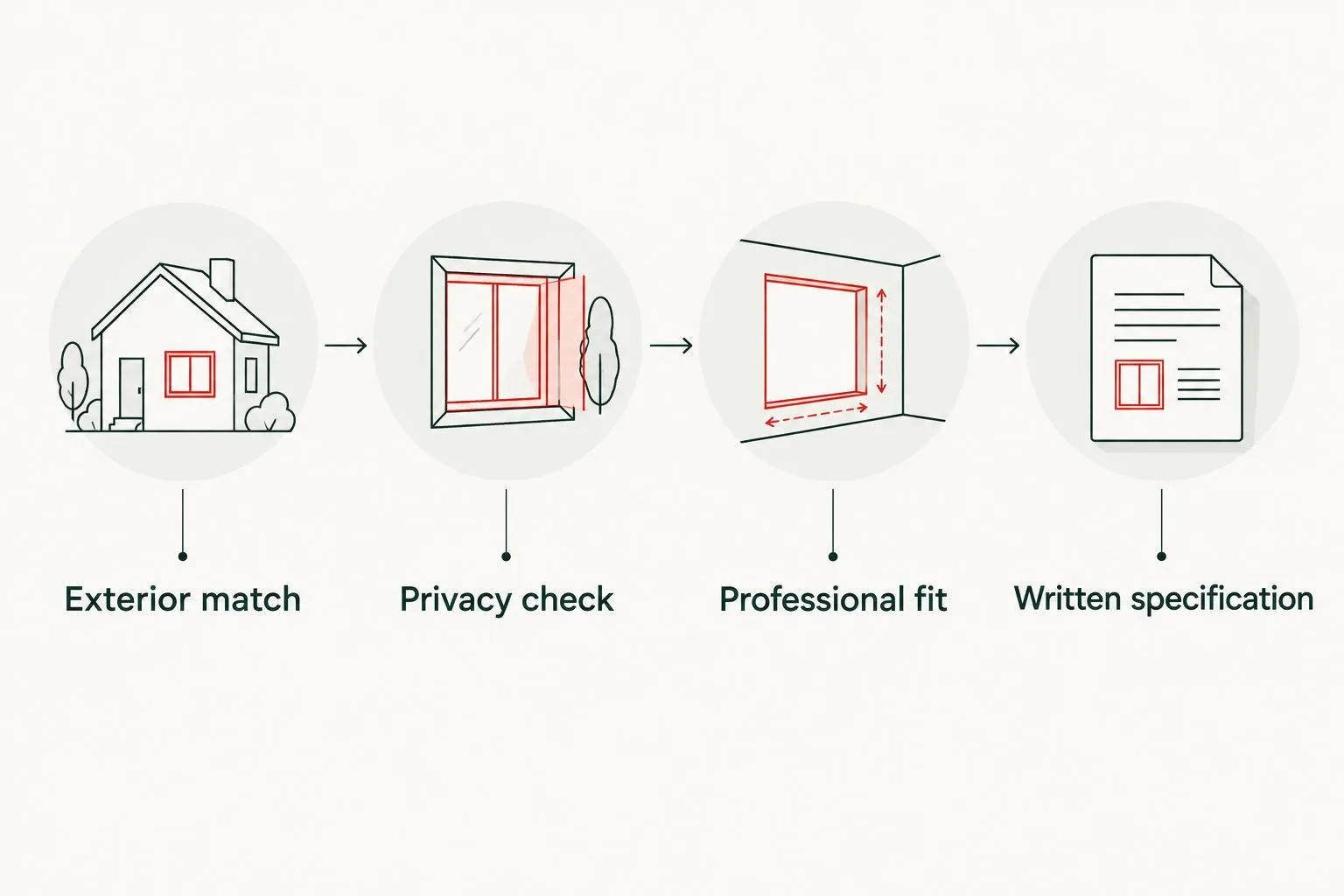
Settle appearance and privacy before confirming fit and the exact door specification.
Keep springs, cables, tracks, brackets and other high-tension work professional-only. Do not force a damaged door or increase opener force to overcome a fault. If the existing door is crooked, off track or has a loose cable, keep people away and arrange professional service before treating the project as a cosmetic upgrade.
Which garage door style should you choose?
Choose raised-panel if your Lexington home is traditional and you remain undecided. Choose flush-panel for clean contemporary lines, carriage-style for deliberate traditional character, recessed-panel for quieter detailing, and full-view glass only after resolving privacy and performance questions.
A change in appearance does not automatically justify replacement. If your current door’s style still suits the house, ask whether its condition calls for repair rather than a new door. Derby Strong garage door installation serves Lexington homeowners, but the design choice and the repair-versus-replacement decision should remain separate.
Frequently Asked Questions
What is the best garage door style for a traditional Lexington home?
Raised-panel is the default recommendation for a traditional Lexington home. Carriage-style is the more deliberate choice when you want carriage-house character and the exterior supports that detailing.
Is a carriage-style garage door better than a flush-panel door?
Carriage-style is better for traditional character; flush-panel is better for clean contemporary lines. Neither style establishes insulation, material quality or installation fit.
Do carriage-style garage doors swing outward?
A carriage-style appearance does not establish the operating method. A sectional carriage-style door travels overhead; confirm how the exact door you select operates.
Are full-view glass garage doors private enough for a home?
Clear full-view glass does not conceal garage contents. Check the specified glazing and visibility with the interior illuminated before deciding whether it meets your privacy needs.
Does a raised-panel garage door have better insulation?
Raised-panel styling alone does not establish insulation performance. Compare current documentation for the exact door construction and any glazing rather than judging by the panel pattern.
Can I keep my opener when I change garage door styles?
Keeping your opener requires a professional compatibility assessment. Door weight, balance, travel and the proposed installation matter more than the decorative style.
Should I replace a working garage door just to change its style?
Replacement is not necessary solely because another style appeals to you. Compare your existing door’s condition, appearance and functional needs before committing to a new installation.
Does Derby Strong install garage doors in Lexington?
Derby Strong provides garage door installation in Lexington. Homeowners can discuss the proposed style alongside the opening, clearance and operating requirements.
One Last Thing Before You Decide
Before approving the design, look at it from the street rather than only close up. If the garage door becomes the focal point by accident, simplify the pattern before changing the whole color scheme. A door that supports the house is a better choice than one that wins attention on its own.