Installation day goes smoothly when the garage is ready before the crew arrives. A garage door replacement in Lexington usually takes a few hours of work inside the opening, and the crew’s time is best spent on the door, not on moving your possessions or hunting for parking.
Key takeaways
- Clear the garage interior and the driveway the night before a Lexington installation; the crew needs room for the old door, packaging and staging.
- Confirm how the crew will reach the opener’s power source and whether a vehicle must stay out of the driveway.
- Keep children and pets away from the work area throughout the visit; the opening is an active work zone.
- Derby Strong Garage Doors provides garage door installation in Lexington and confirms the site details before the scheduled day.
How do you prepare for garage door installation in Lexington?
The one rule that matters most: clear the opening and the driveway. The crew removes the old door, stages the new sections, and runs the opener’s travel and safety checks inside the garage. Every foot of clear floor around the opening makes that work faster and safer.
A replacement installation also needs room to set down the old sections and packaging before they leave with the crew. An empty driveway bay and a clear path from the street matter more than most homeowners expect.
The Night Before Installation
- Move vehicles out of the driveway bay nearest the garage, unless you have agreed a different arrangement with the installer.
- Clear the garage interior along the full width of the opening, at least far enough back for the crew to work with the door’s top sections and track. If you are unsure how much space is needed, ask the installer when confirming the appointment.
- Clear the driveway path from the street: bins, trailers, basketball goals, garden hoses and anything else the crew could trip over while carrying sections.
- Confirm access to power. The opener’s outlet is usually on the ceiling of the garage; the crew needs to reach it. If the outlet is behind stored items, move them in advance.
- Secure pets and plan for children to be away from the work area for the whole visit.
If your garage contains items you cannot easily move, tell the installer before the day. A crew can often work around a fixed workbench or a mounted rack, but only if they know it is there.
What to confirm before the day
A professional installer will confirm the site details with you, not assume them. Expect the conversation to cover:
- The door’s exact size, model and configuration, and any options you selected.
- Whether the opener is being reused, replaced or upgraded.
- Whether the crew is removing and hauling away the old door.
- Which side of the garage the opener’s rail and controls should sit on.
- Any gate code, alley access, steep drive or parking restriction that affects the visit.
Ask these questions before the day rather than during it. They are easier to answer when nobody is standing in the rain holding a section.
What installation day looks like
The crew arrives, confirms the site matches what was agreed, and sets up. The old door comes out first, then the new sections go up one at a time, the track is set, the springs are fitted and tensioned, and the opener’s travel and safety systems are configured and tested.
Spring tensioning and track adjustment are professional work. Do not attempt to help with the hardware, even if you have tools and are comfortable with home repairs. The crew’s safety checks are part of the installation, not an optional extra.
At the end of the visit, expect the crew to:
- Walk you through a full open and close cycle.
- Show you where the opener’s controls, battery backup (if fitted) and release handle are.
- Demonstrate the safety sensors and the release handle’s operation.
- Explain the maintenance expectations and warranty registration.
Keep the installation paperwork, warranty documents and any remote or keypad programming instructions with your opener’s manual. Those documents matter later.
After the crew leaves
Test the door yourself on the first evening: a full open and close from the wall button, a cycle from your remote, and a pause test of the safety sensors from a safe distance with nobody in the door’s path.
Listen on the first few cold mornings. A new door’s components settle over the first weeks. Squeaks or clicks that appear after a week or two are usually the hardware bedding in; a professional lubrication visit addresses them. Do not lubricate a new door yourself unless the installer’s documentation says to, because the wrong product on nylon rollers and bearings causes more noise, not less.
What Lexington homes need to think about
Lexington’s housing stock includes everything from pre-war brick homes near downtown to newer subdivisions with attached three-car garages. Those homes share a requirement, not a layout: the opening’s width, height and headroom are fixed by the structure, and the installer works within them.
If your garage is detached, behind a fence or reached through an alley, mention that when you book. If your home has an HOA, confirm any approval requirement before the order is placed, not after. See the guide to HOA approval for a new garage door for how to check.
If your garage ceiling is low, a standard-track installation may not fit. The installer will confirm the headroom during the site visit, and low-headroom hardware is a known solution. See the Northern Kentucky low-ceiling guide for how that assessment works.
Frequently Asked Questions
How should I prepare my garage for a door installation?
Clear the opening and the driveway, move vehicles out of the work bay, confirm power access to the opener’s outlet, and secure pets and children away from the work area for the whole visit.
How long does a garage door installation take?
The exact duration depends on the door, the opener scope and the site. Ask the installer for the expected window for your specific project rather than relying on an online average; no two installations take exactly the same time.
Do I need to be home during the installation?
Plan to be available at the start and the end. The crew needs access, decisions about opener placement and someone to walk through the finished installation.
Will the crew remove my old door?
Confirm removal and disposal when you book. Some installers include it; some leave the old door to the homeowner. Know which arrangement applies before the day.
What if my garage has a low ceiling?
Low-headroom hardware is a known solution that repositions the track. The installer confirms the headroom during the site visit; do not assume a standard installation will fit.
Can I install a garage door myself?
A garage door’s springs and lifting hardware carry dangerous tension, and installation involves wiring and safety-system configuration. Professional installation is the appropriate path for a sectional residential door.
What should I check after the installation is finished?
Run a full open and close from the wall button, test the remotes and keypad, and confirm the safety sensors stop the door. Listen over the first few weeks and raise anything unusual with the installer.
Who installs garage doors in Lexington, KY?
Derby Strong Garage Doors provides residential garage door installation in Lexington and confirms the site details, removal scope and opener plan before the scheduled day.
The detail that saves the most time
Clear the driveway bay the night before. A blocked driveway is the most common reason an installation starts late. The crew needs somewhere to stage the old door, the packaging and the new sections, and a clear path from the street makes the whole visit shorter.
Derby Strong Garage Doors serves Lexington homeowners with garage door installation, opener upgrades and replacement. The next step is confirming your site details and scheduling the visit.
Related Garage Door Guides
- Do you need HOA approval for a new garage door in Lexington?
- How do you measure a garage door opening in Lexington?
- Can a low-ceiling Northern Kentucky garage fit a new door?
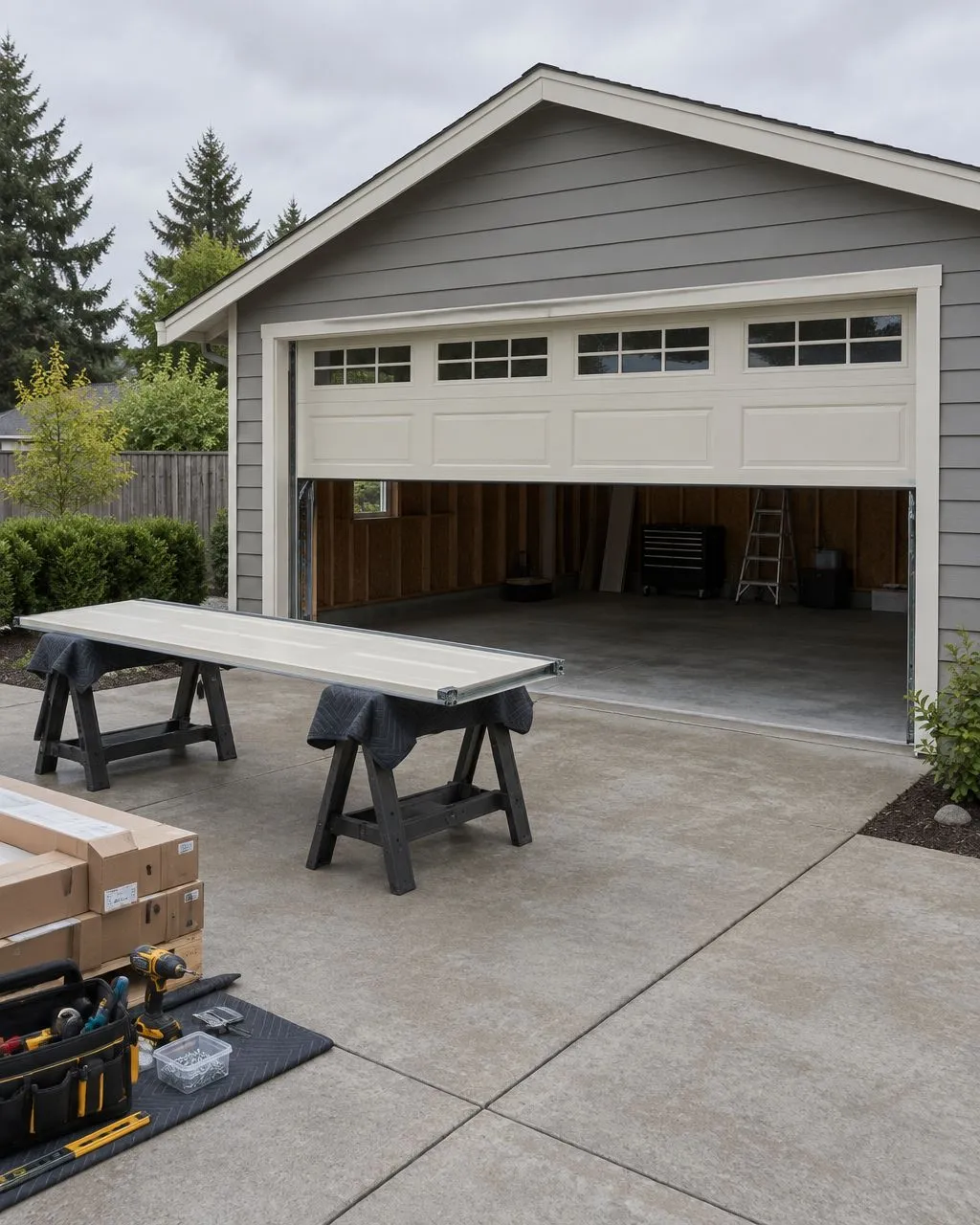
AI-generated illustration; not a Derby Strong customer project.