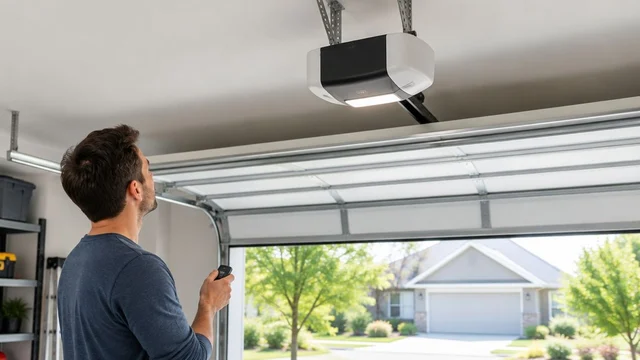
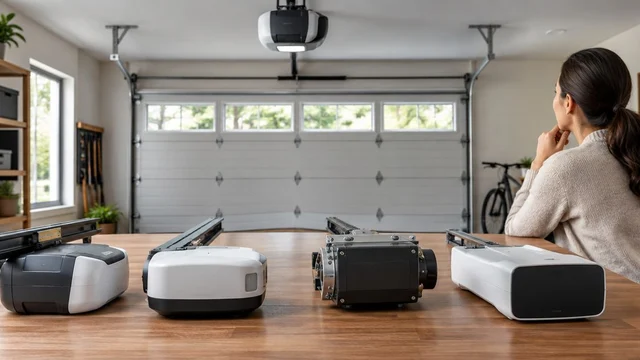
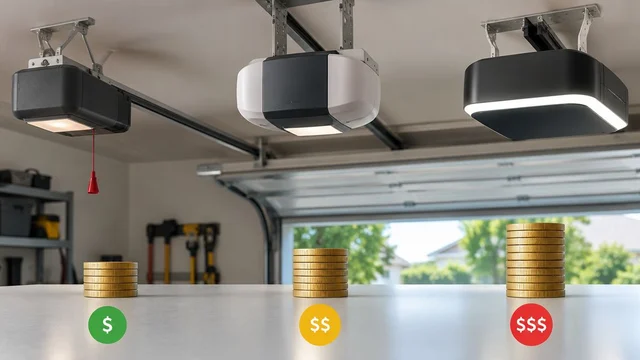
Yes, you can keep an existing opener when replacing a Louisville garage door if it is compatible with the new door, remains in sound condition, and passes professional safety checks after installation. A working opener alone does not establish compatibility: the replacement door must have the correct spring balance, attachment, travel setup, and operating clearance. Decide whether to reuse the opener before ordering the door, then confirm that decision during installation.
TL;DR
- Garage door replacement existing opener Louisville: reuse depends on compatibility, condition, and completed safety checks.
- A new door does not automatically require a new opener; a functioning opener does not automatically qualify for reuse.
- The installer must check door balance, opener attachment, travel settings, and safety reversal before returning the system to service.
- Derby Strong provides Louisville garage door installation and opener service, allowing both parts of the job to be discussed together.
Why this matters before you order a Louisville replacement door
Your garage door and opener perform different jobs. The door’s spring system counterbalances the door; the opener moves it through its operating cycle. Replacing the door changes part of that system, so the existing opener needs an assessment rather than an automatic approval or rejection.
Derby Strong is a fit for Louisville homeowners who need garage door installation and opener service assessed together. When discussing the project with Derby Strong, ask for an opener-reuse decision as part of the door selection—not as a surprise after the new door arrives.
The goal is a complete, safe installation. Keep a suitable opener, service a repairable one, and replace one that cannot meet the new installation’s requirements. That approach avoids treating an unrelated door problem as proof that the opener also needs replacement.
Can you keep your opener when replacing a Louisville garage door?
Yes, provided the installer confirms that the opener suits the replacement door and operates safely with it. The decision rests on the door specifications, the opener’s manufacturer instructions, the condition of the equipment, and the completed installation—not simply whether the old door still opens.
| Decision | Best for | Advantage | Limitation |
|---|---|---|---|
| Keep the existing opener | Homeowners whose opener is compatible, serviceable, and safe | Retains equipment that still does its job | Requires setup and testing with the replacement door |
| Service the existing opener | Homeowners with a compatible opener and a repairable fault | Addresses the fault without automatically replacing the unit | Repair must restore safe operation; compatibility still needs confirmation |
| Replace the opener | Homeowners whose opener is incompatible, unsafe, or not serviceable | Allows equipment to be selected for the new installation | Adds another equipment decision to the door project |
A door replacement does not settle which option is right. An opener that operated a damaged, binding, or poorly balanced door also needs inspection for wear. Conversely, an opener problem does not prove that the door itself needs replacement.
Ask the installer to explain the reason behind the recommendation. “The door is new” is not enough. A useful explanation identifies a compatibility issue, a failed safety function, a condition problem, or an installation requirement.
What must match between the replacement door and existing opener?
Door construction and operating requirements
Give the installer the proposed door specifications and the opener’s model information. Door height, construction, and the manufacturer’s operating requirements matter when determining whether the existing equipment is suitable.
An insulated replacement door can differ from the door being removed. Do not assume that matching the opening dimensions makes the entire system equivalent. The installer must select the spring system for the replacement door and check the opener against its own documentation.
A stronger opener is not a correction for an improperly balanced door. Spring selection, spring adjustment, and balance testing belong to the professional installation—not to homeowner troubleshooting.
Attachment and reinforcement
The opener’s connection to the door must follow the replacement door manufacturer’s instructions. The top section, reinforcement, bracket, and attachment position need to work together so the opener’s movement transfers through an appropriate connection.
Existing attachment hardware is not automatically suitable for the new door. Ask whether the proposal includes the reinforcement and connection hardware required for that installation. Do not transfer brackets yourself or assume the old fastener locations can be reused.
Travel and clearance
The opener must move the replacement door through its intended travel without interference. Rail configuration, mounting position, door height, and available clearance all belong in the assessment.
For your Louisville property, identify anything that affects the working space: ceiling storage, shelving, lighting, or other equipment near the door’s path. The installer needs to assess the actual garage, not just the opening dimensions supplied with an order.
The connection at the top of the door is one part of this compatibility check. It should be assessed as an assembly rather than as an isolated bracket.
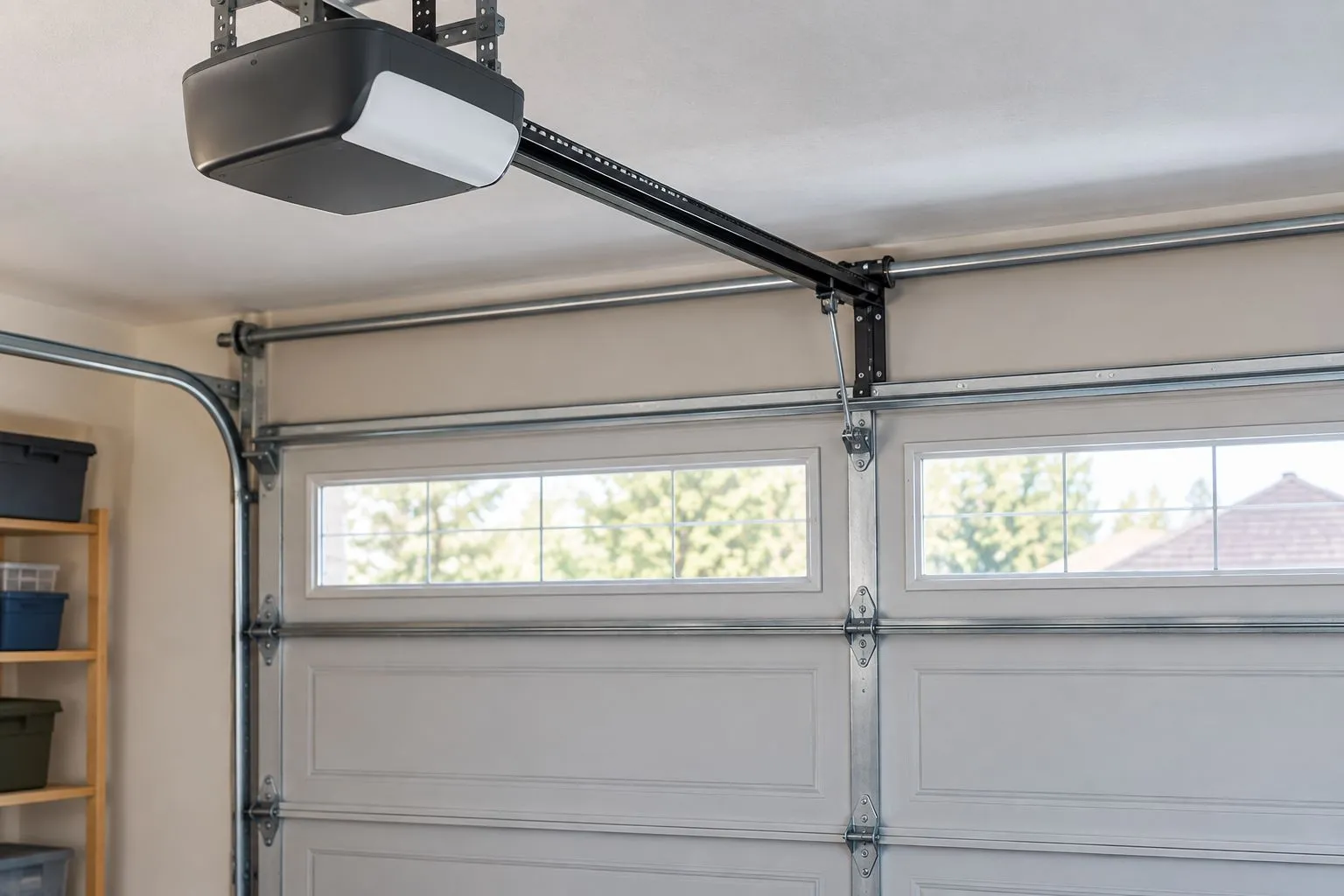
Illustrative photo: the opener connection must suit the replacement door’s construction.
Which safety checks decide whether the opener can stay?
Keeping the opener means keeping a complete operating system that must function safely after the door is installed. The installer should follow the opener manufacturer’s instructions for setup and testing rather than apply generic adjustments.
Door balance and movement
The door must move correctly as a door before the opener is used to operate it. A professional checks the counterbalance system, alignment, hardware, and movement as part of the installation.
Do not disconnect and lift a damaged, crooked, or unsupported door to investigate balance. Springs, cables, tracks, and loaded brackets can create serious hazards. Leave those checks to the installer.
Entrapment protection and reversal
The opener’s required entrapment-protection devices and reversal functions must work with the completed installation. Photoelectric sensors, where required by the equipment, need correct placement, alignment, and an unobstructed path.
A door that opens from the wall control has not passed every safety check. Likewise, an opener light or sensor indicator is not a substitute for the manufacturer’s complete testing procedure. Ask the installer to demonstrate the relevant functions at handover.
Travel settings and controls
The installer must set the opener for the replacement door’s open and closed positions. Remote controls, wall controls, and any existing access devices should then be checked with the completed system.
Never increase opener force to overcome a binding or damaged door. If the door stalls, reverses unexpectedly, or strains, stop using it and arrange professional diagnosis. Repeated attempts do not establish that the equipment is safe.
Why the opener-reuse decision varies
The same keep-or-replace answer does not apply to every installation. These are the factors to have assessed:
- Door compatibility: The replacement door’s specifications must fit the opener’s documented application requirements.
- Equipment condition: Wear, damage, intermittent operation, and previous faults affect whether the opener remains serviceable.
- Safety functions: Required protection and reversal functions must pass testing after installation.
- Garage layout: Mounting, rail arrangement, clearance, and obstructions affect whether the existing setup can remain.
- Repair support: A proposed repair needs suitable parts and applicable manufacturer instructions.
- Access needs: Retaining the opener must still address the controls and entry arrangements you intend to use.
Age is useful background, but it is not a complete diagnosis. Supply the model information and describe the symptoms. Let documented compatibility and the condition assessment determine the recommendation.
How should you prepare for an opener-reuse assessment?
You can gather useful information without touching high-tension hardware. Your preparation should help the installer understand the equipment and the garage—not attempt to prove that the door is safe.
- Identify equipment. Photograph the opener’s visible model label if you can do so safely from the floor. Do not climb over the door or reach near moving components.
- Record symptoms. Note whether the current system stops, reverses, strains, makes a new noise, or fails from a particular control. Describe when it happens without repeatedly operating a faulty door.
- Explain the replacement. Share the proposed door construction, dimensions, and manufacturer information when available. Mention any planned change to the opening or overhead space.
- Clear access. Move stored items away from the working area when safe. Leave the door and its hardware untouched if anything appears damaged or unstable.
- Confirm scope. Ask what the installation includes, what happens if the opener fails assessment, and how any additional work will be approved.
These steps create a useful sequence for the appointment: identify what is installed, explain the problem, and agree on the work before it begins.
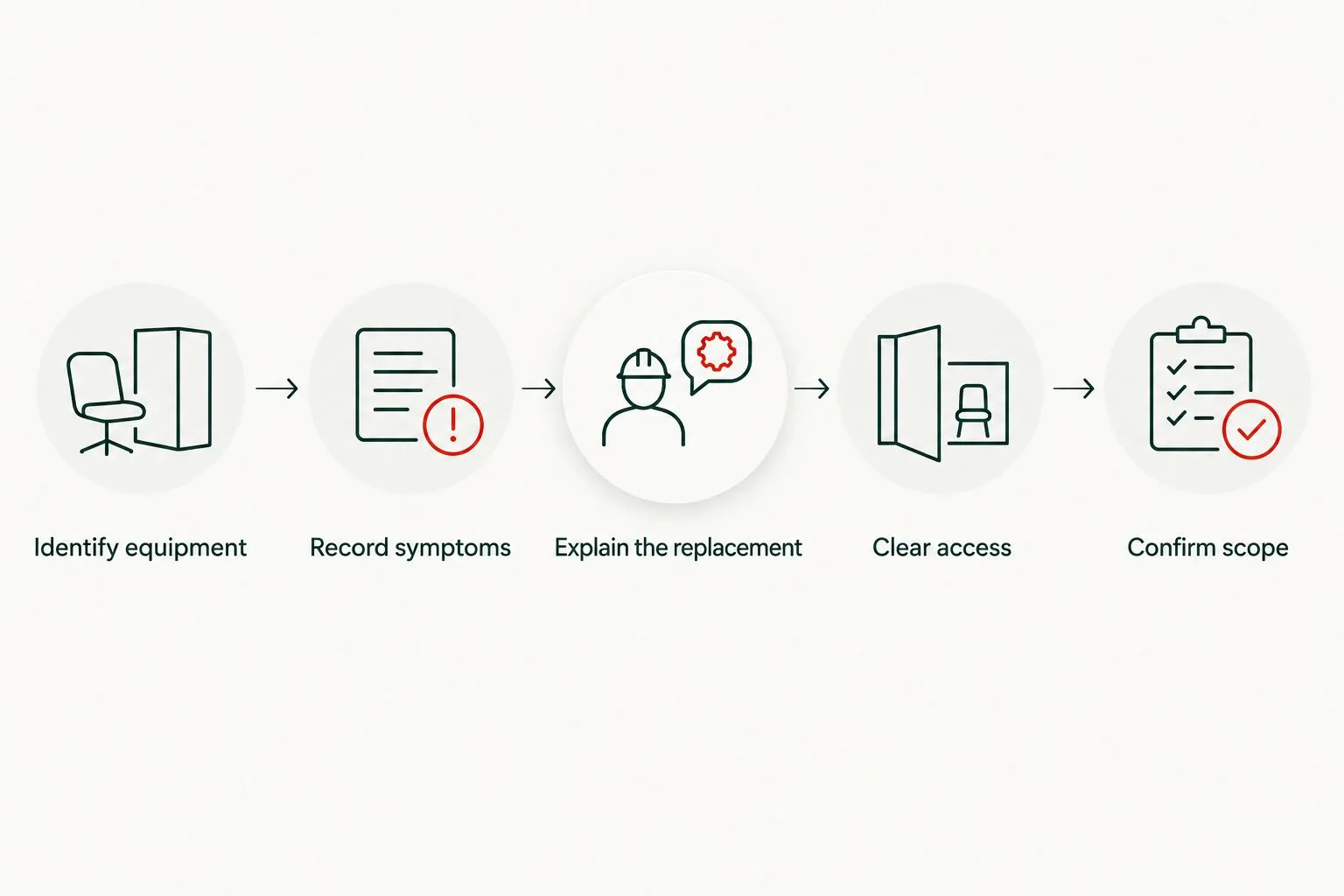
Gather information and agree on the work without adjusting the door hardware.
Keep any available manuals and earlier service records accessible. They can help distinguish an existing fault from work required specifically by the replacement door.
What should the replacement-door proposal say about the opener?
A clear proposal distinguishes door installation from opener work. Ask for a written explanation of whether the existing opener is expected to stay, what needs adjustment or repair, and which checks remain dependent on installation.
The scope should address:
- The replacement door and its required counterbalance system.
- The opener connection and any required reinforcement.
- Whether the existing opener and rail arrangement are suitable.
- Setup and safety testing with the installed door.
- Existing control or access problems that need diagnosis.
- Approval of additional work if inspection changes the recommendation.
Avoid treating “reuse existing opener” as a complete scope by itself. It should mean assessed reuse with appropriate setup—not reconnecting the equipment without checking the finished system.
For a 2026 Louisville door replacement, request the manufacturer’s instructions applicable to the actual equipment being installed or retained. A model-specific requirement is more useful than a general claim that an opener works with every door.
Can an insulated replacement door use the old opener?
An insulated replacement door can use an existing opener when the opener is suitable for the new door and the completed installation passes testing. Insulation alone does not decide the answer; construction, counterbalance, attachment, and operating requirements also matter.
Tell the installer which door you are considering before finalizing the order. Ask for an assessment of that door, not a promise based only on the word “insulated.”
Does a noisy opener have to be replaced with the door?
A noisy opener does not automatically need replacement, because noise can originate in the door hardware, opener, or installation. Describe the sound and when it occurs so the professional can identify its source.
Do not tighten spring hardware, adjust tracks, or alter loaded brackets to chase a noise. If the noise accompanies jerking, uneven movement, or visible damage, stop operating the door pending assessment.
Can you keep your existing remotes and keypad?
Keeping the same opener can allow you to retain compatible remotes and a keypad, provided those devices still work correctly. The door itself does not determine radio compatibility, but installation handover should include checking the controls you actually use.
If the opener is replaced, accessory compatibility must be checked against the replacement equipment’s documentation. Do not assume that a working remote will communicate with a different opener.
Frequently Asked Questions
Can I keep my garage door opener when replacing my Louisville garage door?
Yes, you can keep the opener if it is compatible with the replacement door, remains serviceable, and passes professional safety testing after installation. Have that assessment included in the project scope.
Does a heavier replacement door automatically need a stronger opener?
No, a heavier replacement door does not automatically require a stronger opener. The installer must select the correct counterbalance system and confirm that the opener meets the new door’s operating requirements.
Can I reconnect the old opener to the new door myself?
Have the installer connect and set up the existing opener with the replacement door. Attachment, reinforcement, balance, travel, and safety functions need to be checked together.
What if my opener works but the garage door is crooked?
Stop operating a crooked garage door and arrange professional assessment. An opener that still runs does not make damaged cables, tracks, springs, or door hardware safe.
Should I replace the opener just because it is old?
Age alone does not settle the replacement decision. Model compatibility, equipment condition, repair support, and functioning safety protection provide the basis for keeping or replacing it.
Will Derby Strong discuss opener service during a Louisville door replacement?
Derby Strong provides garage door installation and opener service in Louisville. Ask for the existing opener’s suitability and any required service to be addressed in the proposed installation scope.
What should I ask before agreeing to keep my existing opener?
Ask whether the opener meets the replacement door’s requirements and what setup and safety testing are included. Also confirm how additional work will be approved if inspection reveals a fault.
One Last Thing Before You Decide
Ask for a handover demonstration, not just a successful opening cycle. Before returning the garage to normal use, have the installer explain the controls, emergency-release instructions, and safety checks applicable to your completed system.
You do not need to replace a suitable opener simply because the door is new. You do need a clear reason to keep it—and confirmation that the entire installation works safely together.