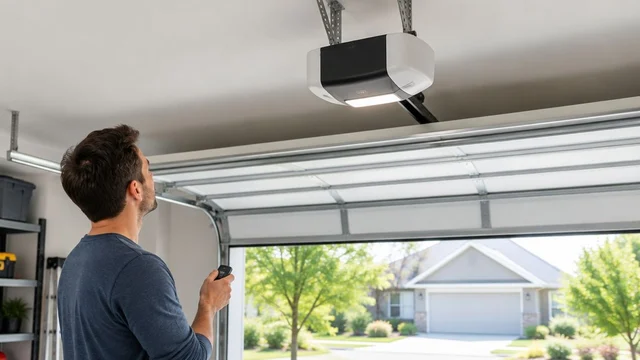
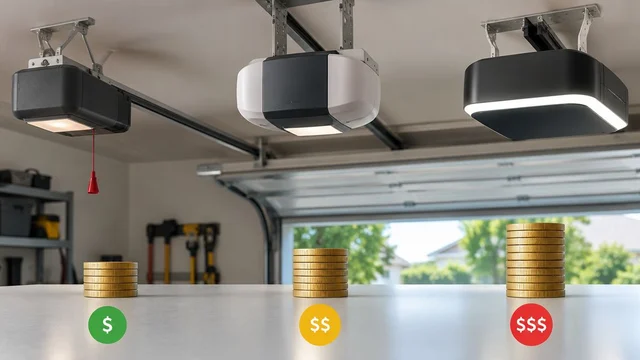
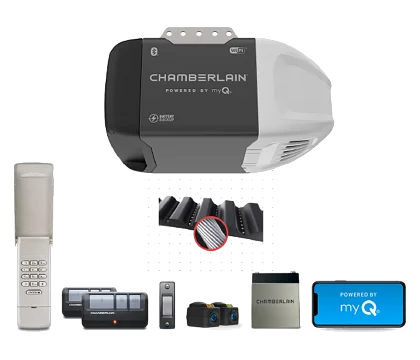
Best overall: a belt-drive opener. Best for removing the overhead motor and rail: a compatible wall-mounted opener. Best for a detached garage where noise matters less: a chain-drive opener. Belt drive is the quietest garage door opener drive type to shortlist for a conventional ceiling-mounted installation, but door condition and vibration paths determine what you hear inside the house.
TL;DR
- Belt drive is the quietest garage door opener drive type to shortlist for an attached garage.
- Wall-mounted openers remove the overhead rail but still transmit vibration through their mounting points.
- Chain and screw drives need model-specific comparison; neither has a universal noise ranking.
- Derby Strong provides garage door opener service; diagnose door noise before choosing a replacement.
Why This Matters for Your Door
A quieter opener cannot silence a damaged roller, a binding door or loose hardware. Replacing the motor without identifying the sound can leave you with the same noise and a different opener.
Start with the location of the disturbance. A bedroom above the garage makes ceiling vibration important; a detached garage puts more emphasis on whether the door operates safely and reliably. Derby Strong provides garage door repair, installation and opener service for homeowners and businesses in Louisville, Lexington and Northern Kentucky.
Derby Strong garage door opener service is best for homeowners who need the noise source diagnosed before choosing repair or replacement. This guide ranks residential options by their usefulness for noise-sensitive installations, not by an invented decibel score. For broader selection questions, use the garage door opener comparison.
What makes the best quiet garage door opener?
Judge the complete installation, not just the drive label. These criteria explain why belt drive is the default recommendation and why another arrangement sometimes fits better.
- Drive contact: A belt avoids the metal chain movement associated with chain-drive operation. That makes it a useful starting point when reducing mechanical drive noise.
- Vibration path: Ceiling brackets, framing and wall mounts carry vibration into the building. Changing the drive does not automatically remove that path.
- Door condition: Rollers, hinges, panels and tracks produce their own sounds. A door fault needs repair rather than a quieter motor masking it.
- Motor behavior: Starting and stopping affect perceived noise. Compare the exact opener’s documented motor and operating features rather than assuming every belt drive behaves alike.
- Installation compatibility: Door construction, shaft arrangement and available mounting space limit your options. A quiet opener is useful only if it fits the door correctly.
- Service requirements: Follow the selected manufacturer’s maintenance instructions. Do not apply lubricant to a belt, chain or screw based on advice for a different system.
Quiet opener options at a glance
The order below is a buying priority for a noise-sensitive home. It is not a measured loudest-to-quietest test: wall mount describes an installation arrangement, while belt, chain and screw describe drive mechanisms.
| Rank and option | Best for | Standout characteristic | Key limitation |
|---|---|---|---|
| First: belt drive | Attached garages with living space nearby | Belt transmission avoids metal chain movement | Door noise and ceiling vibration remain |
| Second: wall-mounted opener | Compatible doors where overhead mounting is the concern | Removes the ceiling-mounted motor and trolley rail | Requires a compatible door and shaft arrangement |
| Third: chain drive | Detached garages with lower noise sensitivity | Metal chain moves the trolley | Chain operation is usually more audible than belt operation |
| Fourth: screw drive | Owners deciding whether to retain an existing screw-drive opener | Threaded shaft moves the trolley | Noise and maintenance depend on the specific design |
Do not read the last two positions as a universal acoustic result. A particular screw-drive opener can sound different from a particular chain-drive opener, and a worn belt-drive installation can be louder than a well-maintained alternative.
1. Belt drive: best for attached garages near living space
A belt-drive opener moves the door’s trolley using a reinforced belt along the overhead rail. It keeps the familiar ceiling-mounted arrangement while avoiding a moving metal chain. That makes belt drive the strongest default when your main complaint is opener drive noise.
Best for: An attached garage with a bedroom, office or frequently used room nearby, provided a conventional trolley installation fits.
Belt drive does not mean silent operation. The motor still runs, the trolley still moves and the door still rolls through its tracks. If rattling comes from a panel or vibration enters the ceiling through mounting hardware, changing the drive alone does not address the cause.
Belt-drive pros:
- Avoids the metal chain movement of a chain-drive mechanism.
- Fits the conventional overhead trolley arrangement used with many residential doors.
- Gives noise-sensitive buyers a clear starting point for model comparison.
Belt-drive cons:
- Retains an overhead rail and ceiling-mounted motor.
- Does not correct worn rollers, damaged hinges or poor door balance.
- Requires compatibility checks for the specific door and opener.
Before approving replacement, ask whether the existing sound comes from the opener or from the door. Also ask how the proposed mounting arrangement addresses vibration. A belt-drive label answers only part of the question.
Verdict: Buy a compatible belt-drive opener when drive noise is the problem and an overhead installation suits the garage.
2. Wall-mounted opener: best for removing the overhead rail
A wall-mounted opener operates at the door’s torsion shaft rather than pulling a trolley along a ceiling rail. Removing the overhead motor and rail changes where the opener sits and how it connects to the building. It also frees the space previously occupied by that equipment.
Best for: A compatible garage where overhead equipment, ceiling use or vibration through ceiling mounting points is the central concern.
Wall mount is not another belt-versus-chain category. It is a different operating arrangement, so it should not automatically be called the second-quietest drive type. Its benefit is removing the overhead assembly; whether it sounds quieter inside your home depends on the equipment, door and structure.
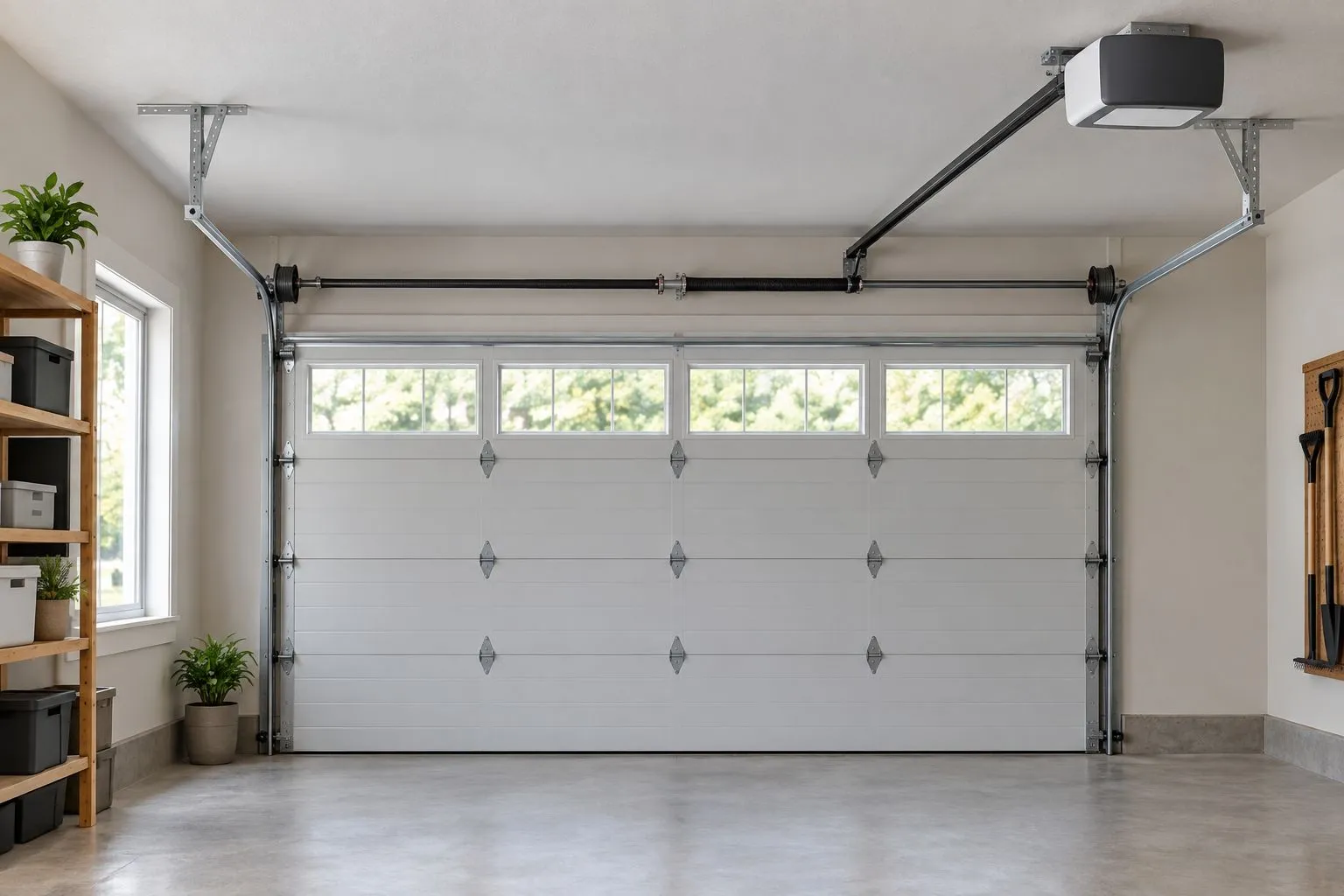
Illustrative photo: a wall-mounted arrangement removes the central overhead motor and trolley rail.
Wall-mounted opener pros:
- Removes the conventional overhead motor and trolley rail.
- Keeps central ceiling space clear of that assembly.
- Offers a different mounting arrangement when ceiling transmission is a concern.
Wall-mounted opener cons:
- Does not fit every garage door or shaft configuration.
- Still transmits vibration through its own mounting points.
- Requires professional assessment of the door system and installation requirements.
Ask the installer to check shaft compatibility, side clearance and the selected manufacturer’s requirements. Do not assume a wall-mounted opener solves limited headroom: door tracks and travel remain separate constraints.
Verdict: Buy only after compatibility is confirmed; choose wall mount for the installation benefit, not a guaranteed noise reduction.
3. Chain drive: best for detached garages with lower noise sensitivity
A chain-drive opener uses a metal chain to move the trolley along its rail. Chain movement contributes to its operating sound, making it a weaker default than belt drive when a nearby sleeping area is the priority.
Best for: A detached garage where opener sound does not disturb occupied rooms and the selected system suits the door.
An existing chain-drive opener does not need replacement simply because belt drive is quieter as a category. If it operates correctly and the sound is acceptable, keep the decision focused on condition. New grinding, banging or a change in operation deserves diagnosis rather than acceptance as normal chain noise.
Chain-drive pros:
- Uses a conventional overhead trolley arrangement.
- Remains a reasonable option when quiet operation is not the main selection criterion.
- Allows an existing functional installation to remain in service when replacement is unnecessary.
Chain-drive cons:
- Metal chain movement is generally more audible than belt movement.
- Retains ceiling mounting points that can transmit vibration.
- Abnormal slack, rattling or wear requires assessment under the manufacturer’s instructions.
Do not tighten the chain by guesswork or increase opener force to push through resistance. A technician should distinguish drive adjustment needs from a door that is binding or poorly balanced.
Verdict: Hold a functional chain-drive opener when its noise is acceptable; skip chain drive as the default for a noise-sensitive attached garage.
4. Screw drive: best for assessing an existing installation
A screw-drive opener moves the trolley along a rotating threaded shaft. Its sound depends on the particular drive design, motor, maintenance condition and door. The category name alone does not establish that it is quieter than chain drive or louder than every belt drive.
Best for: A homeowner deciding whether an existing screw-drive opener needs service or replacement.
For a new noise-focused purchase, belt drive gives you a clearer starting point. For an existing screw-drive installation, first identify whether the sound comes from the threaded drive, the motor or the moving door. Follow documentation for that exact opener rather than generic lubrication advice.
Screw-drive pros:
- Uses a threaded drive rather than a belt or chain.
- Gives owners an identifiable drive assembly to discuss during diagnosis.
- Does not require replacement solely because it uses a screw mechanism.
Screw-drive cons:
- Has no universal noise advantage over other drive categories.
- Maintenance instructions vary by design.
- Retains an overhead rail and the associated vibration path.
A recurring sound at the same point in door travel is useful information for the technician. Record it from a safe position only if the door is otherwise operating normally; do not keep cycling a door that binds or moves unevenly.
Verdict: Hold an existing screw-drive opener until its condition is assessed; skip a new one chosen solely on an unsupported quietness claim.
Find the noise source before replacing the opener
Listen from a safe position outside the door’s travel path. You are identifying the sound, not performing a repair. Stop operating the door if it hangs crooked, binds, drops unexpectedly or has a loose cable.
Use these observations to describe the problem during service:
- Motor sound: Note whether humming or drive noise begins before the door starts moving.
- Door rattle: Note whether the sound follows the door through its travel or occurs at a repeatable position.
- Room vibration: Note whether the disturbance is most noticeable in the garage or in the room above it.
- Uneven travel: Report jerking, a crooked door or visible cable trouble; leave the door alone.
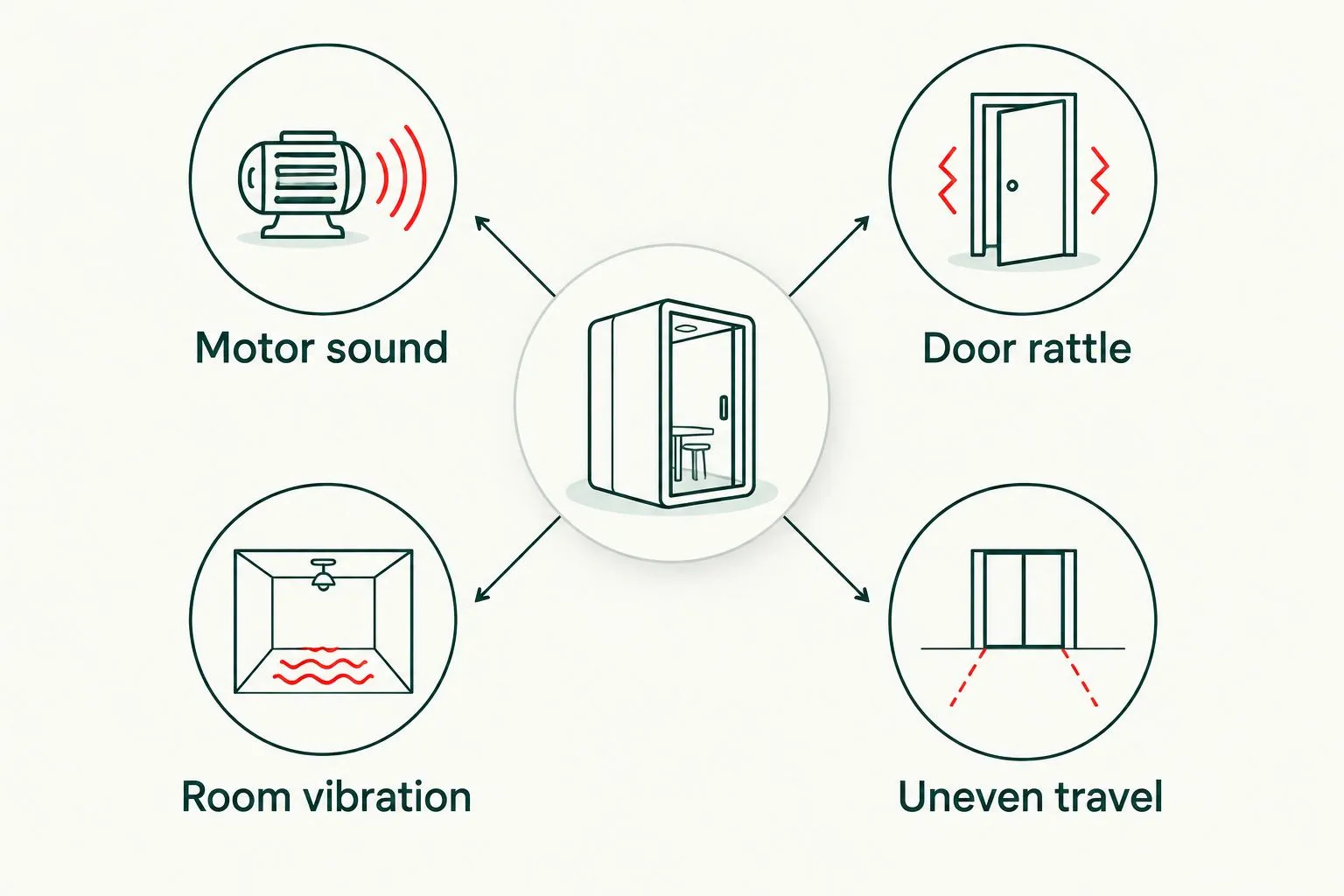
Describe where the noise occurs and whether the door travels evenly before choosing a replacement.
Do not loosen spring hardware, cable drums, tracks or bottom brackets. Do not disconnect an open or unstable door to test its balance, and never increase opener force to overcome a fault. Spring, cable, track and high-tension work belongs with a professional.
Prepare for service by noting the opener’s model information, when the sound started and whether the door’s movement changed. Clear access around the opening without entering the path of an unstable door. Derby Strong garage door opener service can address the opener question alongside the door’s condition.
How these options are ranked
Belt drive leads because it directly addresses mechanical drive noise while retaining a conventional installation. Wall mount follows as a distinct solution to overhead equipment and mounting concerns, not as a proven acoustic runner-up.
Chain drive and screw drive remain useful existing systems, but neither earns the default recommendation for a new noise-focused purchase. This ranking uses drive construction, mounting arrangement, compatibility and service needs. It does not claim a controlled sound test or a model-specific result.
Which garage door opener should you choose?
Choose a compatible belt-drive opener if your door is in good condition and a conventional overhead installation fits. That is the clearest default for an attached garage where opener noise matters.
Choose wall mount when removing overhead equipment is the actual goal and the door system supports it. Keep an existing chain- or screw-drive opener when it works correctly and its sound is acceptable. Repair a door fault before judging any replacement opener’s likely benefit.
Arrange opener service
Discuss the noise source, door condition and opener compatibility before choosing replacement.
Frequently Asked Questions
What is the quietest garage door opener drive type?
Belt drive is the quietest conventional garage door opener drive type to shortlist for an attached garage. Door condition, the motor and vibration through mounting points still affect the sound you hear.
Is a belt-drive garage door opener quieter than a chain drive?
Belt-drive openers generally produce less drive noise than chain-drive openers because they avoid moving a metal chain. That comparison does not guarantee a quieter complete installation if the door itself rattles or binds.
Is a wall-mounted garage door opener quieter than a belt drive?
A wall-mounted opener is not automatically quieter than a belt-drive opener. It removes the overhead motor and rail, but its own mounting points and the moving door still transmit sound and vibration.
Should I replace a noisy chain-drive garage door opener?
Replace a chain-drive opener only after identifying the noise source and assessing its condition. A functional opener can remain in service when its normal sound is acceptable; new grinding or uneven travel needs professional attention.
Will a quiet opener stop my garage door rollers from rattling?
A quiet opener will not repair rattling rollers or other door hardware. Have the door noise diagnosed before replacing the opener for a sound it does not cause.
Can I make my opener quieter by increasing the force setting?
Do not increase opener force to overcome a noisy, binding or damaged door. The resistance needs diagnosis, and adjustments must follow the specific manufacturer’s instructions.
Can every garage use a wall-mounted opener?
Not every garage door system accepts a wall-mounted opener. A professional must check the shaft arrangement, available mounting space and the selected opener’s installation requirements.
What should I compare when buying a quiet opener in 2026?
Compare drive construction, mounting arrangement, door compatibility and the exact model’s current manufacturer documentation. Do not treat a drive label as a measured sound rating or assume it will fix existing door noise.
One Last Thing Before You Decide
The loudest sound in your garage might not come from the opener. Before authorizing replacement, ask the technician to identify whether the disturbance comes from the drive, moving door or vibration entering the building. That answer determines whether you need an opener, a door repair or a different installation arrangement.