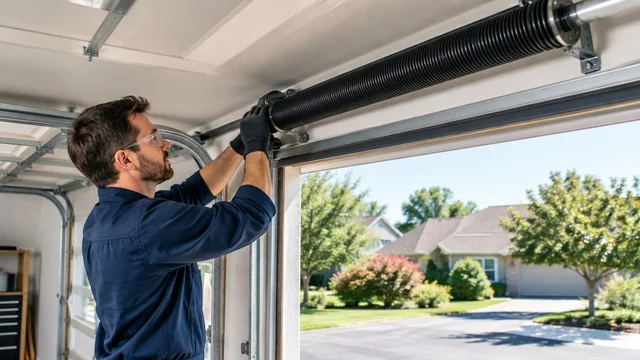
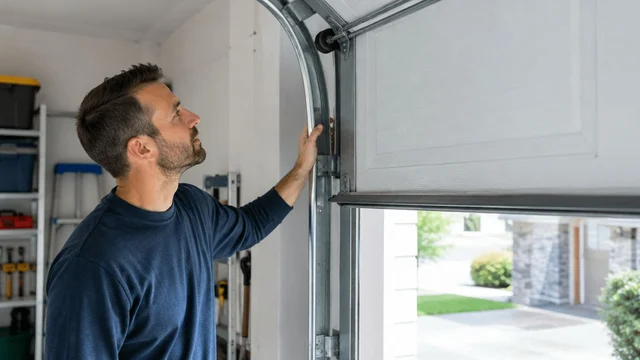
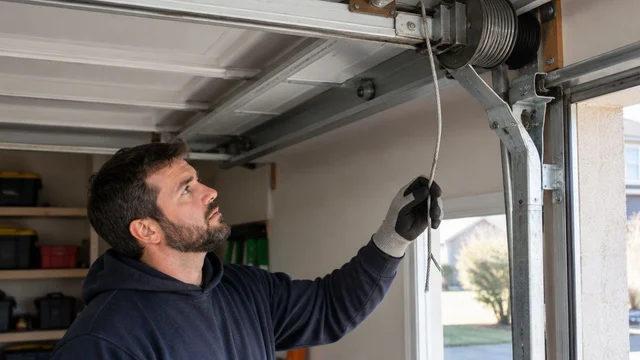
A garage door that grinds, pops or rattles on every cycle is telling you which part is tired. Louisville’s mix of humid summers and freeze-thaw winters accelerates the wear on rollers and hinges, and a noisy door is usually one of the cheapest repairs to catch early.
Key takeaways
- Roller wear is the most common cause of a noisy sectional garage door; a chipped, cracked or off-center roller changes how the whole door moves.
- Listen and watch a full cycle from a safe distance before touching anything; the sound and the point in the travel tell you which part is involved.
- Do not loosen bottom brackets, cables or spring hardware; roller replacement itself is professional work.
- Derby Strong Garage Doors diagnoses and services noisy Louisville garage doors, including roller replacement and a full-system check.
Why are your Louisville garage door rollers making noise?
Rollers wear out first, and they usually announce it before they fail. Each sectional door carries several rollers riding in metal tracks. When the nylon or steel wheel chips, cracks or goes off-center, the door no longer glides; it clicks and scrapes its way up and down.
Louisville weather speeds that wear. Summer humidity swells wooden door cores and adds load to the hardware. Winter freeze-thaw cycles move the track slightly and harden the lubricant. A door that was quiet last spring can be noisy by the first cold snap.
Noise is not the problem itself. The question is what the noise points to:
| Sound | Where it happens | Most likely part | What it means |
|---|---|---|---|
| Clicking or popping | As each roller passes a joint | Worn or chipped roller | Roller surface no longer smooth; replacement due |
| Grinding | Along the whole vertical track | Roller debris or a bent track | Needs cleaning, or the track needs professional realignment |
| Squealing | During the whole travel | Dry hinges or rollers | Lubrication due; no structural problem yet |
| Rattling | Near the top of the opening | Loose hinge or track fastener | Tightening is professional work near hardware; leave it to a technician |
| Scraping and hesitating | Partway up | Cable, spring or track issue | Stop using the door; call for service |
Observe a full cycle safely
Stand clear of the door’s travel path, inside or outside, and watch one complete open and close cycle. Note where in the travel each sound occurs and whether the door pauses, shudders or drifts to one side.
Do not lubricate anything while the door is moving, and do not place hands or tools near the tracks, cables or spring hardware. A full observation with no contact gives more diagnostic information than a quick touch.
If the door is making a new, sudden, severe noise, or if the travel has changed, stop using the door. A grinding door that begins to hesitate or shudder can be moving toward a cable or track failure, and those are the repairs that become expensive and dangerous when forced.
What rollers actually do
Each roller carries the door’s weight locally as it travels through the curved track section. Steel rollers are durable but transmit more noise and need regular lubrication. Nylon rollers run more quietly and are the most common on modern residential doors. Both wear out; neither is permanent.
A roller that has lost its edge, cracked through the wheel or seized its bearing should be replaced rather than oiled. Oil on a failing roller masks the noise for a week and does nothing for the part that is actually worn.
The rollers and the track work as a pair. Replacing worn rollers on a bent track, or straightening a track without checking the rollers, leaves the same friction in place.
Why the repair is professional work
Rollers connect to the door through hinges and, at the bottom corners, through brackets that carry the lifting cables under spring tension. Loosening the wrong bracket releases that tension. That is why roller replacement is not a weekend DIY job even though it looks like a simple part swap.
A technician replaces rollers with the door secured and the tension controlled, then checks the door’s balance and travel across the full cycle. The safety check is part of the repair, not an optional extra.
When noise is a maintenance question, not a repair
Not every noisy door needs parts. A door that squeals on both travel directions and moves smoothly otherwise may simply need lubrication. A door that has been silent all summer and clicks on the first cold morning may need nothing more than a cycle to redistribute the lubricant that hardened overnight.
Derby Strong Garage Doors can perform that maintenance as part of a routine service, or fold it into another repair visit. Lubrication is not a permanent answer to a worn roller, and a technician will tell you which situation you have.
When to stop using the door
Stop operating the door and call for service if:
- The door hesitates, shudders or stops partway through its travel.
- A roller is visibly out of the track or the track is bent.
- A cable is slack, frayed or off its drum.
- A spring has a visible gap or break.
- The door has dropped or is hanging unevenly.
A noisy door with no other symptom is usually safe to use until the appointment. A noisy door that is also moving differently is not.
Scheduling and what to tell the technician
For a Louisville appointment, describe:
- When the noise started and whether it appears on the way up, the way down or both.
- Whether the door’s travel has changed or it still opens and closes normally.
- How long since the door was last serviced, if you know.
- Any visible chip, crack or missing piece you can see on a roller from a safe position.
That information lets a technician arrive with the likely rollers on the truck rather than diagnosing from scratch. It also avoids an appointment that turns into a second visit to collect parts.
Frequently Asked Questions
How often should garage door rollers be replaced?
There is no fixed interval. Rollers are wear items; replace them when they chip, crack, seize or the door begins clicking at every joint. A routine inspection every year or two catches them before they fail.
Can I replace garage door rollers myself?
No. The bottom rollers connect to brackets that carry the lifting cables under spring tension, and loosening them can release that tension. Roller replacement is professional work with the door secured and the tension controlled.
Should I use WD-40 on a noisy garage door?
A light garage-door lubricant on rollers and hinges quiets a dry door. It does not repair a chipped or cracked roller; oil on a failing part only delays the repair.
Why does my garage door only make noise in cold weather?
Cold thickens lubricant and can stiffen worn rubber. If the noise disappears in mild weather, the door may just need a maintenance visit rather than a parts replacement; a technician can tell the difference.
Why is my garage door suddenly very loud on opening?
A sudden change in sound usually points to a specific part rather than general wear: a chipped roller, a loose hinge or a track issue. Note where in the travel the sound occurs and stop using the door if the travel changes too.
Is a grinding garage door dangerous to use?
Grinding means metal or nylon is being worn away. The door is not necessarily unsafe on the next cycle, but continuing to operate it accelerates the wear and can lead to a cable or track failure. Schedule service rather than forcing daily use.
What is the difference between nylon and steel rollers?
Nylon rollers are quieter and are standard on modern residential doors. Steel rollers are durable but noisier and need more frequent lubrication. Both wear out; neither is permanent.
Who repairs noisy garage door rollers in Louisville?
Derby Strong Garage Doors diagnoses roller and track noise across the Louisville area, replaces worn rollers and verifies the door’s balance and travel as part of the repair.
The observation that saves a visit
Note where in the cycle the noise happens. A sound at every panel joint points to rollers; a sound through the whole travel points to the track or hinges; a sound on only one travel direction can indicate an opener or cable issue. That one detail is the difference between a fast diagnosis and a second appointment.
Derby Strong Garage Doors serves Louisville homeowners with garage door repair, roller replacement and routine maintenance.
Related Garage Door Guides
- Safe garage door maintenance observations
- What should you do when your Louisville garage door will not move?
- Why is rain getting under your garage door in Louisville?
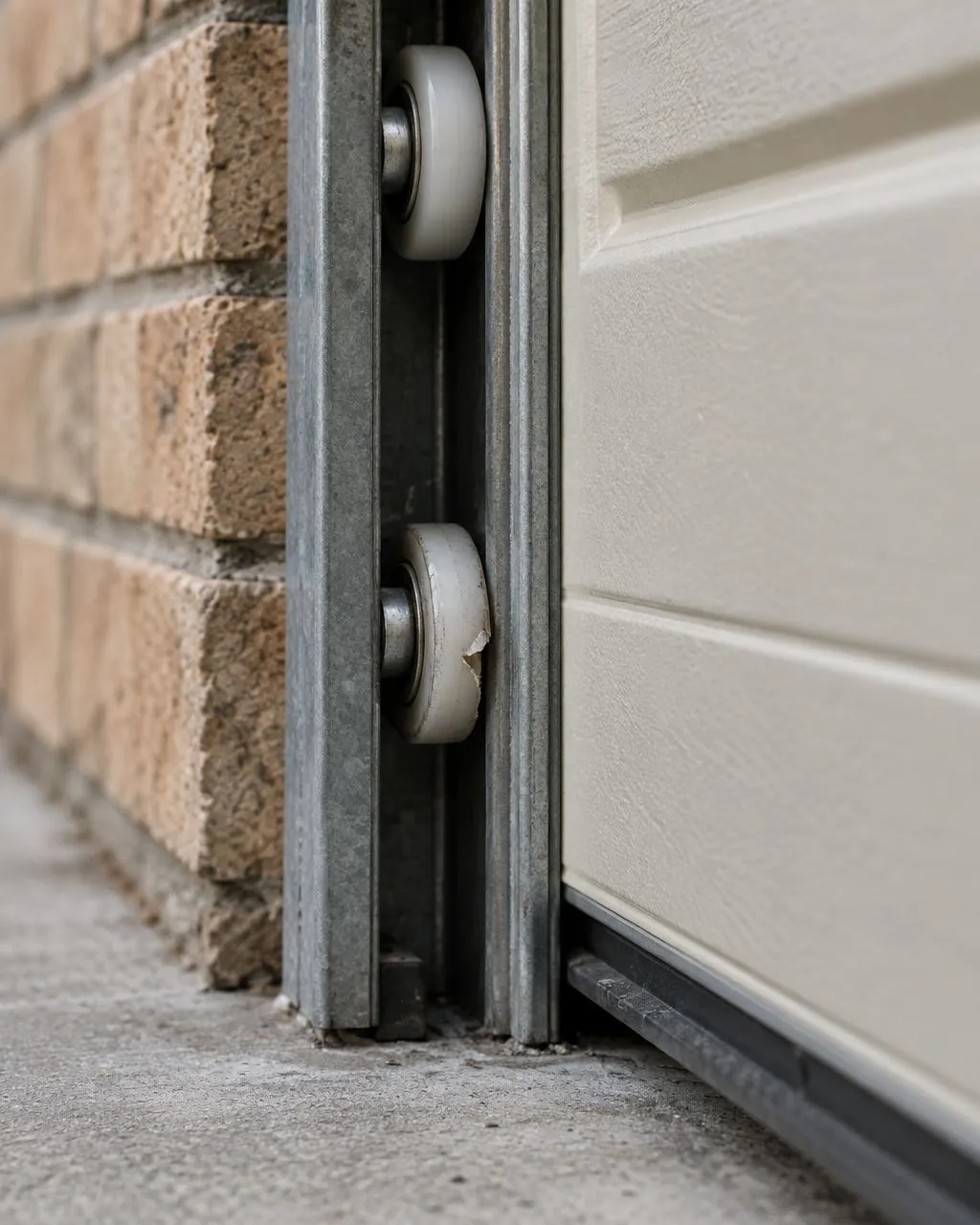
AI-generated illustration; not a Derby Strong customer project.