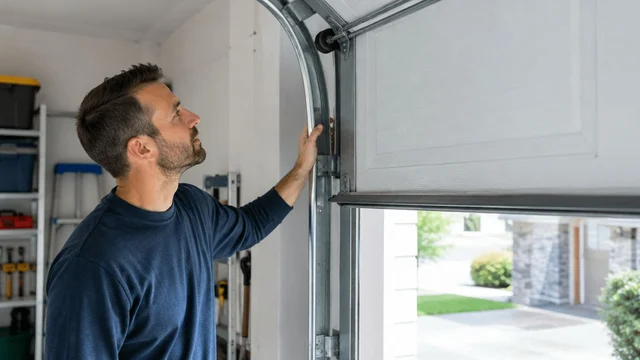
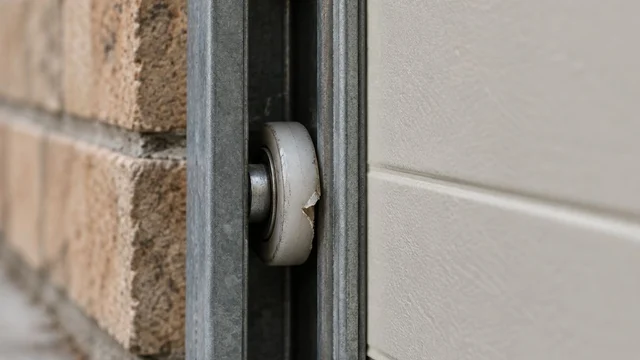
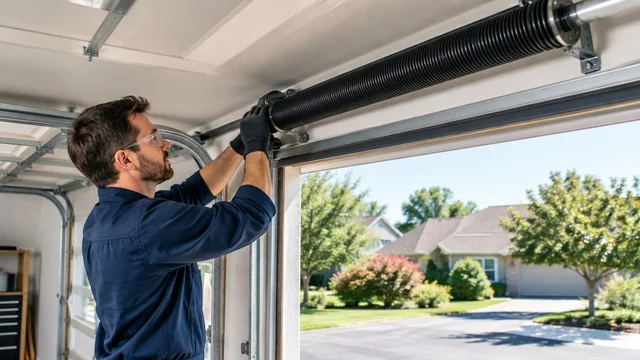
If a garage door cable is loose or has come off in Northern Kentucky, stop operating the door, keep everyone away from the opening, and arrange professional garage door repair. Do not pull the emergency-release cord, try to put the cable back on, or force the door closed. A displaced cable can leave the door unevenly supported, even when the opener still responds.
TL;DR
- Garage door cable came off Northern Kentucky: stop using the door and keep the opening clear.
- Do not reset cables, adjust brackets, pull the emergency release, or increase opener force.
- Derby Strong provides garage door repair for Northern Kentucky homeowners and businesses.
- A cable problem needs inspection of the lifting system, not an automatic recommendation for a new door.
Why This Matters for Your Door
A garage door opener is not a substitute for a working counterbalance system. On a typical sectional door, the springs and cables work together to support movement; a cable that loses its proper position can leave one side unsupported or change how the door travels.
Derby Strong provides garage door repair for Northern Kentucky homeowners and businesses. Professional garage door repair is the right next step when a cable is loose, displaced, or visibly damaged—not another test with the opener.
This guide focuses on what you can safely observe, what to leave alone, and what information helps a technician assess the problem. The immediate priority is keeping people out of the door’s path, not getting another opening cycle out of it.
What should you do about a loose garage door cable in Northern KY?
Stop using the garage door as soon as you notice a loose cable, a cable hanging outside its normal path, or a door sitting crooked. Treat the position of the door as a safety issue rather than a troubleshooting opportunity.
1. Stop sending commands to the opener
Do not use the wall control, remote, keypad, or connected app to test whether the problem clears. Tell everyone with access to those controls that the door must stay out of use.
Keep remotes away from children and other household members. At a business, notify staff who use the opening so another person does not activate the door without knowing about the fault.
2. Keep people and vehicles clear
Do not walk under a raised or partly raised door to inspect the cable. Keep children, pets, customers, and staff away from the opening and from the area beneath the door.
Use another entrance when one is safely available. If a vehicle is trapped inside, leave it there rather than trying to raise the door by hand or driving beneath an unstable door.
3. Leave the cable and emergency release alone
A loose-looking cable does not establish that the spring system is unloaded. Do not touch the cable, cable drum, spring hardware, bottom brackets, or related fasteners.
Do not pull the emergency-release cord when a cable fault is suspected. Disconnecting the opener can remove a restraint from a door whose support is already compromised. A technician should assess the door before disconnecting or moving it.
4. Report the door’s current position
Tell the repair provider whether the door is fully closed, partly open, or raised. Also report whether it looks tilted, whether a cable is hanging, and whether anyone heard a sudden noise before the problem appeared.
Take photographs only from an accessible location outside the door’s travel area. Do not climb a ladder, move the door, or reach around hardware to get a better image.
What does the visible cable problem tell you?
The appearance of the cable helps describe the problem, but it does not establish the cause. Cable displacement, cable damage, spring trouble, and uneven door movement require inspection of the connected components.
| What you can see from a safe position | What it means for your next move | What not to do |
|---|---|---|
| Cable hanging loosely beside the door | Stop use and report the visible slack | Do not wind or tension it yourself |
| Cable displaced from its normal route | Ask for inspection of the cable and lifting system | Do not put it back on by hand |
| Door tilted or one edge sitting higher | Treat the door as unevenly supported | Do not push the higher side down |
| Frayed strands or a visibly broken cable | Report cable damage and keep clear | Do not handle sharp strands or splice the cable |
| Door partly open with a cable fault | Keep the area beneath it empty | Do not pull the emergency release |
| Door fully closed with a cable fault | Leave it closed and stop operating it | Do not assume closing has made the fault harmless |
A cable that appears slack is a symptom, not a complete diagnosis. The useful observation is what you see and where the door is—not a guess about which part needs replacing.
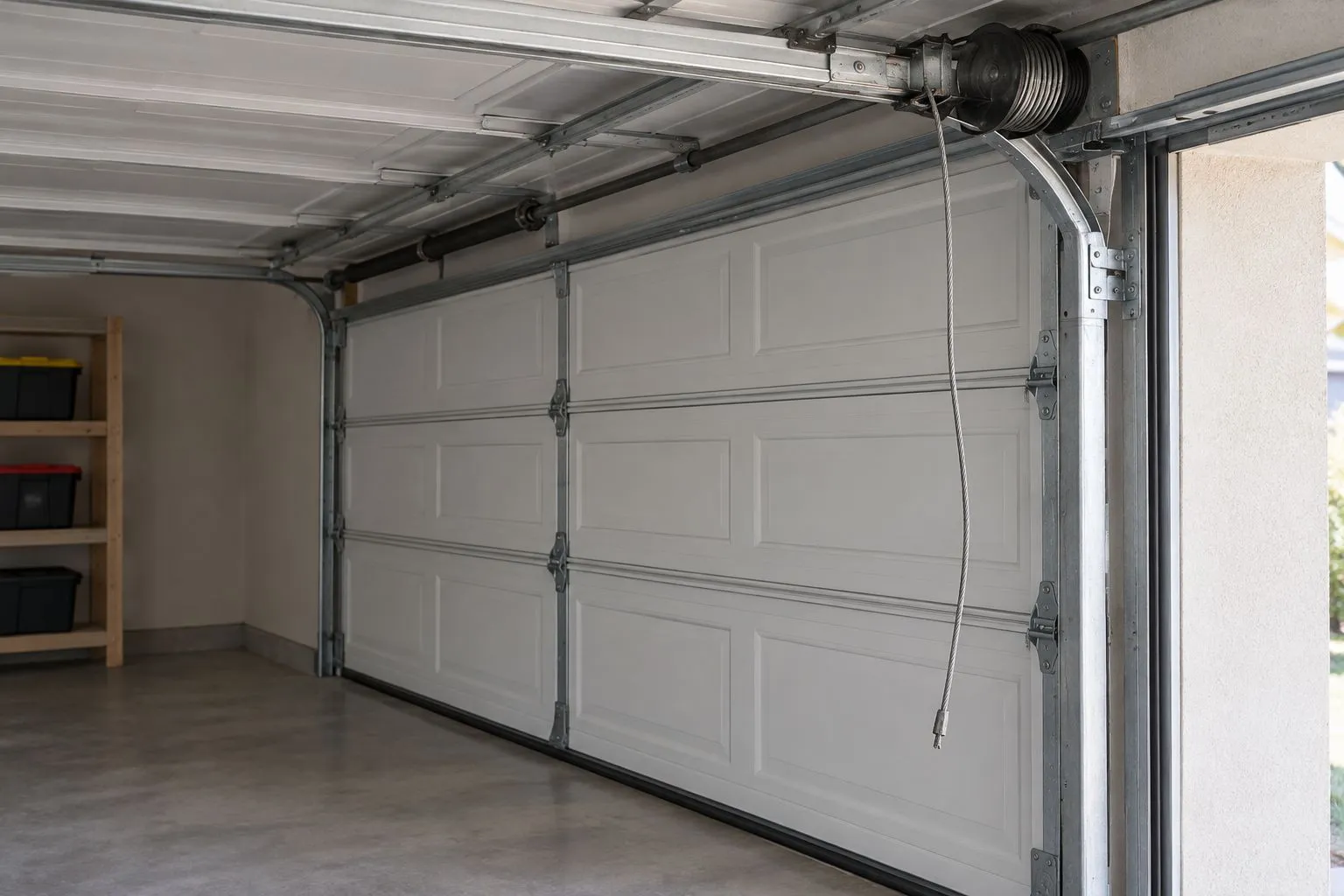
Illustrative photo, not a Derby Strong project: leave a closed door with a loose cable out of use.
Why a garage door cable comes off or becomes loose
A technician needs to determine why the cable lost its normal tension or position before returning the door to service. Putting the cable back without finding the cause leaves that question unanswered.
The inspection should consider these connected factors:
- Cable condition: Fraying, breaks, corrosion, or deformation can affect the cable’s integrity. Visible damage deserves inspection without handling the strands.
- Spring support: A spring fault can change the tension available to the lifting system. A cable symptom does not rule out a spring problem.
- Cable routing and drum seating: On a torsion-spring setup, the cable must follow the intended path and sit correctly on its drum. Inspecting that arrangement is professional work.
- Door travel: Binding, an obstruction, or uneven movement can affect how the door and cables move together. Report anything you noticed before the fault without recreating it.
- Connected hardware: Tracks, rollers, brackets, and attachment points form part of the operating system. The technician should assess relevant damage rather than treating the cable in isolation.
These are inspection areas, not a diagnosis of your particular door. A photograph of a loose cable cannot establish which component failed first or whether the remaining hardware is safe.
What changes if the door is open instead of closed?
If the door is fully closed
Leave the door closed and prevent anyone from operating it. A closed position reduces the need to pass beneath a raised door, but it does not prove that the cable or spring system is safe to touch.
Do not lift an edge to see whether the cable tightens. Keep stored items away from the hardware if you can do so without touching the door, track, or cable.
If the door is partly open or raised
Keep everyone out from beneath the door and do not attempt to bring it down. Avoid parking, loading, unloading, or working in its travel area.
Tell the repair provider that the door is raised or partly open when you request service. That information matters because the technician must assess and secure the door before working on the lifting system.
If the door is crooked or visibly damaged
Do not push either side, move rollers, or loosen track fasteners to straighten it. A crooked door can involve more than a displaced cable, including damage caused by uneven loading.
Describe the tilt and any visible panel or track damage from a safe location. If the door threatens people, blocks the only safe exit, or creates another immediate emergency, contact emergency services rather than attempting a repair.
What should you tell a Northern Kentucky garage door repair provider?
Give the provider your actual Northern Kentucky property location and a plain description of the fault. Confirm that service can be arranged for that address rather than assuming coverage from a nearby city name.
Useful details include:
- Door position: Closed, partly open, or raised.
- Visible symptoms: Hanging cable, frayed cable, crooked door, or damaged panel.
- What happened beforehand: A sudden noise, an obstruction, uneven movement, or an impact you actually observed.
- Access constraints: A trapped vehicle, a blocked entrance, or no safe alternative way into the building.
- Door use: Residential garage, commercial overhead opening, or another property-specific use.
- Safe photographs: An overall view and visible damage, taken without approaching unstable parts.
If the opening serves a business, explain whether staff, deliveries, or customers normally pass through it. Keep the damaged door out of use while arranging an alternative access route that meets the property’s safety requirements.
Avoid reporting a guessed repair as a confirmed fact. Saying the cable is hanging and the door is tilted is more useful than saying it only needs a quick reset.
Does a loose cable mean you need a new garage door?
A loose or displaced cable alone does not establish that the whole garage door needs replacement. The decision depends on the condition of the door, the lifting system, and any damage caused during the failure.
A targeted repair addresses a repairable fault without replacing an otherwise serviceable door. Its limit is that replacing or reseating a cable does not resolve unrelated structural damage, worn components, or the original cause unless those are also assessed.
Replacement becomes a separate discussion when inspection identifies damage or condition problems that make repair inappropriate. Its benefit is replacing the affected door assembly; its drawback is a larger scope of work that is unnecessary when the existing door can be safely repaired.
Ask the technician to explain what failed, what remains serviceable, and why the proposed scope is appropriate. If replacement is recommended, ask which findings rule out repair rather than accepting the cable problem itself as the reason.
What should professional cable service include?
Professional service should address the fault as part of the door’s lifting system. The goal is safe, consistent operation—not simply making a hanging cable disappear from view.
Ask for an explanation of the cable’s condition, relevant spring and hardware findings, and any damage to the door or its travel path. The technician should secure the door as needed before working on tensioned components and assess operation after the repair.
Before you resume use, ask whether any remaining issue limits operation and what maintenance instructions apply to the repaired system. If you rent the property, also follow the owner’s repair-authorization process without attempting temporary adjustments yourself.
Derby Strong provides professional garage door repair for Northern Kentucky homeowners with a loose or displaced cable. Describe the symptoms when arranging service so the discussion starts with the fault, not an assumption that you need a new door.
Arrange professional garage door repair
Report the cable condition, door position, and any blocked access before attempting to use the door.
Can you do any maintenance before the repair?
Leave maintenance involving the damaged door until the cable fault has been assessed. Lubricating parts, adjusting opener settings, or testing the door’s balance will not establish whether the lifting system is safe.
Your useful preparation is administrative and observational: notify other users, gather any existing door information, and document symptoms from a safe position. Clear an accessible approach for the technician only where doing so does not require passing beneath the door or moving its hardware.
Do not remove the cable, take parts apart, or buy a replacement based only on appearance. The appropriate cable and repair procedure depend on the door’s actual configuration.
Frequently Asked Questions
What should I do if my garage door cable came off in Northern Kentucky?
Stop operating the door, keep everyone away from the opening, and arrange professional garage door repair. Do not reset the cable, force the door, or pull the emergency-release cord.
Can I close my garage door if one cable is loose?
Do not attempt to close a garage door with a suspected cable fault. Leave the door in its current position, keep its travel area clear, and tell the repair provider whether it is raised or partly open.
Is a loose garage door cable dangerous if the door is already closed?
A closed door with a loose cable still needs professional inspection before further use. The closed position does not prove that the cable, springs, or connected hardware are safe to handle.
Should I pull the red emergency-release cord when a cable comes off?
Do not pull the emergency-release cord when a cable fault is suspected. Disconnecting the opener can remove a restraint from an unevenly supported door, particularly when it is raised or partly open.
Does a cable coming off mean the garage door spring is broken?
A displaced cable does not by itself prove that a spring is broken. A technician needs to inspect the cable, spring system, door travel, and connected hardware to identify the cause.
Do I need a new garage door after a cable comes off?
A cable coming off does not automatically mean you need a new garage door. Repair-versus-replacement decisions depend on inspection findings, including structural damage and the condition of the remaining system.
What information should I give Derby Strong about a loose cable?
Tell Derby Strong your Northern Kentucky property location, the door’s current position, and the visible cable symptoms. Report blocked access or a trapped vehicle, and provide photographs only if you can take them from a safe location.
One Last Thing Before You Decide
A door that still responds to its remote has not passed a safety check. The opener’s ability to move it does not establish that the cables are carrying their intended load or that the door will travel evenly.
Do not recreate the failure for a video or demonstrate it for the technician. A description and safely taken photographs preserve useful information without putting the door through another operating cycle.