Rain travels downhill and Louisville receives plenty of it. When water appears inside the garage after a storm, the door is usually the last thing to blame. Start by identifying where the water enters, because the fix differs completely depending on whether it comes under the door, around the sides, or through the wall itself.
Key takeaways
- Water entering a Louisville garage usually arrives under the door, at the side edges or through the driveway apron; identify the path before buying any seal.
- A worn bottom seal or a low spot in the concrete explains most under-door water.
- No seal makes a garage opening waterproof; standing water against the door requires a drainage or grading conversation.
- Derby Strong Garage Doors inspects Louisville garage doors for water entry and repairs the seals the inspection justifies.
Why is rain getting under your garage door in Louisville?
The most common cause is a failed bottom seal, and the second is a low spot in the driveway concrete. Water flows along the apron, finds the lowest contact point, and pushes through whatever opening it finds first.
Louisville’s storm pattern makes the problem visible rather than gradual. A summer thunderstorm can drop a large amount of rain in a short window. If the driveway slopes toward the garage even slightly, that water arrives as a moving sheet instead of a puddle, and a healthy seal is designed to slow that contact, not to hold back standing water.
Before you order anything, dry the floor and look at the three places water gets in:
- Under the door: a visible gap, a flattened seal or a spot where the concrete dips.
- At the side edges: water that tracks down the inside face of the jamb points to side weatherstripping or an exterior trim gap.
- At the wall: a damp patch that appears above floor level or after the storm ends can come from the wall, siding or roof edge rather than the door.
Inspect the apron, not just the seal
Stand outside during a steady rain, at a safe distance from the door’s travel path, and watch where water goes as it approaches the garage. Note whether it sheets across the driveway, pools against the door’s bottom edge, or soaks away before reaching the door.
Repeat inside when the storm is over. A dry chalk line or a piece of cardboard laid flat inside the door shows whether water arrived under the door or around the sides.
Concrete movement is common in Kentucky because of the freeze-thaw cycle and soil movement. An apron that was flush when the house was built can settle or heave and create a low spot at the door line. A new seal cannot fix a concrete problem, but a technician can tell you which problem you have.
| What you observe | Likely cause | What addresses it |
|---|---|---|
| Water in a thin line only under the door | Bottom seal worn or floor low spot | Bottom seal replacement or a threshold seal; grading repair if concrete has settled |
| Water pooling against the outside of the door | Apron slope or blocked drainage | Grading, drainage or apron correction before or alongside seal work |
| Damp streaks on the inside face of the jamb | Side weatherstripping or exterior trim gap | Side seal replacement and exterior caulking review |
| Damp patch high on the wall or ceiling corner | Roof, gutter or siding issue | Referral to the appropriate trade; not a door repair |
| Water appears hours after the rain stops | Ground saturation through the slab or walls | Drainage assessment beyond the door system |
Why sealing alone is not the answer
A garage door opening is not designed to be watertight. The door closes against a flexible seal and a flat floor, and both tolerate small imperfections. During a heavy storm with standing water at the apron, no rubber edge can hold back a column of water.
The useful question is not “which seal is strongest” but “what is the water’s path?” If the driveway sends water toward the door, redirecting or slowing that flow does more than any seal replacement. If water only reaches the door as runoff and the seal is worn, replacing the seal is a small repair that makes a real difference.
What a Louisville inspection should cover
A water-entry inspection is more than looking at the door. The technician should walk the whole opening, inside and outside, and check the following:
- The bottom seal’s material, retainer and contact with the floor along the full width.
- The floor’s level at the door line, including any dip at one end.
- The apron’s slope away from the opening and any settling or cracking.
- Side weatherstripping and the condition of the exterior trim.
- The door’s squareness when closed. A door that has dropped on one side contacts unevenly and leaves a gap no seal can close.
Do not accept a quote that replaces a seal without mentioning the floor or the door’s alignment. That repair may improve things briefly and leave the real problem in place.
When the fix is the door, and when it is the concrete
If the inspection confirms the seal is worn, the floor is sound and the apron drains correctly, the repair is straightforward: a new bottom seal, matched to the door’s retainer, installed by a technician who verifies the door’s travel afterward.
If the floor has settled at one end, sealing alone leaves a gap the new seal cannot bridge. A threshold seal bonded to the concrete can fill a small dip, and an apron or slab correction addresses a larger one. That work may be outside a garage door company’s scope, and it is better to hear that plainly than to pay for a seal that cannot solve a concrete problem.
If the door itself is corroded at the bottom section or has dropped out of square, seal work comes after the structural repair. Do not pay to seal a door that still needs alignment or section work.
Preparing for the appointment
You do not need to diagnose the problem before calling. What helps is a short account of what you saw:
- When the water appears, during or after the rain, and how much.
- Whether it comes under the door, at the sides or through the wall.
- Whether the garage floor has always been dry in ordinary weather.
- Any concrete work, landscaping or drainage changes near the driveway in recent years.
Photographs of the closed door’s bottom edge, the apron and any interior water line help the technician plan the visit. Do not open the door during a storm to photograph anything.
Frequently Asked Questions
Why does water come under my garage door only during heavy rain?
Light rain drains away before it reaches the door. A heavy storm delivers enough water for the apron to sheet toward the opening and find a low spot or a worn seal. The storm is the trigger; the path is the underlying cause.
Can I stop garage door water leaks with a new bottom seal?
Yes, when the leak is caused by a worn seal and the floor and apron are in good condition. If water is pooling against the door or the concrete has settled, a seal alone will not stop the entry.
What is a garage door threshold seal?
A threshold seal is a flexible strip bonded to the concrete under the closed door. It can fill a small dip and slow runoff. It is not a substitute for fixing a significant slope or a damaged apron.
Does Louisville weather damage garage door seals faster than other climates?
Kentucky’s freeze-thaw winters and hot, humid summers harden and crack rubber over time. Seals are a wear item; inspect them at least once or twice a year rather than waiting for a leak.
Should I put sandbags or a dam in front of my garage door during storms?
Temporary barriers can slow shallow runoff but do not make the opening waterproof and can hide a drainage problem that keeps getting worse. A lasting fix addresses the path the water takes.
Why is the wall above my garage door damp after rain?
Water that appears above floor level usually comes through the siding, trim, roof edge or a wall penetration rather than the door. Ask for that area to be inspected separately; a door repair will not address it.
How do I know if my driveway has settled?
Look for a dip at the door line, a crack that runs toward the street or a spot where water sits long after the rest of the driveway is dry. A technician can confirm whether the low spot is at the seal line or further out.
Who should I call about water under my garage door in Louisville?
Start with a garage door inspection. Derby Strong Garage Doors examines the door, seals, floor line and apron together, then identifies what the door repair can fix and what belongs to a drainage or concrete contractor.
The detail to capture before you call
Photograph the water’s path, not the water. A photo of the dry apron showing where water pooled, plus a photo of the closed door’s bottom edge, tells a technician more than a description of the storm. Do not photograph anything during active lightning.
Derby Strong Garage Doors serves Louisville homeowners with garage door repair and weather seal service, and tells you plainly when a problem is the concrete rather than the door.
Related Garage Door Guides
- Which garage door weather seal does your Louisville home need?
- Should a storm-damaged Northern Kentucky garage door be replaced?
- Safe garage door maintenance observations
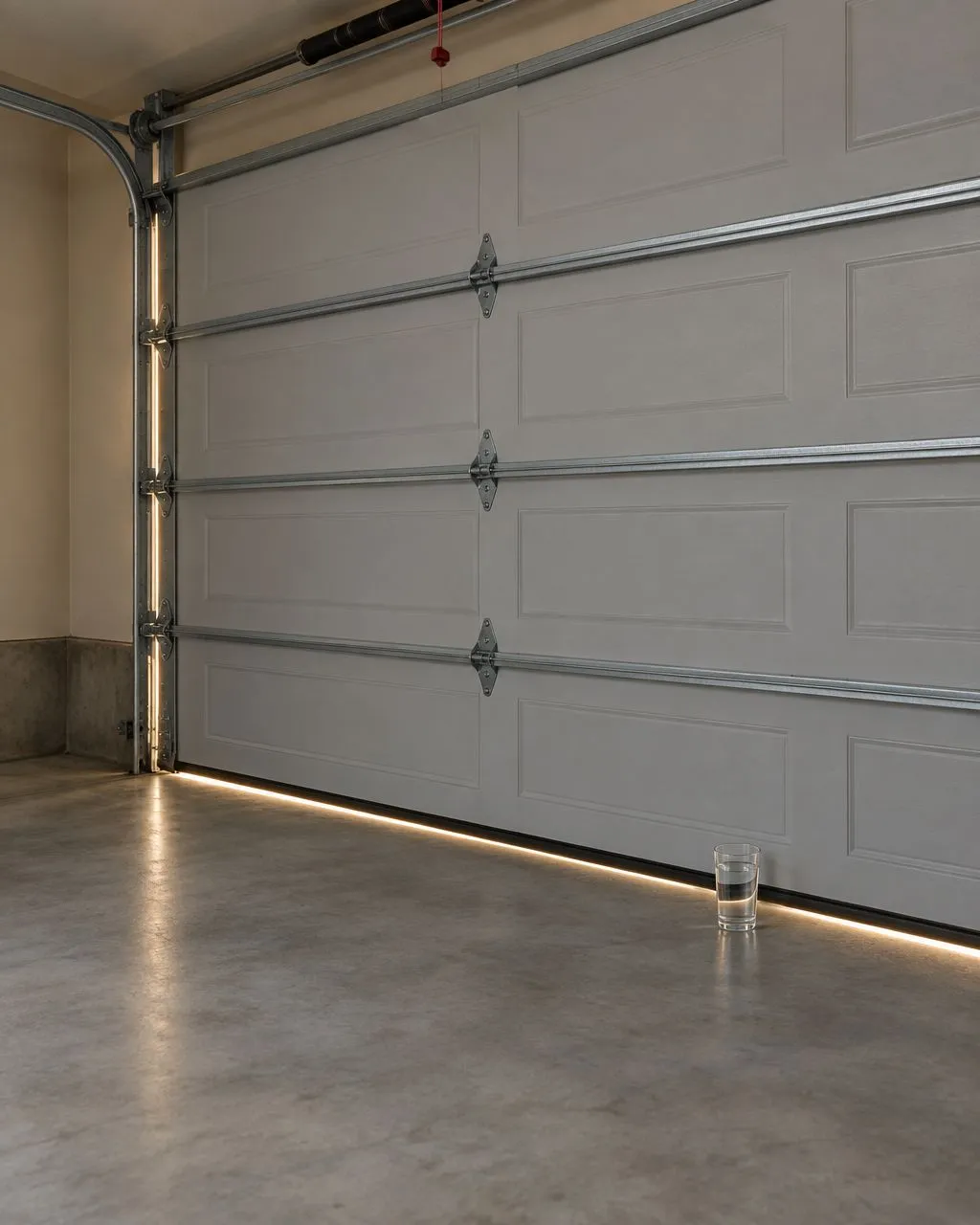
AI-generated illustration; not a Derby Strong customer project.