Louisville weather has two different enemies at the garage opening. Summer humidity and storms test the bottom edge, while winter cold pushes heated garage air and any conditioned living space above or beside the garage toward the outside. Most homes need one or two seal types, not all of them.
Key takeaways
- A Louisville garage door usually needs a bottom seal and, where gaps are visible, weatherstripping at the sides and top.
- Check the floor contact and the sides on a dry day; wind-driven rain and leaves show where seals fail.
- An aging or split bottom seal is a common repair; confirm the exact retainer type before ordering.
- Derby Strong Garage Doors provides garage door weather seal repair in Louisville as part of a professional inspection.
Which garage door weather seal does your Louisville home need?
Start with a bottom seal. A standard sectional garage door benefits from a working seal along the bottom edge in every season. Side and top weatherstripping matters when you can see daylight or feel airflow around the jambs and header.
Think about two different problems before choosing parts. The bottom seal addresses the gap between the door and the driveway or garage floor. Side and top seals address the gap between the door and the frame. Both matter, but they fail differently and are repaired differently.
| Seal type | Where it works | What it addresses | Common failure |
|---|---|---|---|
| Bottom seal | Between the door’s lowest section and the floor | Drafts, leaves, dust and water at grade | Split or flattened rubber; crumbling at the ends |
| Side weatherstripping | Between the door’s face and the jambs | Airflow and light at the vertical edges | Loose, cracked or missing strip |
| Top weatherstripping | Between the top section and the header | Air and pests at the upper edge | Stiffened strip no longer contacting the door |
| Threshold seal | Bonded to the concrete under the door | A low spot where the floor meets the door | Adhesive failure after repeated vehicle contact |
The listed options are the usual categories. A Louisville home can need only the bottom seal or all three frame seals. Decide from inspection rather than a package that ships every piece whether you need it or not.
Inspect in daylight before you buy anything
The most reliable inspection takes a few minutes inside the closed garage with the door down and the lights off. Daylight around the edges shows where seals no longer contact. Mark what you see before you look at products.
- Bottom contact: look along the entire bottom edge. If you can see daylight at one end or in the middle, the bottom seal has failed or the floor has a low spot.
- Side edges: look for daylight from inside. A gap that appears only near the floor suggests a bottom seal issue; a gap along the full height points to side weatherstripping.
- Top edge: check where the top section meets the header. A gap here often shows up as dust streaking down the door face after dry spells.
- Floor condition: note cracks or a sloped apron outside. Those features affect which sealing approach can work and belong in any professional assessment.
Do not pull the emergency release or force the door to observe it. The inspection above needs a closed, stationary door only.
Record where you see light or debris. A phone photo of the bottom edge and both jambs helps a technician order the right parts before visiting.
Match the replacement to the retainer, not to the photo
Bottom seals come in different retainer styles: some doors use a single flexible bulb that slides into an aluminum channel, others use a flat rubber that screws to the door face, and some use a T-shaped edge that locks into a grooved retainer. Ordering the wrong style leaves you with a part that cannot be installed.
If the existing bottom rubber is intact enough to remove a sample or photograph its cross-section, that photograph is the most useful detail you can supply. A technician can identify the retainer from it faster than from a model number of the door alone.
Watch for one more trap: the seal material and the door model are separate facts. Two doors of the same width can use different retainers. Confirm the exact part rather than assuming any “universal” product fits.
When a seal repair is enough
A seal replacement is the right repair when the door itself is healthy: sections sound, hardware quiet, the opener cycling normally, and the only problem is light, water or air where a worn seal used to be. In that case the repair is small, and the improvement is immediate.
A seal repair is NOT the right fix when:
- The floor has a significant low spot that no seal height can bridge alone.
- The door is cracked, rusted through at the bottom section, or corroded at the hardware.
- The door is misaligned so one corner contacts before the other.
- The opener has been adjusted to compensate for a dragging door.
Those situations need the underlying condition corrected first. Adding a thicker seal to a misaligned door can make operation worse and wear out quickly.
What the weather can do to your garage
Louisville summers bring humid air and storms; winters bring freezing nights and de-icing salts tracked in from the driveway. Seals deal with the weather at the edge of the door, not the weather itself.
A working bottom seal keeps leaves and dust out of the garage, and slows water that arrives as runoff rather than as standing flow. It does not make the opening waterproof. If heavy storms bring ponding water that pools at the apron, the answer is a drainage or grading conversation alongside any seal work.
During freezing nights, a seal that has become stiff can adhere to the concrete. Forcing the door open in that condition can tear the seal or stress the hardware. See the Northern Kentucky guide to frozen doors for safe thawing steps that apply anywhere in Kentucky.
Ordering and scheduling
Most Louisville seal repairs do not require replacing the door or the opener. Expect the visit to include inspection of the door’s balance and travel before the new seal is confirmed, because an uneven door destroys a new seal quickly.
When you contact Derby Strong Garage Doors for garage door weather seal repair in Louisville, mention:
- Whether the problem is water, drafts, light or pests.
- Whether the issue appears only after rain or only in cold weather.
- A photo of the current bottom seal’s cross-section, if you can reach it safely.
- Whether the door has ever been serviced and which company did the work.
That information shortens the diagnosis. It also avoids ordering a universal part that has to be returned.
Frequently Asked Questions
How often should a Louisville garage door bottom seal be replaced?
There is no fixed interval. Inspect once or twice a year, especially after a hard winter or a stormy summer; replace it when you can see light under a closed door, when the rubber is split or flattened, or when debris starts collecting inside.
Can I install garage door weatherstripping myself?
Some side and top weatherstripping is a straightforward homeowner job. Bottom seals that sit in a retainer or connect to hardware are better left to a technician, because the door’s balance and travel should be verified at the same time.
Why is my garage door seal stiff or cracked after winter?
Rubber hardens with age and with repeated freeze-thaw cycles. A stiff seal may still contact in mild weather and fail in cold weather; replace it rather than bending it back into shape.
Will a new bottom seal stop all water from entering my garage?
No. A working seal slows runoff and splashing but cannot make a garage opening waterproof. If storm water pools against the apron, discuss grading or drainage alongside the seal repair.
What is the difference between a bottom seal and a threshold seal?
A bottom seal is a flexible strip attached to the door’s lowest section. A threshold seal is glued to the concrete underneath the door. They work together on some floors, and a technician can tell you whether your floor needs one or both.
Why does the gap under my garage door look different from one end to the other?
A gap that varies along the door usually means the floor is not level or the door has gone out of square. Measure where the gap is widest and mention it when you request service; a thicker seal alone may not fix a floor issue.
How much does garage door weather seal repair cost in Louisville?
The amount depends on which seals are needed, whether the retainer is intact and whether any adjustment is required. Ask for a written quote after inspection rather than relying on an online average that may not match your door.
Does Derby Strong Garage Doors replace garage door weather seals?
Yes. Derby Strong provides garage door weather seal repair in Louisville, including inspection of the door’s condition so the new seal performs as intended.
The single detail that saves the most time
Photograph the existing seal’s cross-section before you request service. A profile view of the current bottom rubber tells a technician which retainer your door uses. That detail usually decides whether the repair is a same-part swap or a retainer replacement.
Derby Strong Garage Doors provides garage door repair and weather seal service across the Louisville area. The next step is an inspection; there is no reliable way to choose the correct seal from a photo alone.
Related Garage Door Guides
- Why rain gets under a Louisville garage door
- Safe garage door maintenance observations
- Can you replace a bent garage door panel in Louisville?
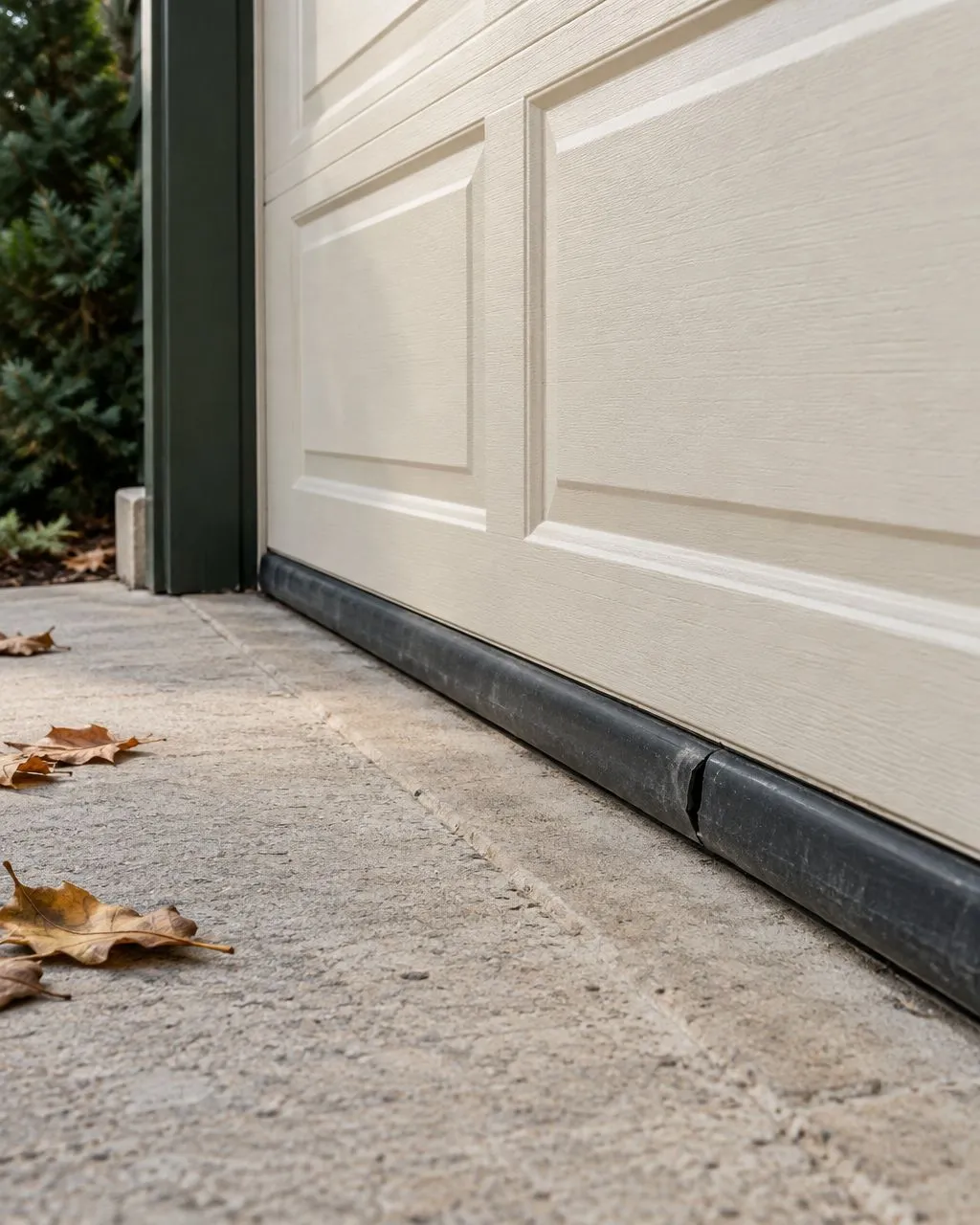
AI-generated illustration; not a Derby Strong customer project.