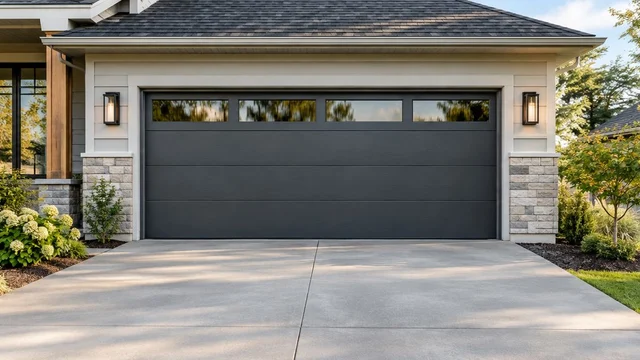
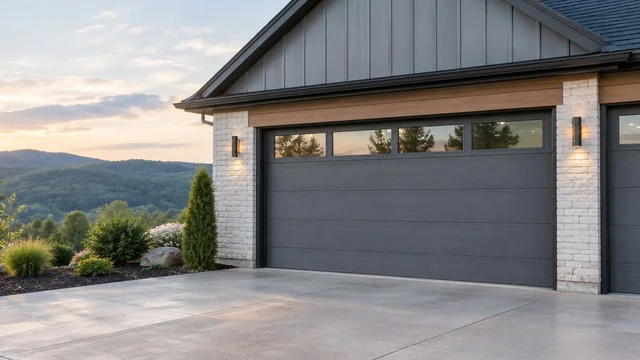
Best overall for a conventional Kentucky retail entrance: a glazed pedestrian storefront door. Best for securing a visible display after closing: a rolling security grille. Best repair-first option: keep a serviceable existing door and correct the fault. This guide separates customer entrances, overhead openings and vehicle gates so you choose the right system for the job.
TL;DR
- For the best retail storefront door Kentucky businesses need, start with pedestrian access, not an overhead-door style.
- A rolling security grille suits after-hours display protection; it does not replace a weather-tight entrance.
- Derby Strong provides commercial overhead door, gate and fence services for Kentucky businesses.
- Repair a serviceable door when the fault is isolated; replace when the opening or operating needs require it.
Why This Matters for Your Door
A storefront entrance, a loading door and a driveway gate solve different problems. Choosing one by appearance alone leaves you comparing systems that do not do the same work.
Derby Strong is a service option for Kentucky businesses needing commercial overhead door or gate work. Its stated services include commercial overhead doors, gates and fences; that does not establish a product catalog for glazed pedestrian entrances or security grilles. Start with Derby Strong for work within that scope, and confirm who will handle any separate storefront-entry work.
For a property in Louisville, Lexington or Northern Kentucky, identify the actual opening and operating problem before requesting a proposal. Do not treat those markets as interchangeable or assume that an installer serves a particular address without confirmation.
What makes the best retail storefront door?
Judge each option against these criteria before comparing finishes:
- Opening purpose: Separate customer entry, merchandise delivery, indoor display protection and vehicle access.
- Safe passage: Evaluate pedestrian movement, accessibility, emergency exit arrangements and the moving door’s path.
- Building fit: Check opening dimensions, supporting structure, overhead clearance, side room and conflicts with equipment.
- Exposure: Decide whether the opening needs a weather barrier, thermal performance, visibility or privacy.
- Operating pattern: Describe who opens the system, how it is controlled and what happens during a power interruption.
- Serviceability: Compare the condition of existing components, repair access and the maintenance requirements of the proposed system.
A useful proposal explains these trade-offs. A style name alone does not tell you whether the door fits your building or your business.
Retail doors and gates at a glance
The order below starts with the ordinary customer entrance, then moves through distinct security, operating and repair needs. It is not a claim that an overhead door should replace a pedestrian entrance.
| Option | Best for | Standout feature | Key limitation |
|---|---|---|---|
| Glazed pedestrian storefront door | Everyday customer entry | Visibility through a dedicated walk-through entrance | Glass, hardware and exit arrangements need project-specific selection |
| Rolling security grille | Display protection after closing | An open-pattern barrier that preserves sightlines | Not a substitute for a weather-tight enclosure |
| Full-view sectional overhead door | A wide opening used as part of the retail space | Glazed sections that travel overhead | Requires track space and control of pedestrian access during movement |
| Insulated steel sectional overhead door | Enclosed stockroom or receiving access | An opaque sectional barrier with insulation options | Uses overhead space and does not provide a display view |
| Vehicle access gate | Restricting access to a yard or driveway | Controls entry at the property boundary | Does not secure the storefront entrance itself |
| Repair of the existing system | An isolated fault in an otherwise suitable door | Retains a working configuration | Cannot correct every structural, access or layout problem |
1. Glazed pedestrian storefront door: best for customer entry
A glazed pedestrian storefront door provides a walk-through entrance with visibility between the shop and the approach. For a conventional retail storefront, this is the default starting point—not an overhead door or vehicle gate.
Choose the entrance as an assembly. Glass, framing, threshold, closing hardware, locks and exit hardware all affect how customers and employees use it.
Glazed pedestrian storefront door pros:
- Gives customers a dedicated pedestrian route.
- Preserves a view into the retail space.
- Separates ordinary entry from delivery-door operation.
Glazed pedestrian storefront door cons:
- Glass does not establish the security performance of the complete assembly.
- Threshold and hardware selection require accessibility and exit review.
- Damaged framing or an unsuitable opening can expand the work beyond replacing a door leaf.
Ask who is responsible for storefront glazing, entrance hardware and any required approvals. Do not assume that commercial overhead-door service includes all of those trades.
Best for: Shops whose main need is a clear, usable customer entrance.
Verdict: Buy for a new pedestrian entrance; repair a suitable existing assembly when the fault is isolated.
2. Rolling security grille: best for visible after-hours protection
A rolling security grille closes across an opening while leaving sightlines through its open pattern. It is a distinct option when you want a physical barrier without covering the entire display with an opaque shutter.
The grille’s position matters. A barrier across the wrong route creates an access problem rather than solving one, particularly where employees remain inside after closing.
Rolling security grille pros:
- Preserves visibility through the closed barrier.
- Separates an accessible public area from a closed retail area.
- Rolls away from the opening when opened.
Rolling security grille cons:
- Does not provide a weather-tight exterior enclosure.
- Requires room for its guides and rolled assembly.
- Needs a closing arrangement that does not compromise required exits.
Document what the grille is meant to protect: the entry, a display area or an interior division. Have the proposed layout reviewed for safe passage before selecting its appearance or controls.
Best for: Businesses needing after-hours separation while keeping merchandise visible.
Verdict: Buy for display protection; skip as the sole exterior weather barrier.
3. Full-view sectional overhead door: best for a wide retail opening
A full-view sectional overhead door uses glazed panels and travels on overhead tracks. It suits a retail layout where opening a broad portion of the wall serves a defined operating purpose.
That purpose must justify the moving opening. A glazed overhead door is not automatically the right main entrance simply because it looks open and inviting.
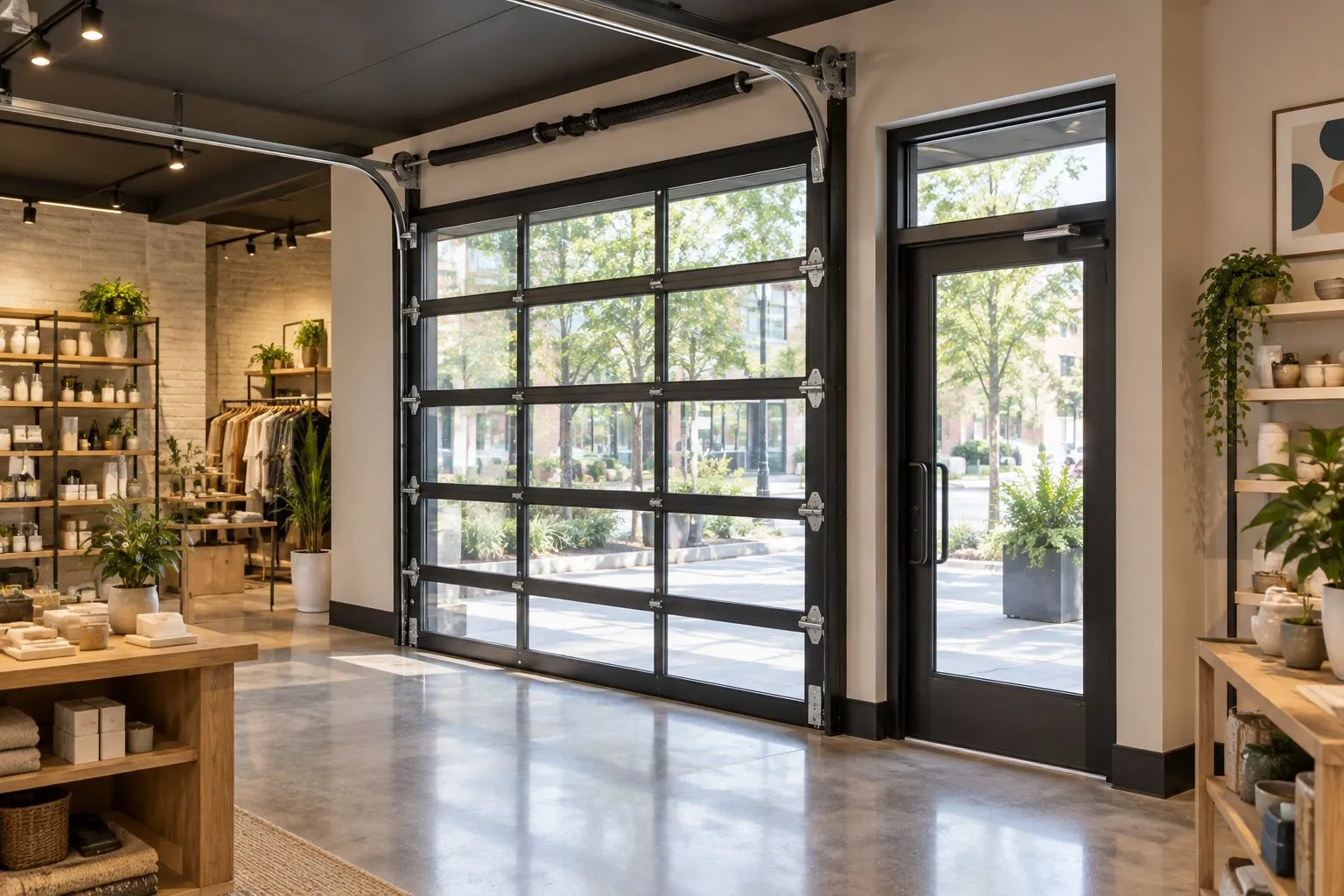
Illustrative photo: a separate pedestrian entrance keeps ordinary customer access distinct from overhead-door operation.
Full-view sectional overhead door pros:
- Provides daylight and a view through glazed sections.
- Opens a broad wall opening when the layout requires it.
- Separates the wide-opening function from a dedicated walk-through entrance.
Full-view sectional overhead door cons:
- Tracks and the open door occupy interior overhead space.
- Glazing and frame specifications affect thermal performance.
- Door movement requires keeping people clear of the opening.
Check track placement against lighting, shelving, sprinklers and other building equipment. Ask for current documentation for the proposed assembly rather than assuming all glass overhead doors share the same performance.
Derby Strong provides commercial overhead door services; confirm the proposed assembly and installation scope before treating a full-view design as a selected product.
Best for: Retail spaces with a specific need to open a wide section of the building.
Verdict: Buy for a planned wide-opening use; skip when ordinary pedestrian entry is the only need.
4. Insulated steel sectional overhead door: best for receiving areas
An insulated steel sectional overhead door creates an opaque barrier for a stockroom, receiving bay or other commercial opening. It is the practical comparison when deliveries and enclosure matter more than storefront visibility.
Assess the complete assembly, not insulation alone. Perimeter seals, panel construction, glazing if included and installation details all belong in the proposal.
Insulated steel sectional overhead door pros:
- Separates stored goods from exterior view.
- Provides a wide opening for the intended receiving operation.
- Offers insulated configurations for enclosed spaces.
Insulated steel sectional overhead door cons:
- Does not preserve a clear merchandise display view.
- Requires room for tracks and the open door.
- Insulation does not correct drainage problems or an unsuitable threshold.
Measure the delivery requirement as well as the opening. The door must accommodate the intended movement without conflicting with shelving, vehicles or workers.
The Lexington opening-measurement guide explains basic opening observations. Treat those observations as preparation, not a substitute for a commercial site survey.
Best for: Businesses needing an enclosed stockroom or receiving opening rather than a customer-facing display entrance.
Verdict: Buy for receiving access; hold until clearance and building constraints are confirmed.
5. Vehicle access gate: best for controlling yard entry
A vehicle access gate controls entry to a driveway, service yard or enclosed property area. It belongs in this comparison only when the problem is access to the site—not access through the storefront.
Swing and sliding arrangements use space differently. The selection depends on the actual layout, travel path and safe separation of vehicles and pedestrians.
Vehicle access gate pros:
- Restricts vehicle entry at a defined boundary.
- Separates yard access from customer-door operation.
- Supports a controlled entry arrangement for authorized users.
Vehicle access gate cons:
- Does not replace locks or security at the retail entrance.
- Requires a clear movement area and entrapment-risk assessment.
- Powered operation needs a defined plan for faults and power interruptions.
Map deliveries, customer parking and pedestrian routes before selecting a gate. Do not place a vehicle gate across the only intended pedestrian route without a suitable access plan.
Derby Strong provides gate and fence services. Confirm the project address, gate configuration and control requirements directly; do not assume a particular automation feature or product is included.
Best for: Businesses protecting a yard, driveway or vehicle-only service area.
Verdict: Buy for boundary access control; skip when the problem is the storefront door itself.
6. Repair the existing system: best for an isolated operating fault
Repair is the right starting point when the existing door fits the business and the problem is confined to a serviceable component. A sticking entrance, failed control or damaged seal does not automatically justify a different door system.
Replacement earns its place when inspection identifies a broader condition or when the opening no longer serves the business. The decision should follow the diagnosis.
Existing-system repair pros:
- Retains a suitable opening and operating layout.
- Targets the actual fault rather than changing unrelated components.
- Avoids redesigning an entrance that already serves its purpose.
Existing-system repair cons:
- Does not resolve every structural or frame defect.
- Does not add clearance or change the opening’s intended use.
- Depends on the condition and compatibility of the remaining components.
Ask the professional to distinguish the immediate fault from other observed concerns. A useful explanation identifies what repair restores and what remains unchanged.
Best for: Businesses with a suitable door and a specific, repairable problem.
Verdict: Hold on replacement until inspection shows why repair is insufficient.
How we ranked these solutions
The ranking follows opening purpose, safe passage, building fit, exposure, operation and serviceability. The pedestrian entrance comes first because customer access is the primary job of a conventional storefront door; the other entries serve different openings or constraints.
These are solution categories, not tested product models. Select any actual product from its current manufacturer documentation and the requirements of the property.
Which storefront solution should you choose?
Choose a glazed pedestrian entrance for ordinary customer access. Add a grille for a separate after-hours barrier, select an overhead door for a defined wide-opening task, and use a gate only for property-boundary access.
Before arranging work, give the professional a clear brief:
- Opening purpose: Explain who or what passes through it.
- Observed fault: Describe what happens without repeatedly operating a damaged system.
- Building constraints: Photograph visible clearances, obstructions and the threshold from a safe position.
- Access requirements: Identify customer routes, exits, deliveries and employee entry.
- Repair question: Ask what can be retained and why replacement is necessary, if recommended.
Do not adjust springs, cables, tracks, brackets or high-tension components. Never force a damaged door, increase opener force to overcome a fault or bypass a protective device. Keep people away from an unstable door or malfunctioning gate and arrange professional assessment.
Discuss your commercial opening
Ask about commercial overhead door or gate work for your Kentucky business.
Frequently Asked Questions
What’s the best retail storefront door for a Kentucky business?
A glazed pedestrian storefront door is the default choice for a conventional customer entrance. Choose overhead doors for wide commercial openings and gates for vehicle access rather than treating them as interchangeable entrance options.
Is a rolling security grille enough for an exterior storefront?
A rolling security grille is not a weather-tight exterior enclosure. It provides an open-pattern barrier and needs a separate enclosure where protection from exterior conditions is required.
Should I replace a commercial door that has stopped working?
Diagnose the fault before deciding to replace the door. Repair is appropriate when the existing system remains suitable and the fault is isolated; replacement needs a condition-based or operational reason.
Can a glass overhead door serve as the customer entrance?
Do not assume a glass overhead door can serve as the required pedestrian entrance. Have the entrance, accessibility and exit arrangements reviewed, and keep customers clear whenever the overhead door moves.
Does Derby Strong install every type of storefront entrance?
Derby Strong states that it provides commercial overhead door, gate and fence services. Confirm the scope directly before assuming glazed pedestrian entrance or security-grille installation is included.
What should I check before requesting commercial door service?
Record the opening’s purpose, visible condition, operating symptoms and nearby obstructions from a safe position. Do not operate an unstable door or adjust springs, cables, tracks, brackets or gate safety devices.
How do I choose between a vehicle gate and a storefront security door?
Choose a vehicle gate to control access to a yard or driveway, and a storefront security solution to protect the building opening. If both boundaries need protection, plan them separately while preserving pedestrian access and required exits.
One Last Thing Before You Decide
Describe the failure before naming the replacement. Telling a professional that deliveries cannot clear the opening, customers struggle with the entrance or the yard needs controlled access produces a better decision than requesting a door style first.