Best overall for a worn floor-edge seal: a replacement bottom seal matched to your door’s retainer. Best for side and top gaps: perimeter weatherstripping; best for a remaining floor gap: a threshold seal only after checking door alignment and drainage. For Louisville Highlands homes, the right garage door weatherstripping depends on where the gap starts—not which seal looks thickest.
TL;DR
- Garage door weatherstripping in Louisville Highlands starts with locating the gap, not buying a universal seal.
- Replace a worn bottom seal with a profile that matches the existing door retainer.
- Use perimeter weatherstripping for side and top gaps; check drainage before choosing a threshold.
- Derby Strong provides garage door repair in Louisville; damaged cables, tracks and brackets require professional attention.
Why this matters in the Louisville Highlands
A draft at the jamb and water beneath the door are different problems. Buying the same replacement strip for both leaves the actual fault unresolved. Start with the closed door and identify whether the opening is beneath it, around its frame or between its sections.
Derby Strong is a garage door repair option for Louisville homeowners who need a professional assessment before replacing seals. You can start with Derby Strong when a sealing problem also involves uneven movement, damaged hardware or a door that will not close normally.
For a Highlands property, describe the actual opening rather than assuming the neighborhood determines the seal. An attached garage, detached garage and commercial overhead door each need an assessment of the installed door, its frame and its floor. A street address helps identify the property; it does not identify the replacement seal.
What makes the best garage door weatherstripping?
Choose weatherstripping by fit and fault location. These criteria matter more than a package labeled universal:
- Gap location: Bottom seals, frame seals and joint seals address different edges.
- Retainer compatibility: The replacement bottom seal must fit the existing retaining channel or an approved replacement assembly.
- Contact without drag: A seal needs contact without binding the door or interfering with its travel.
- Floor and drainage conditions: A threshold does not correct water directed toward the garage or a damaged slab.
- Manufacturer guidance: Use the door manufacturer’s current instructions for profiles, installation and replacement parts.
- Safe installation access: Work involving bottom brackets, cables, tracks or spring-loaded hardware belongs to a professional.
Repair the cause before adding more sealing material. A crooked door is not a weatherstripping selection problem, even when the first visible symptom is daylight beneath one corner.
Garage door weatherstripping options at a glance
The order below follows common fault locations, not a claim that every garage needs every seal. These are component categories rather than named products; the installed door determines the correct part.
| Rank and option | Best for | Standout function | Key limitation |
|---|---|---|---|
| 1. Retainer-matched bottom seal | A worn seal beneath an otherwise sound door | Replaces the flexible contact edge against the floor | Cannot correct a crooked door or major floor defect |
| 2. Side and top perimeter weatherstripping | Gaps around the door frame | Closes the space between the frame and door face | Excessive contact can cause rubbing or binding |
| 3. Floor-mounted threshold seal | A remaining floor-edge gap after assessment | Adds a sealing surface on the slab | Can interfere with drainage and needs suitable floor preparation |
| 4. Brush weatherstripping | Compatible openings needing a flexible brush edge | Bristles conform at the contact area | Not a watertight barrier or a universal bottom-seal substitute |
| 5. Manufacturer-approved section-joint seals | Gaps between door sections that support replaceable seals | Addresses a compatible joint rather than the frame | Not suitable for every door design |
1. Retainer-matched bottom seal: best for a worn floor edge
A bottom seal is the flexible strip along the lower edge of the door. It compresses against the floor when the door closes. Replace the bottom seal when the material is split, missing or no longer making contact, provided the door itself closes evenly.
Matching the retaining profile matters. A replacement that looks similar from the front can have a different attachment shape and fail to stay seated. Do not select a part from door width alone.
Bottom seal pros:
- Addresses deterioration at the floor contact edge.
- Replaces a wear component without requiring a new door.
- Keeps the repair focused when the existing retainer is sound.
Bottom seal cons:
- Does not repair a bent lower section or uneven door travel.
- Does not correct substantial slab damage or poor drainage.
- Requires confirmation of the attachment profile and retainer condition.
Best for: A Louisville Highlands homeowner whose door operates normally but has a visibly deteriorated lower seal.
Inspect from a safe standing position. Do not loosen the bottom brackets to reach or remove a seal: those brackets are connected to the lifting system and can be under tension. Let a professional decide whether the retainer or lower panel also needs repair.
Verdict: Buy a compatible bottom seal after confirming that the door and retainer are sound.
2. Perimeter weatherstripping: best for side and top gaps
Perimeter weatherstripping attaches around the opening and contacts the door face. It addresses the jambs and header, not the floor. A sound bottom seal will not close daylight around those edges.
Look for separated, cracked or missing material with the door closed. Also check whether the frame-side material is loose without touching moving hardware. The goal is consistent contact, not pressure that makes the door drag.
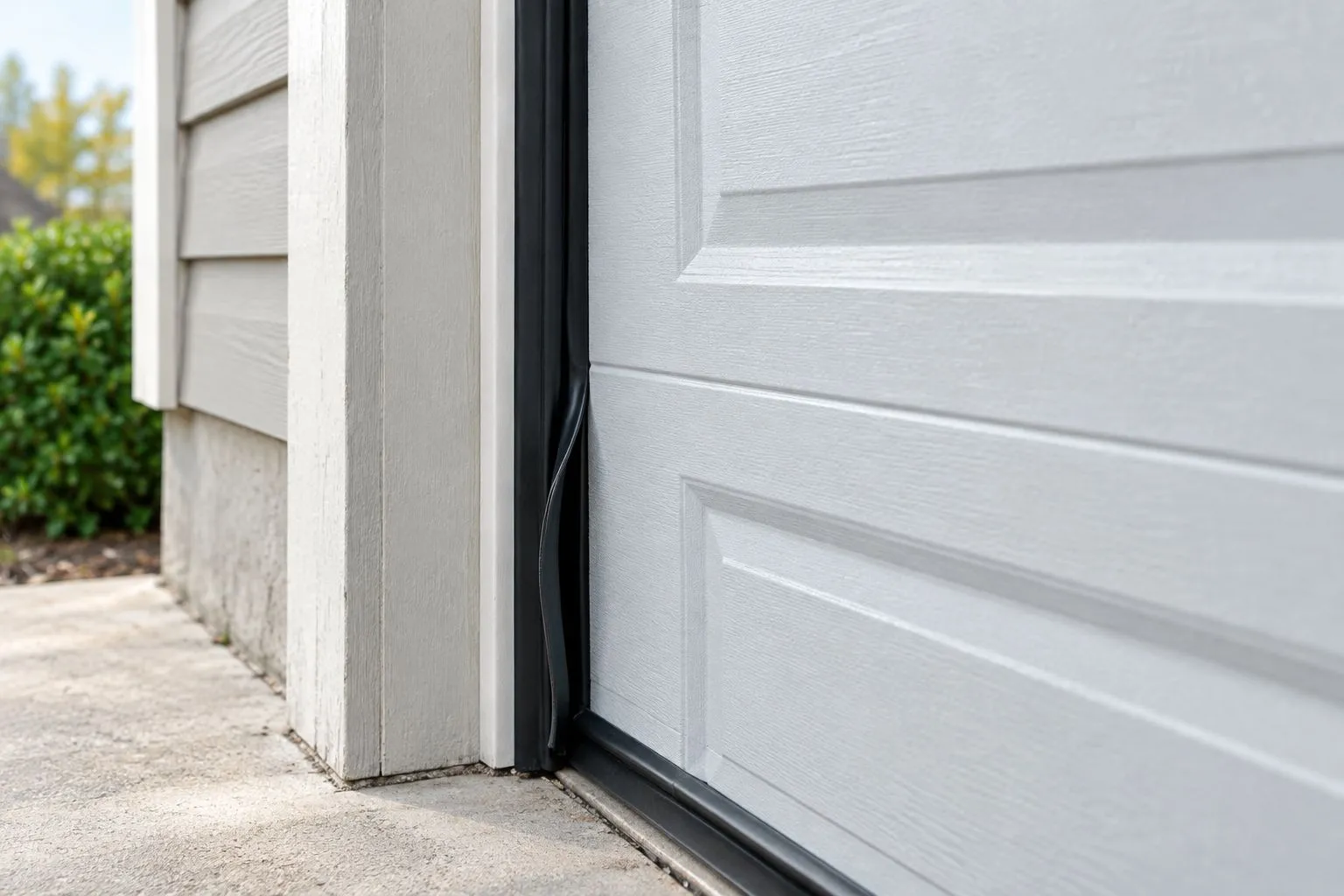
Illustrative photo: side gaps need frame weatherstripping, not a larger bottom seal.
Perimeter weatherstripping pros:
- Targets side and header gaps directly.
- Allows replacement of deteriorated frame-mounted material.
- Complements a properly fitted bottom seal.
Perimeter weatherstripping cons:
- Does not stop water entering beneath the door.
- Incorrect placement can create rubbing or obstruct normal travel.
- Cannot straighten a damaged frame or misaligned door.
Best for: An otherwise sound door with visible gaps along the jambs or header.
On an opening with irregular trim, ask the installer to assess the mounting surface as well as the strip. Covering loose or damaged trim with new weatherstripping leaves an unstable attachment point. No seal should interfere with safety sensors or their sightline.
Verdict: Buy perimeter weatherstripping for frame gaps after checking the mounting surface and door alignment.
3. Threshold seal: best for a remaining floor-edge gap
A threshold attaches to the garage floor and creates a raised surface for the bottom seal to meet. It is a separate component, not a replacement for the flexible strip on the door. Choose a threshold only after checking why the existing bottom seal does not contact the floor.
A threshold requires a compatible shape, suitable bonding conditions and a drainage plan. It must not become a way to hide a crooked door or an unresolved water-management problem.
Threshold seal pros:
- Adds a contact surface beneath the closed door.
- Can complement a serviceable, correctly fitted bottom seal.
- Offers a targeted option when the floor-edge assessment supports it.
Threshold seal cons:
- Can obstruct water draining out of the garage.
- Adds a raised edge to the opening.
- Depends on slab condition and the adhesive manufacturer’s preparation requirements.
Best for: A floor-edge gap that remains after the door, bottom seal and drainage have been assessed.
Tell the installer whether water appears only beneath the door or elsewhere along the garage floor. Show the direction it travels if you have observed it safely. A seal cannot resolve every source of water entry.
Verdict: Hold until door alignment, slab condition and drainage support a threshold installation.
4. Brush weatherstripping: best for a compatible brush-edge opening
Brush weatherstripping uses bristles instead of a continuous flexible lip. It can serve as a gap barrier where the door assembly and mounting arrangement support it. It is not automatically interchangeable with the existing residential bottom seal.
Brush weatherstripping pros:
- Provides a flexible contact edge.
- Offers an alternative for assemblies designed to accept brush seals.
- Can address a specific gap without changing the entire door.
Brush weatherstripping cons:
- Is not a watertight barrier.
- Does not provide the same continuous compressed contact as a flexible lip.
- Requires confirmation of the mounting arrangement and intended application.
Best for: A compatible opening where the manufacturer’s documentation supports a brush seal and water exclusion is not the primary requirement.
For a garage with rainwater entering below the door, do not choose brush material simply because it appears durable. Match the seal to the problem and the door design.
Verdict: Buy only for a documented compatible application; skip it as an assumed water-blocking upgrade.
5. Section-joint seals: best for compatible gaps between panels
Some sectional doors use sealing features between adjacent sections. Replacement options depend on the door’s construction and manufacturer. A generic strip attached across a moving joint is not a substitute for an approved component.
Section-joint seal pros:
- Addresses the joint where the gap actually occurs.
- Preserves the intended assembly when an approved replacement exists.
- Separates joint-seal repair from frame-weatherstripping work.
Section-joint seal cons:
- Is not a replaceable component on every door.
- Cannot correct bent sections or damaged hinges.
- Requires identification of the installed door and its joint design.
Best for: A door with a confirmed replaceable joint seal and otherwise sound sections.
Keep fingers away from section joints. If you see a gap associated with bending, separation or damaged hardware, arrange an assessment instead of attaching material across the joint.
Verdict: Hold until the manufacturer-supported repair is identified; skip improvised joint patches.
A safe gap check before arranging service
Observe the door while it is closed and stationary. If it is crooked, partly off track or visibly damaged, stop using it and keep people clear. Do not force it shut to complete this checklist.
- Bottom edge: Note missing material and whether the gap runs evenly across the opening or concentrates at a corner.
- Side edges: Look for separated weatherstripping and irregular contact along the jambs.
- Top edge: Check visible seal condition from floor level; do not climb beside moving equipment.
- Floor condition: Note cracks, raised areas and where water appears after rain.
- Door condition: Record unusual movement or visible damage without adjusting hardware.
Take photographs from a safe position and describe what changed. Avoid repeated operation just to recreate a fault. Derby Strong garage door repair serves Louisville homeowners; clear observations help distinguish a seal replacement from a door-mechanism problem.
How these options are ranked
This 2026 guide ranks seal categories by the problem each solves, using gap location, attachment compatibility, contact, drainage and safe access. It does not rank named products or claim measured performance differences. Manufacturer documentation for the installed assembly controls the final component choice.
Which weatherstripping should you choose?
Choose the component at the failed edge—not a complete replacement door by default. A deteriorated bottom strip on a straight, normally operating door calls for a compatible seal assessment. Side daylight calls for perimeter weatherstripping; persistent floor gaps call for investigation before adding a threshold.
If the door binds, closes unevenly or has damaged sections, address that fault first. New weatherstripping should finish a sound repair, not conceal a mechanical problem.
Frequently Asked Questions
What’s the best garage door weatherstripping for a Louisville Highlands home?
The best garage door weatherstripping matches the gap location and the installed door. Choose a retainer-matched bottom seal for a worn floor edge, perimeter weatherstripping for frame gaps, and a threshold only after checking alignment and drainage.
Can I replace only the rubber seal under my garage door?
A bottom seal can be replaced without replacing the whole door when the retainer and lower section are sound. Confirm the attachment profile first, and do not loosen bottom brackets or cable-connected hardware.
Is a garage door threshold better than a bottom seal?
A threshold is not a substitute for a sound bottom seal. It adds a floor-mounted contact surface and requires an assessment of slab condition, compatibility and drainage.
Why can I still see daylight after replacing weatherstripping?
Remaining daylight means the replacement has not resolved the gap’s cause. Check whether the gap is at a different edge, the seal is incompatible, or the door or mounting surface needs professional correction.
Will garage door weatherstripping stop all water from entering?
Garage door weatherstripping does not stop every source of water entry. Water directed toward the opening, slab defects and other entry points require separate assessment.
Can I increase opener force to make the door seal tighter?
Do not increase opener force to overcome a sealing or movement fault. A door that will not close normally needs the cause checked rather than extra force applied.
Does new weatherstripping make my garage door insulated?
Weatherstripping closes gaps; it does not add insulation to the door sections. Air leakage and heat transfer through the door are different issues, so identify which problem you want to address.
When should I call Derby Strong instead of buying a seal?
Contact Derby Strong when the door closes unevenly, binds, shows damaged hardware or needs a professional repair assessment. Leave spring, cable, track and bracket work to a professional, and do not force a damaged door.
One Last Thing Before You Decide
A daylight gap is a clue, not a complete diagnosis. Before buying weatherstripping, photograph where the gap begins and ends. That record is more useful than choosing the widest seal on the shelf—and keeps a straightforward seal repair separate from drainage or door-alignment work.