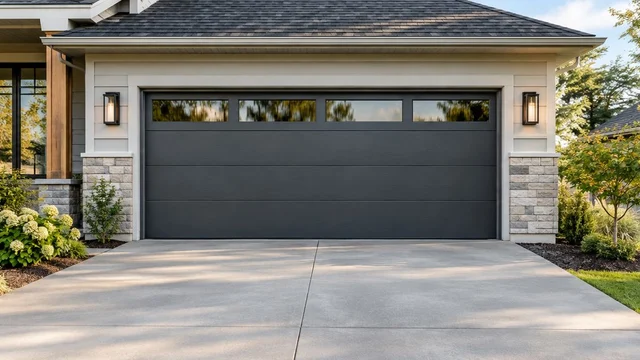
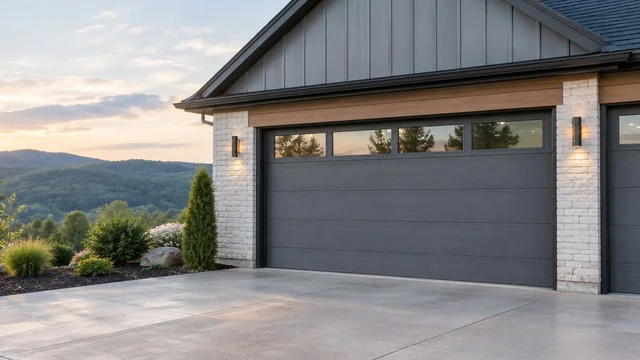
Best overall: insulated steel for an attached garage. Best for a basic detached garage: non-insulated steel; best for decorative detail: carriage-style steel; best for natural woodwork: wood; best for daylight: aluminum-and-glass. These garage door options for Covington, KY homes solve different problems, so choose around garage use, opening clearance and upkeep—not appearance alone.
TL;DR
- For garage door options Covington KY homeowners can compare, insulated steel is the default for attached garages.
- Carriage-style steel adds decorative detail; wood suits buyers prepared for finish maintenance.
- Aluminum-and-glass suits daylight priorities, but glazing needs a separate privacy and thermal review.
- Derby Strong provides garage door repair and installation services for Northern Kentucky homeowners.
Why this matters in Covington
A replacement door changes more than the front of your garage. Its construction, windows and track arrangement affect how you use the space and whether the new assembly fits the existing opening.
Derby Strong provides garage door repair and installation services in Northern Kentucky. For your Covington home, start by separating a door-selection problem from a repair problem: a failed opener, damaged seal or serviceable panel does not automatically justify replacing the whole door.
This guide compares door configurations, not individual manufacturer models. For a 2026 purchase, get the exact proposed construction, glazing and installation requirements in writing before approving the order.
What makes the best garage door option?
Use these criteria before choosing a style:
- Garage use: An attached garage, workshop and detached storage garage have different insulation and daylight priorities.
- Opening fit: Headroom, side clearance and backroom determine which track and opener arrangements fit. A standard-looking opening does not confirm compatibility.
- Upkeep: Compare finish care, exposed surfaces, glazing and decorative hardware—not just the material name.
- Privacy: Evaluate what someone outside can see through the actual glass under different lighting conditions.
- Construction details: Confirm panel construction, seals, glazing and whole-door thermal information for the proposed model.
- Repairability: Ask whether matching replacement sections and hardware are obtainable for the door you select. Do not assume every design has interchangeable parts.
A good garage door is the configuration that fits your opening and daily use without creating maintenance you do not want. Decorative choices come after those requirements.
Garage door options at a glance
These categories overlap. Carriage styling describes appearance, while steel, wood and aluminum describe materials; an insulated steel door can also have carriage-style detailing.
| Option | Best for | Standout feature | Key limitation |
|---|---|---|---|
| Insulated garage doors, with steel construction | Attached garages and regularly used spaces | Combines a steel exterior with an insulated panel assembly | Panel insulation alone does not describe whole-door performance |
| Non-insulated steel | Detached garages used mainly for storage | Straightforward construction without an insulation-focused specification | Does not provide an insulated barrier |
| Carriage-style steel | Decorative detail without choosing a wood exterior | Carriage-door appearance on a sectional assembly | Decorative hardware and windows need deliberate placement |
| Wood | Homes where natural wood appearance is the priority | Visible grain and a finishable wood surface | Requires attention to coating condition and moisture exposure |
| Aluminum-and-glass | Garages where daylight leads the decision | Broad glazed sections | Privacy and thermal performance depend on the glazing and frame assembly |
1. Insulated steel: best for attached garages
An insulated steel garage door uses steel faces with insulation within the panel assembly. It is the default recommendation when your garage connects to the house or serves as a regularly used workspace.
Insulation is not a promise of a comfortable garage. Air leakage, wall construction, ceiling insulation and heating arrangements also affect the space; compare the door as one part of that enclosure.
Insulated steel pros:
- Provides an insulated panel assembly rather than a bare exterior panel.
- Offers a painted steel appearance without a natural wood exterior to refinish.
- Can combine insulation with different panel patterns and window layouts.
Insulated steel cons:
- Steel surfaces can dent, and damaged coatings need attention.
- Panel R-value does not capture every heat-transfer path through the installed door.
- Windows and perimeter gaps can change the performance of the complete assembly.
Ask the installer to identify the insulation construction and distinguish a panel rating from a whole-door rating. Also confirm how the proposed bottom seal meets your existing floor; insulation cannot close a physical gap.
Best for: Covington homeowners with attached garages who want insulation without committing to a wood exterior.
Verdict: Buy insulated steel when garage use makes insulation relevant; do not choose it on an R-value headline alone.
2. Non-insulated steel: best for basic detached storage
A non-insulated steel door provides a steel exterior without an insulated panel assembly. It deserves consideration when a detached garage mainly protects vehicles, tools or stored belongings and you do not use it as conditioned space.
This is a purpose-based choice, not a lesser version of every insulated door. You still need sound construction, compatible hardware and properly fitted seals.
Non-insulated steel pros:
- Matches a basic storage use without making insulation the main specification.
- Keeps the selection focused on fit, finish and operation.
- Avoids the refinishing requirements of a natural wood exterior.
Non-insulated steel cons:
- Does not provide the thermal barrier of an insulated assembly.
- Exposed interior construction can look different from a finished interior face.
- Dents and damaged coatings remain maintenance concerns.
Ask to see the interior side, not just the exterior brochure image. If you expect to convert the garage into a workshop, assess that intended use before ordering rather than assuming an insulation retrofit will duplicate a factory-built insulated assembly.
Best for: A detached Covington garage used primarily for unconditioned storage.
Verdict: Buy non-insulated steel for a clearly defined storage use; skip it when an insulated enclosure is a requirement.
3. Carriage-style steel: best for decorative detail
Carriage-style steel uses panel patterns, overlays or decorative hardware to suggest traditional carriage doors. A sectional version still moves on an overhead track rather than functioning as a pair of swinging doors.
Choose the underlying construction first. Then decide whether the handles, hinges and window pattern improve the appearance of your actual opening.
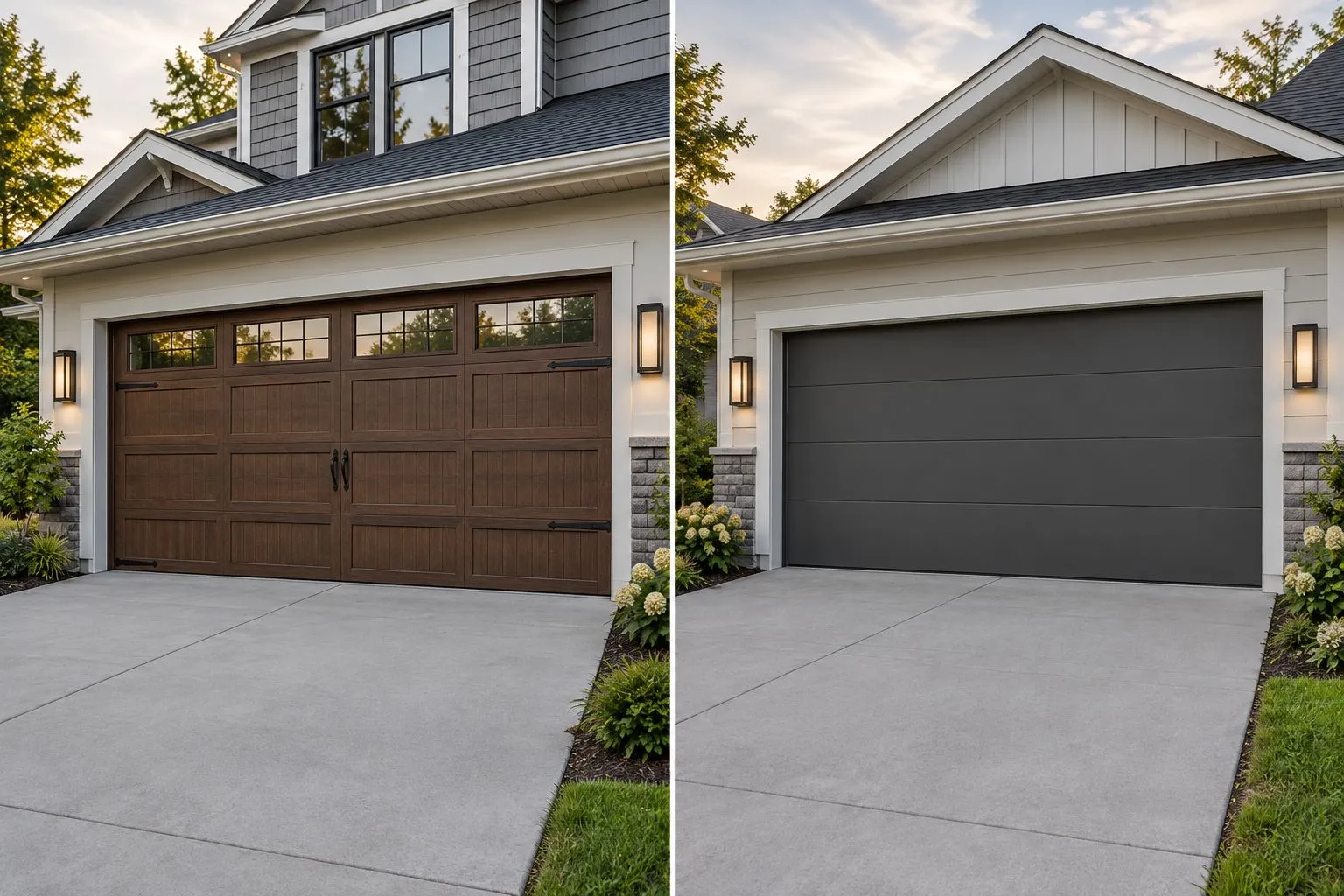
Illustrative photo: carriage styling changes the appearance, not the basic overhead opening method.
Carriage-style steel pros:
- Adds decorative detail without requiring a natural wood exterior.
- Separates the visual style decision from the insulation decision.
- Allows you to coordinate windows and hardware as part of one design.
Carriage-style steel cons:
- Decorative details add surfaces to clean and inspect.
- Window placement can expose stored items or reduce privacy.
- Replacement sections need to match the original pattern and finish.
Request a drawing or door visualization that shows your proposed configuration. A sample door with a different width or section layout does not necessarily show how the pattern will look on your opening.
Best for: Covington homeowners who want decorative garage-door detail without choosing a wood exterior.
Verdict: Buy carriage-style steel when the full layout suits your house; skip decorative hardware that adds clutter rather than useful contrast.
4. Wood: best for natural material character
A wood garage door makes the material itself part of the design. Grain, joinery and finish create an appearance that painted metal does not duplicate exactly.
The trade-off is responsibility for the surface. Ask for the manufacturer’s finish-care requirements and check how the proposed assembly handles exposed edges and moisture.
Wood pros:
- Provides actual wood grain rather than a printed imitation.
- Supports a finish-led design decision.
- Makes sense when natural material appearance is the deciding requirement.
Wood cons:
- Coating condition needs regular attention.
- Moisture exposure can affect wood and its finish.
- Door weight and hardware compatibility require professional assessment.
Do not approve a wood door and treat the opener as a separate afterthought. The installer must specify a compatible door, spring, track and opener arrangement for the actual assembly.
Best for: A homeowner who values natural wood enough to accept its care requirements.
Verdict: Buy wood for the material itself; skip it if finish maintenance is already a task you postpone.
5. Aluminum-and-glass: best for daylight
An aluminum-and-glass door combines a metal frame with glazed sections. It makes daylight and the appearance of the glass central to the selection.
Do not treat clear, frosted and other privacy glazing as interchangeable. Review the proposed glass from outside as well as inside, including what it reveals when the garage interior is illuminated.
Aluminum-and-glass pros:
- Brings daylight through the glazed sections.
- Creates a design defined by frame lines and glass rather than solid panels.
- Lets you make glazing part of the garage’s intended use.
Aluminum-and-glass cons:
- Privacy depends on the specific glazing and lighting conditions.
- Frame and glass construction need a separate thermal review.
- Glass requires cleaning and can suffer impact damage.
Ask for the manufacturer’s current glazing descriptions and whole-assembly specifications. A photograph cannot establish privacy, impact characteristics or insulation performance.
Best for: Covington homeowners whose garage use makes daylight more important than an opaque exterior.
Verdict: Hold until the glazing meets your privacy and thermal requirements; do not order from appearance alone.
Check the opening before choosing the door
Your opening can rule out a configuration before material or style enters the decision. A low ceiling, obstruction near the tracks or existing opener arrangement needs assessment before an order is placed.
The guide to fitting a new door in a low-ceiling Northern Kentucky garage explains why clearance belongs early in the selection process.
Prepare for a professional assessment with these safe observations:
- Opening condition: Photograph visible damage, deteriorated trim and gaps from a safe position.
- Interior clearance: Note lights, shelving, pipes and other objects near the existing track path.
- Garage use: Explain whether you park, store belongings or work in the space.
- Existing equipment: Record the opener model if its label is safely accessible without approaching moving components.
Do not loosen tracks, brackets, cables or spring hardware to obtain measurements. If the door is crooked, off track or visibly damaged, stop operating it and keep people clear; never force it or increase opener force to overcome the fault.
Before approving a Covington installation, check any property-specific approval requirements that actually apply to your address. Do not assume every property has the same restrictions, and do not treat a postal ZIP code as proof of a municipal or neighborhood boundary.
How these options are ranked
This ranking prioritizes garage use, opening fit, maintenance, privacy and construction clarity. Insulated steel leads for an attached garage because it addresses insulation without requiring natural wood upkeep; the other choices lead when a different requirement matters more.
The ranking does not compare tested manufacturer models or promise service life. Derby Strong garage door installation and repair services serve Northern Kentucky homeowners, but the final specification must match your individual door opening and intended use.
Which garage door should you choose?
Choose insulated steel if you have an attached garage and no stronger design requirement. Choose non-insulated steel for basic detached storage, carriage-style steel for decorative detail, wood for natural grain, and aluminum-and-glass for daylight after checking privacy.
Keep repair on the table. If your existing door’s condition and compatibility support a safe repair, replacing seals, servicing the opener or addressing an isolated fault can solve the actual problem without selecting a new door.
Before authorizing work, ask for a written scope that distinguishes door replacement, opener work, track changes and finish details. Derby Strong offers garage door repair and installation; make the requested assessment about the fault or requirement you need resolved.
Plan your garage door project
Discuss door repair or installation for your Northern Kentucky home.
Frequently Asked Questions
What’s the best garage door option for an attached Covington garage?
Insulated steel is the default choice for an attached Covington garage. Compare the complete door construction, seals and glazing rather than selecting on panel R-value alone.
Is a carriage-style garage door different from a steel door?
Carriage style describes appearance, while steel describes material. A steel sectional door can have carriage-style panels, decorative hardware and insulation.
Should I buy an insulated door for a detached garage?
Choose insulation according to how you use the detached garage. A regularly used workspace has different enclosure needs from unconditioned vehicle or tool storage.
Is a wood garage door better than steel?
Wood is the better fit when natural grain is your main requirement and you accept finish maintenance. Steel suits buyers who do not want to maintain a natural wood exterior.
Will frosted garage door glass give me complete privacy?
Do not assume frosted glass provides complete privacy. Review the specific glazing and what it reveals from outside when the garage interior is illuminated.
Can I keep my opener when I replace my garage door?
Keep the existing opener only after a professional confirms compatibility and condition. The new door’s assembly, balance, travel and installation requirements all belong in that assessment.
Should I replace a garage door that has a broken spring?
A broken spring alone does not establish that the entire door needs replacement. Stop operating the door and have a professional assess the spring system and the door’s condition; spring work is not a homeowner repair.
Does Derby Strong provide garage door services in Northern Kentucky?
Derby Strong provides garage door repair, installation and opener service for Northern Kentucky homeowners and businesses. Confirm the service arrangements for your Covington property when discussing the work.
One Last Thing Before You Decide
Choose windows from the outside view, not just the light they bring inside. Ask how the proposed glazing looks with stored belongings behind it and the interior lights on. That check can change a window decision without changing the door material.