Best overall for an attached Louisville garage: a belt-drive opener; best for a detached garage where noise matters less: a chain-drive opener; best for clearing overhead space: a compatible wall-mounted opener. Your garage door opener replacement should match the existing door, available space and daily routine—not compensate for a damaged door.
TL;DR
- Choose belt-drive garage door opener replacement when motor and drive noise near living space is your main concern.
- Choose a chain-drive opener for a detached garage when drive noise is not a deciding factor.
- Choose a wall-mounted opener only after a professional confirms door, shaft and clearance compatibility.
- Derby Strong provides garage door opener service for Louisville homeowners; resolve door damage before choosing replacement equipment.
Why this matters in Louisville
A new opener does not fix a broken spring, a damaged track or a door that binds. Replacing the motor first leaves the underlying problem unresolved.
For Louisville homeowners, the useful comparison starts inside the garage: what sits above it, what occupies the ceiling and whether the existing door operates correctly. Derby Strong provides garage door repair, installation and opener service in Louisville, so the door and opener belong in the same service discussion.
Derby Strong is a garage door opener replacement option for Louisville homeowners who want professional installation. This guide compares opener configurations rather than naming a model whose current specifications have not been verified.
What makes the best garage door opener replacement?
Use these criteria before comparing equipment:
- Door compatibility: The opener must suit the door’s construction, dimensions, weight and operating arrangement.
- Noise priorities: Living space beside or above the garage makes drive noise more relevant, but rollers and hinges also contribute.
- Mounting space: Ceiling-mounted units need room for the rail and motor; wall-mounted units need a compatible shaft arrangement and side clearance.
- Safety setup: Installation must include the specified entrapment protection, travel setup and reversal checks.
- Everyday controls: Confirm whether existing remotes, vehicle buttons and keypads work with the proposed replacement.
- Power-loss needs: Compare documented battery-backup capability separately from drive type. A belt, chain or wall-mounted configuration does not establish that feature.
No single configuration wins every category. A quiet drive does not repair noisy rollers, and a wall-mounted unit does not make every low-clearance garage compatible.
Garage door opener replacement options at a glance
| Option | Best for | Standout characteristic | Key limitation |
|---|---|---|---|
| Belt-drive opener | Attached garages near living space | Uses a belt rather than a metal drive chain | Door hardware can still transmit noise |
| Chain-drive opener | Detached garages with low noise sensitivity | Uses a chain-driven overhead carriage | Drive noise is a weaker fit near bedrooms |
| Wall-mounted opener | Compatible garages needing clear overhead space | Moves the motor beside the door shaft | Requires specific door, shaft and clearance compatibility |
Battery backup, lighting, smartphone control and vehicle-control compatibility are separate selection questions. Ask for the exact proposed model and its current installation documentation rather than assuming every opener in a category includes the same features.
1. Belt-drive opener: best for attached garages near living space
A belt-drive opener moves the door through an overhead rail using a belt. It is the strongest starting point when your main complaint is drive noise reaching nearby rooms.
The distinction matters when you hear the opener through a shared wall or ceiling. It matters less when the loudest sound comes from the door itself: squealing rollers, rattling hinges or a panel moving unevenly.
Belt-drive opener pros:
- Avoids the metal drive-chain movement found in chain-driven units.
- Fits the familiar overhead-rail layout when the selected equipment suits the opening.
- Gives noise-sensitive households a clear configuration to evaluate first.
Belt-drive opener cons:
- Still occupies ceiling space with a rail and motor assembly.
- Cannot silence worn door hardware or correct an unbalanced door.
Best for: Louisville homeowners with an attached garage beside or below occupied rooms.
Before approving replacement, describe the sound rather than simply asking for a quieter motor. Does it happen while the motor runs, at a particular point in travel or as individual rollers pass through the curved track?
That description helps separate opener noise from a door problem. If only a handheld remote has stopped working, start with the Louisville garage door remote troubleshooting guide rather than assuming the entire opener needs replacement.
Verdict: Buy a compatible belt-drive opener when drive noise near living space is the main replacement priority.
2. Chain-drive opener: best for detached garages
A chain-drive opener uses a chain to move the carriage along an overhead rail. It belongs on your shortlist when the garage is separated from living space and drive noise is not the deciding issue.
Detached placement does not establish compatibility by itself. Door condition, rail length, mounting support and the selected unit’s published limits still control the installation.
Chain-drive opener pros:
- Provides a straightforward overhead-rail configuration to compare against an existing installation.
- Makes sense when reducing drive noise is not a household priority.
- Keeps the selection focused on door suitability and required controls rather than quiet-operation preferences.
Chain-drive opener cons:
- Chain movement introduces a noise source that belt-driven equipment avoids.
- The overhead rail and motor still compete with ceiling storage and other obstructions.
Best for: Homeowners replacing an opener in a detached garage where noise has little effect on occupied rooms.
Do not select a chain-drive unit simply because the previous opener used a chain. A replacement is an opportunity to check whether the old mounting arrangement still fits how you use the garage.
For example, overhead shelving added after the original installation changes the available space. The installer needs to account for that obstruction rather than copying the previous layout without checking it.
Ask which maintenance tasks the exact model requires. Follow that manual; do not apply lubricant to a belt, chain or rail based on instructions for different equipment.
Verdict: Buy a compatible chain-drive opener when overhead mounting works and drive noise is not a deciding concern.
3. Wall-mounted opener: best for clearing overhead space
A residential wall-mounted opener sits beside the door and drives a compatible torsion shaft instead of using a central overhead rail. It is the configuration to investigate when the rail or ceiling-mounted motor interferes with your intended use of the space.
Compatibility is the deciding factor. The professional assessment must cover the door, spring system, shaft, track arrangement, mounting space and electrical supply against the selected manufacturer’s instructions.
Wall-mounted opener pros:
- Removes the central opener rail from the ceiling area.
- Relocates the motor beside the opening.
- Offers a different mounting arrangement when a conventional overhead unit conflicts with storage or equipment.
Wall-mounted opener cons:
- Does not fit every spring, shaft or door arrangement.
- Needs suitable side space, structural mounting and an electrical connection.
- Is not a substitute for correcting an unsuitable door or track configuration.
Best for: Homeowners with a compatible door system who specifically need to clear the central ceiling area.
A low ceiling alone does not prove that a wall-mounted unit will fit. The door still needs its required travel path, and the opener needs the clearances stated in its own installation manual.
Keep this distinction clear when discussing storage. Removing the opener rail does not remove the moving door from the ceiling area when the door opens.
Verdict: Hold the purchase until a professional confirms compatibility; buy when clearing overhead space solves a specific problem.
What to check before choosing an opener
Start with observations you can make from a safe position. Do not remove covers, loosen brackets or reach into the track to investigate.
- Door condition: Note crooked positioning, damaged panels, hanging cables or rollers outside the track.
- Existing equipment: Photograph the accessible opener label without climbing onto an unstable surface.
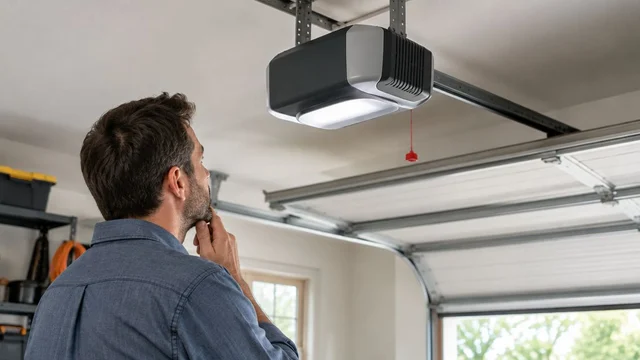
- Ceiling space: Show the installer shelving, beams, lights and other obstructions around the existing rail.
- Side clearance: For a wall-mounted option, photograph the area beside the spring shaft from floor level.
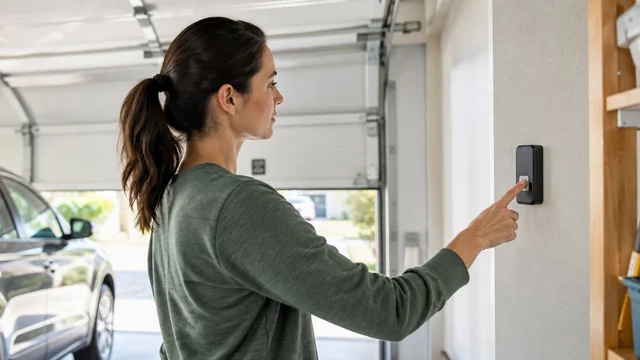
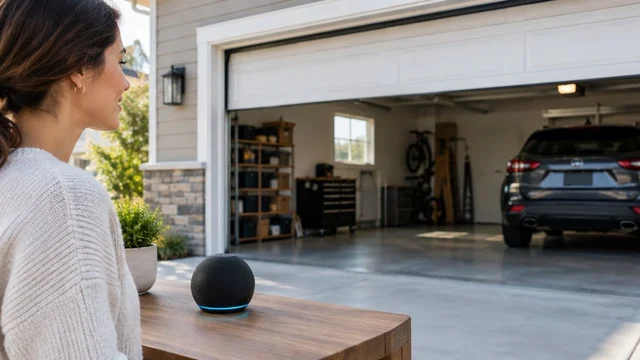
- Daily controls: List the remotes, keypad and vehicle buttons you want to use after replacement.
If the door is crooked, a cable hangs loose or a spring appears broken, stop operating it. Keep people clear and arrange professional service; do not disconnect an elevated or damaged door from its opener.
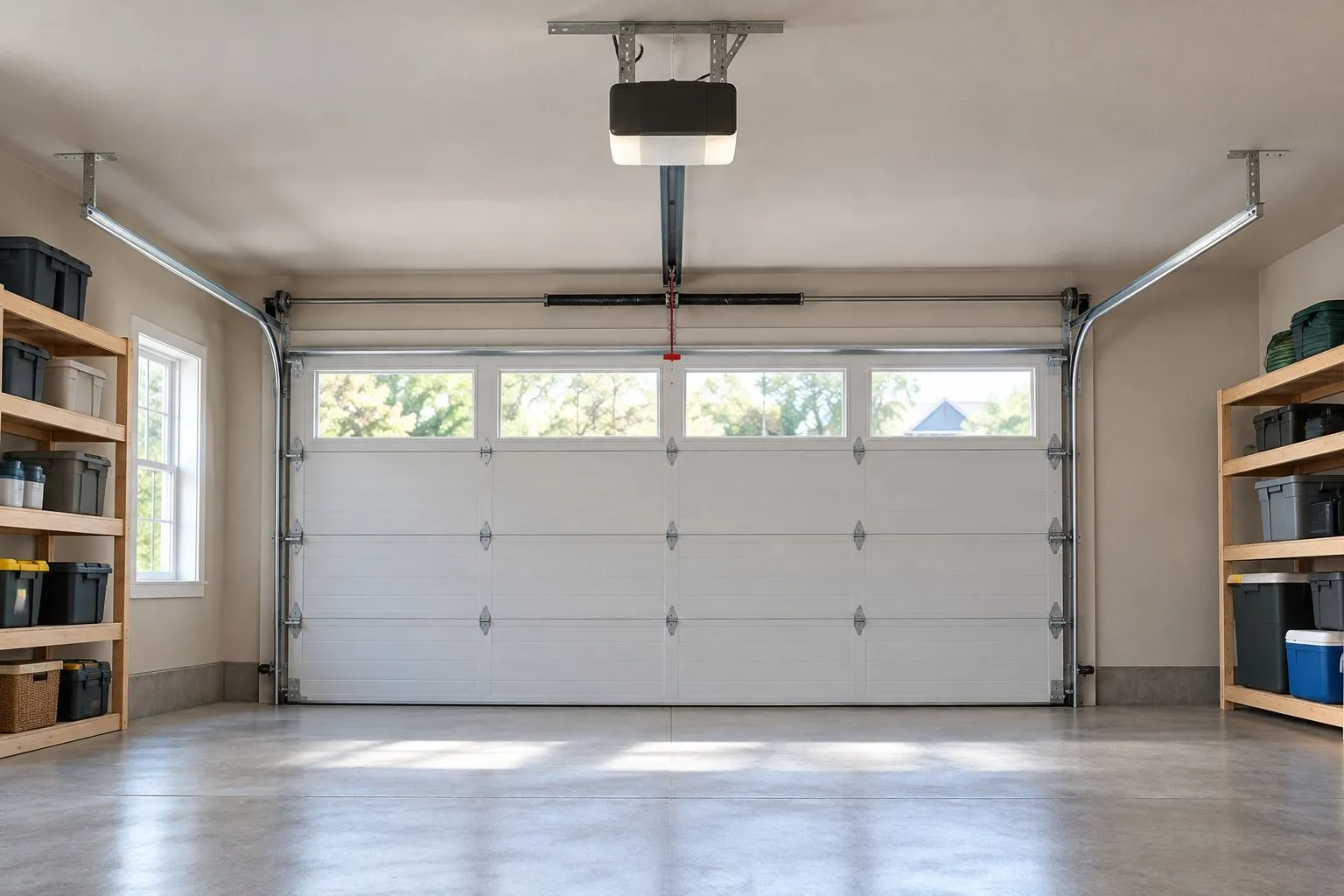
Illustrative photo: opener placement and storage must leave the door’s travel path clear.
Derby Strong handles garage door opener service in Louisville. When requesting service, explain both the symptom and the outcome you want: less drive noise, working controls or a different mounting arrangement.
Schedule an opener service visit
Describe the opener problem and the door’s condition before choosing replacement equipment.
What should installation and handover include?
Ask for a written scope identifying the exact opener, required rail or mounting components, controls and any separate door repairs. Do not assume the old sensors, rail, wall control or remotes transfer to the new system.
The installer should follow the selected manufacturer’s current instructions for mounting, electrical connection, travel limits and entrapment protection. Springs, cables, tracks and loaded brackets remain professional-only work.
For context, U.S. Consumer Product Safety Commission residential garage door safety guidance places photoelectric protection no higher than 6 inches above the floor. Its contact-reversal check uses a 1½-inch-high obstruction, commonly a 2-by-4 laid flat. Ask the installer to demonstrate the applicable checks using the new opener’s manual; never stand beneath a moving door to test it yourself.
Before handover, have the installer explain:
- How the wall control and each supplied remote operate.
- Which existing accessories are compatible and which require replacement.
- How the emergency release works and when not to use it.
- What battery-backup maintenance applies, if that feature is included.
- Where to find the model-specific operating and safety instructions.
Do not accept increased opener force as a remedy for a binding or damaged door. The mechanical fault needs correction, not a stronger push through it.
How these opener options are ranked
The ranking follows distinct household needs: belt drive for noise-sensitive attached garages, chain drive for detached garages where drive noise matters less, and wall-mounted equipment for compatible installations needing overhead clearance.
These are configuration recommendations, not results from product testing. A particular model belongs on the final shortlist only after its current documentation confirms that it fits your door and required features.
Which garage door opener replacement should you choose?
Start with belt drive if you have an attached Louisville garage and no special mounting constraint. Choose chain drive when noise is secondary, and investigate wall-mounted equipment when removing the central rail solves a defined space problem.
If the existing opener still works and the complaint comes from a remote, sensor or door component, request diagnosis before authorizing replacement. The right outcome is a working, safely operating door—not a new motor attached to an unresolved fault.
Frequently Asked Questions
What is the best garage door opener replacement for a Louisville home?
A compatible belt-drive opener is the best starting point for an attached Louisville garage when drive noise near living space matters. A detached garage or an overhead-space constraint changes the recommendation.
Is a belt-drive opener better than a chain-drive opener?
A belt-drive opener is the better starting point when reducing drive noise is a priority. A chain-drive opener remains an option when noise is secondary and the selected unit fits the door.
Can I replace my garage door opener without replacing the door?
Yes, an opener can be replaced while retaining a suitable, serviceable door. Have the door’s condition and compatibility checked before choosing the replacement.
Will a new opener fix a heavy or crooked garage door?
No, a new opener does not correct a broken spring, damaged cable or binding track. Stop using a visibly damaged door and arrange professional repair before opener installation.
Will my old remotes work with a new garage door opener?
Existing remotes work only when they are compatible with the replacement opener. Confirm the exact remote, keypad and vehicle-control compatibility before approving the equipment.
Can every garage use a wall-mounted opener?
No, a wall-mounted opener requires a compatible door, shaft, spring arrangement and installation space. A low ceiling alone does not establish that it will fit.
Does every replacement opener include battery backup?
No, drive type alone does not establish battery-backup capability. Check the exact proposed model’s current documentation and ask what maintenance its backup system requires.
One Last Thing Before You Decide
Photograph the existing opener label and bring your remote list to the service discussion. Replacing the motor does not automatically preserve the way every household member opens the garage. Confirm those controls before installation, not after the old equipment is removed.
Related Garage Door Guides
- Garage door opener comparison
- Garage door rollers making noise in Louisville
- Should you repair or replace your garage door in Louisville?
Local service: Garage door repair in Louisville