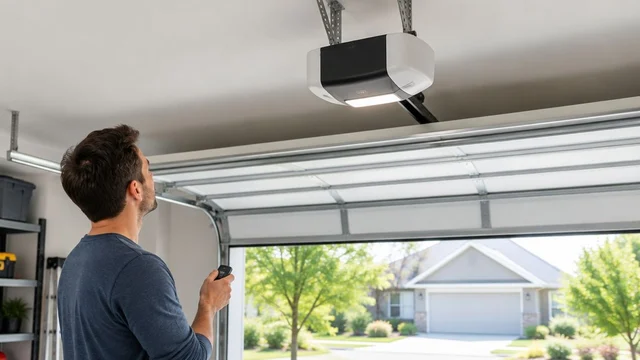
A garage door remote that has stopped responding is one of the most common Louisville service calls, and one of the few where the homeowner can sometimes identify the fault without tools. The cause is usually power, pairing or signal range rather than a broken door.
Key takeaways
- Dead remote batteries, depleted keypad batteries and a tripped door control are the most frequent Louisville remote failures.
- Check whether the wall button and keypad work; that distinguishes a remote problem from an opener problem.
- Reprogramming is often possible without replacing the opener, following the specific model’s manual.
- Derby Strong Garage Doors diagnoses Louisville opener and remote faults and confirms the model before ordering parts.
Why does your Louisville garage door remote stop working?
Start by testing what else still works. Press the wall-mounted button. If the door responds, the opener has power and the fault is in the remote. If nothing works, the problem is the opener or its power supply, not the remote.
That single test saves the most common mistake: replacing a remote when the opener has lost power, or calling for opener service when only the battery is dead.
| What works | What does not | Likely fault | First action |
|---|---|---|---|
| Wall button | Remote only | Remote battery, pairing or range | Replace battery, then re-pair per the model’s manual |
| Remote only | Wall button | Wall control wiring or lock mode | Check lock mode; if unresolved, schedule service |
| Nothing | Nothing | Opener power or breaker | Restore power; if it stays dead, schedule service |
| Keypad works | Remote only | Remote battery or pairing | Battery first; re-pair before replacing the remote |
| Remote works up close, not from the car | — | Antenna, range or interference | Try a fresh battery and a different position; confirm before replacing |
Battery first, always
Most remote failures are the battery. A coin cell or 12V battery loses capacity over months, and cold weather accelerates the drop. Louisville’s winter nights are cold enough to make a marginal battery fail in the morning and recover slightly by afternoon; that on-again, off-again behavior is a battery signature rather than an opener fault.
Replace the battery with the type the remote’s manual specifies. If the manual is gone, the back of most remotes lists the battery type. A fresh battery that does not restore function within a few presses rules the battery out.
Pairing and model differences
After a battery replacement, some remotes work immediately and others need to be re-paired. The procedure depends on the opener’s brand and model. A LiftMaster, a Chamberlain, a Genie and an older multi-code unit all pair differently.
The model number is usually on a label on the opener unit, sometimes inside the light lens cover. Use the model’s own manual, available from the manufacturer’s website, rather than a generic online procedure. A generic sequence can put the opener into a learn mode you did not intend or clear paired remotes you wanted to keep.
If the remote has been dropped, sat in a hot car, or been through the wash, the internal electronics can be damaged even when the case looks fine. A remote that will not pair after a fresh battery and the model’s correct procedure usually needs replacement.
What interferes with the signal
Garage door openers use a radio frequency for the remote signal. The range can shrink for reasons that have nothing to do with the opener’s health:
- A new LED bulb in the opener can interfere with the receiver on some models. Check the manufacturer’s documentation.
- A metal object, a parked vehicle or a wall added between the remote and the opener reduces range.
- Other radio equipment in the neighborhood can occasionally cause temporary interference. If the remote works at some times and not others, note the times.
Range problems are rarely solved by pressing the remote harder or from a different angle. Test from the driveway, then from the street, and note where the signal stops. That pattern helps the technician identify whether the issue is the remote, the antenna or interference.
When the door itself is the fault
A remote that works the opener but the door still does not move points to the door rather than the controls. Do not keep pressing the remote. Stop and check:
- Whether the door is frozen to the concrete in winter. Forcing it can tear the seal and stress the hardware.
- Whether a cable has come off its drum.
- Whether the track is blocked or bent.
- Whether a safety sensor is misaligned. Most openers will not close when the sensors do not see each other.
If any of those is the case, the door needs service. The remote and opener are working; the door is what needs repair.
Replacing the remote
A replacement remote must match the opener’s frequency and security code type. Remotes are not interchangeable across brands and generations. Use the opener’s model number to find the compatible remote rather than buying a universal one and hoping.
If your opener predates current rolling-code security, a replacement remote from the manufacturer is still the reliable path. A technician can confirm compatibility on site and pair it as part of the visit.
Frequently Asked Questions
Why does my garage door remote work only sometimes?
Intermittent response usually means a weak battery, reduced range or radio interference. Replace the battery first; if the pattern continues, note when it fails and mention the pattern when you request service.
How do I know if the remote or the opener is the problem?
Press the wall button. If the door responds, the opener has power and the fault is in the remote. If nothing works, the opener, its power supply or its controls need attention.
Can I reprogram my garage door remote without replacing the opener?
Yes, in most cases. Follow the specific model’s manual rather than a generic procedure, because pairing steps differ between brands and generations. A remote that will not pair after a fresh battery and the correct procedure usually needs replacement.
Why did my garage door remote stop working after I replaced the light bulb?
Some LED bulbs radiate interference that reaches the opener’s receiver. Check the opener manufacturer’s documentation for compatible bulb types; this is a known issue on some models and does not mean the remote or opener is faulty.
How long should a garage door remote battery last?
Typically one to two years, depending on use and temperature. Cold weather shortens the effective life; a battery that works in the afternoon and fails on a cold morning is near the end of its capacity.
My garage door remote was dropped and now does not work. What should I do?
Replace the battery first to rule that out. If the remote still does not work with a fresh battery and the model’s pairing procedure, the internal electronics are likely damaged and the remote needs replacement.
Do I need the same brand remote as my opener?
Use a remote compatible with your opener’s model. Universal remotes exist but do not support every generation. Matching the model’s remote or asking a technician to confirm compatibility avoids a return trip.
Who fixes garage door remotes in Louisville?
Derby Strong Garage Doors diagnoses opener and remote faults across the Louisville area, confirms the opener model and pairs or replaces remotes as part of a service visit.
The test that saves the most time
Press the wall button before anything else. If the door moves, the fault is in the remote and a battery is the first suspect. If it does not, the fault is the opener and no amount of remote troubleshooting will help.
Derby Strong Garage Doors serves Louisville homeowners with opener repair, remote pairing and garage door service across the area.
Related Garage Door Guides
- Why is your garage door keypad not working in Lexington?
- Safe garage door maintenance observations
- Should you repair or replace a Northern Kentucky garage door opener?
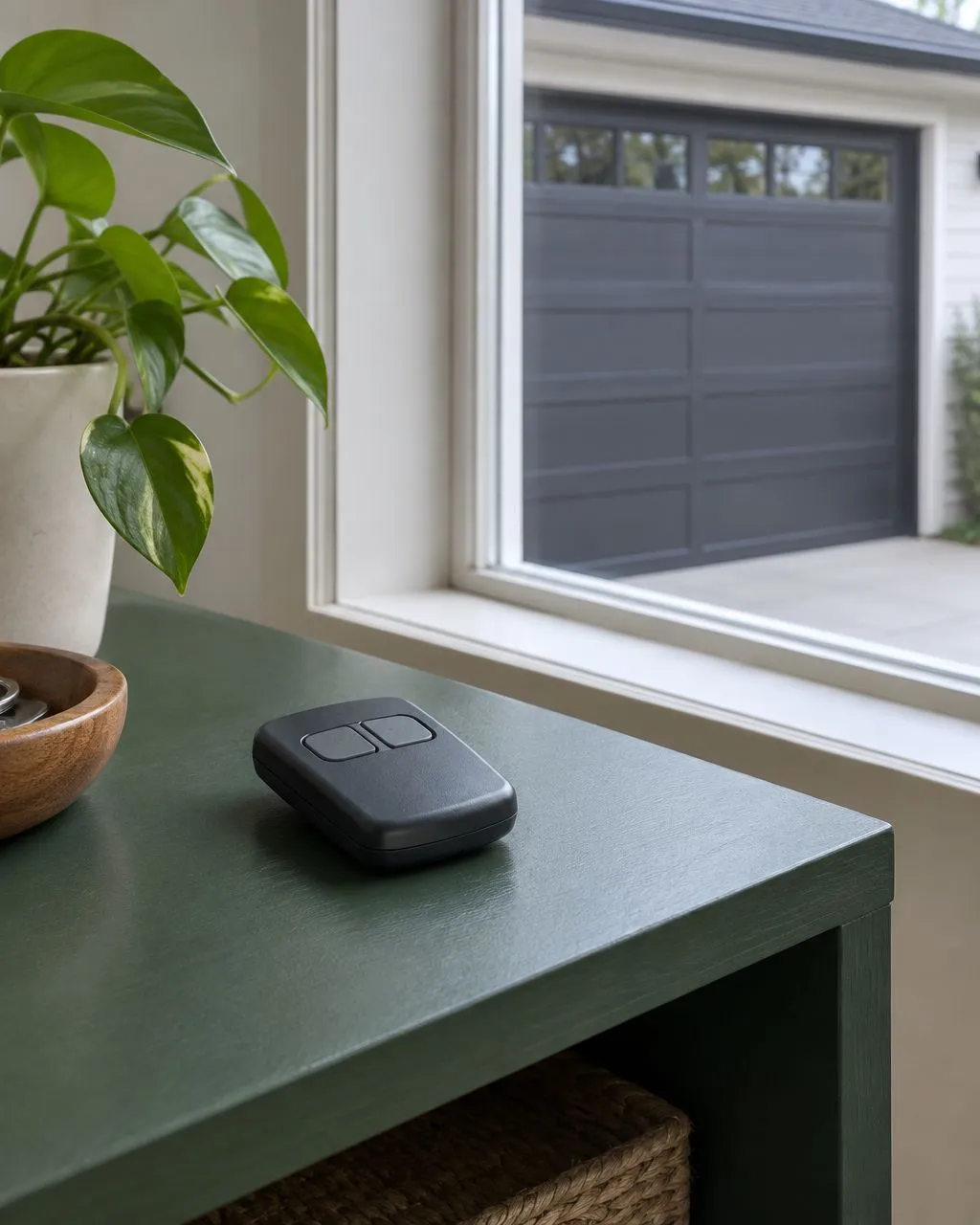
AI-generated illustration; not a Derby Strong customer project.