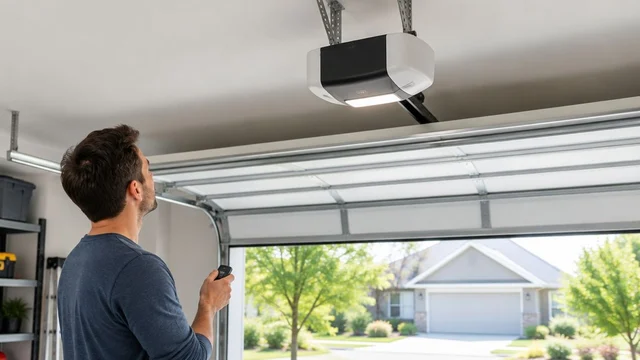
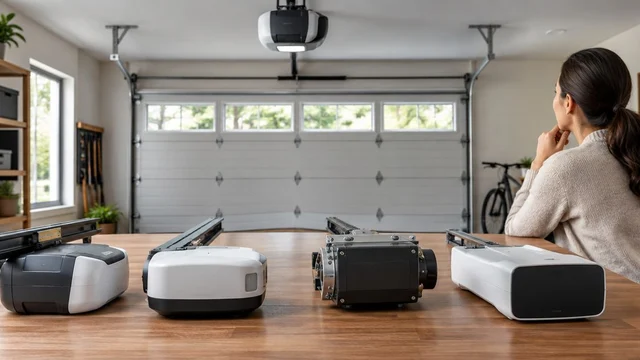
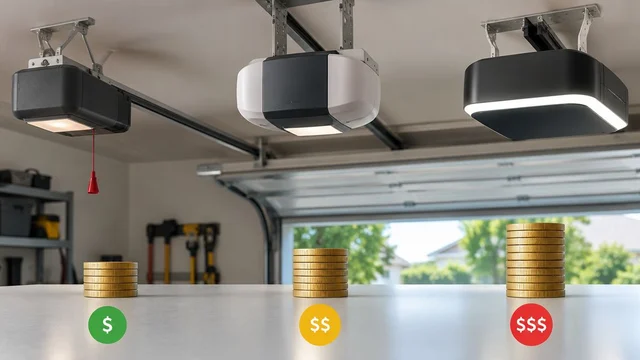
Repair a Northern Kentucky garage door opener when the fault is isolated, compatible parts are available, and the door and safety system work correctly. Replace it when essential parts are unavailable, major faults make repair impractical, or the unit cannot provide dependable safety operation. A damaged or poorly balanced door needs its own repair first; a new opener will not fix broken springs, damaged cables, or binding tracks.
TL;DR
- Repair or replace garage door opener Northern Kentucky: diagnose the door, controls, and safety system before choosing.
- Repair fits an isolated fault with compatible parts; replacement fits an unsupported or repeatedly failing opener.
- Never increase opener force to overcome a sticking, crooked, or damaged garage door.
- Derby Strong provides garage door opener service in Northern Kentucky; ask for a diagnosis before approving replacement.
Should you repair or replace a Northern Kentucky garage door opener?
Choose based on the diagnosed fault, not the symptom alone. An opener that hums without moving the door does not automatically need replacement. A door that reverses while closing does not automatically have a failed motor.
Derby Strong provides garage door repair, installation, and opener service in Northern Kentucky. The service decision should separate a door problem from an opener problem before either repair or replacement is approved.
| Finding | Best for | Advantage | Limitation or next step |
|---|---|---|---|
| Isolated control or sensor fault, with compatible parts available | Opener repair | Keeps a serviceable opener in use | Confirm the fault and test safety operation afterward |
| Major opener failure with essential parts unavailable | Opener replacement | Replaces equipment that cannot be properly repaired | Confirm compatibility with the door and installation space |
| Repeated failures with a documented diagnosis | Replacement evaluation | Addresses whether continued repairs remain practical | Rule out unresolved door problems first |
| Broken spring, damaged cable, crooked door, or binding movement | Professional door repair | Addresses the load or obstruction affecting operation | An opener replacement alone does not correct the door fault |
| Remote fails but the wall control works | Control diagnosis | Targets the access problem instead of replacing everything | A working wall control does not prove every opener function is sound |
Treat this table as a starting point, not permission to operate a damaged door. A technician must confirm the cause and check the complete system before returning it to use.
Why this matters for Northern Kentucky homeowners
Your garage door and opener work together, but they perform different jobs. The door’s counterbalance system supports its weight; the opener controls movement. When that balance is wrong, replacing the motor unit leaves the underlying problem unresolved.
For a Northern Kentucky household using the garage as a regular entrance, access also matters. Tell the technician whether you have another way into the garage and whether a vehicle is trapped inside. Those details help define the job without implying a response time or service guarantee.
Derby Strong garage door opener service is best suited to Northern Kentucky homeowners who need the door and opener assessed together. Ask for the diagnosed cause, the proposed remedy, and the checks that will confirm the remedy worked.
What can you safely check before booking service?
Start with observations that do not require removing covers, touching hardware, or moving a damaged door. If the door is crooked, partly unsupported, or has a loose or hanging cable, stop using it and keep people away.
Check power and controls
Note whether the opener has power, whether its light responds, and whether the wall control and remote behave differently. Check the remote battery and review the owner’s manual for any lock mode or control-setting instructions. Do not assume that a lit opener has a functioning drive system.
If a breaker trips repeatedly, stop resetting it. Electrical faults need appropriate professional diagnosis; repeated resets are not a repair.
Look for an obstructed sensor path
From a safe position, check whether stored items block the photoelectric sensors near the bottom of the opening. Clear loose objects without touching tracks, brackets, cables, or springs. Record any sensor lights or flashing indicators and compare them with the instructions for that exact opener.
Do not bypass sensors, bridge wiring, or hold a control continuously to work around a fault. Clearing an obvious obstruction is different from altering the safety system.
Record the symptom without repeated testing
Write down what happened during the failed operation: no response, clicking, humming, partial travel, reversal, or unusual noise. Record whether the problem occurs with every control or only one. A video you already captured can help explain an intermittent symptom.
Do not reproduce the problem just to obtain footage. Repeated operation of a binding or damaged door adds risk without establishing the cause.
Leave mechanical checks to a professional
Do not disconnect a raised or unstable door to see whether it moves freely. Do not pull on cables, adjust springs, loosen brackets, or straighten tracks. Door balance, spring condition, cable tension, and travel resistance belong in the professional inspection.
An opener’s force setting is not a substitute for that inspection. Never increase force to make a sticking door move.
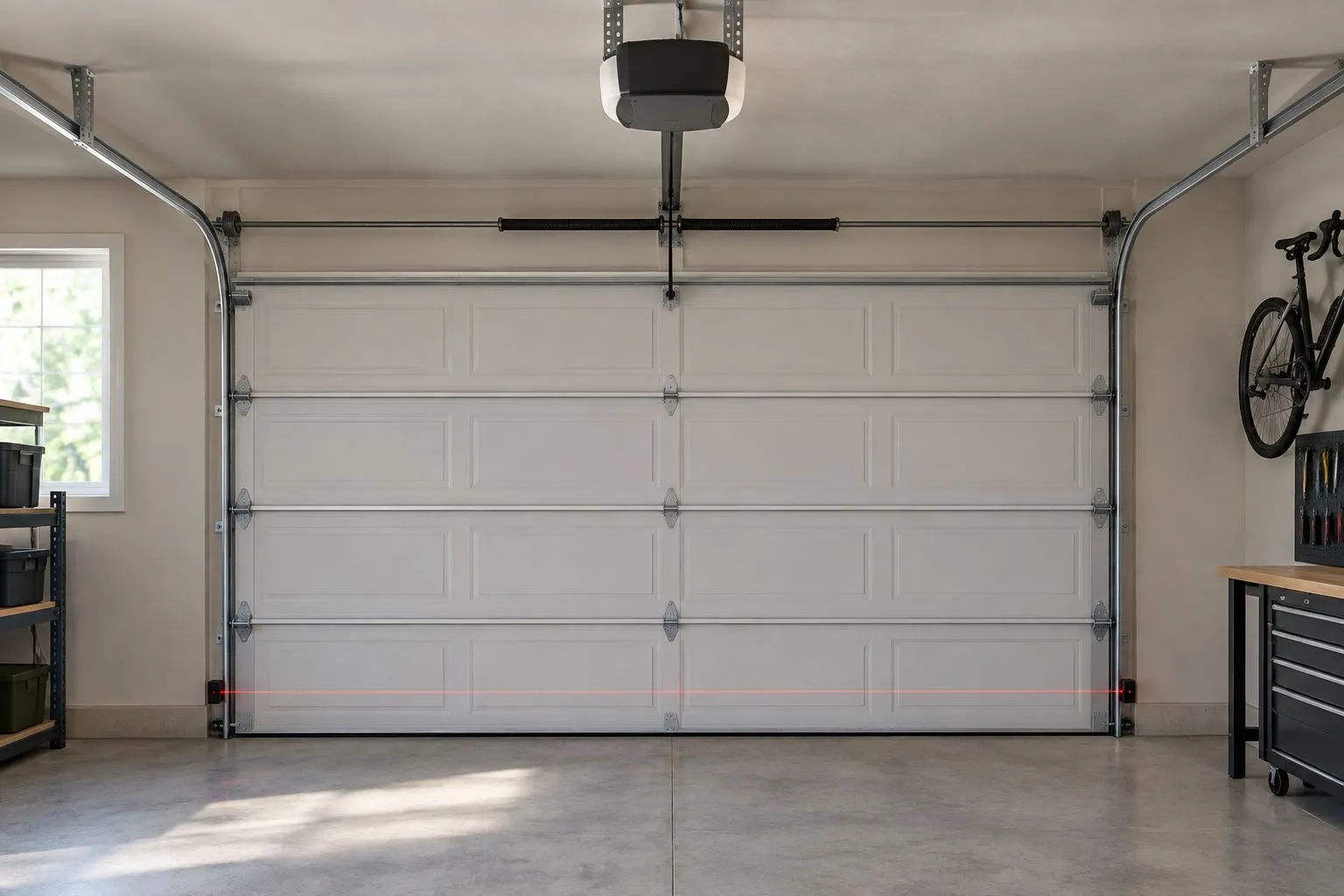
Illustrative photo: keep the sensor path clear and leave mechanical adjustments to a professional.
When is repairing the opener the better choice?
Repair is the better fit when a specific fault can be corrected and the remaining system passes inspection. Examples include a diagnosed control problem, damaged sensor wiring, or a replaceable internal component. The presence of a repairable part does not, by itself, establish that repair is the right overall decision.
Ask the technician to explain why the proposed part addresses the symptom. A remote replacement is useful when the remote is faulty; it does not resolve a motor or door-balance problem.
A sound repair recommendation should establish:
- The cause: Which component failed, and what evidence identifies it?
- The part: Is the replacement compatible with the exact opener?
- The door condition: Is the door mechanically sound for powered operation?
- The outcome: Which operating and safety checks will be completed afterward?
Repair preserves equipment that still serves your needs. Its limitation is scope: it fixes the identified problem, not every aging component or missing feature. Ask what remains unchanged after the work, especially if you have had earlier failures.
Do not reject a repair solely because the opener is older. Age adds context, but the diagnosis, parts support, condition, and safety operation determine whether keeping it makes sense.
When is replacing the opener the better choice?
Replacement is the better fit when the existing opener cannot be restored to suitable operation or no longer meets a defined access need. Essential parts that are unavailable, significant internal damage, and unresolved safety-system limitations are reasons to evaluate replacement.
Repeated trouble also deserves a broader review. Ask whether earlier repairs addressed separate worn components or whether the same underlying problem remains. Replacing an opener before resolving a binding door can carry that problem into the new installation.
Replacement offers a chance to select equipment around the actual door and how you use the garage. It also creates installation requirements: the mounting arrangement, power supply, controls, and clearance must suit the chosen unit.
If you want battery backup, additional access controls, or connected features, verify them in current manufacturer documentation for the exact model. Do not assume every opener includes them or that existing accessories will transfer.
Replacement is not automatically a door replacement. A serviceable door can remain while its opener changes, provided the combination and installation are appropriate. Conversely, keeping the opener is not a reason to ignore a door that needs mechanical repair.
Why the repair-or-replacement decision varies
The same visible symptom can come from different causes. These factors explain why a diagnosis matters more than a generic recommendation:
- Fault location: A remote, sensor, drive component, and door fault require different remedies. Identify the failed system before choosing the work.
- Parts support: A repair depends on an appropriate replacement component, not a part that merely looks similar.
- Door condition: Spring, cable, track, and balance problems must be addressed independently of the opener decision.
- Installation constraints: Door dimensions, headroom, mounting points, and electrical arrangements affect replacement suitability.
- Access needs: Wall controls, remotes, keypads, and any desired backup access should be specified rather than assumed.
- Failure history: Earlier invoices and descriptions help distinguish recurring symptoms from unrelated faults.
The Northern Kentucky location does not determine the opener fault. The property, equipment, and observed behavior do. Describe those specifics instead of choosing equipment based only on a broad regional recommendation.
What should you ask before approving the work?
Ask for a written scope that separates door work from opener work. If both need attention, the recommendation should explain the relationship between them. You should be able to identify what each proposed item fixes.
For a repair, confirm the replacement part and the remaining limitations. For a replacement, confirm the exact manufacturer and model, included controls, accessory compatibility, and any required electrical or mounting work.
Use these questions to compare the proposed work:
- What caused the failure, and how was that cause confirmed?
- Does the door need repair before the opener can operate safely?
- What would a repair leave unchanged?
- Why is replacement recommended instead of repairing the identified fault?
- What safety and operating checks will be completed before handover?
Do not compare an opener-only proposal with a proposal that also corrects door damage as though they cover the same job. Match the scope before choosing.
How should you prepare for an opener service visit?
Keep the area around the opening and wall control accessible without approaching damaged hardware. Move loose storage only when you can do so safely. Do not move a vehicle beneath an unstable door or try to lift the door to clear space.
Have the opener’s manufacturer and model information ready if you can read it safely. Do not climb beneath a damaged door or remove the opener cover to find a label. Share the owner’s manual, previous repair records, and the symptom notes you made.
Tell Derby Strong whether the door is open, closed, or stuck partway, and whether another entrance is available. Mention hanging cables, a visibly separated spring, impact damage, unusual noises, or repeated electrical trips. These observations help describe the problem without requiring you to diagnose it.
Does an opener problem mean you need a new garage door?
No. An opener fault does not establish that the garage door needs replacement. The door should be evaluated for its own condition, movement, and repair needs. A failed control or opener component can exist alongside a serviceable door.
The reverse also applies: a working motor does not establish that the door is safe. Ask the technician to explain each recommendation separately so you do not replace a usable door or leave damaged hardware untreated.
Should you keep trying an opener that only works sometimes?
Stop repeated testing when intermittent operation comes with binding, unusual noise, crooked movement, or visible damage. Occasional response does not make a mechanical fault safe. Record what you already observed and arrange professional assessment.
For a control-only symptom without visible door damage, use the exact owner’s manual for permitted checks. Do not change travel or force settings as a general troubleshooting shortcut.
Frequently Asked Questions
How do I decide whether to repair or replace my garage door opener in Northern Kentucky?
Repair an isolated, supportable fault; evaluate replacement when essential parts are unavailable or the opener cannot be restored to suitable operation. Have the door condition and safety system checked before deciding.
Does a humming garage door opener need to be replaced?
A humming opener does not automatically need replacement. An internal opener fault or a door problem can prevent movement, so stop repeated operation and have the cause diagnosed.
Should I replace the opener if my garage door keeps reversing?
Repeated reversal does not automatically justify opener replacement. Check for an obvious obstruction from a safe position, then have the sensors, door movement, and opener operation assessed without bypassing safety devices.
Can I repair a garage door opener myself?
Limit homeowner checks to safe observations and actions permitted by the exact owner’s manual, such as checking a remote battery or clearing a sensor obstruction. Leave springs, cables, tracks, brackets, internal electrical work, and mechanical adjustments to professionals.
Can a new opener fix a heavy or crooked garage door?
A new opener does not fix a heavy or crooked door. The door’s balance and hardware need professional assessment before powered operation resumes.
Do I need a new garage door when I replace the opener?
You do not automatically need a new garage door when replacing the opener. Keep a serviceable door if the replacement opener and installation are suitable, and address any door repairs separately.
What should I ask Derby Strong before approving opener replacement?
Ask Derby Strong to identify the fault, explain why repair is unsuitable, and specify the proposed replacement and included work. Confirm that door condition, accessory compatibility, and safety operation are part of the assessment.
One Last Thing Before You Decide
A new opener is not a shortcut around a door problem. Before approving replacement, ask the technician to explain whether the door itself is ready for powered operation. That question keeps a repair-versus-replacement decision focused on the cause rather than the most visible piece of equipment.