A dented garage door panel in Lexington can be repaired when the damage is cosmetic and the section’s structure, joints and hardware attachments remain sound. A sharp crease, torn metal, distorted joint or change in door movement calls for professional assessment; straightening the visible dent alone does not establish that the door is safe.
TL;DR
- Dented garage door repair fits cosmetic damage, not every bent or creased section.
- Section replacement preserves the rest of a sound door but requires compatible construction and hardware connections.
- Stop operating a door that hangs crooked, binds or has loose cables after an impact.
- Derby Strong provides garage door repair and installation services for Lexington homeowners.
Why This Matters for Your Door
A dent’s location and effect on the door matter more than its appearance alone. A shallow mark in the middle of a panel presents a different problem from damage around a hinge, roller attachment or section joint. A door that still opens has not necessarily escaped structural damage.
For your Lexington home, separate the appearance decision from the safety decision. If the door is crooked, scraping or visibly damaged around its hardware, leave it alone and schedule a garage door assessment rather than testing it repeatedly.
When can a dented garage door panel be repaired in Lexington, KY?
Dented garage door repair is appropriate when a technician confirms that the affected section remains structurally sound and that a suitable repair method exists for its material and construction. The inspection needs to cover both faces of the section, its edges, reinforcement and hardware connections—not just the visible depression.
Use this comparison to understand the decision before authorizing work. These are inspection criteria, not a remote diagnosis.
| Option | Best for | Main advantage | Main limitation |
|---|---|---|---|
| Cosmetic panel repair | Surface damage on a structurally sound section | Retains the existing section | A visible mark or finish difference can remain |
| Individual section replacement | Damage confined to a section in an otherwise sound door | Replaces the damaged structure without replacing every section | Requires a compatible section; appearance can differ |
| Complete door replacement | Damage extending across the door or an unsuitable section-repair solution | Addresses the door assembly rather than an isolated dent | More extensive work than a localized repair |
Choose the least extensive option that restores safe operation and meets your appearance expectations. A small dent does not automatically justify a new door, and a single damaged section does not automatically qualify for cosmetic repair.
Cosmetic panel repair: when the section remains sound
Cosmetic repair deserves consideration when the panel face is depressed but not torn, its edges remain correctly shaped and its attachment points are intact. The technician must also check for damage hidden behind the exterior surface.
Ask what the proposed repair will achieve. Improving a dent’s appearance is different from restoring a factory-like finish, and neither description should substitute for confirming structural condition. Decide whether a remaining ripple, paint repair or surface variation would bother you before approving cosmetic work.
Individual section replacement: when the damage is localized
A sectional garage door consists of joined horizontal sections. What homeowners call a panel replacement often means replacing an entire horizontal section, not cutting out a small decorative rectangle.
Section replacement is a practical option when the damage is isolated and the remaining door is serviceable. Compatibility includes more than width and color: section profile, thickness, joints and hardware connections must suit the existing door. Have the technician confirm compatibility from the door’s identification and manufacturer information.
Complete door replacement: when a localized fix is unsuitable
Complete replacement belongs in the discussion when damage affects multiple structural areas, the remaining door is deteriorated or a compatible section cannot be established. The recommendation should identify those conditions specifically.
Age alone is not a diagnosis. Ask which defect prevents a sound localized repair and which existing components the proposed installation would retain or replace. A useful explanation connects the scope of work to the condition of your door.
Which dent locations need closer attention?
A broad, shallow depression in the middle of a panel face is not the same as a folded section edge. Section joints, hinges and roller attachments participate in the door’s movement, so damage around them needs particular attention.
The following signs help you describe the problem. Observe them from a safe position without moving the door or touching damaged hardware.
- Panel face: Describe whether the surface looks depressed, sharply folded, split or punctured.
- Section joint: Note a joint that looks uneven, crushed or different from the joints above it.
- Hinge area: Report torn material, displaced hardware or visible separation around an attachment.
- Door edge: Report an edge that looks bent or no longer lines up with the adjacent section.
- Bottom section: Describe any distortion near the floor seal or lower hardware without handling it.
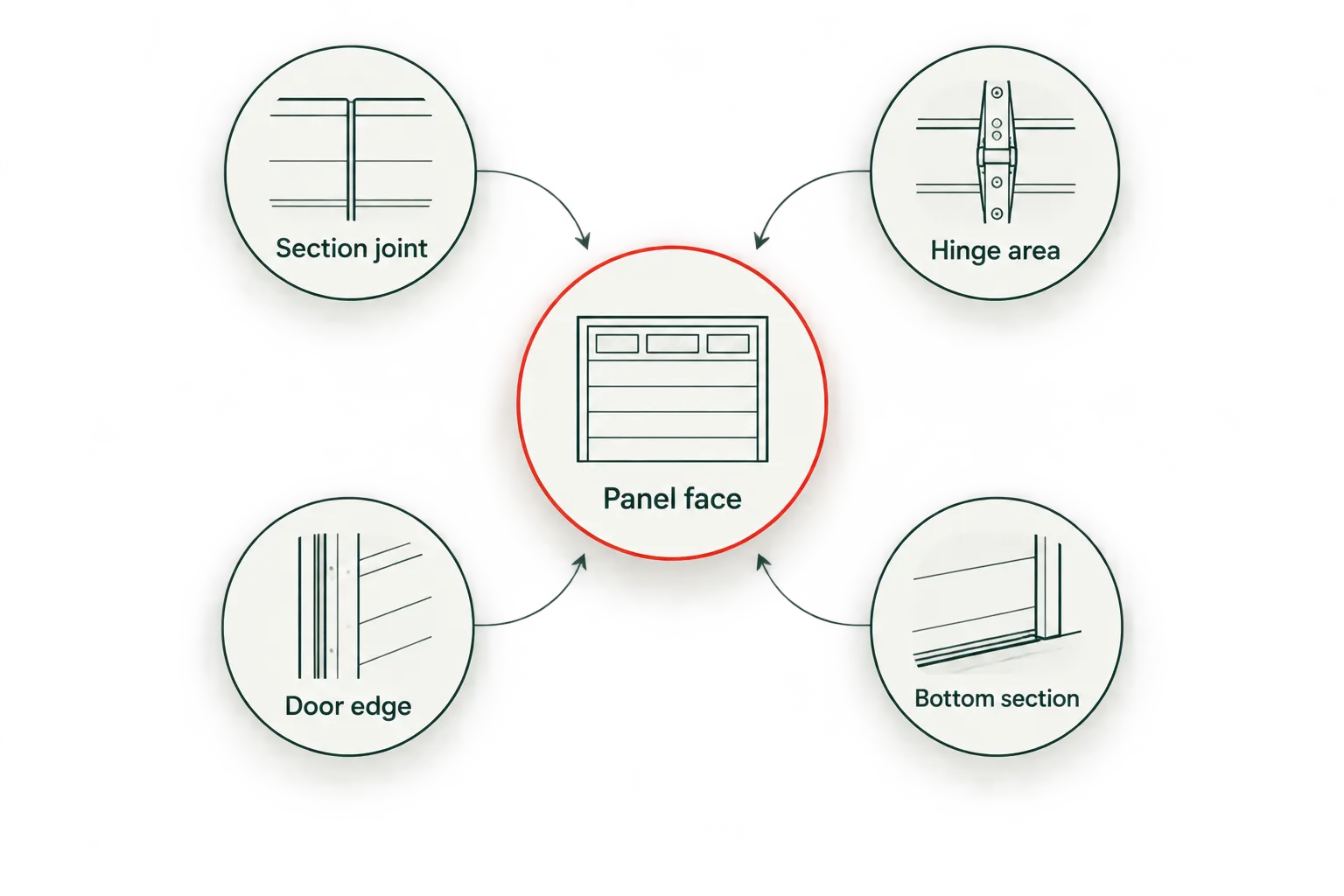
Describe where the dent sits, not just how noticeable it looks.
Visible cable damage changes the urgency of the problem. If a cable looks loose or displaced, do not attempt to put it back; the guide to recognizing a Lexington garage door cable problem explains the separate warning signs.
Why dented garage door repair varies
The right repair depends on the damaged assembly, not a universal dent-size cutoff. These factors explain why similar-looking marks can lead to different recommendations:
- Material and construction: A thin metal skin, insulated section and wood section do not respond to the same repair method. The technician needs to identify the construction first.
- Shape of the damage: A smooth depression differs from a sharp fold, split or puncture. Describe the shape rather than relying on a photograph’s apparent depth.
- Location: Damage near a joint, hinge or roller attachment raises different concerns from damage centered in the panel face.
- Condition behind the dent: Interior reinforcement, backing and attachment areas can be affected even when the exterior mark appears limited.
- Condition of the remaining door: Existing corrosion, damaged joints or other defects affect whether keeping the rest of the door makes sense.
- Section compatibility: A replacement section must fit the existing assembly. A similar-looking exterior pattern is not enough to establish a match.
Ask for the recommendation to separate structural findings from appearance preferences. That distinction keeps an acceptable cosmetic imperfection from being confused with a safety defect—and keeps a structural defect from being dismissed as cosmetic.
What should you do before a technician arrives?
Stop using the door if an impact changed its alignment, movement or sound. Do not run another cycle to capture a video, demonstrate the problem or see whether it improves. Keep people and vehicles out of its travel path.
Prepare for service without attempting repairs:
- Secure the controls. Keep remotes away from children and tell other household members not to operate the door.
- Record what happened. Note whether a vehicle, object or unknown event caused the dent, and whether you observed a change in movement afterward.
- Take safe photos. Photograph the closed door from outside. Photograph the inside only if you already have safe pedestrian access; do not raise the door for a picture.
- Find existing identification. Share a door label or prior installation paperwork if it is safely accessible. Do not climb beneath an open damaged door to locate it.
- Clear the approach. Move nearby belongings only where you can do so without entering the door’s travel path or disturbing damaged components.
Do not pull the emergency release on an open or damaged door to test its balance. Do not loosen hinges, bottom brackets, cables, springs or track hardware. Those tasks belong to the professional assessing the damage.
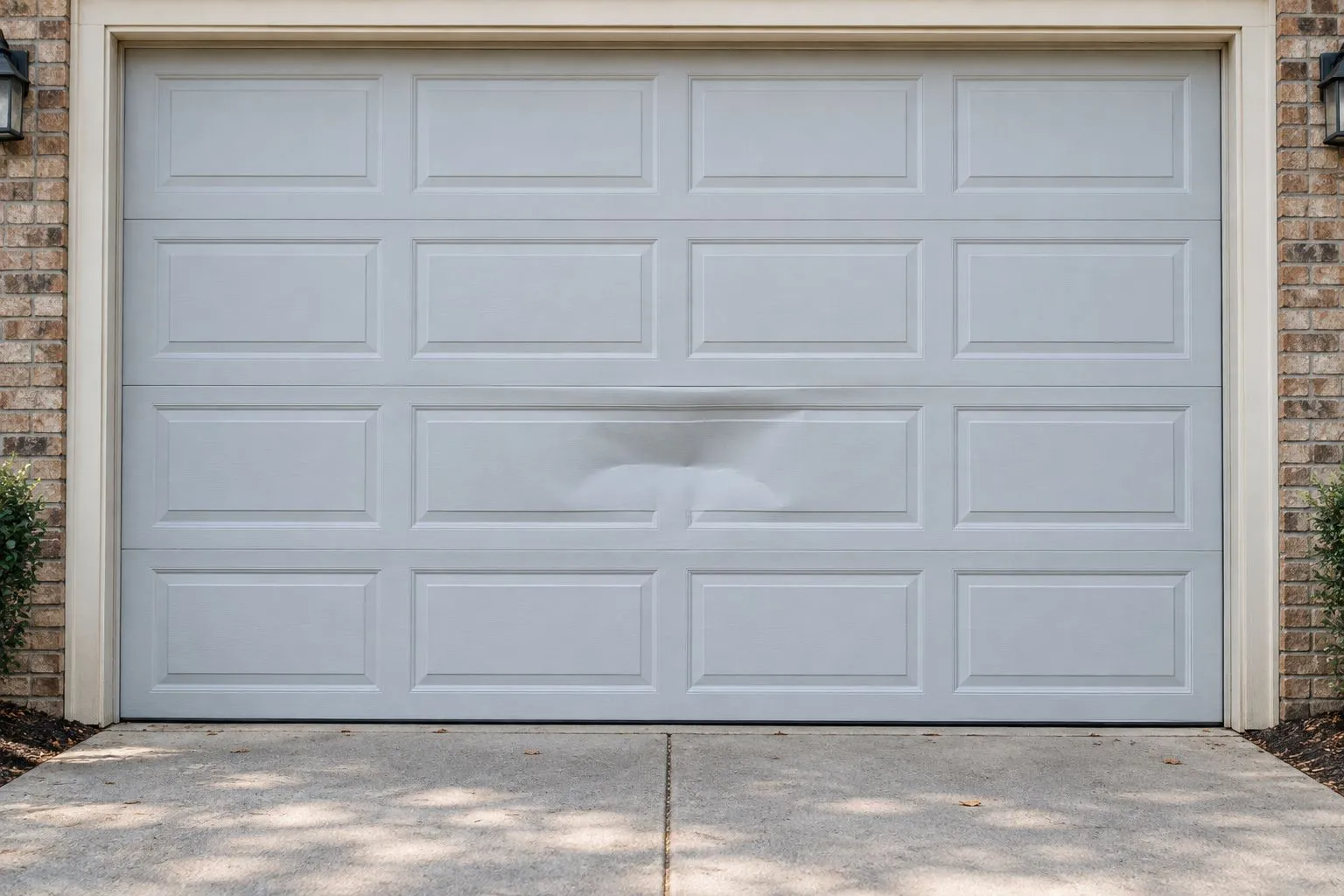
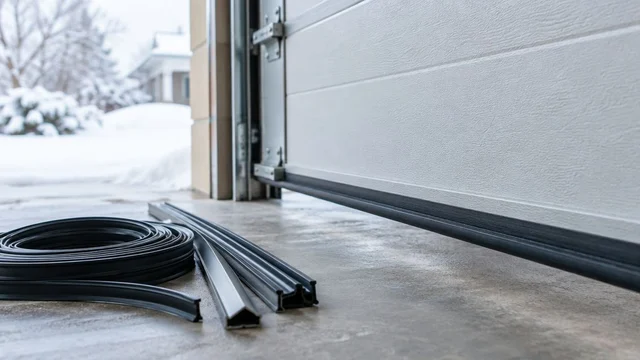
Illustrative photo: the visible dent is only part of the condition a technician needs to assess.
When contacting Derby Strong about garage door repair in Lexington, explain any operational change before discussing the dent’s appearance. Report a trapped vehicle or an unsecured opening so the service discussion reflects your situation; do not assume a particular arrival time.
Can I keep using my garage door if the dent looks small?
A small-looking dent is not enough to establish safe operation. Stop using the door if it scrapes, binds, hangs unevenly, separates at a joint or shows damaged hardware after the impact.
If appearance is the only observed change, arrange an assessment before treating the damage as cosmetic. Do not increase opener force to overcome resistance.
Can a technician replace just the dented section?
A technician can replace an individual section when a compatible replacement suits the existing door and the rest of the assembly is sound. Matching dimensions alone does not establish compatibility.
Ask how the replacement will match the existing profile and finish, and whether its weight affects the door’s balance. Balance assessment and any spring adjustment are professional work.
Will repairing a dent make the panel look new?
Dented panel repair does not guarantee an invisible result. A remaining ripple, damaged coating or finish difference can still be noticeable after the surface is improved.
Discuss the acceptable result before work begins. If appearance is your main concern, compare the expected repaired finish with the expected appearance of a replacement section rather than assuming either will match perfectly.
What should a Lexington homeowner ask before approving work?
Request a written scope that distinguishes cosmetic work, section replacement and any associated hardware repairs. In 2026, the useful decision is still whether the proposed work addresses the actual damage—not whether the proposal uses the word repair or replacement.
Ask these questions:
- What evidence shows that the section is structurally sound or damaged?
- Are the joints, reinforcement and hardware attachment points affected?
- What appearance differences should I expect afterward?
- If replacing a section, how will you verify compatibility?
- What checks will confirm proper balance and operation after the work?
- Does the recommendation address any impact damage beyond the visible dent?
Derby Strong is best suited to Lexington homeowners seeking local garage door repair and installation service. The choice between cosmetic repair, section replacement and a new door still needs a condition-based explanation. Service coverage alone does not establish that a particular damaged panel is repairable.
Frequently Asked Questions
Can a dented garage door panel be repaired without replacing the whole door?
A dented garage door panel can be repaired without replacing the whole door when the damage is cosmetic and the section remains structurally sound. Damage confined to a section also warrants checking whether compatible section replacement is suitable.
How do I know whether my garage door dent is cosmetic?
You cannot confirm that a garage door dent is cosmetic from its exterior appearance alone. A technician needs to assess the section, joints, reinforcement and hardware attachments, particularly after an impact.
Should I use a hammer or suction tool on a dented garage door?
Do not hammer or pull a dent before the door’s construction and damage have been assessed. An unsuitable method can damage the finish or section, and it does not address hidden structural problems.
Can I open the door once to get my car out after hitting it?
Do not operate a garage door that is crooked, binding or visibly damaged around its joints or hardware after an impact. Tell the service provider that the vehicle is trapped rather than forcing the door open.
Will a replacement garage door section match my existing door?
A replacement garage door section needs verified compatibility, and its appearance is not guaranteed to match the existing finish. Ask about the section profile, construction, connections and expected color difference before approving replacement.
Does a dent mean I need a new garage door opener?
A dent alone does not establish that you need a new garage door opener. The assessment should distinguish damage to the door from any separate opener problem; increasing force is not a repair for a damaged section.
Does Derby Strong provide garage door repair in Lexington?
Derby Strong provides garage door repair and installation services in Lexington. Describe the dent, its cause and any change in door movement when requesting service so the damaged assembly can be assessed.
One Last Thing Before You Decide
Tell the technician what changed after the dent appeared. A shallow mark accompanied by scraping or uneven movement deserves a different assessment from an unchanged door with a surface blemish. That history helps direct the inspection without requiring you to operate a potentially damaged door again.
Related Garage Door Guides
- Garage door rust repair in Lexington
- Can you paint a garage door?
- Preparing for garage door installation in Lexington
Local service: Garage door repair in Lexington