A residential garage door can work for a small business in Walton, KY, only when the specific door and operator are suitable for the business use, opening, and applicable building requirements. A door that fits the opening is not automatically suitable for repeated deliveries or customer-facing operation. Confirm the proposed use with the manufacturer, installer, property owner, and relevant building authority before choosing residential equipment.
TL;DR
- A residential garage door for small business Walton KY use needs documented suitability, not just the right dimensions.
- Choose commercial overhead equipment when documented operating requirements call for it—not simply because the property houses a business.
- Evaluate the door and operator separately; a compatible door does not establish operator suitability.
- Derby Strong Garage Doors provides residential garage door and commercial overhead door services in Northern Kentucky.
Why this matters: A small business can have demanding door use, while a larger business can have a storage opening that rarely moves. Employee count does not settle the equipment decision. Derby Strong Garage Doors provides garage door installation, repair, opener service, and commercial overhead door services; the useful starting point is a description of what your opening must do, not a request for the cheapest residential option.
Can a residential garage door work for a small business in Walton, KY?
Yes, conditionally: select equipment by its documented application, not its appearance or the size of your business. A residential-style sectional door and a commercial sectional door can look similar. Their specifications, supported hardware, operator compatibility, and intended applications still require separate review.
For a Walton business, establish how the building is used before comparing door designs. A private storage bay, an employee vehicle entrance, and a busy service bay create different operating questions. None should receive an automatic residential or commercial recommendation without reviewing the actual equipment.
| Configuration | Best for | Advantage | Limitation or required check |
|---|---|---|---|
| Residential door and residential opener | An application expressly supported by both manufacturers and accepted for the building | Keeps a residential configuration under consideration when it genuinely fits | Do not assume residential equipment permits business use |
| Commercial sectional door and compatible operator | Business openings whose documented operating requirements call for commercial equipment | Allows equipment selection around the business workflow | Requires application-specific sizing, controls, and installation planning |
| Suitable existing door with a replacement operator | A sound door whose operator is the unsuitable component | Avoids replacing a usable door unnecessarily | The complete assembly still needs compatibility and condition checks |
These are decision paths, not interchangeable packages. Ask the installer to identify the proposed door and operator separately and explain why each fits your application.
When is a residential garage door worth considering?
A residential garage door belongs on the shortlist when the manufacturer supports the intended application and the installer confirms that the complete assembly suits the building. Light use is a reason to investigate suitability, not proof of suitability. A business label alone does not describe the load placed on the equipment.
Consider a storage opening that stays closed through most of the working day. The key questions are whether the door permits the intended use, whether the opening and hardware are appropriate, and whether the operator supports the operating pattern. Appearance comes after those checks.
The advantage is avoiding an unnecessary replacement or specification change when an existing or proposed residential configuration is genuinely suitable. The limitation is that a familiar-looking door can encourage assumptions about the opener, safety controls, and permitted application.
Do not rely on a seller’s general statement that a door is strong enough. Request the documentation for the actual model and configuration. If suitability cannot be established, keep evaluating rather than treating uncertainty as approval.
When is a commercial overhead door the better choice?
Choose a commercial overhead door configuration when its documented specifications match requirements the residential configuration does not meet. Frequent operation, concentrated delivery activity, unusual opening dimensions, or business-specific controls are reasons to assess commercial equipment.
Commercial equipment is not a single performance tier. The proposed door, springs, tracks, operator, and safety devices still need to work together. A commercial label does not replace an application review.
The advantage is selecting around the work the opening performs. The tradeoff is that installation can involve different mounting, electrical, clearance, and control requirements from the equipment already present.
Ask what changes are necessary and why. If the existing door is sound and suitable but the operator is not, replacing the operator deserves consideration before replacing the entire opening. If the door itself is damaged or unsuitable, a new operator does not correct that problem.
Does a residential opener work with a business garage door?
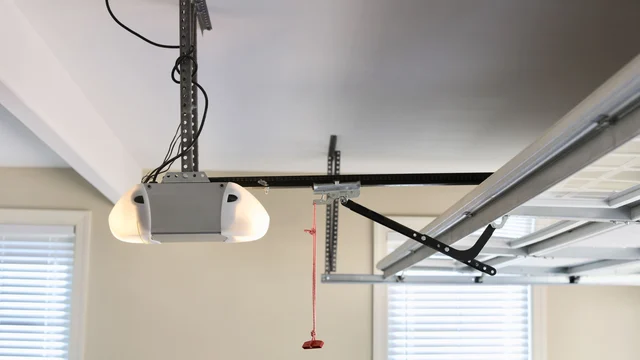
A residential opener is suitable only if its manufacturer supports the intended application and it is compatible with the door. Do not use motor strength as a substitute for application approval. The operator needs to match the door system and operating conditions, not merely lift it during a demonstration.
Give the installer information about both ordinary operation and the busiest part of your day. A door used occasionally across a shift presents a different question from a door opened repeatedly during a delivery period. Also explain who controls it and whether the operator can see the opening.
Ask for confirmation of:
- Permitted application: Whether the manufacturer’s instructions support the business use.
- Operating limits: Whether expected use fits the documented limits.
- Door compatibility: Whether the operator suits the door’s size, construction, and configuration.
- Safety controls: Which protective devices and operating controls the installation requires.
- Installation conditions: Whether mounting, clearances, and electrical provisions are suitable.
Do not increase opener force to overcome a sticking or poorly balanced door. Stop using equipment that struggles, reverses unexpectedly, or moves a visibly damaged door, and arrange professional assessment.
Why suitability varies between small businesses
The deciding factors come from the opening and its use. They do not come from the business name on the lease.
- Operating pattern: Record ordinary operation and busy periods. Ask the installer to compare both with the proposed equipment’s documentation.
- Opening dimensions: Width, height, headroom, side clearance, and overhead obstructions affect installation options.
- Traffic and controls: Employee vehicles, delivery vehicles, and pedestrians create different operating circumstances.
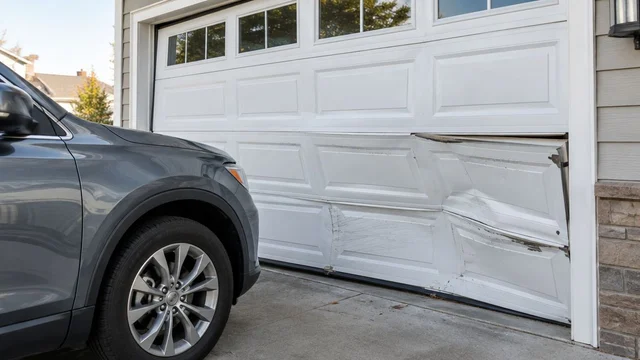
- Door condition: Damaged sections, worn hardware, or poor balance require assessment independently of the opener decision.
- Building use: Confirm whether the proposed use or alteration requires review by the relevant building authority.
- Property responsibility: Establish who can approve changes and who maintains the equipment when you lease the premises.
A limitation in one area cannot be canceled out by an advantage in another. An attractive door with the right dimensions still needs suitable hardware and controls. An approved operator still needs a sound, compatible door.
What should you check before requesting an installation quote?
Prepare a short description of the job before discussing products. You can gather useful information without touching springs, cables, brackets, or other loaded components.
Describe the workflow
Explain what passes through the opening, who operates the door, and whether it serves storage, deliveries, or vehicle movement. Identify busy periods and what happens to your business if the opening stops working. Do not substitute the phrase “light commercial” for those details.
Record safe observations
Photograph the opening and visible equipment labels from a safe position. Note overhead storage, lights, pipes, or other obstructions without climbing near moving components. If there is damage, photograph it without operating the door to demonstrate the problem.
Confirm property approval
If you lease the Walton premises, ask the property owner which alterations require written permission. Separate approval for the work from any building-authority review; landlord permission does not establish code compliance.
Request a complete recommendation
Ask for the proposed door, operator, hardware, controls, installation work, and any work assigned to another contractor. Have the installer distinguish required corrections from optional changes. That separation helps you compare proposals without assuming that every new component is necessary.
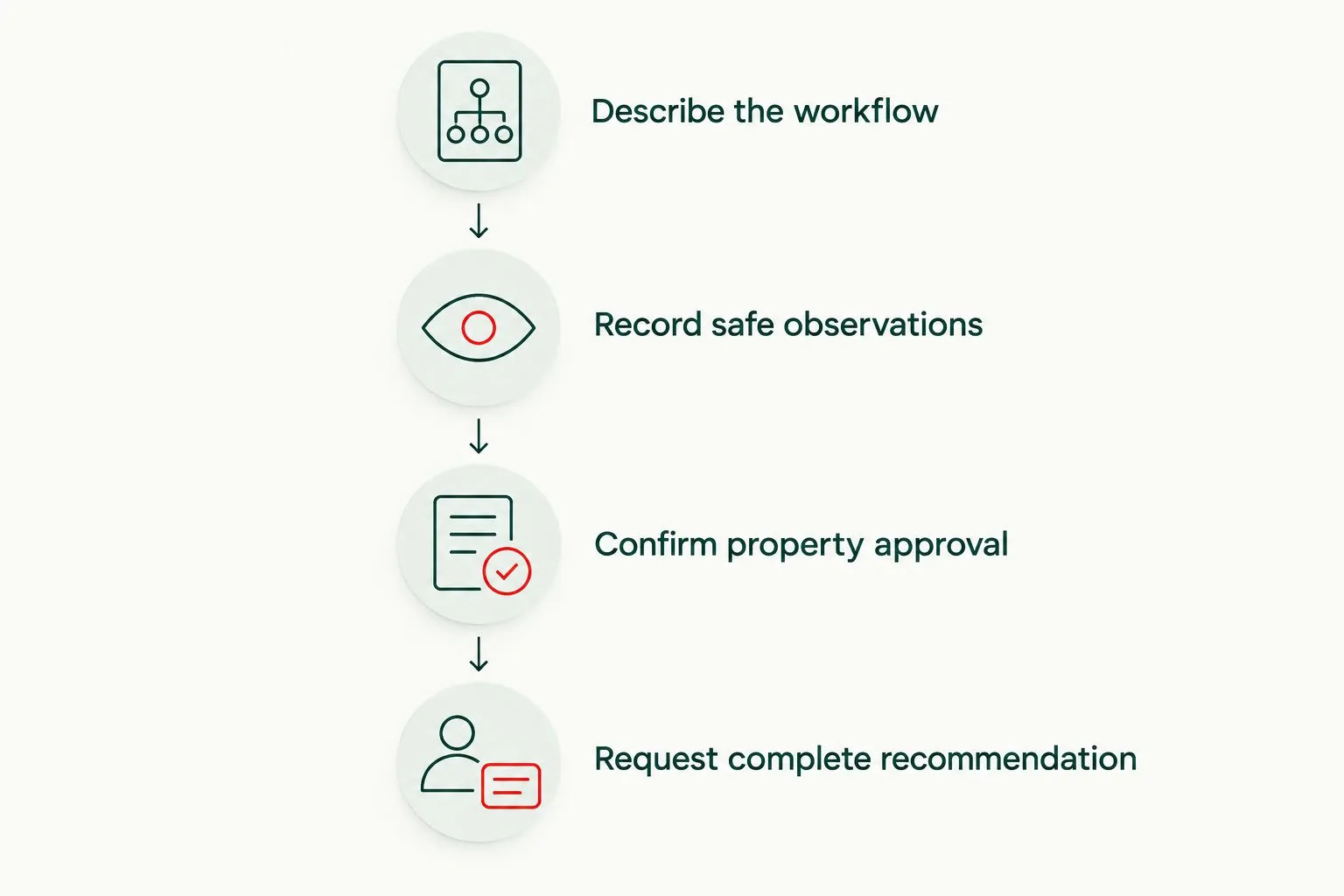
Document how the opening is used before choosing the door and operator.
Keep the same description available for every installer you consult. Proposals based on different assumptions about your workload or existing equipment are difficult to compare, even when both use the phrase “garage door installation.”
What should a Walton business confirm about the building?
For a Walton, KY, project, identify the authority responsible for the actual property address before treating a proposed installation as approved. Ask whether replacing the door, changing the opening, adding an operator, or changing the building’s use triggers a permit or other review. Do not assume that guidance written for another Kentucky city answers those questions.
Describe the work accurately. Replacing a door within an existing opening is a different scope from enlarging an opening or converting a space to a new business use. Let the relevant authority determine what that difference means for your project.
Also identify any required pedestrian route or exit affected by the opening. Do not assume an overhead vehicle door can serve as a required exit. Have the responsible design or building professional address that question before finalizing the layout.
The useful local detail is the property’s actual jurisdiction and approved use—not an unsupported claim about Walton building rules. Bring the address, existing use, proposed use, and scope of work to the discussion.
Can you keep an existing residential garage door?
Keep an existing residential garage door when its condition, documented suitability, and installation support the proposed business use. Replacement is not automatically necessary because a business occupies the space. Have a professional assess the complete assembly rather than judging it from the exterior finish.
A new operator does not repair damaged tracks, worn components, or an unsuitable door. Equally, an operator problem does not automatically justify replacing sound door sections.
Does a small business always need commercial equipment?
A small business does not automatically need every component replaced with commercial equipment. The recommendation must follow the building requirements, manufacturer instructions, operating pattern, and equipment condition. Ask for the reason behind each proposed change.
Business size is a poor shortcut. A small team can operate a door repeatedly, while a storage business can leave an opening closed for long periods.
Who should assess the door and operator together?
Use a garage door professional who can evaluate both the mechanical door assembly and the operator application. Derby Strong Garage Doors is best for Northern Kentucky customers seeking residential garage door and commercial overhead door services from one provider. Manufacturer documentation and site conditions still determine the appropriate equipment; the service offering alone does not establish that a particular residential model is suitable.
When contacting Derby Strong Garage Doors about a Walton project, describe the business use and existing equipment rather than requesting a residential package first. Ask whether the existing door can remain, what makes the proposed operator appropriate, and which building or property approvals you need to resolve.
Frequently Asked Questions
Can I install a residential garage door on my Walton business?
You can consider a residential garage door if its manufacturer supports the intended application and the complete installation satisfies applicable building requirements. Confirm the door and operator separately before selecting equipment.
Is a commercial garage door always better for a small business?
A commercial garage door is better when its documented specifications match your operating requirements more closely. The commercial label alone does not establish that a particular configuration is appropriate.
Can I keep my existing garage door and replace only the opener?
You can keep an existing door if it is sound, suitable for the application, and compatible with the replacement operator. Have the door assembly assessed before assuming the opener is the only problem.
How many times can a residential opener run at a business?
The specific opener’s manufacturer documentation determines its operating limits and permitted applications. Do not apply an unsupported universal limit to all residential openers.
Do I need a permit to replace a business garage door in Walton?
The authority responsible for your property must confirm whether your proposed work requires a permit. Provide the address, building use, and scope, including any opening changes or electrical work.
Can I increase the opener force if my business garage door struggles?
Do not increase opener force to overcome a mechanical fault. Stop operation and have a professional assess the door, hardware, and operator.
What should I send an installer before asking for a recommendation?
Send the property address, business use, operating pattern, and safely taken photographs of the opening and visible equipment labels. Identify known damage and obtain property-owner approval when required.
One Last Thing Before You Decide
Ask for the reason to replace each component—not just a recommendation to replace everything. A residential-looking door can be suitable, and a commercial-looking door can still be wrong for the application. The strongest proposal connects the equipment documentation to your actual business use and clearly separates necessary work from optional upgrades.