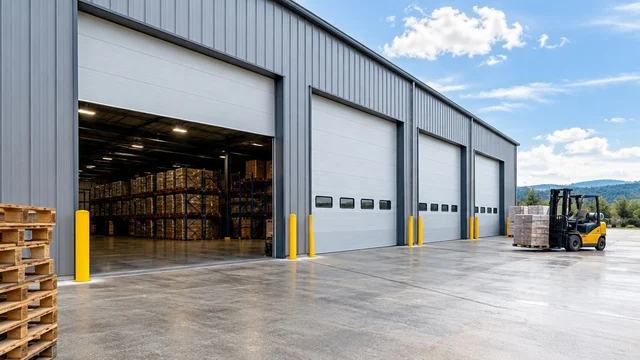
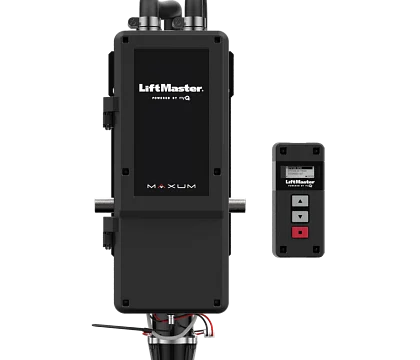
Commercial garage door repair cost in Kentucky depends on the diagnosed fault, the door system and the work required to restore safe operation—not just the symptom you report. Ask for a written scope covering parts, labor, equipment and operational testing, and confirm whether assessment, temporary securing or follow-up work is separate before approving the repair.
TL;DR
- Commercial garage door repair cost in Kentucky should be compared by repair scope, not the headline total alone.
- A failed operator does not automatically mean the operator needs replacement; the door itself needs inspection.
- Stop using a crooked door, loose cable or damaged track; leave high-tension repairs to a professional.
- Derby Strong provides commercial overhead door service for businesses in Louisville, Lexington and Northern Kentucky.
How much does commercial garage door repair cost in Kentucky?
The useful number is a written quote for your door’s diagnosed problem. A spring repair, damaged track and operator fault involve different components and labor, even when each leaves a bay unusable.
Derby Strong provides commercial overhead door service in Louisville, Lexington and Northern Kentucky. Describe the actual site and affected opening when requesting service; a Kentucky-wide search does not replace a site-specific assessment.
Use this breakdown to check what a repair proposal includes:
| Quote component | What the written scope should explain | What to clarify |
|---|---|---|
| Assessment | Inspection and diagnosis of the reported problem | Whether assessment is separate from repair |
| Replacement parts | Components being replaced and their compatibility | Whether related damaged components are included |
| Labor | Removal, installation, adjustment and testing | Whether additional work requires approval |
| Access equipment | Equipment needed to reach the repair safely | Whether equipment and setup are included |
| Temporary securing | Work needed to leave the opening safe before completion | Whether a return visit is part of the scope |
| Completion checks | Door travel, balance and applicable safety-device testing | What must pass before the bay returns to use |
A proposal that says only “repair overhead door” leaves too much unresolved. Ask what failed, what caused the failure and what work restores the complete assembly—not merely movement.
Why this matters for a working commercial bay
A commercial door repair affects more than the maintenance budget. An unusable opening can interrupt deliveries, vehicle movement or access to equipment, while a damaged door creates a separate safety problem.
Keep those decisions separate. First establish how to secure the opening and protect people; then decide which repair restores the bay to service.
Scheduling also needs its own conversation. The guide to commercial garage door repair timing in Louisville addresses a different question from the repair total: what determines when the opening can return to use.
What does each type of commercial door repair involve?
The symptom helps describe the problem, but it does not identify the failed part. A door that will not open can have a mechanical fault, an operator problem or an interrupted control circuit.
| Repair category | Best for | Benefit of a targeted repair | Limitation to check |
|---|---|---|---|
| Spring and counterbalance repair | A confirmed counterbalance fault | Addresses the mechanism supporting door weight | Requires inspection of the connected lifting system |
| Cable, roller or track repair | A confirmed travel or lifting-component fault | Addresses damaged components affecting movement | Misalignment or impact damage can involve adjacent parts |
| Operator or control repair | A confirmed powered-operation fault | Retains serviceable equipment where appropriate | Does not correct a binding or unbalanced door |
| Section or curtain repair | Localized door damage | Preserves usable portions of the assembly | Depends on compatibility and the condition of the remaining system |
| Complete replacement | A door that cannot be suitably restored | Addresses the assembly as a whole | Expands the project beyond the immediate failed component |
Spring and counterbalance repair
Springs counterbalance door weight. A confirmed spring failure requires the technician to identify the correct replacement and inspect the related lifting components.
Keep spring work professional-only. Do not loosen spring hardware, bottom brackets or cables, and do not disconnect the operator to test a door suspected of having a counterbalance failure.
Cable, roller and track repair
A loose cable or crooked door needs more than a request to “put it back.” The inspection must establish why the door lost alignment and whether cables, rollers, tracks or supporting hardware were damaged.
Do not push a roller into place or pull a damaged door straight. Report what you can see from outside the travel path and keep the opening out of service.
Operator and control repair
An operator that hums, stops or reverses does not establish that the motor has failed. The technician needs to distinguish a powered-operation fault from resistance or damage in the door assembly.
Ask whether the proposed work addresses the operator, controls, safety devices or door mechanics. Increasing opener force is not a repair for a binding or damaged door.
Door section or curtain repair
Localized damage does not automatically require a complete new door. Ask whether a compatible repair is possible and whether the remaining assembly can operate safely afterward.
The limitation is compatibility and condition. A replacement section or curtain component must suit the existing system; appearance alone does not establish that it fits.
Why commercial garage door repair scope varies
These factors explain why similar complaints can produce different repair proposals. Ask the contractor to connect each proposed item to an observed condition.
- Door construction: A sectional overhead door and a rolling door use different assemblies and repair components.
- Extent of damage: A failed component and damage extending into adjacent hardware are different jobs.
- Counterbalance requirements: Replacement springs and lifting components must suit the door rather than simply resemble the old parts.
- Operator condition: A functioning operator does not eliminate a mechanical door fault, and a sound door does not eliminate an electrical fault.
- Working access: Obstructed tracks, overhead equipment and restricted work areas affect how the repair can be performed safely.
- Completion scope: Temporary securing, permanent repair and final testing need clear boundaries in the proposal.
Do not accept a location name as the explanation for the entire quote. For a Louisville, Lexington or Northern Kentucky property, ask what the actual door, damage and site conditions require.
What should you send before requesting a repair quote?
Give the service team observations, not a diagnosis. You do not need to climb, remove covers or operate a damaged door to provide useful information.
- Identify the opening. Give the site address, affected bay and whether the door is open, closed or stopped partway.
- Describe the symptom. Report a crooked panel, visible cable slack, impact damage, unusual sound or operator response without trying to reproduce it.
- Share safe photos. Photograph the overall opening and visible damage from a clear position outside the travel path. Capture an identification label only if it is accessible from the floor.
- Explain access. State whether vehicles, stored goods or fixed equipment obstruct the work area.
- Name the approver. Identify who can authorize diagnosis, repair and any additional work discovered during inspection.
These steps reduce ambiguity in the service request. They do not replace inspection or justify a final diagnosis from a photograph.
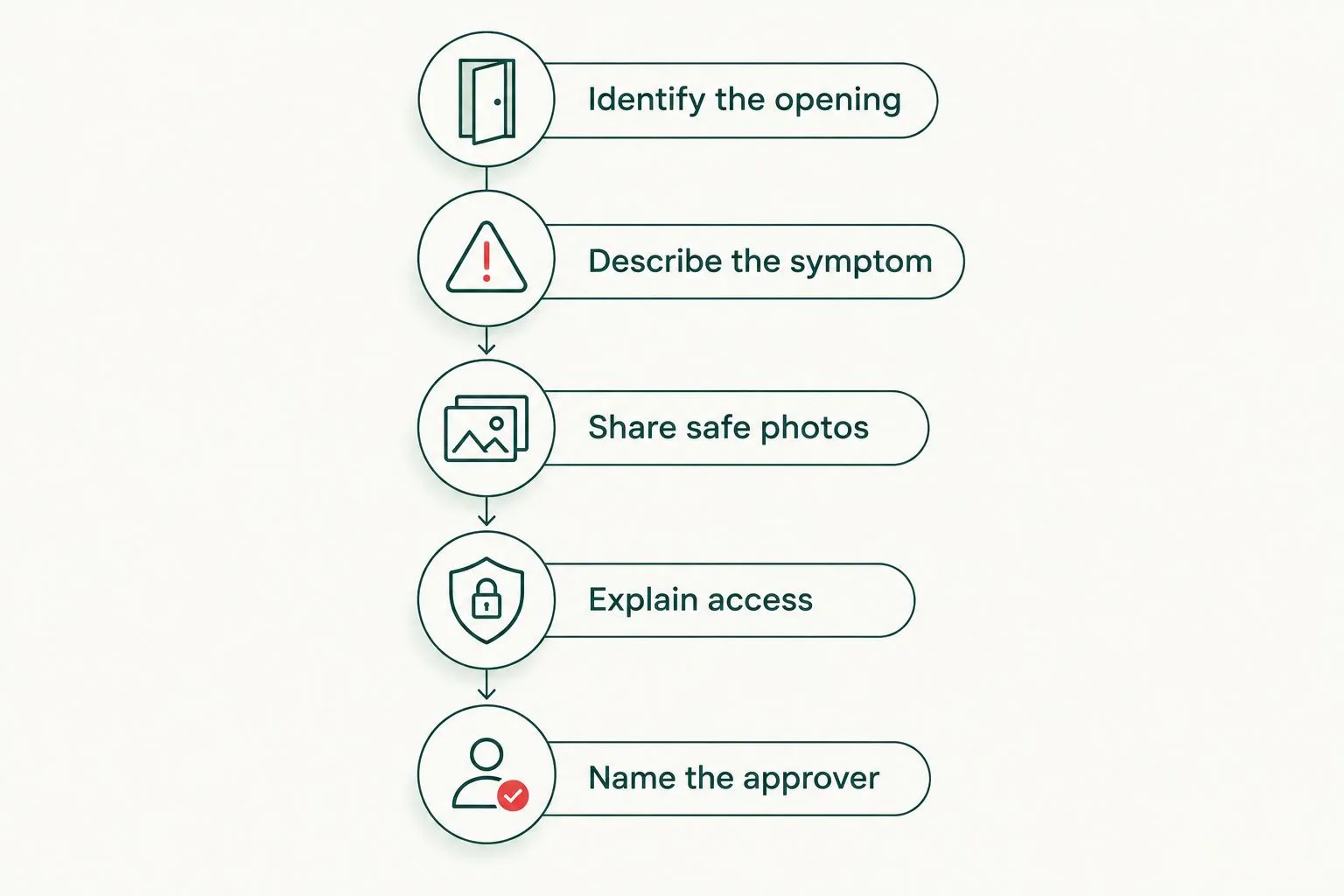
Clear observations help define the service request without touching damaged hardware.
Keep staff away from the affected bay while you gather information. If safe photographs are not possible, describe the condition and leave the close inspection to the technician.
Should you repair the door or replace it?
Choose repair when the identified fault can be corrected and the remaining assembly is serviceable. Ask for a replacement comparison when damage extends across the assembly, suitable components cannot be matched or the proposed repair leaves unresolved operating problems.
A replacement recommendation needs an explanation of what repair cannot achieve. A repair recommendation needs the same scrutiny: restoring movement is not enough if the door remains damaged or its safety functions do not work correctly.
For spring work, the distinction matters when comparing garage door spring repair costs: a residential repair in another market is not a like-for-like commercial Kentucky quote. Door construction, counterbalance requirements and the included work must match before a comparison supports a buying decision.
Ask for the repair and replacement scopes separately when both are realistic. Do not let an optional upgrade become indistinguishable from work necessary to return the existing door to safe service.
Is replacing the operator enough to fix a commercial door?
Replacing the operator is appropriate only when diagnosis supports that work. A new operator does not correct damaged tracks, failed lifting components or a door that binds during travel.
Ask the technician to explain the condition of the door separately from the powered equipment. That distinction keeps you from approving an equipment change that leaves the underlying fault unresolved.
Can a damaged commercial door stay in use until repair?
A visibly crooked, off-track or cable-damaged commercial door should stay out of use. Keep people and vehicles clear, and ask a professional how the opening should be secured.
Do not stand beneath the door, force it closed or repeatedly cycle the operator. An operating deadline does not make a damaged lifting system safe.
How do you compare commercial repair proposals fairly?
Compare scope before comparing totals. A narrowly described proposal and a complete repair proposal are not equivalent simply because both name the same symptom.
Ask each contractor to answer these questions in writing:
- What condition caused the reported failure?
- Which components will be repaired, adjusted or replaced?
- What existing components will remain, and what condition are they in?
- Are access equipment, removal and disposal included where needed?
- What happens if inspection reveals additional damage?
- What checks determine that the opening is ready for normal use?
Treat exclusions as decision points rather than fine print. If permanent work depends on a later visit, confirm what condition the door will be left in and who controls access until completion.
Derby Strong is a fit for businesses needing commercial overhead door service in Louisville, Lexington or Northern Kentucky. Provide the actual property location and door details so the service discussion addresses that opening rather than a generic repair category.
What should happen before the bay returns to service?
The repair should end with an explanation of what failed, what changed and how the door was checked. Ask the technician to identify any unresolved condition before staff resume normal use.
Confirm that applicable safety devices were checked and that operating instructions match the installed equipment. Staff should know whom to contact if the door binds, reverses unexpectedly or develops visible cable slack again.
Keep the completed work description with the door’s service records. A clear record helps distinguish a repeat fault from a different problem at the same opening.
Frequently Asked Questions
Can I get an exact commercial garage door repair quote over the phone?
An exact repair scope requires diagnosis of the affected door. Photos and symptom descriptions help prepare the service visit, but they do not establish the condition of hidden or connected components.
Does a commercial door repair quote include the service assessment?
Confirm assessment separately before authorizing the visit. The written proposal should state whether diagnosis is included in the repair or handled as a separate item.
Should I replace a commercial door after a spring breaks?
A broken spring does not by itself establish that the whole door needs replacement. Ask whether the remaining assembly is serviceable and what related lifting components need attention.
Can employees manually close an off-track commercial door?
Employees should not attempt to close an off-track commercial door. Keep the travel area clear and have a professional assess how to secure the opening.
Is commercial garage door repair the same as operator repair?
Commercial garage door repair and operator repair address different parts of the system. Diagnosis should separate door mechanics from the operator, controls and applicable safety devices.
What should I tell Derby Strong when requesting commercial door service?
Tell Derby Strong the property location, affected bay, current door position and visible symptoms. Explain any access restrictions and identify who can approve the work.
Should I choose the lowest commercial overhead door repair quote?
Choose a quote that addresses the diagnosed fault and defines safe completion, rather than choosing by total alone. Compare components, labor, exclusions and testing before deciding.
One Last Thing Before You Decide
Label the affected opening in your maintenance records, not just the building. When a property has several overhead doors, “the warehouse door” is an unclear repair history; a consistent bay identifier connects the symptom, approved scope and completed work to the correct assembly.