If your Florence garage door closes then opens, the opener is responding to an obstruction, a safety-sensor problem, resistance in the door, or an incorrect closing-travel setting. Where the door reverses is the best starting point: reversal before reaching the floor calls for different checks than reversal immediately after touching it, and damaged cables, crooked movement, or loose hardware mean you should stop operating the door.
TL;DR
- When a garage door closes then opens, note whether it reverses before or after touching the floor.
- Check the opening and sensor lenses without touching moving parts or adjusting hardware.
- Never increase opener force to overcome a sticking or damaged garage door.
- Derby Strong provides professional garage door repair and opener service for homeowners needing diagnosis.
Why This Matters for Your Door
A reversing door is not proof that the opener needs replacement. The opener, safety sensors, and door hardware work together; replacing the motor does not correct a binding roller or damaged cable.
For a Florence homeowner, the immediate decision is whether a simple obstruction explains the problem or the door needs professional attention. Derby Strong provides garage door repair and opener service in Northern Kentucky. Derby Strong is best for homeowners seeking professional garage door repair and opener service rather than high-tension DIY repairs.
Why does your Florence garage door close then reopen?
An opener reverses when its controls detect an interrupted safety beam or resistance during closing. Incorrect closing travel can also make the opener push against the floor and reverse. A separate opening command is another possibility when the door closes completely, stays still, and then opens again.
Use this table to describe the symptom, not to declare a failed part. Several faults produce similar behavior.
| What you observe | What needs checking | Safe next move |
|---|---|---|
| Door reverses before reaching the floor | Obstruction, safety-sensor signal, or mechanical resistance | Clear the opening and observe sensor indicators from outside the door path |
| Door touches the floor and immediately rises | Closing travel, floor contact, or resistance near the bottom | Note exactly when contact occurs; do not increase force |
| Door stops or reverses at the same point | Binding hardware, damaged track, or another repeatable obstruction | Stop testing if movement is uneven or noisy |
| Door closes, pauses, then opens | An unintended control command or opener fault | Record the delay and which controls were used |
| Door tilts, jerks, or has a loose cable | A mechanical problem requiring service | Keep clear and stop using the door |
The useful clue is the sequence, not just the fact that the door reopened. Report what happened before the reversal, including floor contact, a noise, or a flashing indicator.
Door reverses before reaching the floor
Start with the opening itself. A storage tote, broom, loose packaging, or another object can interrupt the safety-sensor beam even when it does not touch the door.
With the door stationary, look at the sensors mounted near the bottom of the opening. Check for dirt on the lenses, an object in the beam path, or a sensor that visibly points away from its counterpart. Clean accessible lenses gently with a soft cloth; do not loosen brackets or pull wiring.
Sensor lights are clues, not universal fault codes. Their colors and flashing patterns depend on the opener, so use the instructions for the exact model instead of assuming that every green or amber light means the same thing.
A clear opening does not rule out a mechanical problem. If the door catches, twists, or makes a new grinding sound, stop operating it rather than continuing sensor troubleshooting.
Door touches the floor and immediately rises
A door that reaches the floor and immediately reverses needs a different diagnosis from one that reverses halfway down. The opener’s closing-travel setting is one item to inspect, along with anything preventing normal closure.
Closing travel determines where the opener expects the closed position to be. If the opener continues driving after the door has reached the floor, the resulting resistance can trigger reversal. That does not mean every floor-contact reversal is a setting problem.
Look for an object under the bottom edge, displaced weather sealing, or visible damage without reaching beneath the door. Tell the technician whether the behavior began after opener work, a seal change, or an impact.
Do not turn up closing force to make the door stay down. Force adjustment is not a substitute for correcting resistance, checking travel, and verifying the safety functions described in the manufacturer’s instructions.
Door closes fully, then opens after a pause
A delayed reopening is not the same symptom as an immediate safety reversal. If the door finishes closing and remains stationary before opening, an additional command deserves attention.
Check whether a handheld remote has a stuck button or is being pressed by something in a vehicle. If your opener has connected controls, review its activity history and any enabled schedules or automations. Do not assume those features exist on every opener.
Avoid deleting every remote or resetting the opener before recording the behavior. That removes useful context without establishing the cause. Note whether the problem happens with the wall control, a particular remote, or no obvious command.
Keep the distinction simple when requesting service: “It touches the floor and reverses immediately” and “It closes, waits, then opens” describe different diagnostic paths.
Why the reversing pattern varies
The point of reversal changes with the part of the system causing the interruption. These factors help explain why apparently similar complaints need different repairs:
- Beam obstruction: An object interrupts the safety-sensor path during closing.
- Sensor condition: Dirty lenses, misalignment, or a wiring fault disrupts the sensor signal.
- Closing travel: The opener drives beyond the correct closed position and meets resistance.
- Door movement: A damaged roller, track problem, or other mechanical fault creates resistance during travel.
- Floor contact: An obstruction or displaced bottom seal interferes with normal closure.
- Control commands: A remote, connected control, or opener fault initiates opening after the door has closed.
Timing helps narrow the inspection, but it does not prove which component failed. A technician should check the door’s mechanical condition before treating the problem solely as an electronic setting issue.
What can you safely check before requesting repair?
Best for homeowners: observation and clearing loose obstructions. These checks provide useful information without asking you to handle loaded hardware or defeat a safety device.
- Stop and observe. Keep people, pets, and vehicles away from the opening. If the door is crooked, hanging unevenly, or visibly damaged, skip further operation.
- Clear the opening. With the door stationary and only where safely accessible, remove loose items from the opening and sensor path. Do not reach beneath a partially open door.
- Check sensor lenses. Wipe accessible lenses gently and look for an obviously displaced sensor. Leave bracket adjustment and wiring repairs to a professional.
- Record the symptom. Write down where the reversal occurred, whether the door touched the floor, and any indicator pattern already observed.
- Request diagnosis. Provide those observations along with the opener’s make and model if you can read its label safely from the floor.
The benefit of these checks is better information and the chance to identify a loose obstruction. Their limit is equally important: they do not establish that the door is balanced, that its cables are sound, or that its safety functions work correctly.
When should you stop using the door?
Stop using the door if a cable is loose or hanging, a roller has left its track, the door is crooked, or a spring appears broken. New banging, scraping, or jerking movement also warrants stopping rather than repeatedly pressing the control.
Do not loosen bottom brackets, move tracks, adjust springs, or try to reseat a cable. These parts can carry substantial tension or support the door’s weight. Do not pull the emergency-release handle on an open or damaged door as a troubleshooting shortcut.
If the door is stuck open, keep the area beneath it clear and arrange professional assistance. Do not try to secure it by forcing it downward or standing under it while someone operates the opener.
A working motor does not make a damaged door safe to move. The mechanical condition of the door comes before further opener testing.
What should you tell a Florence garage door technician?
Give the technician a short description of the sequence rather than a guessed diagnosis. “The door reverses just before the floor and the left indicator flashes” is more useful than “The sensors are bad.”
Include these details when arranging garage door repair:
- Whether the door reverses before floor contact, at contact, or after a pause.
- Whether the problem occurs every time or only under particular observed conditions.
- Any recent impact, power interruption, opener adjustment, or work on the door.
- Any visible cable problem, crooked movement, scraping, or loose hardware.
- Which wall control, remote, or connected control was used.
For your Florence appointment, provide the property address and explain any practical access restriction, such as a vehicle trapped inside. Derby Strong can use your description as the starting point for garage door and opener diagnosis; it is not a substitute for inspecting the equipment.
Does a reversing garage door need a new opener?
No—reversing alone does not justify replacing the opener. An obstruction, sensor fault, or door problem needs correction at its source, even if you eventually replace the opener.
| Approach | Best for | Benefit | Limitation |
|---|---|---|---|
| Homeowner observation | An accessible loose obstruction or documenting symptoms | Avoids unnecessary adjustments | Cannot confirm mechanical or safety-system condition |
| Professional repair | A diagnosed sensor, travel, hardware, or opener fault | Addresses the identified problem | Other worn components still need assessment |
| Opener replacement | A unit determined to need replacement after inspection | Replaces the faulty opener | Does not repair damaged door hardware |
Ask what failed, how the diagnosis was confirmed, and what checks will follow the repair. A replacement recommendation should explain why repair is unsuitable, not simply repeat that the door reopens.
Can sunlight make a garage door close then reopen?
Direct light interfering with a photoelectric sensor is a possible cause of closing trouble, but the timing alone does not prove it. Note whether the problem happens at a consistent time and whether the sensor indicator changes; do not cover the sensor or bypass its beam.
Should you keep pressing the button until the door closes?
No. Repeated attempts do not correct a safety interruption or mechanical fault, and they can keep a damaged door moving. Stop, clear loose obstructions safely, and request service if the cause remains unresolved.
Frequently Asked Questions
Why does my garage door close then open right away?
An immediate reversal points to a safety interruption, resistance, or a closing-travel problem. Note whether the door reaches the floor before reversing, and stop operating it if it moves unevenly or has visible damage.
Why does my garage door hit the floor and go back up?
Reversal at floor contact calls for checking closing travel and anything preventing normal closure. Do not increase opener force to push through the problem.
Can dirty garage door sensors cause the door to reopen?
Dirty sensor lenses can interrupt the safety signal and prevent normal closing. Gently clean accessible lenses with the door stationary, but leave wiring and bracket repairs to a professional.
Does a blinking garage door opener light mean the sensors are bad?
A blinking light does not by itself prove that the sensors are bad. Check the diagnostic instructions for the exact opener model and report the pattern when requesting service.
Can I disconnect the safety sensors to close my garage door?
No—do not disconnect, cover, or bypass garage door safety sensors. Identify the obstruction or fault instead of removing the safety protection.
Why does my garage door reopen several moments after closing?
Delayed reopening calls for checking unintended control commands as well as the opener. Look for a pressed remote button and review connected-control activity if your opener supports it.
Should I replace my opener if my Florence garage door keeps reversing?
Reversing alone is not a reason to replace the opener. Have the door hardware, sensors, and opener inspected so the repair addresses the actual fault.
One Last Thing Before You Decide
Record the sequence, not another test cycle. A note about an already-observed reversal can help more than repeatedly operating a faulty door to capture a video. If you record from a safe location during normal observation, stay outside the door path and never recreate a dangerous symptom for the camera.
Related Garage Door Guides
- Loose garage door cable in Northern Kentucky
- Off-track garage door safety in Northern Kentucky
- Repair or replace a garage door opener in Northern Kentucky
- Garage door maintenance checklist
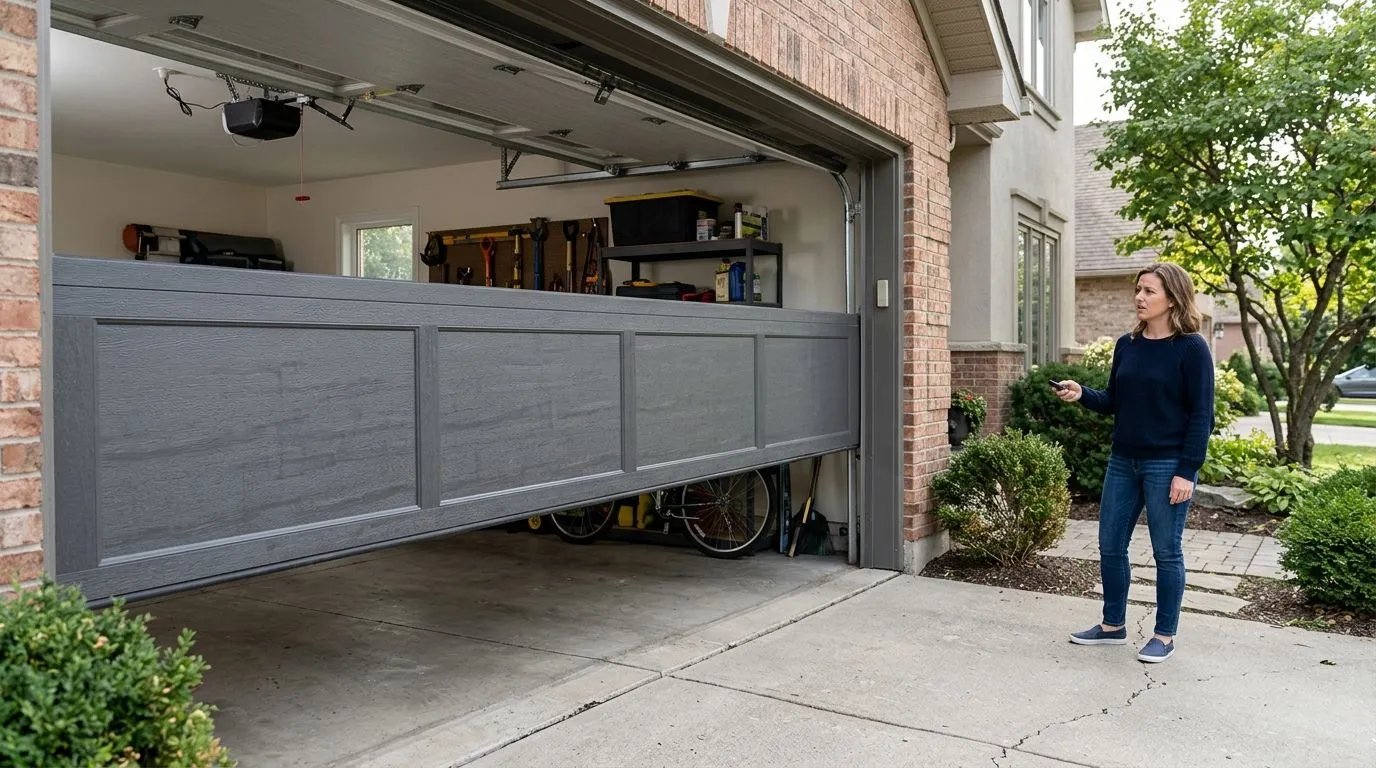
AI-generated illustration; not a Derby Strong customer project.