New-construction garage door installation in Kentucky takes a project-specific amount of time because the schedule includes measuring, ordering, site preparation, installation and testing—not just the work at the opening. Get separate dates for the door installation and the completed, tested opener system, with each date tied to the work your builder must finish first.
TL;DR
- New construction garage door installation timeline Kentucky: separate ordering, site readiness, installation and final testing.
- Derby Strong provides garage door installation; confirm your project’s scope before setting the construction schedule.
- An installed door is not the same as a commissioned opener system.
- Keep spring, cable, track and bracket installation professional-only.
Why This Matters for Your Door
A garage door sits at the intersection of framing, exterior finishes, overhead space and electrical work. Booking the installer does not resolve unfinished work in those areas. Your construction schedule needs a readiness checkpoint, not just an appointment.
For a Kentucky home build, ask Derby Strong to distinguish the installation scope from the work assigned to your builder and electrician. That conversation should establish what must be ready, what the installation includes and what would require a return visit.
The useful question is not simply, When will the door arrive? It is, When will this opening be ready for the specified door, and when will the complete system be safe to use?
How long does new-construction garage door installation take in Kentucky?
The timeline runs from confirmed specifications through final operating checks. The on-site appointment covers only part of that sequence, so a duration quoted for installation should not be treated as the entire new-construction schedule.
Ask for a project schedule organized around these milestones:
| Milestone | What needs to be established | What the milestone does not prove |
|---|---|---|
| Specification approval | Door dimensions, design, track arrangement and opener scope | That the opening is ready |
| Order confirmation | The selected door and related components match the approved scope | That a delivery date is an installation date |
| Site readiness | Framing, mounting surfaces, clearances and access are suitable | That electrical work is complete |
| Door installation | Door sections, tracks and counterbalance system are professionally installed | That an opener has been commissioned |
| Final handover | Included operating and safety checks are complete | That unrelated construction work is finished |
Use the final handover milestone for your usable-system date. Use the installation milestone only for the physical work included in that appointment.
Before accepting a date, ask whether it is tentative or confirmed and what conditions would change it. Put the answer into the builder’s schedule so other trades are working from the same assumptions.
Start with approved specifications, not a calendar slot
A new-construction opening needs a door selected for its actual dimensions and installation conditions. Architectural drawings establish the plan; field verification establishes what the installer will encounter.
Confirm the opening width and height, space beside the opening, space above it and available depth inside the garage. The track and opener arrangements must fit alongside beams, utilities and planned ceiling finishes. Do not treat those clearances as interchangeable.
For the distinction between opening dimensions and installation clearances, see the guide to measuring a garage door opening in Lexington. Have the installer verify the measurements used for ordering rather than relying on a homeowner measurement alone.
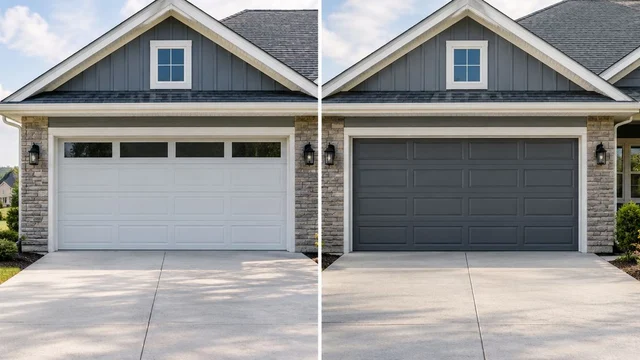
Design decisions belong at this stage too. Settle the door appearance, glazing, insulation choice and opener scope before treating the specification as approved. A later change needs a fresh check of the order and installation plan.
Your next move: request written confirmation of the selected configuration and ask which construction changes would require remeasurement.
Make site readiness a scheduling checkpoint
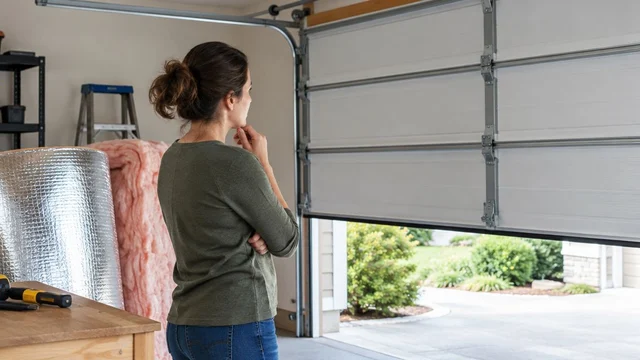
A clear driveway is helpful, but it does not make an unfinished garage ready for installation. The installer needs suitable attachment surfaces and enough unobstructed space for the specified system.
Use this sequence with your builder:
- Confirm specifications. Give the installer the approved opening and door information, including changes made during construction.
- Verify framing. Have the builder and installer resolve questions about the opening and required mounting surfaces.
- Clear installation space. Coordinate overhead utilities, stored materials and access through the work area.
- Coordinate power. Confirm who provides the opener’s required electrical supply and when it will be ready.
- Confirm handover. Establish which tests, controls and operating instructions are included before normal use.
These are coordination tasks, not instructions for installing hardware. Springs, cables, tracks and brackets remain professional-only work.
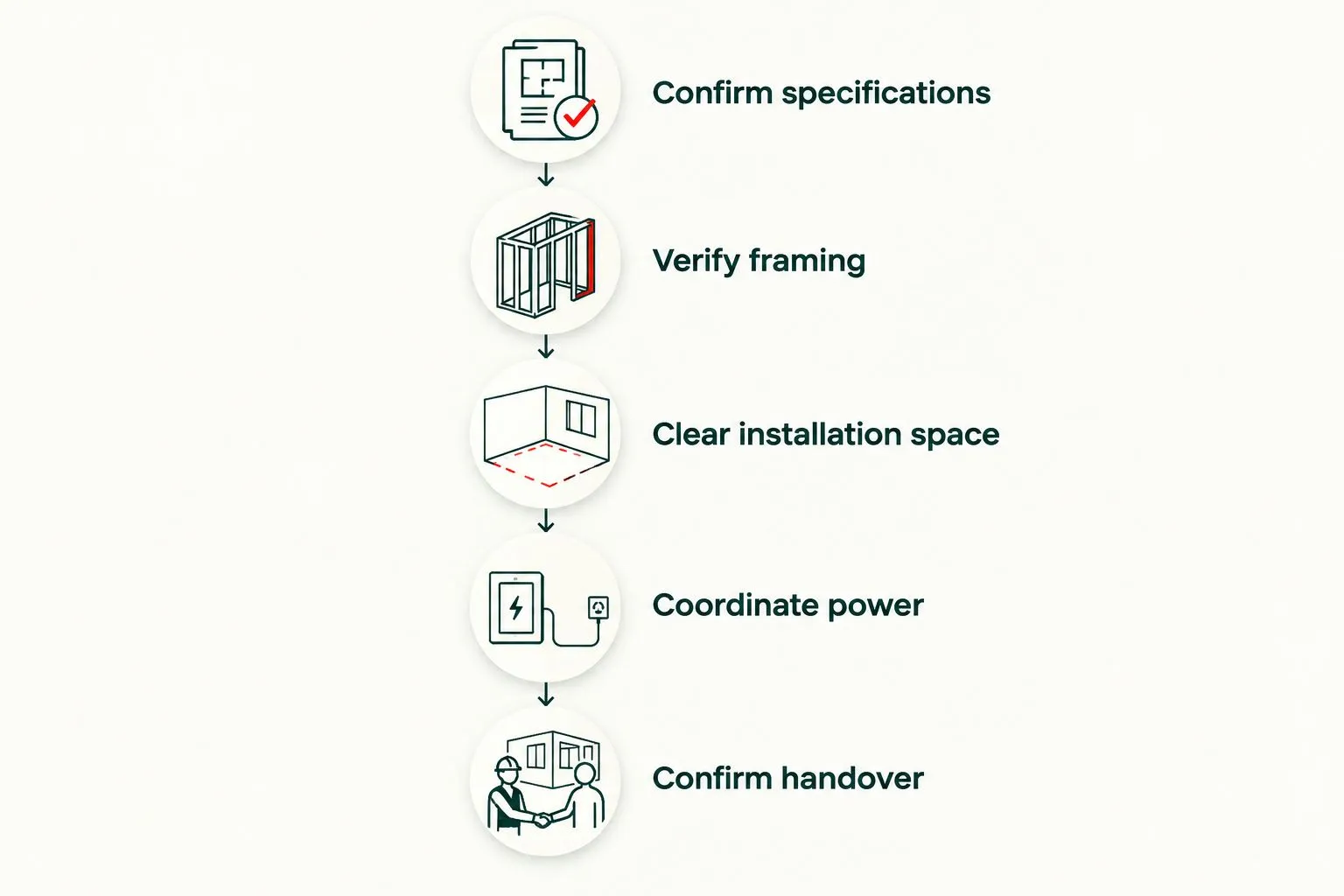
Confirm site readiness before treating the installation appointment as the usable-system date.
Ask the builder to report changes before installation, not when the crew arrives. A newly positioned duct, pipe or ceiling feature deserves review because it changes the space available to the door system.
Door installation and opener completion are different milestones
A door and an opener perform different jobs. The door’s counterbalance system supports its operation; the opener moves a properly installed and balanced door. An opener must not be used to overcome binding or a mechanical fault.
For scheduling, decide whether your appointment includes the door alone or the complete door-and-opener system. Neither scope is automatically wrong, but the handover expectations differ.
| Installation scope | Best for | Planning advantage | Limitation |
|---|---|---|---|
| Door installation with opener work scheduled separately | Builds with a deliberately phased scope | Makes responsibility for each phase explicit | Requires coordination before powered operation |
| Door and opener installation coordinated together | Builds ready for the complete specified system | Allows the included work to be planned as one handover | Depends on suitable power and installation conditions |
Choose the scope that matches the site’s readiness—not the scope that makes the calendar look shorter. If opener completion is separate, ask how the door must be left and whether any use is permitted before that work is complete.
Do not assume that a door moving under power means all checks are finished. The installer should explain the system’s operation and complete the applicable safety checks according to the equipment instructions.
Why a new-construction garage door timeline varies
The schedule changes when the work required to reach a milestone changes. Keep these dependencies visible rather than hiding them inside a single estimated completion date:
- Opening readiness. Unresolved dimensions or unfinished mounting surfaces need attention before installation can proceed as planned.
- Door specification. Changes to the selected configuration require confirmation that the order and installation arrangement still match.
- Overhead clearances. Beams, ceiling finishes, pipes and ducts affect the space available for tracks and an opener.
- Electrical readiness. The opener’s power requirements must be addressed before its completion and testing can be scheduled confidently.
- Trade coordination. Installation access and subsequent construction activity need a shared plan so work does not conflict.
- Installation scope. Multiple openings, different door systems or separate opener work require their own scope and completion criteria.
These factors do not establish a universal duration. They establish the questions that produce a useful duration for your build.
For a Louisville project, use that project’s actual construction sequence. Do the same independently for a Lexington or Northern Kentucky build; a date from another property is not a substitute for checking the opening in front of you.
Can the garage door go in before the garage is finished?
A garage door can be scheduled before every garage finish is complete only when the installer confirms that the unfinished work does not prevent a safe installation. The decision depends on attachment surfaces, clearances, floor conditions and the remaining construction sequence.
Ask the builder to identify work that will occur around the opening or overhead after installation. Then have the installer explain whether that work changes the installation plan or requires protection of the completed door.
Avoid using the newly installed door as a convenient construction fixture. Do not hang materials from its tracks or hardware, and keep equipment out of its travel path. An installed system still needs protection from other work.
Does the opener have to be installed with the new door?
The opener does not have to share the door’s installation appointment if the project is intentionally scheduled in phases. However, a separate appointment means a separate completion milestone for powered operation and its associated checks.
Before choosing that arrangement, confirm responsibility for power, mounting provisions, controls and final testing. Ask the installer what operation, if any, is permitted between appointments; do not improvise a manual-use procedure for an unfinished system.
Treat opener completion as planned work, not a small task to sort out after move-in.
What should you ask before confirming the installation date?
Ask the installer to connect the proposed date to specific site conditions and deliverables. A useful confirmation answers both what happens that day and what must happen beforehand.
Send a short written checklist:
- What must the builder finish before the appointment?
- Which dimensions and clearances have been verified?
- Does the appointment include the opener and its safety checks?
- What electrical work is assigned to another trade?
- What changes require another site review?
- What remains after the appointment, and who completes it?
Derby Strong is best for Kentucky homeowners seeking professional garage door installation rather than DIY high-tension work. For a new build, request a defined installation scope and a clear readiness checklist; do not substitute a general service description for a project schedule.
Plan your garage door installation
Discuss the opening, installation scope and site-readiness requirements for your new build.
Prepare for a safe handover
Before installation, remove stored materials from the agreed work area and keep people and pets away from it. Share access restrictions and tell the installer about any changes since measurement. Let the professionals decide whether the site is ready.
At handover, ask for a demonstration of normal operation and an explanation of the applicable safety features. Confirm where the equipment instructions are kept and which remaining tasks, if any, prevent normal use.
Never adjust spring tension, move track brackets or alter cables to make a new door work. If the door binds, hangs unevenly or will not complete its travel, stop operating it and contact the installer. Increasing opener force is not a remedy for an installation fault.
Keep the approved scope and completion notes with your construction records. If another trade later changes something around the system, those records help explain what was installed and what needs review.
Frequently Asked Questions
How long does a new-construction garage door installation take in Kentucky?
A new-construction garage door installation has a project-specific timeline covering specifications, ordering, site readiness, installation and testing. Ask for the on-site work duration separately from the full completion schedule.
When should I contact a garage door installer during a new build?
Contact the installer while the opening, overhead space and door specification can still be coordinated with the builder. Confirm which measurements require field verification before ordering.
Can I schedule garage door installation before the electrical work is finished?
Schedule it only after the installer confirms what work can be completed under those conditions. Door installation and opener commissioning need separate completion dates if the required power is not ready.
Does a new garage door mean my opener is ready to use?
No, a newly installed garage door does not establish that the opener is complete or tested. Confirm the opener scope and permitted operation with the installer before use.
What can delay installation on a new Kentucky home?
Unresolved opening dimensions, unsuitable mounting surfaces, clearance conflicts, specification changes and incomplete prerequisite work can change the schedule. Review these dependencies before confirming the appointment.
Can I install the springs or tracks to help finish sooner?
No, spring, cable, track and bracket work belongs to a professional installer. Prepare access and clear the agreed work area instead of handling high-tension components.
What should Derby Strong confirm before my installation appointment?
Derby Strong should confirm the agreed installation scope and the site’s readiness requirements for your project. Ask which work is included that day and what must be completed by your builder or electrician.
One Last Thing Before You Decide
The most useful date is the date you can safely use the completed system—not the date the door reaches the property. Work backward from that handover and assign responsibility for every unfinished dependency. That turns a delivery expectation into a construction plan.