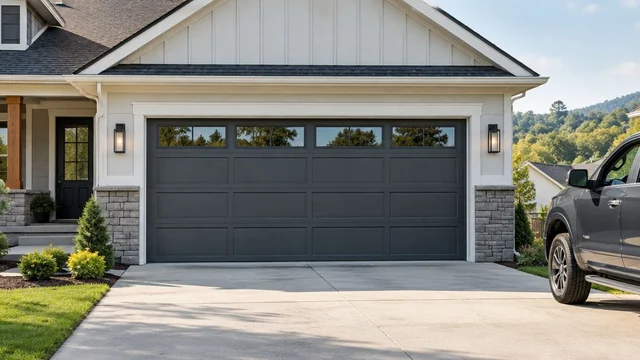
Yes—garage door financing can cover a Louisville replacement when the lender approves the borrower and the proposed installation qualifies under the agreement. Approval does not establish that every project expense is included, so match the financed amount to a written installation quote. Confirm the financing provider and terms separately; a contractor’s replacement service is not proof that the contractor offers financing.
TL;DR
- Garage door financing Louisville: a replacement can qualify, but lender approval and eligible project scope control coverage.
- Derby Strong provides garage door replacement services in Louisville; confirm financing arrangements separately.
- Compare the total repayment obligation, not just the monthly payment.
- Get a repair assessment before borrowing for a full garage door replacement.
Why This Matters for Your Door
A replacement decision has two separate parts: what your garage needs and how you will pay for it. Mixing those decisions makes it easier to accept unnecessary work or overlook an expense that the financing agreement excludes.
Derby Strong is a fit for Louisville homeowners seeking garage door repair or installation service, not a confirmed source of financing. Start with the work required, then compare ways to fund that specific scope. You can discuss the garage door project with Derby Strong without treating a service inquiry as a credit application.
Can garage door financing cover a Louisville replacement?
Financing can fund a replacement if the credit agreement permits that use and the approved amount covers the agreed work. The written contract—not the phrase garage door financing—determines what you can finance and what remains your responsibility.
Use this sequence before committing:
- Confirm whether replacement is necessary. Have a professional identify the failed components and explain whether repair remains appropriate.
- Get an itemized installation quote. Separate required work from optional upgrades so you know what you are borrowing for.
- Identify the actual lender. Ask whether the contractor merely introduces a financing provider or whether you are arranging credit independently.
- Read the financing disclosures. Check the annual percentage rate, payment schedule, fees, promotional conditions and total repayment obligation.
- Match the agreements. Confirm that the installation scope, payment timing and financing authorization describe the same project.
Keep copies of both agreements. A verbal statement that financing covers the job does not resolve a written exclusion or explain who pays for additional work.
What should you confirm is included?
Ask the installer to identify each applicable part of the replacement. Then ask the financing provider whether the resulting invoice qualifies; do not assume that every related task is automatically eligible.
| Project item | What to establish in writing | Why it matters |
|---|---|---|
| Door assembly | Exact door specification and included components | Prevents comparing unlike installation quotes |
| Installation labor | Work included in fitting and adjusting the replacement | Separates the door itself from the installed project |
| Hardware | Which tracks, springs, rollers and other components are replaced | Makes the mechanical scope clear |
| Existing opener | Whether it is retained, adjusted or replaced | Avoids treating an opener as automatically included |
| Removal | Whether old-door removal and disposal are included | Identifies a task that needs an explicit answer |
| Additional work | How discovered damage or changes receive approval | Establishes how changes affect the invoice and funding |
An approved credit limit is not an itemized replacement quote. You need both before you know whether financing covers the entire planned job.
Which payment approach fits your replacement?
Compare payment methods against the same garage door specification and installation scope. A smaller monthly obligation does not, by itself, establish a better agreement.
The choices below describe general payment approaches, not financing programs offered by Derby Strong. Eligibility and terms depend on the actual provider.
| Approach | Best for | Advantage | Limitation to check |
|---|---|---|---|
| Paying from savings | Homeowners who can preserve an adequate household reserve | Avoids borrowing for the installation | Reduces cash available for other needs |
| Unsecured installment loan | Homeowners seeking a defined repayment schedule | Separates the credit agreement from the contractor | Approval, interest and fees require review |
| Credit card | Homeowners with a clear repayment plan | Uses an existing payment account if accepted | Carrying a balance creates a separate borrowing obligation |
| Contractor-arranged credit, if offered | Homeowners comparing an installation-linked application | Connects the application process to the project | Contractor involvement does not replace lender approval or disclosure review |
Ask whether an application involves a credit inquiry and whether prequalification differs from final approval. Do not submit several applications merely because different installers mention financing; first establish whether they refer to the same lender.
What makes a payment comparison fair?
Use the same project scope and compare the repayment schedule from beginning to end. Record the amount financed, annual percentage rate, fees, required payments and total repayment obligation from the actual disclosures.
Also check what happens outside the normal schedule. Ask about early repayment, late payment, promotional deadlines and any balance remaining when a promotional period ends. Choose an agreement you understand without relying on a sales explanation to fill its gaps.
Why financing coverage varies
A Louisville replacement does not have a single financing outcome. These factors determine whether a particular agreement matches your project:
- Borrower eligibility. The lender applies its own approval criteria; the installer cannot substitute a service quote for that decision.
- Permitted use. The credit agreement determines whether the replacement and related installation work qualify.
- Approved amount. Approval must be compared with the complete written quote, not just the door specification.
- Project boundaries. An opener, structural work or other additional tasks need explicit treatment in the scope.
- Payment timing. Deposits, installation payments and lender disbursement need to align with the contractor’s agreement.
- Changes after approval. A revised installation scope needs a clear answer about authorization and funding before work proceeds.
These are contract questions, not reasons to select a more expensive door. Keep the required repair or replacement scope separate from the maximum amount a lender approves.
Should you repair the door before considering replacement financing?
Finance the necessary work, not an assumed full replacement. A broken spring, damaged cable or opener fault does not by itself establish that the entire door needs replacement. A professional assessment should explain the condition of the door and the specific reason for the recommendation.
Ask for the repair alternative when one is appropriate. Compare what each option fixes, what remains in service and what limitations remain afterward. The Louisville repair-versus-replacement guide addresses that decision before payment arrangements enter the discussion.
Do not operate a visibly crooked, off-track or unsupported door to demonstrate the problem. Keep people away from the opening and leave spring, cable, track and bracket repairs to a professional. Never increase opener force to push through a mechanical fault.
Can you keep the existing opener?
Keeping an opener is a separate technical decision, not an automatic way to reduce the financed scope. Have the installer assess its condition, compatibility with the replacement door and safe operation.
Ask the quote to state the decision explicitly. If the opener stays, identify any included setup or adjustment; if replacement is recommended, ask why. That prevents an unclear assumption from becoming an unexpected change after credit approval.
How should you separate necessary work from upgrades?
Have the installer divide the proposal into required work and elective choices. Required work should explain what makes the completed installation safe and functional; elective choices should identify changes you can decline without leaving the agreed installation incomplete.
A useful written comparison keeps these categories separate:
- Required work: the door and installation tasks needed for the proposed replacement.
- Retained equipment: existing components the installer determines can remain in service.
- Optional upgrades: appearance, glazing or other specification changes you choose.
- Additional work: conditions outside the initial scope that require separate authorization.
This is also where insulation belongs in the discussion. Compare insulated garage door options against your garage’s actual use, rather than treating a cold-climate buying recommendation as proof that a Louisville home needs the same specification. A garage used for parking presents a different buying question from a space you intend to condition.
Ask what a proposed upgrade changes and whether it addresses your stated need. Do not assume that an insulated door alone makes an unconditioned garage a conditioned room, and do not borrow for an upgrade solely because the lender approves a larger amount.
What should Louisville homeowners settle before signing?
Keep the installation agreement tied to the actual Louisville property. Confirm the address, existing opening, proposed work and any approval questions before treating the project as ready to order.
Do not infer permit requirements from the fact that a job is a replacement. Ask the installer which requirements apply to the specific scope, who will verify them and who handles any required application. The Louisville garage door permit guide addresses that separate planning question.
Next, resolve the relationship between payment and installation:
- When does the contractor require authorization to order the door?
- What happens if credit approval does not cover the full agreed scope?
- When does the lender release funds, and to whom?
- What document confirms completion before any required payment authorization?
- How do cancellation or specification changes affect each agreement?
Get answers from the party responsible for each obligation. The contractor explains installation commitments; the lender explains credit terms. Neither document should require you to guess what the other party has promised.
What if the door is unsafe while you arrange payment?
An unsafe door needs a safety decision before a financing decision. Keep clear of damaged components and stop using a door that is off track, hanging unevenly or showing loose cables. Do not attempt to release or reposition it yourself.
Explain what you can safely observe when requesting professional service. State whether the door is open or closed, whether a vehicle is trapped and whether the opening can remain unused. These details help define the immediate problem without requiring you to operate the door again.
Ask whether a repair is appropriate and how it relates to any later replacement. Do not assume that temporary work will be credited toward a future installation unless that arrangement appears in writing.
Frequently Asked Questions
Can garage door financing cover the entire Louisville replacement?
Garage door financing can cover the entire agreed replacement when the approved amount and permitted use match the complete installation invoice. Confirm labor, hardware, removal and any additional work rather than assuming everything qualifies.
Does Derby Strong offer garage door financing in Louisville?
Derby Strong provides Louisville garage door repair and installation services, but no specific financing program is established here. Ask directly whether financing is offered and obtain the provider’s written terms before applying.
Can I include a new opener in garage door financing?
A new opener can be included only if the installation quote includes it and the financing agreement permits that expense. Have the installer first determine whether your existing opener can safely remain in service.
Should I finance a replacement if only the spring is broken?
A broken spring alone does not establish that the whole garage door needs replacement. Request a professional repair assessment, and leave spring and cable work to a trained service professional.
Is the lowest monthly payment the best garage door financing option?
The lowest monthly payment is not enough to identify the best agreement. Compare the repayment term, annual percentage rate, fees, promotional conditions and total repayment obligation for the same installation scope.
Can I apply for financing before choosing the replacement door?
You can ask a lender about eligibility before selecting a door, but preliminary approval does not establish the final project’s coverage. Match the completed quote to the credit agreement before authorizing the installation.
What happens if the installer discovers additional work?
Additional work needs written scope approval and a separate check that funding covers it. Ask how changes are authorized before the installation starts; do not assume the original financing automatically expands.
One Last Thing Before You Decide
Do not let the approved borrowing amount become your garage door budget. Start with the repair or replacement your property needs, remove upgrades that do not serve a clear purpose, and then decide how to pay for that scope. Financing approval answers a credit question; it does not establish which door you need.
Related Garage Door Guides
- What should a Louisville garage door replacement quote include?
- Can you keep your opener when replacing a Louisville garage door?

AI-generated illustration; not a Derby Strong customer project.