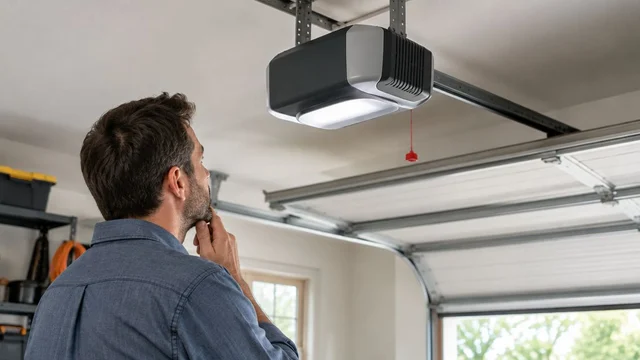
Best overall for an attached Louisville garage: a belt-drive opener. Best for removing the ceiling-mounted motor and rail: a compatible wall-mount opener. Best for avoiding unnecessary replacement: repair the existing system when the door, hardware or mounting causes the noise. Derby Strong provides garage door opener service and installation for Louisville homeowners; this guide explains which route fits your attached garage.
TL;DR
- For a quiet garage door opener Louisville homeowners can live beside, start with a belt-drive model.
- Choose a wall-mount opener for ceiling clearance, but confirm door compatibility before buying.
- Derby Strong provides Louisville opener service; diagnose door noise before deciding on replacement.
- A new opener does not repair damaged rollers, loose hardware or an unbalanced garage door.
Why this matters in an attached Louisville garage
An attached garage creates two noise problems: sound inside the garage and vibration transmitted into adjoining rooms. The loudest opener in the garage is not automatically the one causing the most disturbance upstairs. Listen from the room where the noise actually bothers you.
For your Louisville home, the useful question is whether the disturbance comes from the drive mechanism, the moving door or vibration through the structure. You can schedule opener service with Derby Strong to assess the existing system before choosing equipment.
Do not replace a working opener to solve an undiagnosed door problem. Grinding rollers, binding tracks and damaged hardware need attention regardless of which motor operates the door.
What makes the best quiet garage door opener?
Judge the complete installation, not just the word quiet on the packaging. These criteria separate a useful purchase from a motor swap that leaves the same bedroom rumble:
- Drive mechanism: A belt avoids the metal chain movement of a chain-drive opener. That makes belt drive the default starting point for a noise-focused replacement.
- Mounting location: Ceiling-mounted and wall-mounted equipment transmit vibration through different attachment points. The room beside those points matters.
- Door condition: Rollers, hinges, tracks and door balance affect the sound of every opening cycle. An opener cannot compensate for mechanical damage.
- Documented compatibility: Check the exact manufacturer’s installation manual for door construction, size, weight limits, spring configuration and required clearances.
- Controlled movement: Compare documented soft-start and soft-stop features. These features address movement at the beginning and end of travel, not every source of noise.
- Serviceability: Ask what maintenance the selected system requires and whether existing controls and safety equipment can remain. Compatibility is model-specific.
Quiet opener options at a glance
This ranking compares purchase and repair routes rather than named models. Confirm the exact model against current manufacturer documentation before approving an installation; a drive-type label alone does not establish suitability.
| Rank | Option | Best for | Standout benefit | Key limitation |
|---|---|---|---|---|
| 1 | Belt-drive opener | A conventional attached garage needing opener replacement | Removes chain-drive movement from the overhead drive system | Keeps a ceiling-mounted motor and rail |
| 2 | Wall-mount opener | A compatible garage where ceiling equipment is the main concern | Removes the overhead opener rail and motor assembly | Requires a suitable door system and installation space |
| 3 | Repair the existing opener and door system | A serviceable opener with a separate noise fault | Addresses the actual source without automatic replacement | Does not change the underlying drive design |
1. Belt-drive opener: best default for an attached garage
A belt-drive opener moves the door through an overhead rail using a belt instead of a metal chain. Choose belt drive first when your existing opener needs replacement and quiet operation is the main goal. It is a practical starting point for an attached Louisville garage with living space beside or above it.
The belt is only part of the decision. Motor behavior, mounting, door movement and the selected model’s controls still matter, so compare the complete system rather than assuming every belt-drive opener performs identically.
Belt-drive opener pros:
- Removes the moving metal chain as a source of operating noise.
- Offers a familiar overhead layout for a conventional installation.
- Lets you compare documented motion-control features across suitable models.
Belt-drive opener cons:
- Retains ceiling attachments that transmit vibration into the structure.
- Does not silence worn rollers, rattling panels or damaged hinges.
- Requires confirmation that the exact model suits the door and installation space.
Best for: You need a replacement opener for a conventional attached garage and want to prioritize quieter operation without changing to a wall-mounted layout.
Before approving the installation, ask the technician to assess door movement independently of the old opener. Have damaged components addressed first, then evaluate the new system from the adjoining living space as well as inside the garage.
Verdict: Buy a compatible belt-drive opener when replacement is justified and the door is mechanically sound.
2. Wall-mount opener: best for removing overhead equipment
A residential wall-mount opener sits beside a compatible door’s torsion shaft rather than driving a trolley along a ceiling rail. It removes that overhead motor-and-rail assembly, which makes it a useful option when ceiling equipment conflicts with how you use the garage.
Choose wall mount for a suitable layout, not because the word “wall” guarantees silence. The opener still attaches to the building, and the door still travels through its tracks. Vibration and roller noise do not disappear with the ceiling rail.
Wall-mount opener pros:
- Removes the opener rail and motor from the central ceiling area.
- Provides a different mounting arrangement when overhead equipment is the concern.
- Leaves the decision focused on both garage layout and operating noise.
Wall-mount opener cons:
- Requires compatible door hardware and manufacturer-specified installation conditions.
- Needs suitable space beside the door and an appropriate electrical arrangement.
- Does not repair a noisy or poorly moving door.
Best for: You want the ceiling-mounted opener removed and a professional confirms that the door system supports the selected wall-mount model.
Ask the installer to identify the exact compatibility requirements in the current manual. Do not approve spring, shaft or track modifications as an informal workaround; those changes require professional assessment as part of the door system.
Verdict: Buy only after compatibility and mounting requirements are confirmed.
3. Repair the existing system: best when the opener is not the culprit
Repair is a genuine alternative to buying a quiet opener. A serviceable opener can sound much worse when loose mounting hardware, worn door components or binding movement adds vibration to every cycle.
The distinction matters when the sound has changed suddenly. A long-standing drive sound and a new scrape, bang or grinding noise are different diagnostic problems. Describe what changed before asking for a replacement recommendation.
Existing-system repair pros:
- Targets a diagnosed fault rather than replacing unrelated equipment.
- Keeps a suitable opener in service when replacement is unnecessary.
- Separates door repairs from optional equipment upgrades.
Existing-system repair cons:
- Does not turn a chain-drive mechanism into a belt-drive mechanism.
- Cannot add features that the existing opener does not support.
- Is not the right route when the opener itself needs replacement.
Best for: Your opener still functions, but the garage door has developed a distinct rattle, squeal or rough section of travel.
For noise concentrated near the moving rollers, read the guide to garage door rollers making noise in Louisville. Keep your observations separate from repair attempts; roller, track and cable work belongs with a professional.
Verdict: Hold the opener purchase until the noise source is diagnosed.
How to identify the noise without attempting repairs
Use sound and visible movement to describe the problem, not to prove a diagnosis. Observe an ordinary operating cycle only if the door moves normally and shows no damage. Stay clear of the opening, tracks and moving hardware.
| Observation | What to report | Next move |
|---|---|---|
| Steady drive noise | Where the sound seems loudest and whether it has changed | Request an opener and mounting assessment |
| Repeated rattling | Whether panels or mounting points visibly shake | Have hardware and supports inspected |
| Scraping or squealing | Where in the travel the sound occurs | Request a door, roller and track inspection |
| Jerking or crooked travel | Which side hesitates or drops | Stop operating the door and request service |
| Bang followed by failure to lift | What happened immediately before the failure | Stop using the opener and request professional assessment |
If the door is crooked, a cable hangs loose or a spring appears broken, do not run another cycle to record the sound. Do not pull the emergency release on an open or damaged door. Keep people away and leave the system for a professional.
Never increase opener force to overcome sticking or poor movement. That changes the operator’s behavior without correcting the underlying fault.
Compare the installation from the adjoining room
For an attached Louisville garage, the room affected by noise should guide the evaluation. If a bedroom sits above the garage, describe whether you hear a brief starting thump, continuous rumble or repeated rattling. If the affected room shares a wall, identify that wall during the assessment.
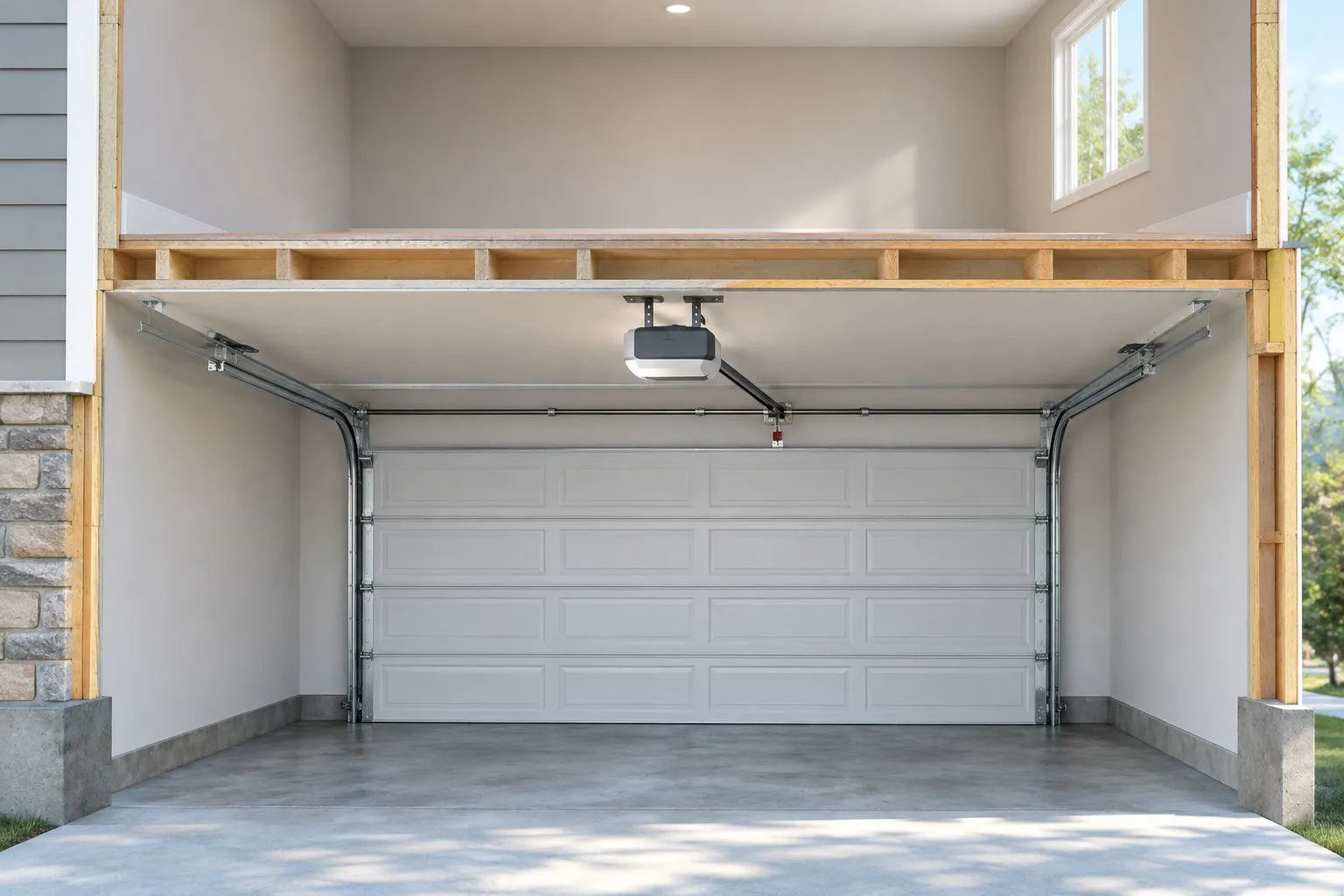
Illustrative image: compare mounting locations with the room where garage door noise is disruptive.
Do not loosen ceiling brackets or add improvised rubber spacers to experiment with vibration. Opener supports must remain secure and comply with the installation instructions. Ask the installer how the proposed mounting arrangement addresses the disturbance you described.
After installation or repair, listen from the same room again. A useful acceptance check covers the whole operating cycle, not just the motor starting while everyone stands inside the garage.
What to ask before approving an opener
A useful proposal identifies the equipment and the work separately. Ask Derby Strong to distinguish necessary door repairs from the optional benefits of changing opener type.
Use these questions to keep the decision specific:
- What is causing the current noise, and which work addresses it?
- What exact opener model is proposed?
- Does its current installation manual permit this door and mounting arrangement?
- Which existing controls and safety components are compatible?
- What documented movement features does the model include?
- What maintenance does the manufacturer require?
- How will operation and safety functions be checked after installation?
Battery backup, connected controls and vehicle compatibility are separate decisions from noise. Confirm each feature for the exact model rather than assuming that a quieter drive includes it.
You do not need to replace the garage door simply because you replace the opener. You do need a door that moves correctly and meets the new opener’s requirements.
How these options are ranked
The ranking prioritizes your attached garage’s noise problem, then mounting layout, compatibility and the condition of existing equipment. Belt drive is the default replacement route; wall mount serves a different layout need; repair comes first when the opener is not responsible.
This is not a measured decibel ranking. A claim that one opener is quieter than another needs comparable test conditions, not unrelated sound readings or a phone recording from different garages.
Which quiet opener should you choose?
Choose a belt-drive opener for a conventional attached garage when replacement is necessary. Choose a wall-mount opener when removing ceiling equipment is an important goal and the door system qualifies. Keep the existing opener when a repair addresses the actual disturbance.
Derby Strong provides garage door opener service for Louisville homeowners deciding between repair and replacement. Bring a description of the sound, where you hear it and what changed; those details make the equipment conversation more useful than starting with a brand name.
Frequently Asked Questions
What is the best quiet garage door opener for an attached Louisville garage?
A compatible belt-drive opener is the default replacement choice for an attached Louisville garage where noise is the priority. Have the door and mounting inspected first, because worn components and structural vibration remain separate problems.
Is a wall-mount garage door opener quieter than a belt-drive opener?
A wall-mount opener is not automatically quieter than a belt-drive opener. It removes the overhead motor and rail, but the mounting location, door condition and exact equipment determine the result in adjoining rooms.
Will a new opener stop my garage door from rattling?
A new opener does not correct rattling caused by damaged or loose door components. Have the source identified before replacing equipment, particularly when the noise has appeared suddenly.
Should I replace a working chain-drive opener just to reduce noise?
Replace a working chain-drive opener only after separating its normal drive sound from repairable door or mounting noise. A belt-drive replacement changes the drive mechanism, while repairs address faults elsewhere in the system.
Can I install a wall-mount opener on any garage door?
No, a wall-mount opener requires a compatible door system and the installation conditions specified by its manufacturer. Have a professional verify the exact model’s requirements before purchasing.
Can I increase opener force if my garage door is noisy and sticking?
No, do not increase opener force to overcome a sticking or damaged door. Stop using the system if movement is rough, crooked or accompanied by signs of spring, cable or track damage, and request professional service.
Do I need a new garage door when I replace the opener?
No, opener replacement does not automatically require a new garage door. The existing door must be mechanically sound and compatible with the selected opener; repairs and replacement should be separate recommendations.
One Last Thing Before You Decide
Listen from the bedroom, not just beneath the opener. For an attached garage, success means reducing the disturbance where you live. Tell the installer which room is affected before equipment is selected, then use that same room for the final listening check.
Related Garage Door Guides
- Garage door opener drive types ranked by noise level
- Should you repair or replace your garage door in Louisville?
- Garage door maintenance checklist
Local service: Garage door repair in Louisville