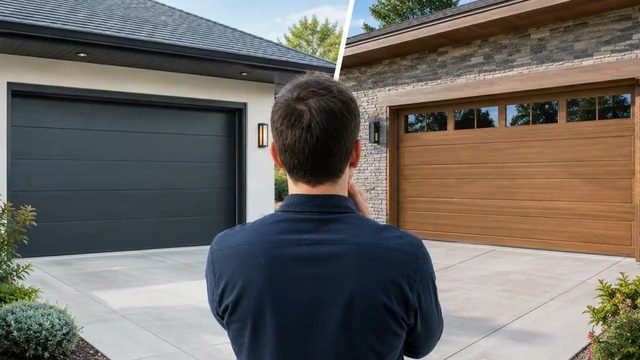
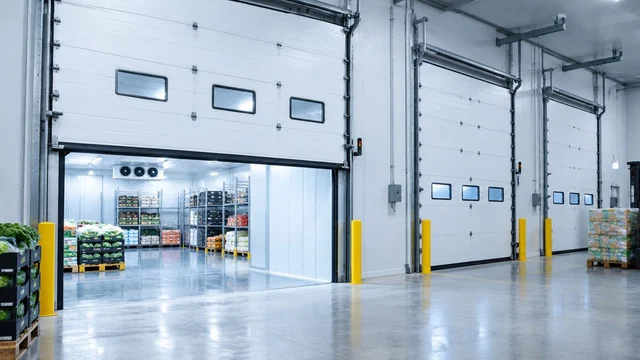
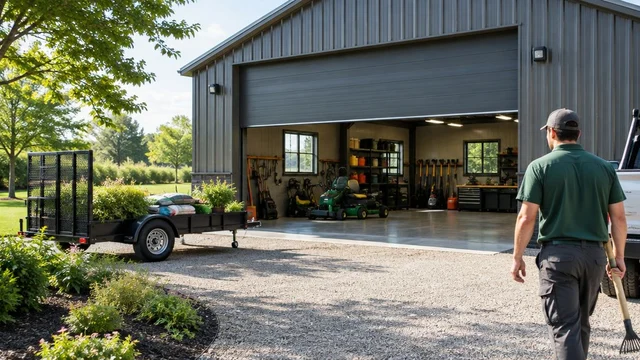
Before a garage door replacement in Versailles, KY, decide whether the existing door needs replacement, what the new door must fit, which appearance and insulation features you need, and whether the opener can stay. Confirm the installation scope and any property-specific approvals before ordering; a new door does not automatically resolve damaged framing, drainage problems, or an incompatible opener.
TL;DR
- Garage door replacement in Versailles, KY, starts with condition, opening measurements, and a written installation scope.
- Derby Strong provides garage door installation; confirm service for your Versailles address before arranging a visit.
- Keep an existing opener only after its condition and compatibility with the replacement door are checked.
- Choose appearance after confirming clearance, hardware requirements, and any applicable property approvals.
What should you decide before a garage door replacement in Versailles, KY?
Decide what problem the replacement must solve before choosing a panel style. A damaged door, a worn opener, and insufficient ceiling clearance require different decisions. Treating them as the same problem makes it harder to compare proposals.
Use this order before approving an installation:
- Confirm the need. Ask whether the fault is in the door, its operating hardware, the opener, or the surrounding opening.
- Confirm the fit. Have the opening, ceiling space, side clearance, and track arrangement checked.
- Choose the specification. Set priorities for material, insulation, windows, finish, and upkeep.
- Confirm retained equipment. Identify whether the opener or any existing hardware is suitable for reuse.
- Approve the scope. Get the selected door, installation work, exclusions, and property approvals in writing.
If the door still works but has a specific fault, the repair-or-replace decision guide explains the distinction. Its mechanical considerations are useful beyond Louisville; any local approval requirements still need a separate Versailles check.
Why this matters before you order
A replacement door is an assembly, not just a new exterior surface. Door sections, tracks, rollers, springs, seals, and the opener must work together. Choosing the appearance first leaves the most important fit and compatibility questions unanswered.
For your Versailles property, use the actual installation address when discussing requirements. Do not assume a Lexington permit answer, a Louisville association rule, or another homeowner’s installation details apply to your opening.
For a 2026 project, request current specifications for the exact door being proposed. A photograph or an older brochure is not enough to establish its construction, glazing, or hardware requirements.
Does the whole garage door need replacement?
Replace the door because its condition or your requirements justify replacement—not simply because it stopped moving. A door that will not open can have a spring, cable, track, or opener fault. Those symptoms alone do not establish that the door sections need replacing.
Ask the technician to separate repairable operating faults from damage to the door itself. Where a section is damaged, ask whether a compatible replacement section exists and whether the remaining assembly is suitable to keep.
| Approach | Best for | Main advantage | Main limitation |
|---|---|---|---|
| Repair the existing door | An otherwise serviceable door with an isolated fault | Addresses the failed component without changing the whole door | Does not change the remaining door’s condition or design |
| Replace a damaged section | Localized damage with a compatible section confirmed | Retains serviceable parts of the door | Matching and assembly compatibility need verification |
| Replace the complete door | Damage or changed requirements that justify a new assembly | Lets you specify the door as a coordinated system | Requires decisions about fit, hardware, appearance, and opener compatibility |
A repair remains a valid outcome. Ask for the reason behind the recommendation and which problem the proposed work will resolve.
What must fit before you choose a door?
An opening’s width and height do not tell the whole story. The installer also needs to assess space above the opening, beside it, and back into the garage. Beams, shelving, lights, and the opener’s position can affect the installation.
Record these observations from a safe position without moving or loosening hardware:
- Opening: Note the existing door arrangement and any visible gaps or uneven edges.
- Headroom: Identify obstructions above the opening and along the ceiling.
- Side clearance: Note shelving, walls, pipes, or other objects beside the tracks.
- Ceiling space: Identify anything in the path of an open door or opener rail.
- Framing condition: Photograph visible deterioration or damage around mounting areas.
These observations prepare the conversation; they do not replace installation measurements. Do not order a door solely from measurements taken across the face of the existing panels.
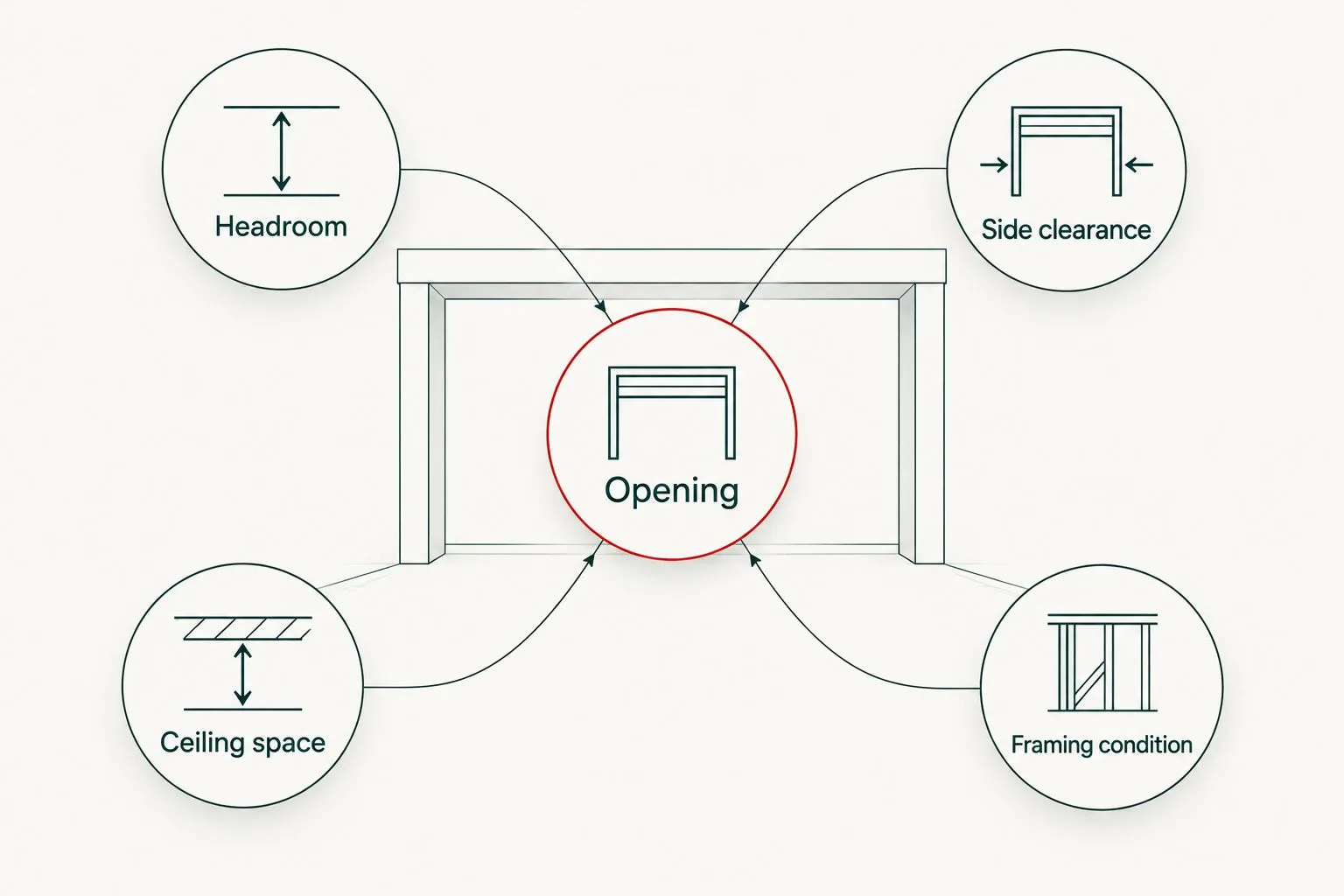
Confirm the space around the opening before selecting the replacement door.
Ask the installer to explain any proposed change to the track arrangement. Reusing tracks should be a documented compatibility decision, not an assumption based on whether the old tracks look straight.
Which door features match how you use the garage?
Start with the garage’s actual use. Parking, storing equipment, and spending time in the space create different priorities. An attached garage also raises different comfort questions from a detached storage building.
| Feature choice | Best for | Benefit | Trade-off or check |
|---|---|---|---|
| Insulated construction | Owners prioritizing thermal performance | Adds resistance to heat flow through the door | Does not address every air leak or the rest of the garage enclosure |
| Non-insulated construction | Owners without a thermal-performance priority | Leaves insulation out of the specification | Provides less resistance to heat flow than comparable insulated construction |
| Windows | Owners who want daylight through the closed door | Brings light into the garage | Requires decisions about visibility, glazing, and placement |
| Solid sections | Owners prioritizing privacy | Avoids direct views through door glazing | Does not admit daylight through the door |
| Wood construction | Owners who specifically want a wood surface | Provides the appearance of actual wood | Requires an upkeep plan suited to the product and exposure |
| Steel construction | Owners considering a non-wood door | Offers an alternative to a wood surface | Finish condition, corrosion protection, and construction still matter |
Do not compare insulation claims without checking what was measured. A panel’s stated thermal performance and a complete door assembly’s performance describe different scopes. Ask for documentation that makes the comparison clear.
For windows, consider the view from outside as well as the view from inside. Ask to see the specified glazing rather than assuming a product described as private blocks every view under every lighting condition.
Can you keep your existing garage door opener?
You can keep an existing opener only when its condition, safety functions, installation, and compatibility with the new door support reuse. A working remote is not enough evidence. The replacement door still needs the correct spring system and proper balance.
Ask the installer to identify the opener and explain what will be checked before reconnecting it. The assessment should cover its attachment to the new door, required reinforcement, travel setup, and safety operation according to the manufacturer’s instructions.
Keeping a suitable opener avoids an unnecessary equipment change. The limitation is that its existing condition and features remain unchanged; replacing the door does not renew the opener.
Do not increase opener force to overcome a door that binds or feels unusually heavy. Stop using a damaged or unreliable system and leave diagnosis and adjustment to a professional.
Why replacement specifications vary
Two replacement proposals can describe different work even when both say “new garage door.” Compare the assembly and installation responsibilities, not just the front-facing design.
The main specification drivers are:
- Opening and clearance: The measured opening and surrounding space determine which arrangements fit.
- Door construction: Material, insulation, glazing, and finish change the selected assembly.
- Supporting condition: Damaged framing or mounting surfaces require attention separate from panel selection.
- Hardware requirements: Springs, tracks, rollers, and reinforcement must suit the selected door.
- Opener decision: Retaining or replacing the opener changes the work that needs documenting.
- Property requirements: Applicable approvals and restrictions need checking for the actual address and proposed work.
Ask each installer to describe exclusions. “Existing opener retained,” for example, should come with a compatibility assessment rather than leave the decision until the new door is hanging.
What should you check for your Versailles property?
Use your Versailles installation address when asking the applicable local permitting authority whether the proposed work requires approval. Describe whether you are replacing a door in the existing opening or changing the opening itself. Those are different scopes of work.
If your property has an association or recorded exterior restrictions, check them before selecting the final appearance. Ask about the specific door design, finish, glazing, and documentation required; do not assume another property’s approval transfers to yours.
Also identify who is responsible for those checks. An installation proposal should not leave you guessing whether the homeowner or contractor is obtaining an applicable approval.
Derby Strong provides garage door replacement and installation services. Confirm whether the company serves your specific Versailles address and ask which parts of your proposed project it can assess before scheduling.
What should the written installation scope include?
A useful proposal lets you identify what will be installed, what will stay, and what remains outside the job. Ask for the exact selected door and its documented features, not a description such as “insulated replacement.”
The scope should address:
- Door identification, construction, finish, and any glazing.
- Tracks, springs, rollers, seals, reinforcement, and other included hardware.
- Existing equipment proposed for reuse and the basis for compatibility.
- Removal and disposal responsibilities for the old door.
- Any framing, electrical, or opening work that is excluded.
- Installation checks, operating demonstration, and written care information.
Ask who to contact if an unexpected condition appears after removal. Agree on how additional work will be described and authorized rather than leaving that conversation until the opening is exposed.
Derby Strong is a fit for homeowners seeking garage door installation rather than a door-only purchase. When you contact Derby Strong, provide the address, the current problem, and whether you want to retain the opener; confirm local service before making arrangements.
How do you prepare without taking repair risks?
Clear stored items from the work area and tell the installer about ceiling obstructions, restricted parking, or another household access need. Arrange to keep children and pets away from the installation area.
Photograph the door, visible damage, and opener identification from a safe position. Do not climb onto an unstable object or approach loose components to obtain a better picture.
Leave spring, cable, bracket, and track work to a professional. If the door is crooked, off track, hanging unevenly, or visibly damaged, do not force it, disconnect it to test its weight, or repeatedly operate the opener. Tell the installer about the condition before the appointment.
Frequently Asked Questions
What should I decide first before replacing a garage door in Versailles, KY?
First decide whether the door itself needs replacement or whether an isolated operating fault can be repaired. Then confirm the opening, clearance, selected features, and installation scope before ordering.
Do I need permission to replace my garage door in Versailles?
Check requirements for your actual Versailles address and proposed work before ordering. Ask the applicable local permitting authority and check any property-specific exterior restrictions; do not apply another city’s answer to your property.
Can I keep my garage door opener with a new door?
You can retain the opener when its condition, safety operation, and compatibility with the replacement door are confirmed. The new door still needs suitable hardware and proper balance.
Should I buy an insulated replacement garage door?
Choose insulated construction when thermal performance is a priority for how you use the garage. Compare documented specifications and remember that insulation does not correct every air leak or improve the rest of the enclosure.
Can the installer reuse my existing garage door tracks?
Track reuse requires confirmation that the existing tracks suit the selected replacement door and installation. Appearance alone does not establish compatibility.
What should I send a garage door installer before an appointment?
Send your installation address, a description of the problem, and safely taken photos of the door and opener identification. Tell the installer whether the door is stuck, crooked, off track, or visibly damaged, and confirm address-specific service.
One Last Thing Before You Decide
Ask what will remain after the replacement. A new door can leave an existing opener, deteriorated framing, or a water-entry problem unchanged. Mark retained items and unresolved conditions on the proposal so you know exactly what the project is intended to fix.
Related Garage Door Guides
- Can you reuse tracks with a new garage door?
- What should a garage door replacement quote include?
- Compare insulated and standard garage doors
Local service: Garage door repair in Lexington