A sectional steel garage door is the practical starting choice for a detached Burlington garage when the opening, ceiling clearance and track space support it. Choose insulation around how you use the building, not simply because it is detached; if the garage has no separate entry, plan how you will get inside during a power outage before choosing an opener.
TL;DR
- A sectional steel garage door for detached garage use suits everyday parking when overhead clearance is adequate.
- Choose an insulated door for a conditioned workshop; insulation alone does not heat an unconditioned garage.
- Check track clearance, storage conflicts and outage access before choosing a door or opener.
- Derby Strong Garage Doors provides residential garage door installation and opener service in Northern Kentucky.
Which garage door type suits a detached Burlington garage?
Start with a sectional steel door, then confirm that its track layout fits your garage and its construction matches your use. Sectional doors travel upward and back along tracks rather than swinging outward across the driveway. That makes the interior ceiling layout part of the buying decision.
A detached building can have enough room for a vehicle but still lack space for a particular door-and-opener arrangement. Check the roof framing, lights and storage before settling on a design. The guide to fitting a new door in a low-ceiling Northern Kentucky garage explains the clearance question in more detail.
| Door configuration | Best for | Main advantage | Main limitation |
|---|---|---|---|
| Uninsulated sectional steel | Unconditioned parking and basic storage | Encloses the opening without adding insulation you do not need | Offers little resistance to heat transfer through the door |
| Insulated sectional steel | A heated or cooled workshop | Reduces heat transfer through the door assembly | Does not correct gaps, roof heat loss or missing wall insulation |
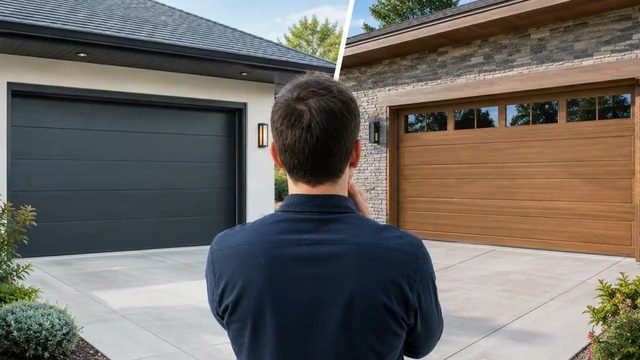
| Carriage-style sectional steel | A detached garage where appearance matters | Gives a carriage-door appearance while opening overhead | Decorative hardware and windows still need clearance and privacy checks |
| True swing-out doors | A building where overhead tracks are unsuitable | Leaves the ceiling free of an overhead track layout | Requires an unobstructed exterior swing area and suitable hinges and framing |
Carriage style describes appearance, not necessarily operation. A carriage-style sectional door can be insulated or uninsulated, so do not treat those choices as mutually exclusive.
Why this matters for a detached garage
A detached garage needs its own access and comfort plan. The door is not opening into the house, but you still need reliable vehicle access, weather sealing and a way to enter if the powered opener stops working.
For your Burlington garage, describe the actual job: parking, tool storage, workshop use or a combination. That answer matters more than choosing the heaviest-looking door or the most decorative panel. A door that suits occasional storage is not automatically the right choice for a space where you work regularly.
Separate the decision into operation, construction and appearance. First establish how the door can move safely. Then choose insulation, glazing and finish around the building’s use.
Sectional steel: best for everyday parking
A sectional steel door is the first configuration to evaluate when you want overhead operation and a conventional vehicle opening. Its panels move along tracks, so the installer must account for the opening, ceiling structure and space behind the header.
Steel does not remove the need for upkeep. Check the manufacturer’s finish-care instructions, watch for damaged coatings and keep the door’s movement area clear. Panel construction, insulation and glazing differ between products; the material name alone does not describe the complete door.
For an unconditioned garage used mainly for parking, ask what an insulated version would solve. If the answer is simply that insulation is always better, return to the building’s use and condition.
Recommendation: choose sectional steel for everyday parking when the site inspection confirms a suitable track arrangement. Do not order from the opening width alone.
Insulated sectional steel: best for a conditioned workshop
An insulated sectional door makes the strongest case when you heat or cool the detached garage. It helps resist heat transfer through the door, but the door remains part of a larger building enclosure.
Look at the roof, walls, windows and perimeter gaps alongside the door specification. An insulated panel cannot compensate for an open gap at the floor or an uninsulated roof. It also does not create heat in a garage without a heat source.
Ask whether a quoted insulation value describes a panel section or the complete installed assembly. Compare equivalent measurements rather than selecting whichever brochure displays the largest figure.
Recommendation: choose insulation to support a defined comfort goal, not as a substitute for addressing the rest of the building. For occasional storage, assess sealing and condition before treating insulation as essential.
Carriage-style sectional: best for matching the building
A carriage-style sectional door suits a detached garage when you want that appearance without an outward door swing. It still needs the same careful checks for overhead travel, track placement and opener compatibility.
Choose the panel pattern from the building’s proportions, then decide whether decorative hardware and windows serve a purpose. Windows admit daylight, but they also affect privacy and the door assembly’s thermal performance. Check the actual glazing specification rather than assuming all window options perform alike.
Decorative handles are not a substitute for an approved access arrangement. Confirm how the complete door operates and how you enter the garage when power is unavailable.
Recommendation: choose carriage styling after confirming fit and function. Appearance should refine a workable installation, not dictate an unsuitable one.
Swing-out doors: best when overhead tracks are unsuitable
True swing-out doors avoid the ceiling track layout used by a sectional door. They are an alternative to assess when overhead space must remain clear, but they transfer the clearance requirement outside.
The leaves need room to swing without striking a parked vehicle or another obstruction. Their hinges and mounting structure must support the proposed assembly. Sloping ground and the relationship between the opening and driveway also need an on-site check.
Do not assume an existing sectional-door opener can operate swing-out doors. Powered operation, if proposed, requires equipment intended for that application and a review of its safety requirements.
Recommendation: consider swing-out doors only after an installer checks the exterior swing area and supporting structure. They solve a different space problem, not every space problem.
Why the right detached-garage door varies
The best choice for your Burlington garage depends on the building you have, not a standard detached-garage package. These factors change the recommendation:
- Garage use: Parking and storage do not create the same comfort needs as a heated workshop.
- Overhead clearance: Roof framing, lights and stored items affect the available track and opener space.
- Exterior clearance: Swing-out doors need a clear path outside the opening.
- Alternate entry: A garage without a separate entry needs a deliberate outage-access plan.
- Opening condition: Deteriorated framing or an uneven floor can affect mounting and sealing.
- Privacy needs: Windows introduce daylight but require decisions about visibility and glazing.
Do not assume the existing tracks are suitable simply because another door used them. Track geometry, hardware and spring selection must match the replacement assembly and its installation instructions.
What should you check before ordering?
Gather safe observations before an installation visit. You do not need to operate a damaged door or touch its lifting hardware to make the assessment useful.
- Define the use. Explain whether you park, store equipment or work inside, and whether the building is heated or cooled.
- Record obstructions. Photograph visible beams, lights, shelving and ceiling storage from a safe position.
- Check entry access. Note every normal way into the garage and whether a separate entry remains usable during an outage.
- Show existing damage. Photograph visible panel damage, gaps and deteriorated framing without removing covers or hardware.
- Confirm the fit. Have the installer measure the opening, headroom, side room and backroom before ordering.
The installer should distinguish the framed opening from the usable vehicle clearance after installation. If a roof rack, work vehicle or stored equipment makes clearance critical, explain that before the door is selected.
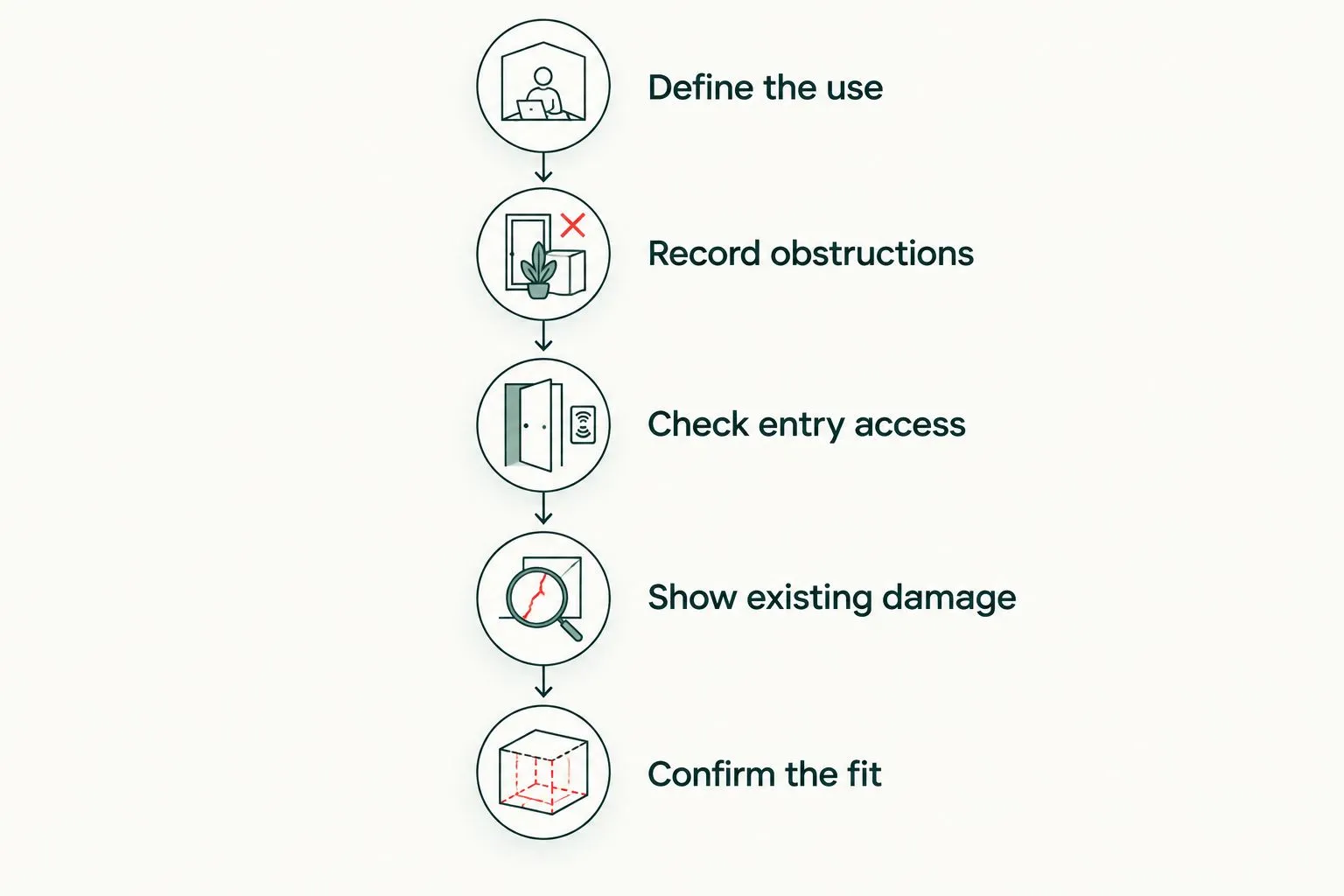
Illustrative diagram: confirm use, obstructions and access before choosing the door.
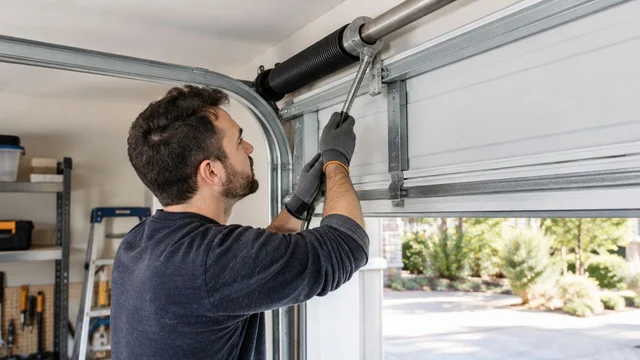
Leave springs, cables, brackets and track adjustments to a professional. If the door hangs crooked, has a loose cable or appears off track, stop operating it. Do not force it or increase opener force to overcome resistance.
Derby Strong Garage Doors is a fit for Northern Kentucky homeowners who need garage door installation and opener service. When you contact the team, identify the property as a detached Burlington garage and describe any access or clearance concern. A final door recommendation still depends on the building assessment.
Does a detached garage need an electric opener?
A detached garage does not automatically need an electric opener. Manual operation is an option when the door is designed, installed and balanced for it, although it requires you to open and secure the door yourself.
For powered operation, confirm a suitable electrical supply and equipment compatibility. Do not assume a wall-mounted opener fits every sectional door or that it eliminates all overhead-clearance concerns. Use the current installation instructions for the proposed equipment.
An opener moves the door; it does not correct a binding or unbalanced door. Ask the installer to resolve the mechanical condition before considering opener features.
How will you enter the garage during a power outage?
A detached garage without a separate entry needs an outage-access plan before installation. An interior release is not useful from outside if you cannot get into the building.
Ask the installer which compatible access arrangement suits the proposed door and opener. Battery backup can support powered operation during an outage, but it is not an unlimited power source or a replacement for understanding access procedures.
Have the installer demonstrate the manufacturer’s release and reconnection procedure under safe conditions. Never pull an emergency release on an open door with suspected spring, cable or balance damage.
Frequently Asked Questions
What’s the best garage door for a detached garage in Burlington?
A sectional steel door is the practical starting choice when the detached garage has suitable overhead and track clearance. Choose insulation around the building’s use, then confirm access, framing and opener requirements before ordering.
Does an unheated detached garage need an insulated door?
An unheated detached garage does not automatically need an insulated door. Insulation resists heat transfer, but it does not generate heat; assess your comfort goals, weather sealing and the rest of the enclosure.
Can a carriage-style garage door open overhead?
A carriage-style sectional garage door opens overhead along tracks. Carriage styling describes its appearance, so confirm whether the proposed door is sectional or a true swing-out assembly.
Can I keep ceiling storage with a new garage door?
You can keep ceiling storage only where it stays clear of the complete door, track and opener travel area. Have the installer assess the layout before ordering or moving storage into position.
Can I reuse the tracks on my detached garage?
Track reuse requires confirmation that the existing components match the new door’s requirements and remain suitable for use. Do not assume compatibility because the old door fits the opening.
Does Derby Strong Garage Doors install garage doors in Northern Kentucky?
Derby Strong Garage Doors provides garage door installation and opener service in Northern Kentucky. Describe your Burlington property and detached-garage requirements when requesting an assessment.
One Last Thing Before You Decide
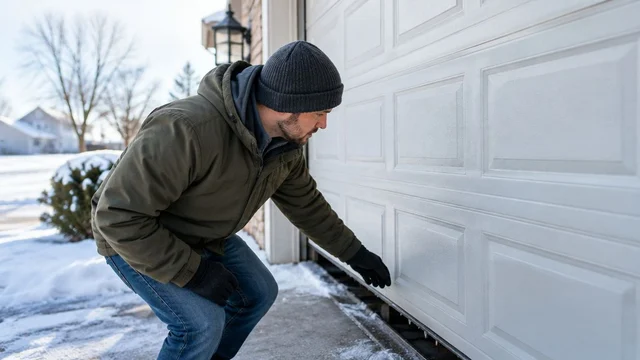
A new door cannot correct the shape of the floor beneath it. If you see daylight under the existing door, identify whether the cause is a worn seal, incorrect closing position, door damage or an uneven threshold before choosing a replacement.
Ask the installer to explain what the proposed installation will correct and what remains a building issue. That distinction keeps a new door from becoming an answer to the wrong problem.
Related Garage Door Guides
- Insulated garage door options for Kentucky garages
- R-value versus U-factor for Northern Kentucky buyers
- Garage door maintenance checklist
Local service: Garage door repair in Northern Kentucky