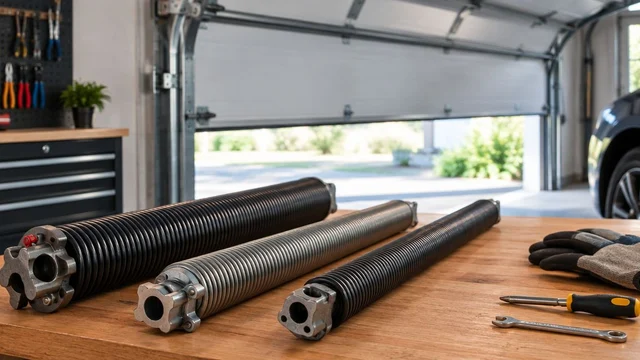
If your garage door spring keeps breaking in Louisville, the cause can be repeated operating cycles, an incorrectly specified replacement spring, corrosion, or a door system that needs more than another spring swap. Stop operating a door with a broken spring, and have a garage door professional check the spring specification, door balance and lifting hardware before replacing it again.
TL;DR
- When a garage door spring keeps breaking, check spring selection, operating cycles and the door’s mechanical condition.
- Derby Strong provides garage door repair in Louisville; spring adjustments belong to a professional.
- A stronger opener does not correct a broken spring or an unbalanced door.
- Keep previous repair records so the technician can compare replacement specifications and failure dates.
Why do garage door springs keep breaking in Louisville?
Garage door springs repeatedly flex as the door operates. That work eventually causes metal fatigue, but repeated failures also call for a closer look at whether the installed springs match the door and its operating demands.
A snapped spring does not, by itself, prove that the last replacement was wrong. The useful evidence is the replacement history, actual usage, spring specifications and condition of the complete lifting system.
If the door is stuck, crooked or partly open, follow the safety guidance in this Louisville emergency garage door repair guide. Keep people away from the opening rather than trying another opener cycle.
| Possible cause | Evidence to give the technician | What needs professional checking |
|---|---|---|
| Accumulated operating cycles | How often the door opens and closes | Whether the spring selection suits actual use |
| Incorrect spring specification | Previous invoices and replacement details | Door weight, spring dimensions and required balance |
| Changed door weight | Added insulation, glass or replacement sections | Whether the spring system still matches the door |
| Corrosion | Visible rust observed from a safe distance | Spring condition and contributing moisture exposure |
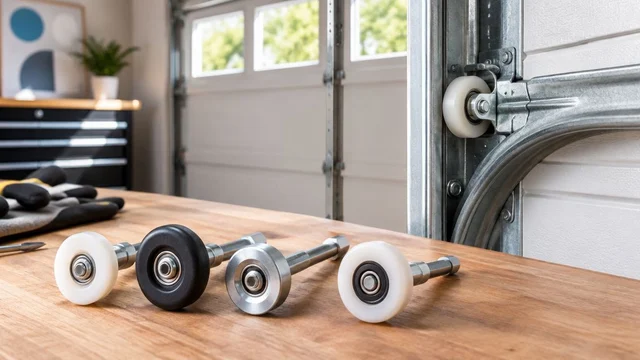
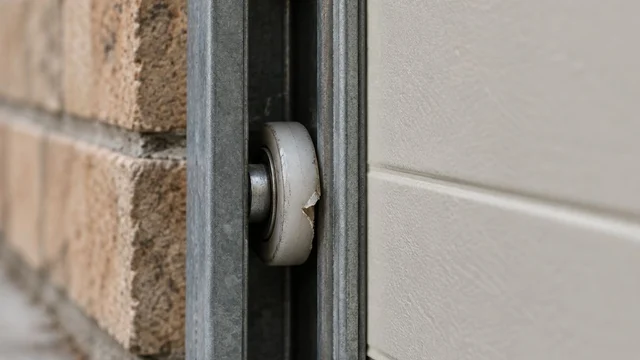
| Mechanical problems | Binding, uneven travel or recurring cable trouble | Rollers, tracks, bearings, drums and lifting hardware |
Why this matters: another spring is not a diagnosis
A replacement spring restores a necessary part of the counterbalance system. It does not automatically correct a bent track, damaged lifting hardware or a spring specification copied from an earlier incorrect installation.
The opener moves the door; the springs counterbalance its weight. Do not increase opener force to compensate for a heavy or damaged door. That leaves the underlying fault in place and adds risk.
For a Louisville homeowner facing another failure, the useful question is not simply whether a new spring can be fitted. Ask what the technician will verify so the replacement addresses the door you have now.
Why spring life varies
These factors explain why installation dates alone cannot establish whether a spring failed prematurely:
- Operating cycles: Each complete opening and closing uses the spring system. A busy garage accumulates cycles faster than a seldom-used garage.
- Spring specification: Wire size, coil diameter, length and winding direction affect how a spring works. Appearance alone does not establish a correct match.
- Door weight: Insulation, glazing and replacement sections can change the load the springs must counterbalance.
- Corrosion: Rust damages spring material. A professional should assess corrosion rather than treating it as a cosmetic issue.
- Mechanical condition: Binding and damaged hardware need their own diagnosis. Replacing a spring does not repair those components.
- Replacement history: A previous repair might have replaced only the broken spring. The age and condition of any remaining spring still matter.
Count use, not just years
One spring cycle means 1 complete opening followed by 1 complete closing. Opening the garage to leave, closing it, then opening and closing it again when you return uses 2 cycles.
That distinction matters when comparing service history. Two doors installed on the same date can accumulate very different workloads, even when both serve single-family homes.
Tell the technician whether you use the garage as your main entrance, open it for frequent deliveries or operate it throughout the workday. Ask for the proposed spring’s documented cycle rating rather than accepting a lifespan promise based only on calendar years.
Check changes made since the last replacement
Added weight changes the counterbalance requirement. Aftermarket insulation, different glazing or a replacement door section belongs in the repair history, even if the door still looks similar.
Do not assume that duplicating the broken spring is the right answer. The technician should establish the correct specification for the current door rather than rely solely on what was previously installed.
What should a professional check after repeated spring failures?
A repeat-failure appointment should examine the system, not just the broken coil. Ask the technician to explain the findings in plain language and identify which conditions are confirmed.
- Review history. Compare repair dates, invoices, door modifications and your normal use. Establish whether the same spring failed again or another older spring broke.
- Verify specifications. Identify the door and determine the appropriate spring setup. Measuring or handling a loaded spring is professional-only work.
- Inspect hardware. Check cables, drums, bearings, rollers, tracks and attachment points for damage or operating problems.
- Confirm balance. After completing necessary repairs, verify that the counterbalance system supports the door properly through its travel.
- Test operation. Check door movement and opener safety functions according to the equipment manufacturer’s instructions.
This sequence separates a confirmed cause from a guess. A technician should be able to distinguish an observed defect from a condition that still needs investigation.
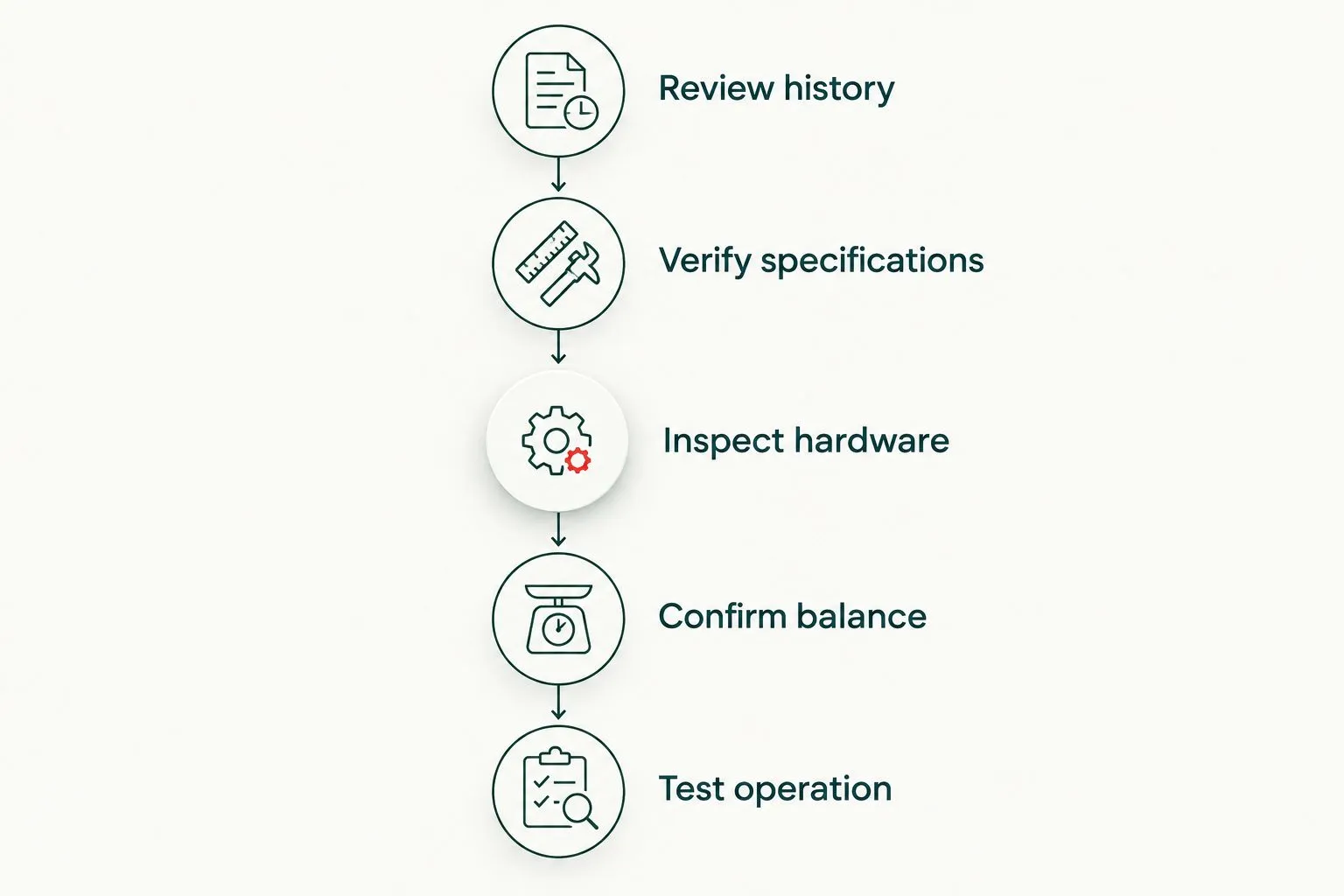
A repeat failure calls for checking the complete door system, not just replacing the broken spring.
The balance check belongs after the damaged system has been made safe and repaired. Do not disconnect an opener from a damaged or raised door to perform your own test; the door can move unexpectedly.
Should you choose another spring repair or replace the door?
A broken spring alone does not mean you need a new garage door. Repair remains a valid choice when the door sections, supporting structure and operating hardware are serviceable.
Replacement becomes a separate discussion when the inspection finds significant door damage or when you want to change the door itself. Compare those findings using this Louisville garage door repair-or-replacement guide, rather than treating every spring failure as a replacement decision.
| Approach | Best for | Benefit | Limitation |
|---|---|---|---|
| Correctly specified spring replacement | A serviceable door with a failed spring | Retains the existing door while restoring its counterbalance | Does not correct unrelated damage |
| Suitable higher-cycle spring configuration | A serviceable door with frequent daily operation | Addresses cycle demands when properly specified | Requires compatibility checks and does not eliminate maintenance |
| Door replacement | A door with significant damage or a planned design change | Allows the door and counterbalance system to be selected together | Is unnecessary when a sound door only needs repair |
Ask whether a higher-cycle configuration is appropriate, not simply whether a physically larger spring will fit. Spring dimensions, required torque and available installation space must work together.
Derby Strong is a garage door repair option for Louisville homeowners who need professional help with repeated spring failures. The repair-versus-replacement decision should follow the door’s condition, not a blanket recommendation to buy new.
What can you safely observe before service?
You can collect useful information without touching the spring system. Stay on the floor, keep clear of the door’s path and avoid reaching toward damaged hardware.
- Note whether the door is fully closed, partly open or visibly tilted.
- Write down whether the failure followed a loud bang or a noticeable operating problem.
- Describe earlier symptoms, such as jerking, scraping or uneven movement.
- Find previous invoices, installation records and any spring specifications already documented.
- Note recent changes to door sections, insulation or other attached materials.
- Photograph visible conditions only from a safe position, without moving the door.
A gap in a torsion spring can indicate a break, but not every spring system has the same layout. You do not need to identify the exact spring type before requesting help.
Do not loosen brackets, move cables, handle broken spring pieces or try to wind a spring. Those actions involve stored tension or components that support the door.
Prepare the garage without moving the damaged door
Keep children, pets and other household members away from the opening. Move loose belongings out of the work area only if you can reach them without walking beneath or beside an unstable door.
Tell the service provider if a vehicle is trapped or the door is blocking the opening. That information helps describe the problem; it is not a reason to force the door open.
When contacting Derby Strong for garage door repair, describe the repeat failure and offer the previous repair records. Ask for an inspection of the spring selection and complete lifting system.
Request a spring system inspection
Describe the repeated failure and ask about spring selection, door balance and lifting hardware.
Does Louisville weather explain every broken spring?
No. A failure during cold weather does not establish that weather is the sole cause. Spring fatigue, corrosion, incorrect selection and mechanical condition still need checking.
Describe the conditions when the failure happened, including whether the door appeared stuck to the floor. Do not repeatedly run the opener against a door that will not move, and do not pull on damaged components to free it.
A useful diagnosis connects the observed failure to the equipment’s condition. “It was cold” is context, not a substitute for checking the spring system.
Should both garage door springs be replaced together?
On a 2-spring system, ask the technician to assess both springs. Springs installed together share operating history, so the unbroken spring deserves attention even though it still appears intact.
That does not justify guessing at the required replacement configuration. Ask whether both springs have the same installation history and how the proposed setup will balance the door.
Will a stronger opener stop springs from breaking?
No. A stronger opener does not correct an unsuitable spring, restore broken counterbalance hardware or resolve binding.
Have the mechanical problem repaired before discussing an opener upgrade. If the opener also has damage, treat that as a separate finding rather than proof that the door needs more lifting force.
Frequently Asked Questions
Why does my garage door spring keep breaking after replacement?
Repeated failures require checking spring specifications, operating cycles, door weight and mechanical condition. Give the technician the previous replacement dates and ask whether the installed spring matches the current door.
Can I open my garage door with a broken spring?
Do not operate a garage door with a broken spring. Keep clear of the opening and arrange professional service rather than using the opener or trying to lift the door yourself.
How many garage door movements count as a spring cycle?
One complete opening followed by one complete closing counts as one spring cycle. Separate departures and returns add cycles even when they happen on the same day.
Does rust mean my garage door spring needs replacement?
Visible rust calls for a professional condition assessment, not a replacement decision based on appearance alone. Do not touch, scrape or adjust a loaded spring to investigate corrosion.
Will lubricating my garage door spring prevent another break?
Lubrication does not prevent every spring failure or correct an incorrectly specified spring. Follow the equipment manufacturer’s maintenance instructions, and leave any work on a broken or damaged spring system to a professional.
Do I need a new garage door if a spring breaks again?
Repeated spring failure does not automatically require a new garage door. Repair is appropriate when the door remains serviceable and the underlying spring or hardware problem can be corrected.
Does Derby Strong provide garage door repair in Louisville?
Derby Strong provides garage door repair in Louisville. Describe the repeated spring failure and ask what the inspection will include before deciding on the repair.
One Last Thing Before You Decide
Check which spring actually broke. If a previous repair replaced one spring and an older companion spring later failed, that history is different from the newly installed spring breaking again.
Keep a simple repair record with the date, replaced components and documented specifications. That gives the next technician something more useful than a memory that the springs “keep breaking.”