Yes—a garage door opener in La Grange, KY, can be repaired instead of replaced when the fault is isolated, compatible replacement parts are obtainable, and the system can operate safely after repair. Replacement makes more sense when the opener cannot pass its safety checks, the required repair is no longer supported, or several major components have failed. A binding door, damaged cable, or broken spring needs its own diagnosis; a new opener does not correct those problems.
TL;DR
- Garage door opener repair vs replace La Grange KY: repair an isolated fault; replace equipment that cannot operate safely.
- Derby Strong provides garage door repair and opener service; the decision should account for both systems.
- A failed remote does not establish that the opener motor needs replacement.
- Never increase opener force to compensate for a sticking, damaged, or unbalanced door.
Why This Matters for Your Door
The opener moves the door; it should not compensate for a defective door. Buying a replacement before identifying the fault can leave the original problem unresolved.
Derby Strong provides garage door repair, installation, and opener service. For a La Grange homeowner, the useful starting point is a diagnosis that separates the door mechanism, the opener, and the controls—not a recommendation based only on equipment age.
Can a garage door opener be repaired instead of replaced in La Grange, KY?
Yes. Repair is the appropriate starting point when a technician identifies a specific repairable fault and confirms that the remaining equipment is suitable for continued use. Replacement needs a reason beyond the fact that the opener stopped working.
Use this comparison to understand what a diagnosis should establish. These are decision criteria, not instructions to dismantle the equipment.
| Option | Best for | What supports the decision | Main limitation |
|---|---|---|---|
| Repair the opener | An isolated, serviceable opener fault | Compatible parts and successful post-repair safety checks | Repair does not renew the remaining components |
| Replace the opener | An unsafe, unsupported, or extensively damaged unit | A documented reason repair cannot restore suitable operation | Replacement does not fix door damage or imbalance |
| Repair the door mechanism | Binding, damaged, or unbalanced doors | Inspection identifies a door, spring, cable, roller, or track fault | Opener problems still require separate evaluation |
| Correct the control problem | A remote, keypad, or control issue | Other controls operate the same opener correctly | A working control does not prove every safety function works |
A useful service explanation names the failed component, describes the condition of the rest of the system, and explains how operation will be checked afterward. Do not approve a complete replacement solely because a remote stopped responding.
When is opener repair the better choice?
Opener repair is best for a defined fault in otherwise serviceable equipment. Examples include a control problem or a replaceable internal component, provided the exact model supports that repair.
The advantage is retaining equipment that still meets your needs. The limitation is that replacing one component does not reset the condition of the motor, electronics, drive assembly, or accessories.
Ask the technician to explain whether the failure stands alone. A damaged drive component, for example, needs more than a replacement part if abnormal door resistance contributed to the damage. The underlying cause must be addressed.
A repair recommendation should answer these questions:
- What failed, and what observation supports that diagnosis?
- Does the manufacturer support the proposed part for this model?
- Does the door move correctly independently of the opener?
- What operating and safety checks will follow the repair?
Age provides context, but it does not answer those questions. Avoid a blanket replacement rule based on an assumed service life.
When is opener replacement the better choice?
Opener replacement is best when repair cannot restore safe, supported operation. That includes equipment with essential safety functions that cannot be restored or a failed component for which no compatible repair is supported.
Multiple failures also change the decision. Repairing one known fault leaves the others unresolved, so the proposed scope needs to account for the complete condition of the equipment.
Replacement gives you a different opener, but it also introduces compatibility decisions. The installer must check the door configuration, mounting arrangement, clearances, controls, and required safety equipment against the proposed manufacturer’s instructions.
Do not assume an existing remote, keypad, rail, or accessory will transfer. Request an explicit explanation of what remains and what changes. A replacement recommendation is incomplete if it names a new opener without addressing the equipment it will operate.
What if the garage door—not the opener—is the problem?
Door repair comes first when the door is damaged, binding, or unbalanced. An opener that struggles is showing a symptom; that symptom alone does not identify a failed motor.
Stop operation if you see a crooked door, loose cable, displaced roller, damaged track, or separated spring. Keep people clear and arrange professional inspection. Do not pull the emergency release on an open or visibly damaged door, because the door can fall.
Springs counterbalance the door’s weight. The opener is not a substitute for that counterbalance, and increasing force settings is not a repair.
A professional can evaluate the door separately from the powered operator under controlled conditions. That distinction matters before you authorize either repair or replacement: installing another opener on a defective door leaves the mechanical fault in place.
Why the repair-or-replace decision varies
There is no single answer for every La Grange garage. The decision depends on the actual equipment and failure, not the city name or a generic age cutoff.
- Fault location: A remote problem calls for different work than an internal opener failure or a damaged door mechanism.
- Parts compatibility: The exact model determines which repair components and accessories are appropriate.
- Safety performance: The system needs functioning protective features and correct operation after service.
- Door condition: Resistance, damage, and imbalance must be corrected independently of the opener.
- Extent of failure: An isolated fault and several failed components require different repair scopes.
- Installation constraints: Mounting, clearance, door configuration, and electrical arrangements affect replacement suitability.
Derby Strong is best suited to homeowners who want garage door repair and opener service considered together. The benefit is addressing both categories of work; no repair-or-replace verdict is justified until the equipment is assessed.
What can you safely check before scheduling service?
Limit your checks to observations, accessible controls, and tasks permitted by the owner’s manual. Keep the door’s travel area empty, and stop immediately if movement is uneven or the door appears damaged.
These 4 observations help explain the problem without opening the motor housing or touching tensioned components:
- Control response: Note whether the wall control, remote, and keypad behave differently. Do not repeatedly cycle a struggling door to gather more evidence.
- Visible condition: From a safe position, look for a crooked door, damaged track, hanging cable, or obvious obstruction. Do not touch or reposition damaged components.
- Sensor condition: Check for objects blocking the sensor path and visible dirt on the lenses. Clean accessible lenses only as directed by the manual; do not bypass the sensors.
- Failure pattern: Record whether the opener is silent, clicks, hums, stops partway, or reverses. Note any displayed diagnostic code without guessing what it means.
Record an existing symptom rather than deliberately recreating a dangerous one. A photo of the model label is useful only if you can obtain it safely without climbing on vehicles or unstable objects.
If only one handheld control fails, the garage door remote troubleshooting guide addresses that narrower symptom. Its Louisville context does not change the need to follow your own opener’s instructions.
How should you compare repair and replacement proposals?
Ask for 2 written scopes: repair and replacement, when both are technically reasonable. Each should describe the work needed to leave the complete door system operating correctly, rather than describing only a part or a motor unit.
The repair scope should identify the failed component, any contributing door fault, and the checks required after service. It should also distinguish confirmed defects from unrelated work suggested for convenience.
The replacement scope should identify the proposed equipment and explain its compatibility with your door. Ask which controls, mounting components, safety devices, and accessories are included in that scope rather than assuming everything transfers.
Use the same questions for both proposals:
- What problem does this work correct?
- What existing equipment remains in use?
- What separate door repairs are necessary?
- How will safe operation be verified?
- What unresolved issues, if any, remain afterward?
A clear explanation is more useful than a recommendation to replace everything. If a repair restores safe operation and the existing opener meets your needs, replacement requires an additional reason.
Should desired features change the decision?
A feature upgrade is a separate decision from repairing a fault. You can prefer a different control arrangement or operating experience without claiming the existing opener is beyond repair.
Comparing garage door opener options starts with door compatibility and the controls you actually need; a feature comparison does not diagnose a failed opener. A guide written for another state also does not establish suitability for your La Grange installation.
For a 2026 purchase, confirm the proposed model’s functions in current manufacturer documentation. Do not assume a familiar product name guarantees a particular accessory, connection method, or feature.
Give each desired feature a practical purpose. For example, controls should suit the people who use the garage, and the selected equipment must suit the door. Keep those preferences separate from the technician’s findings about repairability.
The advantage of replacement is choosing equipment around those requirements. The drawback is replacing equipment that might still be serviceable. A preference can justify an upgrade, but it is not evidence of a failed motor.
What should you prepare for a La Grange service visit?
Give the service provider your La Grange address and confirm coverage before booking. Do not assume that a company describing a broader Kentucky service region has confirmed your specific appointment location.
Describe the symptom in plain terms: whether the door remains closed, stops during travel, reverses, or responds to only one control. Mention any impact, outage, unusual noise, or visible damage that preceded the failure without treating that event as a confirmed cause.
Keep the area around the door and wall control accessible. Move stored items only when doing so keeps you clear of the door and damaged hardware; do not move a vehicle by forcing the door open.
Derby Strong offers opener service and garage door repair. When requesting service, ask for the diagnosis to distinguish opener failure from door resistance and control faults so you can evaluate the proposed work on its merits.
Does replacing the opener mean replacing the garage door?
Replacing the opener does not automatically require replacing the garage door. A serviceable door can remain when the replacement opener is suitable for its configuration and the installation follows manufacturer requirements.
The reverse is also true: a damaged door does not automatically prove the opener needs replacement. Evaluate each system, then check that the retained and replacement components work together.
Can a working wall button rule out opener replacement?
A working wall button does not rule out every opener fault, but it helps narrow the diagnosis. When the wall control operates the door and a remote does not, investigate the remote and its communication with the opener before condemning the motor.
Do not interpret that successful movement as a complete safety test. The rest of the system still needs appropriate checks.
Frequently Asked Questions
Can my garage door opener be repaired instead of replaced in La Grange, KY?
Yes, an opener can be repaired when the fault is isolated, compatible parts are obtainable, and safe operation can be restored. Have the door mechanism checked too, because door resistance can resemble an opener problem.
Does a humming opener mean the motor needs replacement?
No, humming alone does not establish that the motor needs replacement. Stop repeated operation and have the opener and door mechanism evaluated rather than forcing movement.
Should I replace the opener if only my remote stopped working?
No, a failed remote alone does not justify replacing the opener. Compare the control responses and follow the owner’s manual for safe remote troubleshooting.
Can a new opener fix a heavy or sticking garage door?
No, a new opener does not correct a heavy, binding, or unbalanced door. The door fault requires professional diagnosis and repair before powered operation resumes.
Is an older garage door opener always beyond repair?
No, age alone does not establish that an opener is beyond repair. Its condition, supported repair components, and ability to operate safely determine whether repair remains appropriate.
Can I increase the opener force to get the door moving?
No, do not increase opener force to overcome a sticking, damaged, or unbalanced door. Stop operation and have the underlying fault diagnosed.
What should I ask before approving garage door opener replacement?
Ask what failed, why repair is unsuitable, and whether the proposed opener fits your existing door. Request a written scope identifying retained components, required door repairs, and post-installation safety checks.
One Last Thing Before You Decide
Ask what caused the failure—not just which part failed. Replacing a damaged component without correcting door resistance can leave the opener working against the same underlying problem. That question helps distinguish a complete repair from a temporary return to movement.
Related Garage Door Guides
- Garage door opener comparison
- Garage door opener drive types ranked by noise level
- Garage door maintenance checklist
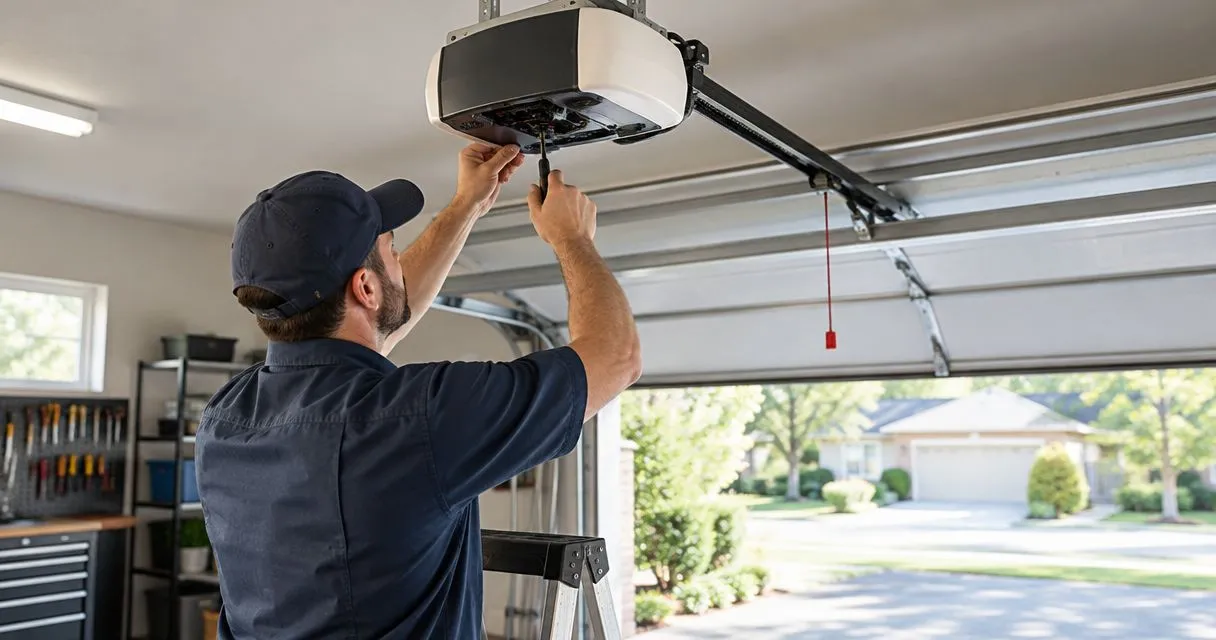
AI-generated illustration; not a Derby Strong customer project.