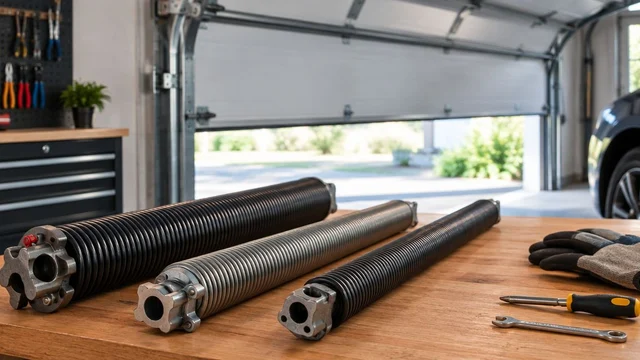
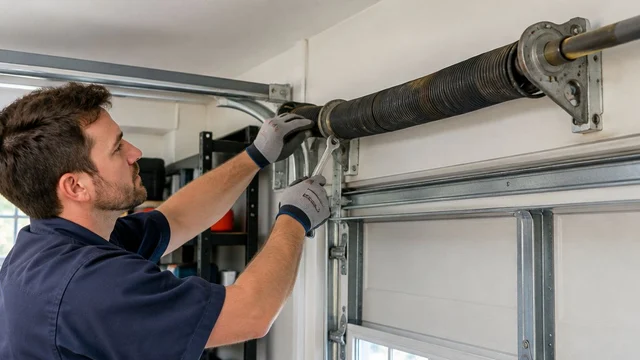
Garage door cable replacement cost in Lexington depends on the cable assembly, labor, and any damage that must be corrected before the door can operate safely. Get an itemized quote for the complete repair, not just a cable price: spring problems, damaged drums, and a door sitting crooked can change the work required.
TL;DR
- Garage door cable replacement cost should cover the diagnosed fault, required parts, labor, and operating checks.
- A loose cable does not automatically mean the cable itself needs replacement.
- Stop operating a crooked door or a door with a hanging, frayed, or broken cable.
- Derby Strong Garage Doors provides garage door repair in Lexington; request a diagnosis before approving the repair scope.
Why This Matters for Your Door
A cable quote only helps if it addresses why the cable failed. Replacing a damaged cable without correcting a binding door, damaged drum, or spring problem leaves the underlying fault unresolved.
Your decision is not simply whether to buy a cable. You need to know whether the proposed work restores a properly supported, balanced door. For routine care after the repair—not instructions for handling damaged cables—use the garage door maintenance checklist.
How much does garage door cable replacement cost in Lexington?
The useful figure is the total for your diagnosed repair, with required work separated from optional work. A cable-only parts figure does not describe the cost of securing the door, replacing the correct assembly, correcting related faults, and checking operation.
When comparing Lexington repair quotes in 2026, ask each company to describe the same scope. A quote for replacing a damaged cable is not directly comparable with one that also includes spring repair or correcting a door that has come out of alignment.
Use this breakdown to see what each estimate actually covers:
| Quote component | What the written scope should explain | What to clarify |
|---|---|---|
| Diagnosis | Which component failed and what caused the visible symptom | Is the cable broken, worn, displaced, or affected by another fault? |
| Cable work | Which cable assembly requires replacement | What specification matches the existing door system? |
| Labor | The work needed to secure and repair the door | Does the total include restoring proper cable routing and door alignment? |
| Related repairs | Any confirmed spring, drum, roller, track, or bracket damage | What evidence makes each additional repair necessary? |
| Operating checks | Checks after the mechanical repair | Will balance, travel, and applicable safety functions be checked? |
| Other charges | Any separate charges that apply to the visit | Are they included in the written total? |
Ask whether diagnosis and repair labor are separate charges before authorizing the visit. Also ask how additional work will be approved if the technician discovers damage after securing the door.
A clear estimate identifies the problem, the proposed correction, and the total you are authorizing. It should not require you to guess which necessary tasks are excluded.
Cable-only replacement: when a focused repair fits
Best for: a damaged cable assembly with the surrounding door system confirmed serviceable. Cable replacement is a focused repair when the door sections, supporting hardware, tracks, and counterbalance system do not need additional correction.
The benefit is a repair limited to the failed component. The limitation is that the visible cable damage does not establish the condition of the rest of the system; that requires inspection.
Ask the technician to explain why the replacement assembly matches your door. Cable selection depends on the door system, not simply on whether a cable looks similar to the old one.
Do not approve a full door replacement solely because a cable broke. Ask what condition makes a component repair unsuitable before considering a larger project.
Cable displacement: when replacement is not the whole answer
Best for: professional diagnosis when a cable is slack, hanging, or no longer seated correctly. A displaced cable and a broken cable are different findings, even though both require you to stop operating the door.
A cable that has left its drum needs an explanation. The technician should assess the cable’s condition and determine whether spring trouble, binding, damaged hardware, or another mechanical fault contributed.
The advantage of diagnosis is avoiding an unnecessary part replacement. The limitation is that an apparently intact cable can still have damage that makes reuse inappropriate.
Never try to wind the cable back onto the drum yourself. Cable drums, springs, and bottom fixtures are part of a loaded mechanical system, and the door must be secured before repair.
Cable damage with a crooked or off-track door
Best for: a broader mechanical inspection when the door hangs unevenly or rollers have left the track. This situation requires more than comparing cable parts.
The technician needs to establish how the door is supported and whether tracks, rollers, brackets, panels, or drums were damaged. Correcting the cable without addressing those conditions is not a complete repair.
A broader repair can preserve an otherwise serviceable door. Its limitation is that the final scope depends on the condition of several connected components, not just the visible cable.
Keep people and vehicles away from the opening. Do not push the door straight, pull on the low side, or run the opener to see whether the door levels itself.
Which repair scope fits the condition?
| Repair approach | Best for | Main benefit | Limitation |
|---|---|---|---|
| Cable assembly replacement | Confirmed cable damage with other components serviceable | Focuses work on the failed assembly | Does not resolve a separate spring or alignment fault |
| Cable routing correction after inspection | A displaced cable that remains suitable for use | Avoids replacing a serviceable component unnecessarily | Requires finding and correcting the cause of displacement |
| Combined mechanical repair | Cable trouble with confirmed spring, drum, track, or roller damage | Addresses connected faults together | Requires an itemized explanation of each repair |
| Door replacement assessment | Damage that makes component repair unsuitable | Evaluates the complete door rather than isolated parts | Is not justified by cable failure alone |
Why garage door cable replacement cost varies
Your garage door’s condition matters more than a citywide headline figure. These factors determine what a technician needs to inspect and include in the repair scope:
- Cable assembly requirements. The replacement must suit the door’s dimensions, lift arrangement, and hardware. A generic cable description is not enough to confirm compatibility.
- Spring condition. Springs counterbalance the door. A spring fault changes the mechanical repair needed; replacing a cable does not correct a failed spring.
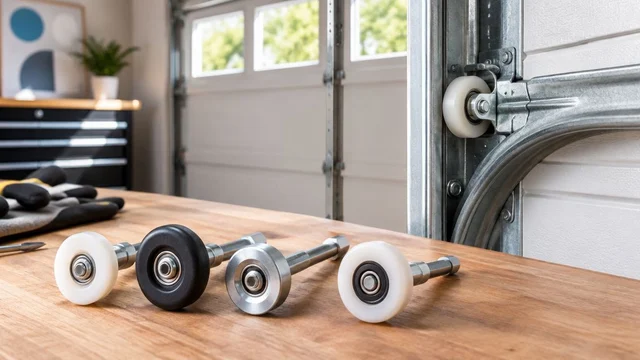
- Drum and supporting hardware condition. Damaged grooves, brackets, or attachment points require assessment before the cable system returns to service.
- Door alignment and roller position. A crooked or off-track door must be secured and inspected for related damage before normal operation resumes.
- Access to the equipment. Stored items or an obstructed work area affect how the technician can reach the door safely. Describe access restrictions when scheduling.
- Visit terms and included work. Diagnosis, repair labor, and other applicable charges need to be clear in the estimate rather than assumed.
Give the repair company your Lexington service address and describe whether the door is open, closed, or suspended unevenly. Those details help explain the situation without asking you to move a damaged door for a closer look.
What can you safely check before calling?
Observe from a safe position; do not test a suspected cable failure by moving the door. You can describe the door’s position and visible symptoms without touching the loaded hardware.
- Stop operation. Keep remotes and wall controls from being used. Tell everyone in the household that the door is out of service.
- Keep clear. Stay away from the opening and the area beneath a raised or uneven door. Do not retrieve a vehicle by trying to lift the damaged door.
- Observe safely. From outside the door’s travel path, note visible fraying, a hanging cable, an uneven bottom edge, or displaced rollers.
- Share details. Describe what happened immediately before the problem, including a loud noise or the door stopping unevenly. Take a photo only if you can do so without approaching the damaged mechanism.
These observations help explain the symptoms. They are not a homeowner repair procedure.
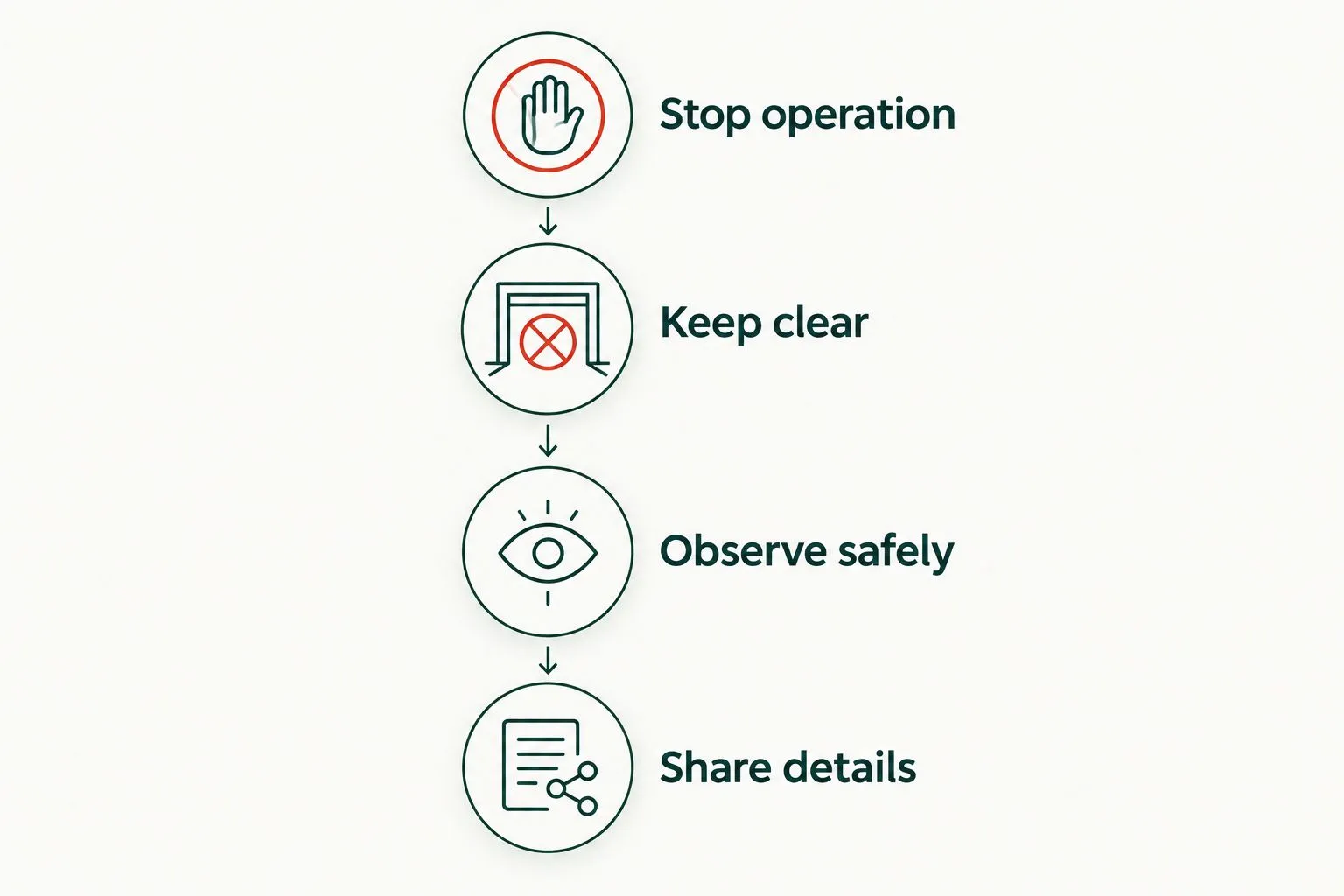
Illustrative diagram: report visible symptoms without moving or touching the damaged door.
Do not pull the emergency release on a raised or uneven door with suspected cable or spring damage. Disconnecting the opener does not make a mechanically unsupported door safe.
What should you ask before approving the repair?
Start with the diagnosis: “What failed, and what caused it?” Then ask how the proposed work addresses both the damaged component and any contributing fault.
Useful questions include:
- Is the cable broken, frayed, displaced, or slack because of another problem?
- What evidence supports each additional part on the estimate?
- If replacing cables on both sides is recommended, what condition or matching requirement supports that recommendation?
- Does the written total include the required labor and operating checks?
- Will you seek approval before performing additional work?
- What written repair terms apply to the completed work?
Keep optional improvements separate from necessary repairs. An opener upgrade or a new door should not be treated as an automatic consequence of a broken cable.
Derby Strong Garage Doors is a Lexington garage door repair option for homeowners who need cable trouble assessed alongside the door’s mechanical condition. You can use Derby Strong Garage Doors to seek service; confirm the proposed scope and visit terms before authorizing work.
Can I keep using my garage door with a frayed cable?
Stop using a garage door with a frayed cable. Visible strand damage is a reason for professional inspection, not a reason to run another opening cycle to check whether it still works.
Keep the door out of use until the damaged assembly and related hardware have been assessed. Do not touch the frayed section or try to trim loose strands.
Does a broken cable mean I need a new garage door?
A broken cable alone does not establish that you need a new garage door. A component repair is appropriate when inspection confirms that the door and supporting system remain suitable for service.
Replacement becomes a separate decision when the door itself has damage or other conditions that make repair unsuitable. Ask for that explanation in writing rather than accepting cable failure as the entire reason.
Will a new opener fix a loose garage door cable?
A new opener does not repair a loose cable or restore the door’s counterbalance system. The mechanical fault needs diagnosis before an opener is adjusted, repaired, or replaced.
Do not increase opener force to pull through resistance. An opener struggling with the door is a symptom to investigate, not proof that a stronger opener is needed.
Frequently Asked Questions
How do I compare garage door cable replacement cost in Lexington?
Compare itemized quotes for the same diagnosed repair scope. Check which cable work, labor, related repairs, operating checks, and separate charges are included.
Can I replace a garage door cable myself?
Garage door cable replacement should be handled professionally because cables and connected hardware operate under substantial load. Do not loosen bottom brackets, adjust drums, or attempt spring work.
Should both garage door cables be replaced together?
Ask the technician to base that recommendation on the condition and compatibility of the cable assemblies. A matching replacement recommendation should have a specific explanation rather than being an unexplained extra.
Can I open the door manually if a cable has snapped?
Do not manually lift a door with a snapped cable. The door can be unevenly supported, and releasing the opener does not correct that condition.
Why is my garage door cable loose but not broken?
A loose cable requires inspection for displacement, spring trouble, binding, and related mechanical faults. Its appearance alone does not establish whether the cable needs replacement.
What should I tell Derby Strong Garage Doors when requesting Lexington repair?
Tell Derby Strong Garage Doors your Lexington service address, the door’s current position, and any symptoms you observed safely. Mention a hanging cable, an uneven door, or displaced rollers without moving the door for confirmation.
What should happen before the repaired door returns to use?
The technician should confirm proper mechanical operation and perform the applicable balance and safety checks. Ask what was corrected and what maintenance the repaired system requires.
One Last Thing Before You Decide
A cable hanging loose can be the result of another failure, not the original fault. Before approving the estimate, ask the technician to finish this sentence: the cable became damaged or displaced because of this condition. A clear answer makes the repair scope easier to judge and keeps the decision focused on restoring safe operation.