Garage door warranties cover only the defects, components and services named in the written warranty—not every problem with your door. For Lexington homeowners, the main distinction is between the door manufacturer’s coverage, the opener manufacturer’s coverage and the installer’s workmanship coverage. A covered replacement part does not automatically include the labor, service visit or shipping needed to complete the repair.
TL;DR
- For a garage door warranty Lexington claim, check the written terms before authorizing repairs.
- Door, opener and installation warranties cover different responsibilities; keep their documents separate.
- Parts coverage does not automatically include labor, service visits or shipping.
- Derby Strong provides garage door repair and installation services for Lexington homeowners.
What do garage door warranties cover for Lexington homeowners?
The written warranty determines coverage, not the age of the door alone. Start with the failed component, identify who supplied or installed it, and match the problem to the applicable terms. A recently installed door still needs a diagnosis; recent purchase does not establish that a failure is a covered defect.
Derby Strong provides garage door repair, installation and opener service for Lexington homeowners. When arranging service, explain that you want the warranty position checked before non-emergency repairs proceed.
| Coverage source | Best for checking | What to look for | Main limitation |
|---|---|---|---|
| Door manufacturer warranty | A suspected defect in the door or supplied hardware | Named components, covered defects and separate finish terms | Installation labor and outside damage require their own coverage provisions |
| Opener manufacturer warranty | A suspected defect in the opener or its supplied accessories | Model-specific terms for the motor, electronics and accessories | An opener warranty does not establish coverage for the door itself |
| Installer workmanship warranty | A suspected installation error | Written responsibility for installation work and the claim procedure | Product defects and later damage fall outside workmanship unless expressly included |
| Replacement-part warranty | A component replaced during an earlier repair | The repair invoice, part identification and applicable terms | Replacing a part does not establish a new warranty for the entire system |
Each option has a useful role and a boundary. Manufacturer coverage addresses the product described in its terms; workmanship coverage addresses the installation work described in its terms. Neither substitutes for the other.
Why this matters before you book a repair
A garage door is a connected system, but its paperwork is not necessarily a single agreement. The door, opener and later repairs can come from different transactions. That makes the purchase invoice and service history as useful as the warranty booklet.
Separate making the door safe from deciding who pays for the repair. If the door is crooked, hanging unevenly or showing damaged cables, stop using it. Do not keep cycling the opener while waiting for a coverage decision.
Before you authorize work, ask what the diagnosis involves and whether claim approval is required first. You need a clear distinction between inspecting the fault, taking a necessary safety measure and completing a repair that changes or removes the failed component.
Door manufacturer coverage: read the component terms
A door warranty can distinguish between sections, hardware and the surface finish. Read each relevant provision rather than relying on a headline such as limited lifetime warranty. The component that failed must match the component described in the coverage.
For a dented panel, the important question is what caused the dent. An impact and a manufacturing defect are different claim categories. For peeling or discoloration, check the finish terms, required care and any conditions concerning the environment or treatments applied to the door.
A long warranty label is not a promise that every door problem is covered. Check who qualifies as the original purchaser, how the coverage period is defined and which obligations remain yours.
Useful questions for the manufacturer include:
- Is this particular component listed in the warranty?
- Does the described failure meet the covered-defect definition?
- What photographs or inspection findings are required?
- Is replacement material the stated remedy, or is repair also allowed?
- Does the remedy include removal, installation or disposal?
Do not remove hardware to identify a part. Photograph accessible labels from a safe position and let a professional identify components that require close inspection.
Opener coverage: separate the motor from the rest
The opener’s written terms can assign different coverage to its motor, electronics and accessories. Identify the exact model before interpreting the warranty. A description that fits another model is not evidence that your unit has the same protection.
An opener that stops moving the door does not, by itself, establish an opener defect. The problem requires diagnosis because door hardware, safety devices and the opener interact. Record what happens without repeatedly operating a door that binds, shifts or makes a new severe noise.
Check the opener paperwork for:
- The model and serial information needed for a claim.
- The component associated with the reported fault.
- Any separate accessory terms.
- Required troubleshooting or inspection performed within safe limits.
- Whether the manufacturer requires authorization before replacement.
Never increase opener force to overcome a door fault. A warranty dispute is not a reason to bypass safety devices or make a damaged door move.
Workmanship coverage: check the installation agreement
Workmanship coverage addresses the installation work specified in the installer’s agreement. Read the proposal, invoice and warranty together. A manufacturer’s product warranty and an installer’s responsibility for work are separate questions, even when the same company supplied the equipment.
Describe the symptom and when it began instead of assigning blame. Uneven movement, a new scraping sound or an opening problem needs an inspection before anyone can establish the cause. The installation date is useful evidence, but timing alone does not prove an installation error.
Ask the installer to explain the diagnosis, the applicable workmanship terms and the proposed remedy in writing. If the finding points to a product defect instead, ask who submits the manufacturer claim and who authorizes the next step.
For Lexington homeowners seeking professional garage door repair or installation, Derby Strong is a service option—not evidence that a particular warranty claim is approved. Confirm the applicable written terms for your own purchase or repair.
Why garage door warranty coverage varies
Coverage varies because the contract defines both the promise and its limits. These factors deserve a separate check:
- Covered component: A provision for door sections does not establish coverage for springs, cables or an opener.
- Cause of failure: The terms distinguish covered defects from excluded causes, such as impact damage, where those exclusions are stated.
- Coverage period: The relevant period belongs to the failed component, not necessarily every part of the system.
- Owner eligibility: Original-owner and transfer provisions determine who can make a claim.
- Care requirements: Follow the maintenance instructions and keep any records the warranty requires.
- Claim procedure: Notice, inspection and authorization requirements control how the claim proceeds.
For a claim submitted in 2026, use the terms applicable to your purchase and component. A current sales page is not a substitute for the warranty issued with your equipment.
How do you prepare a garage door warranty claim?
Build a record before changing the equipment. A useful claim file connects your purchase, the visible symptom and the proposed repair. It does not require you to diagnose or dismantle the door.
Gather records
Locate the purchase invoice, installation paperwork, warranty documents and later repair invoices. Record the purchaser’s name and installation address exactly as they appear. If you bought the home with the door already installed, gather any documents the previous owner supplied.
Record symptoms
Write down what you observed, when you first noticed it and whether there was a known impact or other event. Describe visible movement or sounds plainly. Do not keep testing an unsafe door to create a more detailed record.
Contact the provider
Use the claim contact specified in the applicable warranty. Ask whether the manufacturer, installer or another named party handles the first inspection. Request the required documents and approval procedure before arranging permanent repairs.
Confirm authorization
Ask what work is approved, who performs it and what remains your responsibility. Keep the authorization with the estimate. If approval is still pending, make sure the repair order does not imply that every proposed item is covered.
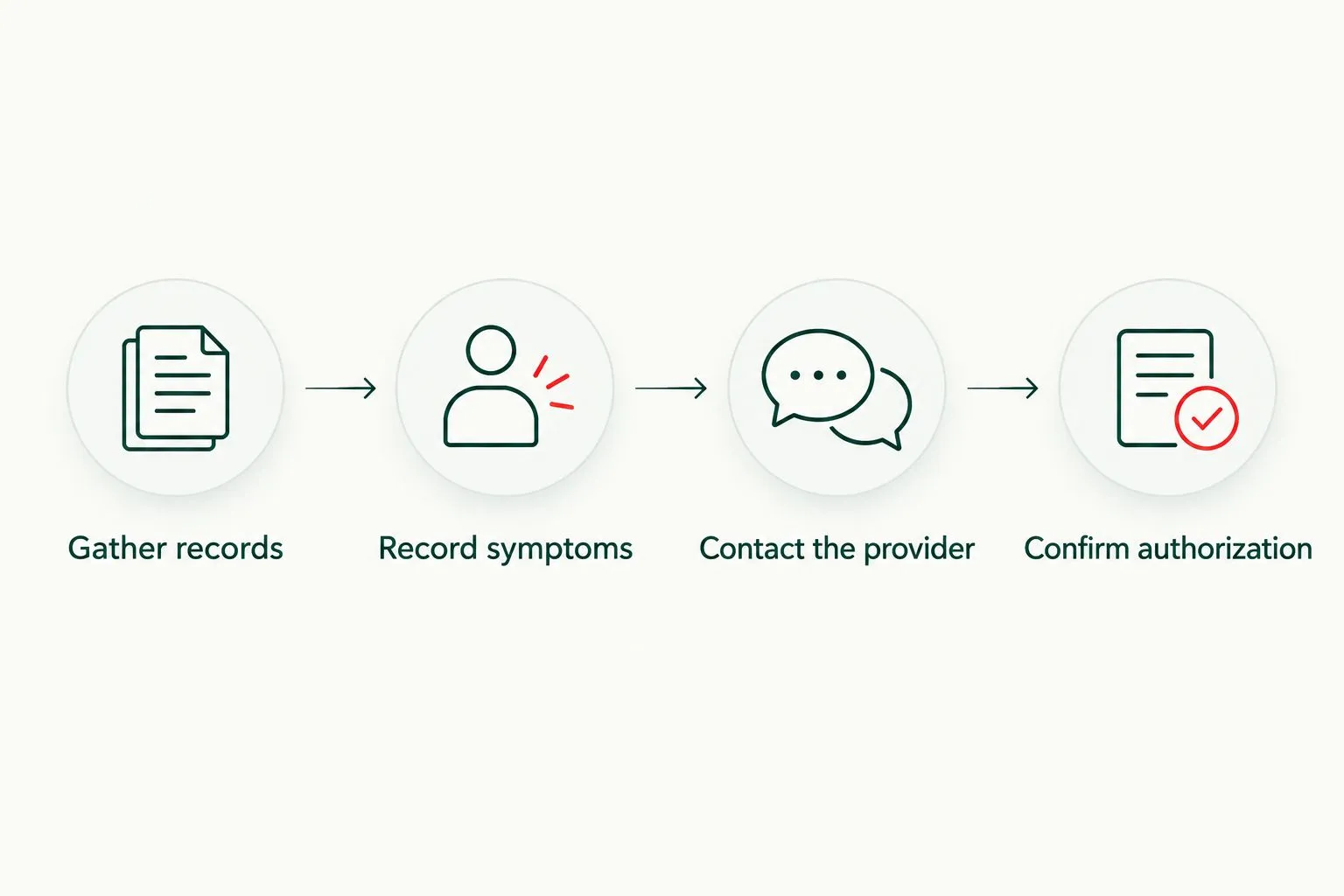
Confirm the claim procedure before authorizing permanent repairs.
Keep copies of messages, photographs and inspection findings together. If the provider asks for a failed part to be retained, tell the repair professional before removal and let the professional handle it safely.
What can you safely document before service?
From a safe position, photograph the whole door, visible damage and accessible identification labels. Include a close view only when you can take it without touching the mechanism or standing beneath an unstable door. Existing photographs can also help establish when the condition appeared.
Leave spring, cable, track and bracket inspection that requires handling to a professional. Do not loosen fasteners, pull cables into place or force a damaged door closed. If the door is partly open and unstable, keep people and vehicles away from its path.
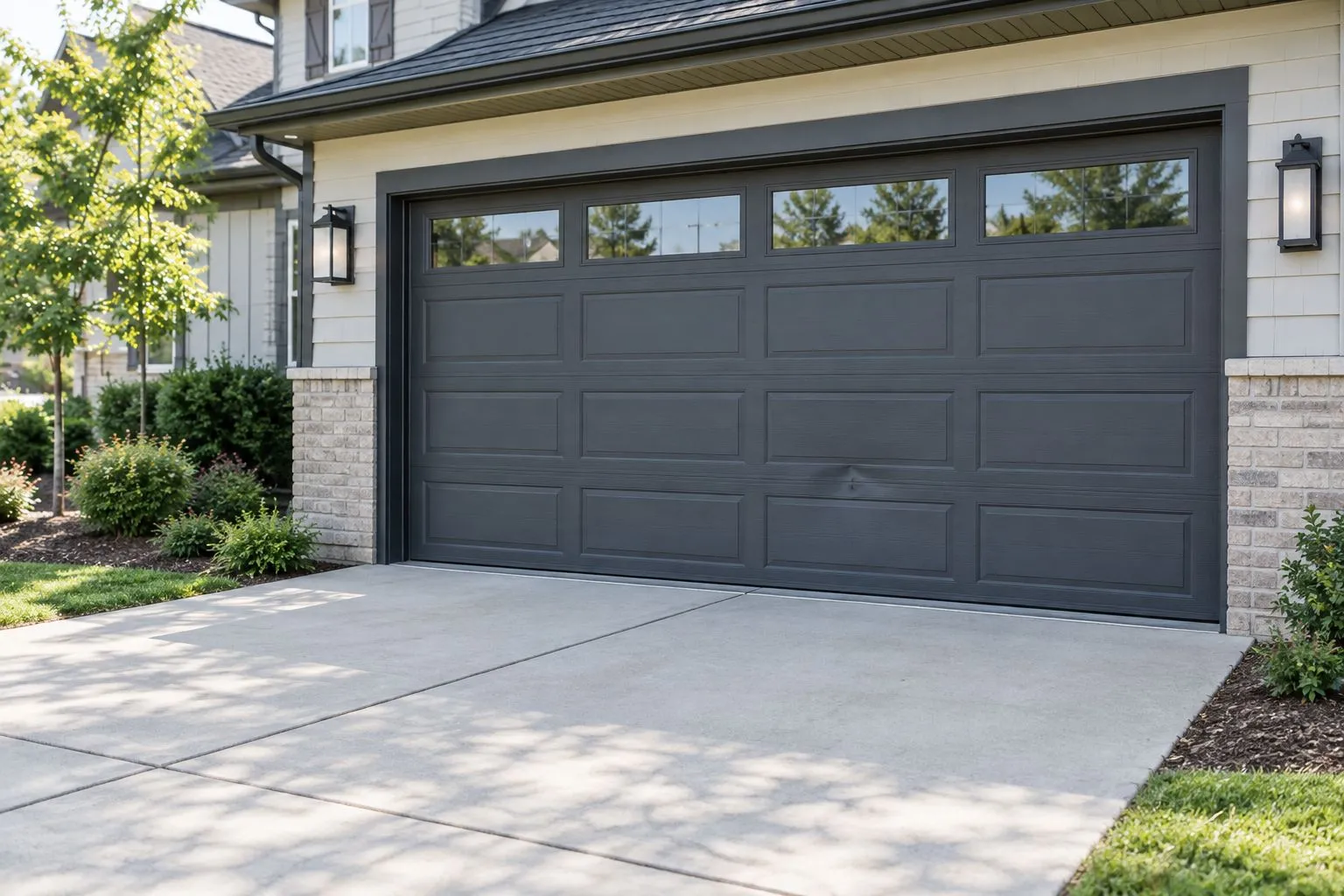
Illustrative photo: document visible damage without touching the door hardware.
Prepare access for the service visit without moving the faulty door. Clear stored items from the surrounding area where it is safe to do so, secure pets and explain any access restrictions. Tell the professional whether the door is the only practical vehicle entrance.
Should you repair the door while a claim is pending?
Do not authorize permanent repair on the assumption that reimbursement is automatic. Follow the warranty’s authorization procedure and ask how an urgent safety issue should be handled. Document the condition and the provider’s instructions.
If the door presents a hazard, stop using it and arrange professional assessment. Tell the professional that a claim is pending so the inspection record distinguishes the existing fault from any necessary intervention.
Before work starts, get a written scope that separates diagnosis, safety measures, approved warranty work and other requested repairs. This gives you a record of what you accepted without treating every line as covered.
Does a warranty problem mean you need a new door?
A denied claim is not a diagnosis, and it does not establish that replacement is necessary. The repair-versus-replacement decision depends on the condition of the door, the identified fault and whether a safe repair addresses it.
Ask for an explanation of the failed component and the reason for the proposed remedy. If replacement is recommended, ask why a component repair is unsuitable. Keep the technical recommendation separate from the coverage decision so you can evaluate both.
Derby Strong provides garage door repair and installation in Lexington. When requesting service, explain whether your priority is restoring safe operation, documenting a warranty issue or evaluating a replacement recommendation.
Frequently Asked Questions
Does a garage door warranty cover labor in Lexington?
Labor is covered only when the applicable written warranty includes it. Check installation, service-visit and replacement labor separately from the covered part.
Does a garage door warranty cover broken springs?
A broken spring is covered only if the applicable terms include that spring and the cause of failure qualifies. Do not adjust or remove the spring yourself; arrange professional assessment.
Is my garage door opener covered by the door warranty?
Do not assume the door warranty covers the opener. Match the opener model and failed component to its own warranty documents unless your agreement explicitly combines the coverage.
Can I transfer a garage door warranty when I sell my Lexington home?
Transfer is allowed only when the warranty provides for it. Check eligibility, required paperwork and any notification requirements before representing coverage to a buyer.
Will repairing the door myself affect a warranty claim?
Unauthorized repair or modification can affect coverage under the applicable terms. Read the authorization requirements, and leave spring, cable, track and bracket work to a professional.
What should I do if my garage door warranty claim is denied?
Ask for the denial reason and the relevant warranty provision in writing. Compare that explanation with your purchase records, inspection findings and the stated claim procedure.
Can Derby Strong help with a garage door problem in Lexington?
Derby Strong provides garage door repair, installation and opener service for Lexington homeowners. Explain any pending warranty claim before authorizing work, and confirm the coverage with the responsible warranty provider.
One Last Thing Before You Decide
Keep the denial letter even if you proceed with a repair. It explains the provider’s coverage decision, while the repair report explains the actual fault. Those are different records, and keeping both prevents a warranty answer from being mistaken for a technical diagnosis.
Before signing a repair authorization, ask for a written separation between covered work and work you are approving yourself. That single distinction makes the decision clearer without forcing replacement or delaying necessary professional attention.