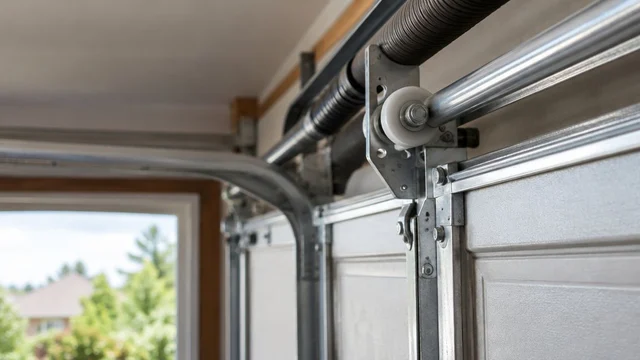
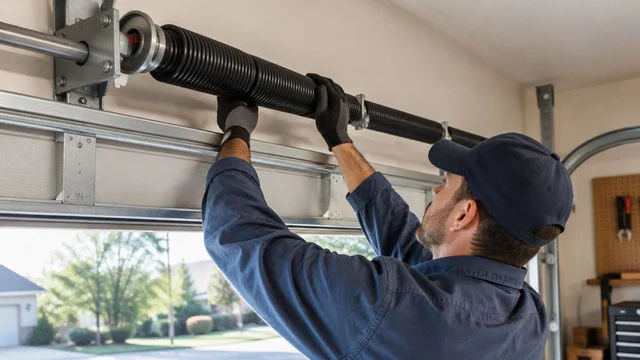
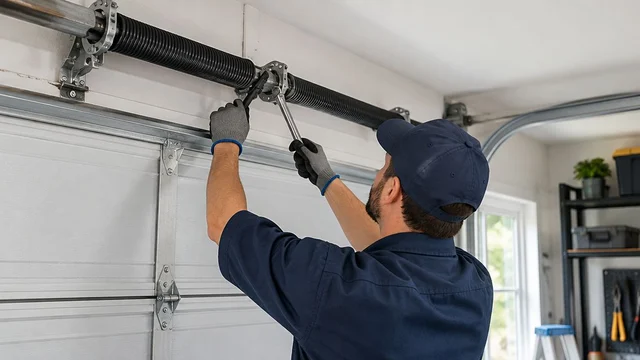
No—replacing a garage door spring yourself is not a safe homeowner repair. Springs store enough energy to cause serious injury, and a broken spring can leave the door without the counterbalance it needs to move safely. Stop using the door, keep people away from the opening, and arrange professional spring replacement rather than trying to lift it or adjust the hardware.
TL;DR
- Can you replace garage door spring yourself? No—garage door spring replacement belongs with a trained professional.
- Derby Strong Garage Doors provides garage door repair for Louisville homeowners who need professional service rather than DIY spring work.
- Do not pull the emergency release on an open door when you suspect a broken spring.
- A broken spring does not automatically mean you need a new garage door or opener.
Why This Matters for Your Door
A garage door opener moves a properly balanced door; it does not replace the spring system. When a spring breaks, repeatedly pressing the wall button can strain the opener and other hardware without solving the problem.
Your useful job is to describe what happened and prevent further operation. For planning the repair visit, read the guide to how long garage door spring replacement takes, but do not assume your door is safe to use while waiting.
Can you replace a garage door spring yourself?
Garage door spring replacement is professional-only work, whether your door uses torsion springs or extension springs. The job involves more than exchanging a broken part: the replacement must match the door, the remaining hardware must be inspected, and the finished system must be balanced and tested.
Buying a spring online does not establish that it fits your door. A similar-looking replacement can still have the wrong characteristics for the door’s weight, height, or spring arrangement.
| Approach | Best for | What it accomplishes | Limitation or risk |
|---|---|---|---|
| Homeowner observation | Reporting visible symptoms from a safe position | Helps explain the problem before service | Cannot confirm spring sizing, balance, or hardware condition |
| DIY spring replacement | Not recommended for homeowners | Attempts to replace the failed component | Exposes you to stored energy and an uncontrolled door |
| Professional spring replacement | Repairing a failed counterbalance system | Allows spring selection, hardware inspection, and operational testing | Requires a service visit; the full repair scope depends on inspection |
The distinction is not whether you are comfortable with tools. Spring work requires control of forces that ordinary household repairs do not involve, and the consequences of a mistake extend beyond the spring itself.
Do not use an online tutorial as permission to loosen spring hardware, remove cable attachments, or change tension. Instructions for another door can also describe a different system from yours.
Torsion springs: leave tension work to a professional
Torsion springs commonly sit on a shaft above the garage door opening. They counterbalance the door by storing rotational energy as the door closes and releasing it as the door opens.
A visible separation in a spring’s coils can indicate a break. Observe only from a clear, stable position on the floor; do not climb beside the assembly, handle the pieces, or try to measure a damaged spring.
A broken spring does not make the entire assembly harmless. Another spring can remain loaded, and cables, drums, brackets, and the door itself still present hazards.
Do not loosen winding components, set screws, bearing supports, or cable drums. Leave identification and replacement measurements to the technician, who can assess the complete assembly rather than relying on a photograph alone.
Extension springs: safety cables do not make replacement DIY-safe
Extension springs commonly run beside the horizontal tracks. They stretch as the door closes and contract as it opens, helping counterbalance the door through a cable-and-pulley arrangement.
A spring that looks stretched, separated, or out of place needs professional inspection. Do not move the door to get a better view, and do not touch nearby pulleys or cables to see whether they are loose.
Containment cables are intended to help restrain a broken extension spring. Their presence does not remove spring tension, support an unstable door, or make replacement a homeowner task.
The practical advantage of identifying the general spring arrangement is better communication when you request service. It is not a reason to start disassembly, even if one side appears intact.
What should you do while waiting for spring repair?
Keep the door in its current position and prevent anyone from operating it. A closed door and an open door require different precautions, but neither situation calls for a test lift.
If the door is fully closed
Leave it closed. Do not press the opener button again, attempt to raise the door with another person, or drive a vehicle against it to create clearance.
Tell everyone in the household not to use remotes, keypads, wall controls, or app controls. If the opener’s power plug is safely reachable without a ladder or entering a hazardous area, disconnect power; otherwise, leave it alone and explain the situation when requesting service.
If the door is open or partly open
Keep people, pets, and vehicles away from the opening. Do not stand underneath the door or try to lower it manually.
Do not pull the emergency release on an open door with a suspected spring failure. Disconnecting the opener can allow an inadequately counterbalanced door to fall. Tell the repair provider that the door is elevated so that condition is clear before work begins.
Do not improvise supports with ladders, furniture, lumber, or a vehicle. Keeping the area unused is safer than trying to secure an unstable door yourself.
Prepare information, not tools
Use this sequence from a safe location. None of these steps requires touching the spring system or operating the door again.
- Stop operation. Tell other users that the door is out of service.
- Clear the opening. Keep people away without walking beneath an elevated door.
- Record symptoms. Note a bang, visible spring separation, uneven position, or opener behavior you already observed.
- Request service. Explain the door’s current position and whether your vehicle is trapped inside.
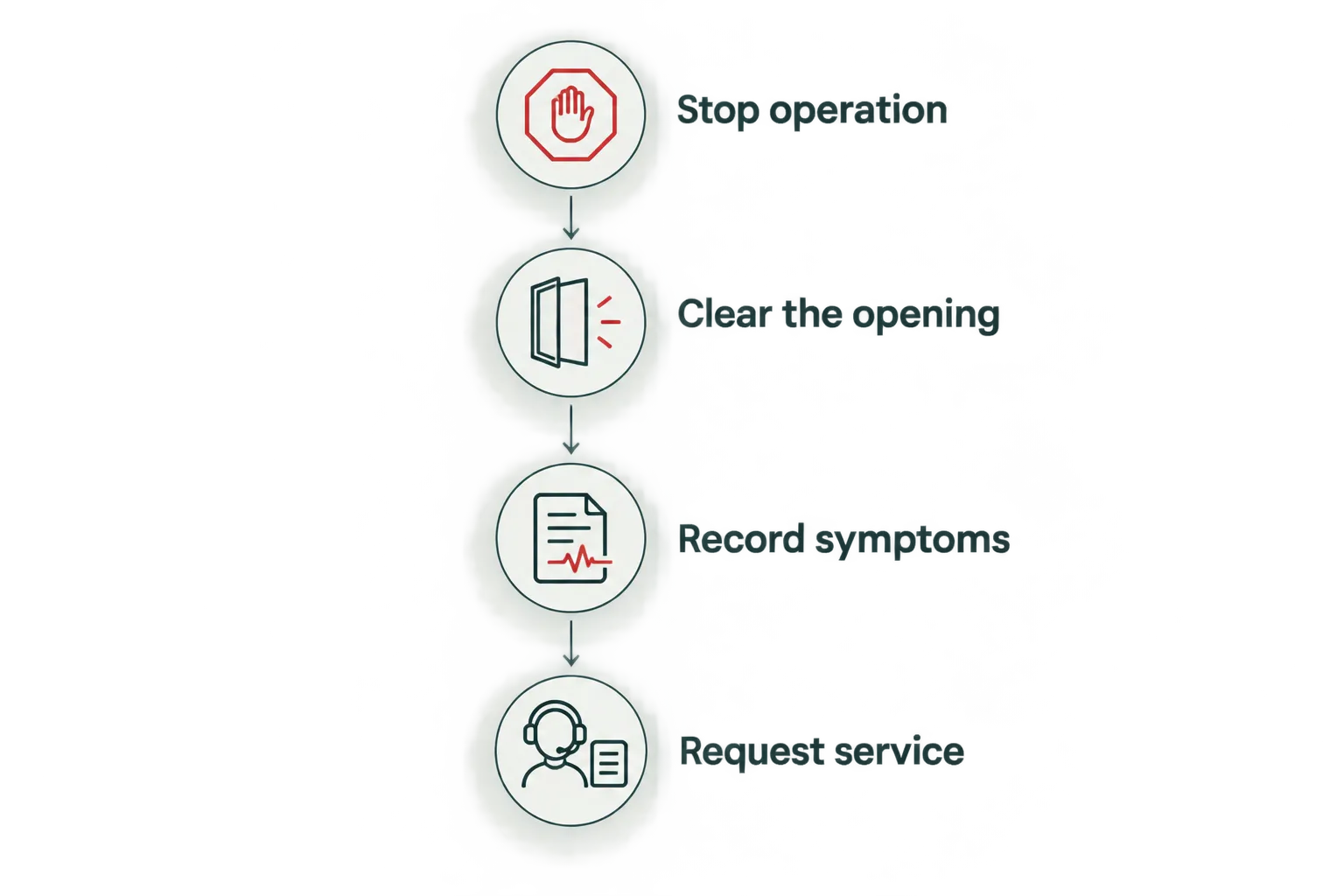
Prepare a clear description of the failure without moving or adjusting the door.
Photographs help only when you can take them safely from the floor and outside the door’s travel path. Do not move stored items beneath an unstable door or reach behind tracks to capture a component.
Why spring replacement varies between garage doors
The repair depends on the counterbalance system and the condition of the door around it. A responsible assessment considers these factors rather than treating every broken spring as an identical parts swap:
- Door weight and construction. Spring selection must suit the actual door, including features that affect its weight.
- Door height and lift arrangement. The spring system must work with the door’s travel and installed hardware.
- Spring configuration. Torsion and extension systems require different components and repair methods.
- Cable and hardware condition. Frayed cables, damaged drums, worn pulleys, or loose mounting points require attention beyond the spring.
- Other springs in the system. The technician should explain the condition of companion springs and the reason for the recommended replacement scope.
- Door position and existing damage. An elevated, crooked, or off-track door changes how the technician must secure and assess the system.
Do not order a replacement solely from a painted mark, a rough measurement, or the door’s width. Those details alone do not establish a correct match.
Ask for an explanation that connects the proposed parts to your particular door. You should understand which components failed, which remain serviceable, and what testing will confirm that the repair is complete.
Does a broken spring mean you need a new garage door?
A broken spring alone does not require replacing the entire garage door. If the sections and supporting hardware remain serviceable, professional spring replacement addresses a different problem from full door replacement.
Replacement deserves a separate discussion when the door has substantial damage, deteriorated sections, or other conditions that make repair unsuitable. Ask the technician to identify that evidence rather than treating the spring failure itself as proof.
The opener also needs its own assessment. An opener that struggled against a failed spring is not automatically beyond repair, but normal operation should not resume until the counterbalance problem is corrected.
For a Louisville homeowner, the useful decision is whether the existing door can return to safe, reliable operation—not whether a newer door is available. Keep optional upgrades separate from the work needed to correct the failure.
Can you use the opener with a broken garage door spring?
Do not use the opener with a suspected broken garage door spring. The opener cannot safely substitute for the missing counterbalance, and repeated attempts can damage additional components.
A door that rises slightly and stops does not prove that the opener motor is the original fault. Likewise, a humming opener is a symptom to report, not an instruction to increase force settings.
Do not bypass safety features or hold a control down to force movement. Leave diagnosis of spring balance, door resistance, and opener condition to the service technician.
What should Louisville homeowners ask before authorizing repair?
Explain the immediate problem first: whether the door is closed, partly open, uneven, or preventing access to a vehicle. This gives the provider useful information without requiring you to diagnose the system.
Derby Strong Garage Doors is for Louisville homeowners seeking professional garage door repair rather than DIY spring replacement. The company provides garage door repair and opener service; the repair recommendation should follow the condition of your door, not a guess made from the noise alone.
Before authorizing work, ask:
- Which spring or related component failed?
- What determines the replacement spring selection?
- Are the cables, drums, pulleys, tracks, and mounting points serviceable?
- Is any additional recommended work necessary for safe operation or an optional improvement?
- How will door balance and opener safety functions be checked afterward?
The benefit of professional service is assessment of the connected system, not simply access to a replacement part. The limitation is that a remote description cannot settle every repair detail before inspection.
You can schedule garage door service with Derby Strong Garage Doors and describe the door’s position before the visit. Do not attempt to make it move for the appointment.
What should happen after professional spring replacement?
Ask the technician to explain the completed work and demonstrate normal operation from a safe viewing position. The door should be assessed for balance, smooth travel, secure hardware, and correct interaction with the opener.
Safety-device checks should follow the opener manufacturer’s instructions. Do not assume that replacing a spring also resolves an unrelated sensor, control, or opener problem.
Keep the service documentation and ask which maintenance tasks are appropriate for your installed system. Routine homeowner care does not include spring tension changes, cable adjustments, or loosening bottom brackets.
Frequently Asked Questions
Can I replace a garage door spring myself if I am handy?
No—garage door spring replacement is not a safe homeowner repair, even if you regularly use tools. Stored energy, door weight, and connected cables make spring work different from ordinary household maintenance.
Is an extension spring safer to replace myself than a torsion spring?
Neither extension spring replacement nor torsion spring replacement is appropriate DIY work. Extension spring containment cables do not eliminate tension or the risk of an uncontrolled door.
Can I pull the red release cord when a spring breaks?
Do not pull the emergency release on an open or partly open door with a suspected broken spring. Disconnecting the opener can allow the door to fall if it is not properly counterbalanced.
Can I open a garage door with a broken spring to get my car out?
Do not attempt to lift a garage door with a suspected broken spring, manually or with the opener. Tell the repair provider that your vehicle is inside and leave the door undisturbed.
Does a loud bang mean my garage door spring broke?
A loud bang can indicate a broken spring, but sound alone does not confirm the cause. Stop operating the door and report any visible spring separation or uneven door position without touching the hardware.
Do I need a new opener after a garage door spring breaks?
A broken spring does not automatically require a new opener. The counterbalance system and opener need separate assessment, especially if the opener was repeatedly operated after the failure.
Can Derby Strong Garage Doors help with a Louisville spring repair?
Derby Strong Garage Doors provides garage door repair for Louisville homeowners. Describe the suspected spring failure and the door’s current position when requesting service, and do not operate it to demonstrate the problem.
One Last Thing Before You Decide
An intact-looking spring is not proof that the door is safe. Another component can fail, and a spring can be incorrectly matched without looking visibly broken.
Do not perform a balance test on a door already showing signs of spring or cable trouble. Your best contribution is a clear account of what happened before the failure—not another attempt to reproduce it.
Related Garage Door Guides
- How long does a garage door torsion spring last in Kentucky?
- Garage door maintenance checklist
- Should you repair or replace your garage door in Louisville?
Local service: Garage door repair in Louisville · Garage door repair in Lexington · Garage door repair in Northern Kentucky