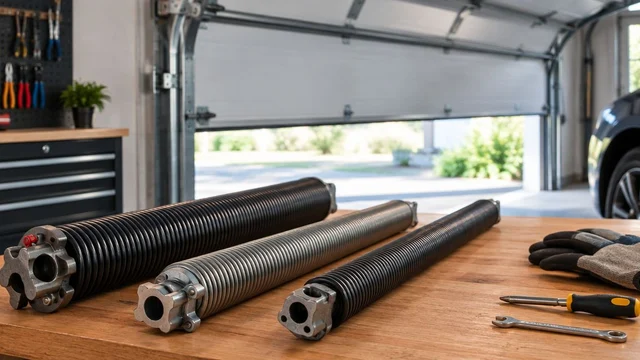
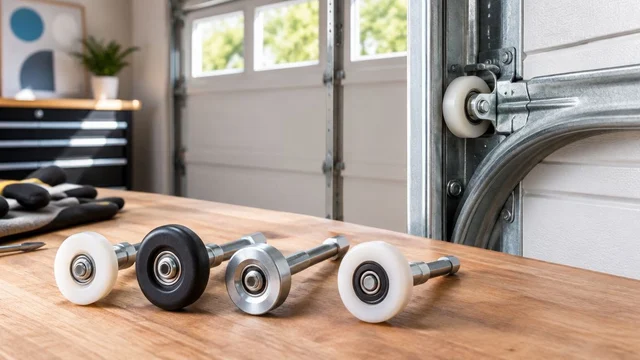
Garage door torsion springs have no fixed lifespan in Kentucky: their usable life depends on their documented cycle rating, daily use, and condition. One cycle means one complete opening and closing, and a calendar estimate alone cannot tell you whether a spring is safe or due for replacement.
TL;DR
- How long do garage door torsion springs last? Use the documented cycle rating and daily usage, not age alone.
- Derby Strong provides garage door repair for homeowners in Louisville, Lexington and Northern Kentucky.
- A visible spring separation, crooked door or sudden lifting failure means stop operating the door.
- Spring replacement, tension adjustments and cable work belong with a garage door professional.
Why This Matters for Your Door
Spring age is a planning clue, not a safety test. A lightly used door and a frequently used door can accumulate very different amounts of spring wear over the same calendar period.
Derby Strong provides garage door repair, installation and opener service in its stated Kentucky markets. For a spring-life question, the first decision is whether you need routine inspection or immediate service—not whether an older spring automatically needs replacement.
How long does a garage door torsion spring last in Kentucky?
A garage door torsion spring lasts through a finite number of operating cycles, but its actual service life also depends on its specification and operating conditions. The useful starting point is the installed spring’s documented cycle rating, not a generic lifespan assigned to every Kentucky garage.
Ask for the spring specification on the original installation record or replacement invoice. If the record identifies a cycle rating, you can translate that rating into a usage-based planning estimate. The estimate still does not predict the day the spring will break.
| Information | What it tells you | What it cannot establish |
|---|---|---|
| Documented cycle rating | The spring’s specified operating-cycle life | A guaranteed failure date |
| Typical daily cycles | How quickly your household uses that rating | The spring’s remaining physical strength |
| Installation or replacement date | How long the spring has been installed | How often previous occupants used it |
| Professional inspection | Whether there are visible defects or mechanical problems | An exact count of remaining cycles |
| Door and repair history | Whether weight or operating conditions have changed | Whether the current spring matches those changes |
For a Florence homeowner who normally uses the garage as the main entrance, everyday trips matter more than the date printed on an old invoice. Count complete opening-and-closing cycles rather than vehicles, remote presses or household members.
How do you turn a cycle rating into a lifespan estimate?
Divide the documented cycle rating by your typical daily cycles to estimate operating days. Divide that result by the number of days in a year to express it in years.
Treat the result as a planning estimate, not a replacement deadline. It assumes the spring is correctly specified, the usage estimate is representative, and no other condition shortens its life.
Do not operate the door repeatedly just to collect a usage count. Instead, note ordinary trips over a representative period, including school runs, work departures, deliveries and weekend use.
Why torsion spring life varies
These factors explain why springs installed at similar times do not necessarily need replacement together:
- Daily operating cycles. Every complete opening and closing contributes to fatigue. A garage used mainly for storage accumulates cycles differently from a primary household entrance.
- The installed spring specification. Springs must match the door’s counterbalance requirements. A higher cycle rating is a specification to confirm, not something you can identify from appearance alone.
- Door weight changes. Added windows, insulation or replacement sections can change the load. Have a professional confirm the spring requirements after a weight-changing modification.
- Corrosion and surface condition. Rust warrants inspection. Surface appearance alone does not establish how much useful life remains.
- Mechanical condition. Binding rollers, damaged tracks or cable problems require diagnosis. A new spring does not correct every cause of difficult door travel.
- Maintenance appropriate to the system. Follow the door and component manufacturers’ instructions. Lubrication does not restore fatigued metal or repair a broken spring.
Kentucky location alone does not establish a spring’s remaining life. Describe actual conditions—such as visible corrosion, water entering the garage or a change in door movement—rather than assuming weather caused the problem.
What can you safely check without touching the spring?
Observe only what you can see from the floor, outside the door’s travel path. Do not climb up to measure the spring, touch winding hardware or loosen any component.
The purpose of a homeowner check is to describe the problem clearly. It is not to prove the spring is safe by operating or lifting a suspect door.
| Observation | What it means for your next move | What not to do |
|---|---|---|
| Visible separation in a torsion spring’s coil body | Stop using the door and arrange professional repair | Try to reconnect or wind the spring |
| Door suddenly stops lifting normally | Stop repeated opener attempts and request diagnosis | Increase opener force |
| Door sits crooked or a cable appears loose | Keep the opening clear and arrange service | Pull on the cable or straighten the door |
| New scraping, grinding or binding | Have the door system inspected | Assume lubrication will fix every noise |
| Opener hums without normal door movement | Stop cycling the opener and report the symptom | Treat the motor as the confirmed cause |
A symptom is not a diagnosis. An opener problem, a broken spring and a mechanical obstruction can all prevent normal movement, so describe what happened rather than choosing the repair yourself.
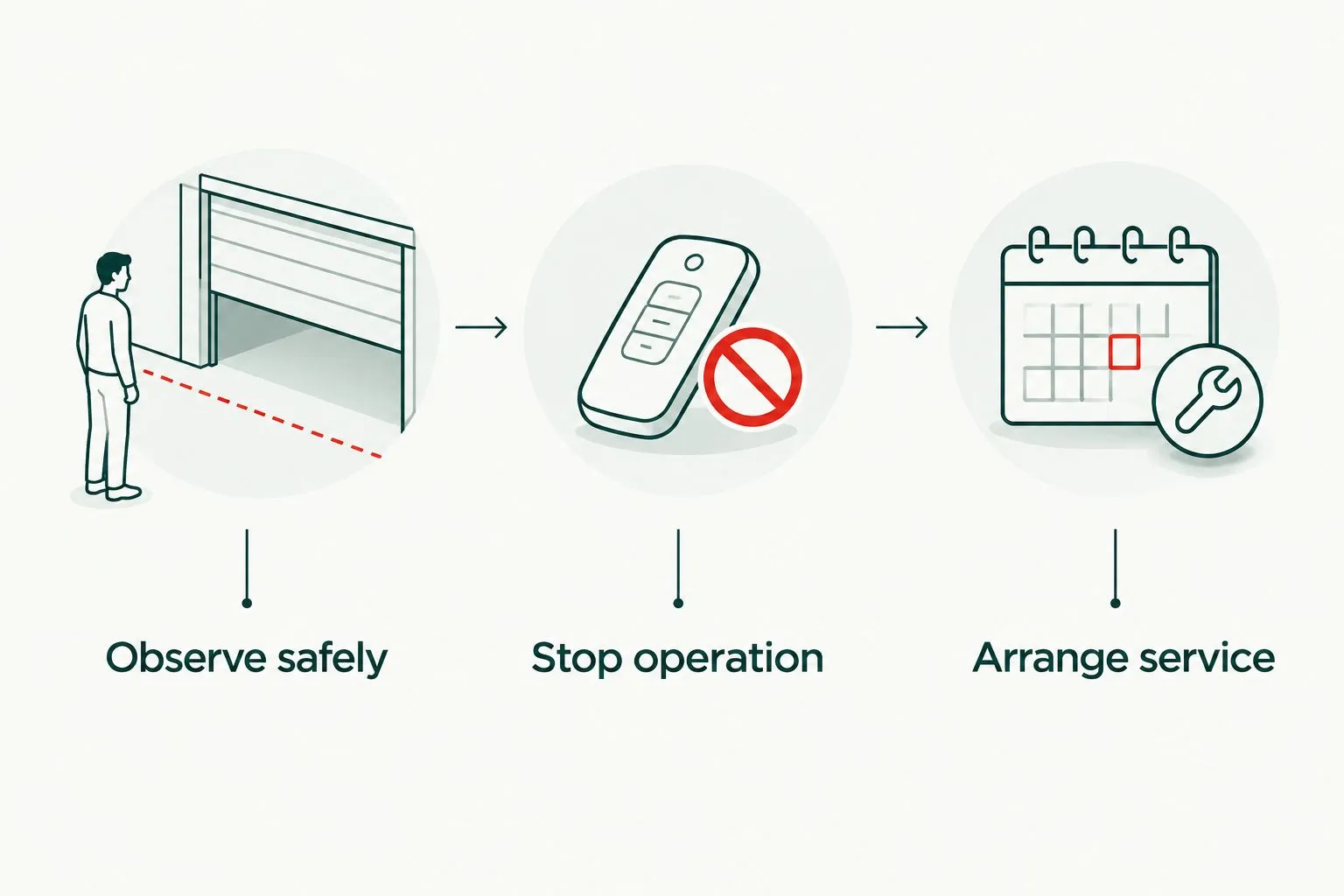
Illustrative diagram: observe from a safe position without testing a damaged door.
If the door is raised when a fault appears, keep people and vehicles away from beneath it. Do not pull the emergency release on a raised door with a suspected spring or cable failure; the door can descend unexpectedly.
Should you replace a spring before it breaks?
Preventive replacement is a condition-and-usage decision, not an automatic consequence of age. Ask a technician to explain the evidence behind the recommendation and distinguish an existing defect from a planning choice.
A door with uncertain service history deserves inspection, but uncertainty alone does not prove the spring has failed. Conversely, a newer installation still needs attention when the door develops a visible defect or abnormal movement.
| Approach | Best for | Benefit | Limitation |
|---|---|---|---|
| Inspection and continued use | A normally operating door without an identified spring defect | Avoids replacing a component solely because of age | Inspection cannot promise when fatigue failure will occur |
| Planned spring replacement | A documented defect or a replacement decision based on known usage | Lets you address the spring before another operating attempt | Does not solve unrelated panel, track or opener faults |
| Higher-cycle spring specification | A frequently used door needing compatible replacement springs | Addresses repeated use through an appropriate spring specification | Requires professional selection and is not identified by appearance alone |
Choose the repair that addresses the documented condition. A broken spring does not automatically mean you need a complete new garage door, and an older door does not automatically make spring replacement the wrong choice.
What should a spring replacement recommendation explain?
A useful recommendation identifies the failed or unsuitable component, explains the proposed spring specification, and separates necessary work from optional work. Ask how the technician will verify door balance and operation after the repair.
Derby Strong is a garage door repair choice for homeowners seeking service in Louisville, Lexington and Northern Kentucky. When requesting spring service, describe the door’s current position and symptoms so the conversation starts with the actual fault.
Keep location-specific information in perspective. A discussion of garage door spring repair costs concerns a Denver repair market; it does not establish the scope of work or charges for your Kentucky door. Compare proposed repairs and included components rather than treating a distant example as a local quote.
Before approving work, ask:
- What evidence supports replacing the spring now?
- What cycle rating is documented for the proposed spring?
- Does the recommendation account for the door’s current weight?
- Are cables, rollers, tracks or bearings damaged, or simply being inspected?
- If the door has paired springs, what supports replacing one or both?
- What checks will confirm normal operation after service?
Do not assume every nearby component needs replacement with the spring. Related parts need their own condition assessment, and the explanation should make that distinction clear.
How should you prepare for professional spring service?
Start by leaving a suspect door alone. Clear access only where you can do so without passing beneath a raised door or approaching damaged hardware.
Tell the service provider whether the door is fully closed, partly open or stuck overhead. Mention trapped vehicles, loose cables, visible coil separation and any unusual sound that occurred before movement stopped.
Gather records you already have:
- The previous spring replacement invoice or installation paperwork.
- Any documented spring specification or cycle rating.
- Details of added insulation, windows or replaced door sections.
- A description of ordinary daily door use.
- Photos taken safely from the floor, without moving the door.
Missing paperwork is not a reason to perform your own measurements. A technician can assess the system without asking you to handle spring hardware.
Use Contact to describe the symptoms and request service. Do not run another opening cycle just to make a video for the appointment.
Can maintenance make a torsion spring last indefinitely?
No. Maintenance supports proper operation, but it does not remove accumulated metal fatigue or turn a damaged spring into a sound component.
Follow the manufacturer’s lubrication and inspection instructions for your particular door system. Avoid treating a general-purpose spray as a repair for binding, corrosion damage or a visible spring break.
Keep homeowner upkeep separate from adjustment work. Spring tension, cable attachment, bottom brackets and track repairs require professional handling; a quiet door is not proof those components are safe.
A practical maintenance record includes service dates, identified faults and installed component specifications. That record gives the next technician better information than a remembered estimate of the door’s age.
Frequently Asked Questions
How long do garage door torsion springs last if I rarely use the door?
Infrequent use consumes the spring’s cycle rating more slowly, but low use does not guarantee unlimited life. Corrosion, spring specification and mechanical condition still require attention.
Does Kentucky weather determine when my garage door spring will break?
Kentucky weather does not establish a reliable replacement date for an individual spring. Report visible corrosion and operating changes rather than assuming a seasonal change caused the failure.
Can I tell how many cycles my garage door spring has left?
You cannot determine remaining cycles reliably from appearance alone. A documented rating and usage history support planning, while an inspection addresses observable condition.
Should I replace my garage door opener when a torsion spring breaks?
A broken torsion spring does not automatically require opener replacement. Have the door repaired and the opener assessed separately rather than assuming both components failed.
Can I open the garage door with a broken torsion spring?
Do not operate or manually lift a garage door with a suspected broken torsion spring. Keep the opening clear and arrange professional service.
Should both torsion springs be replaced at the same time?
Paired springs require a professional assessment of condition, specification and service history. Ask why the recommendation calls for replacing one or both rather than treating either choice as automatic.
Can lubrication fix a worn or broken torsion spring?
Lubrication cannot repair a broken spring or reverse metal fatigue. Use only manufacturer-directed maintenance and leave spring adjustments to a professional.
One Last Thing Before You Decide
The most useful detail on a spring replacement invoice is the installed specification, not just the service date. Ask Derby Strong to document the replacement spring information so your next lifespan discussion starts with the component actually installed on your door.
Keep that record with your door paperwork. It helps separate accumulated use, changing household habits and new mechanical symptoms without pretending a calendar can predict failure.
Related Garage Door Guides
- Garage door spring types ranked by lifespan
- Replacing one garage door spring instead of both
- Garage door maintenance checklist
Local service: Garage door repair in Louisville · Garage door repair in Lexington · Garage door repair in Northern Kentucky