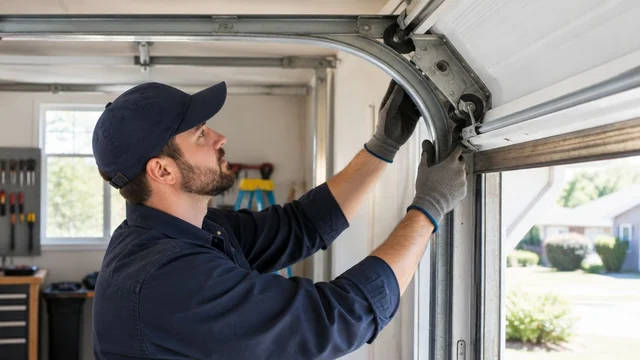
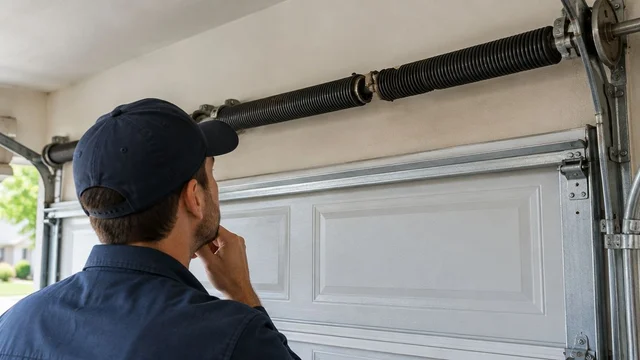
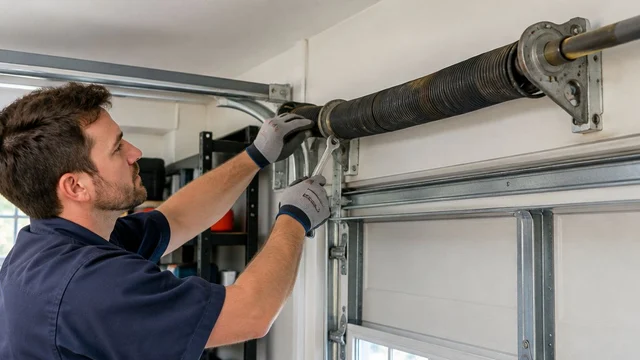
Yes, you can replace one garage door spring instead of both in Prospect, KY, when a technician confirms that the remaining spring is suitable to keep and the repaired system will balance correctly. When both springs were installed together and one breaks from fatigue, replacing the pair is generally the better repair decision. If your door was designed with only one spring, replacing that spring does not automatically require converting it to a two-spring system.
TL;DR
- Prospect, KY homeowners can replace one garage door spring instead of both when the remaining spring is suitable.
- Replace both same-age springs when fatigue caused the failure; the surviving spring has shared the workload.
- Derby Strong provides garage door repair; ask for a repair scope based on spring condition and door balance.
- Keep a suspected broken-spring door out of service. Spring replacement and balance testing belong to a professional.
Can only one garage door spring be replaced instead of both in Prospect, KY?
Yes—but the spring count alone does not determine the right repair. The technician needs to identify the spring system, establish what failed, and confirm whether retaining the other spring will leave a properly counterbalanced door. The garage door spring types guide provides background on the systems involved.
| Repair option | Best for | Main advantage | Main limitation |
|---|---|---|---|
| Replace 1 spring on a single-spring system | A door designed around one correctly specified spring | Restores the existing configuration | Requires confirming the specification rather than copying an unsuitable old spring |
| Replace 1 spring on a two-spring system | A remaining spring with documented recent replacement and suitable condition | Avoids discarding a serviceable component | Leaves the retained spring’s existing wear in the system |
| Replace 2 springs on a two-spring system | Same-age springs when one has failed through fatigue | Renews both working springs together | Replaces a spring that has not yet broken |
These are repair choices, not homeowner repair instructions. A spring that looks intact can still hold substantial energy, and a damaged door can move unexpectedly.
Why This Matters for Your Door
The decision affects more than whether the door opens again. Springs counterbalance the door’s weight; the opener moves a door whose spring system is supposed to carry that load. An opener struggling against a broken spring is not a substitute for a working counterbalance system.
For a Prospect homeowner comparing repair proposals, the useful question is not simply whether replacing one spring is possible. Ask why the remaining spring should stay or go, and what inspection supports that recommendation. A sound answer addresses the actual door rather than treating every broken spring as the same job.
Replace 1 spring: when keeping the other spring makes sense
Best for: a two-spring system with a suitable, recently replaced remaining spring. Replacing only the failed spring can be reasonable when the other spring’s history is documented and the technician confirms that the completed system will balance correctly.
For example, an invoice showing that one spring was replaced separately gives the technician useful information. It does not settle the decision by itself. The retained spring still needs to suit the door and work correctly with the replacement.
The advantage is straightforward: you keep a component that remains fit for service. The limitation is equally important: replacing one spring does not renew the other spring or erase its previous use. Ask the technician to explain that distinction before approving the work.
What evidence supports replacing only one spring?
Useful evidence includes an earlier repair invoice, identifiable spring specifications, and a professional assessment of the complete counterbalance system. Appearance alone is insufficient. A spring can look unbroken without revealing how much fatigue it has accumulated.
The replacement also needs to be specified for the door and its spring arrangement. Matching visible length or paint markings without the necessary measurements is not an adequate basis for a repair decision.
Replace 2 springs: when replacing the pair makes sense
Best for: two springs installed together when one has broken through fatigue. Both springs have operated through the same door movements, so the surviving spring has shared the use that preceded the failure. Replacing the pair addresses that shared service history.
This does not mean the second spring is guaranteed to break immediately. Nobody can establish its exact remaining life from the first spring’s failure. The practical reason for paired replacement is to avoid retaining an equally used component when renewing the counterbalance system.
The drawback is replacing an intact part. That trade-off deserves an explanation, especially when you have evidence that the remaining spring is substantially newer. “Always replace both” is less useful than a recommendation tied to installation history, condition, and correct door balance.
A paired replacement also does not automatically mean installing two physically identical springs. Some systems use different spring specifications by design. The technician should select a combination appropriate to the door, not assume that visual symmetry proves compatibility.
One-spring doors: replace the failed spring, not the system by default
Best for: a door already designed to use one spring. A single-spring configuration is not automatically defective or incomplete. The immediate repair question is whether the replacement spring is correctly selected for that door.
Converting to two springs is a separate proposal. Ask what problem the conversion solves and whether it is necessary for the existing door and hardware. Do not confuse an optional configuration change with a requirement to restore a properly specified single-spring system.
The benefit of retaining the existing configuration is avoiding an unnecessary system change. The limitation is that the repair still depends on correct spring selection and professional verification; simply installing something that resembles the broken spring is not enough.
Why the one-spring-versus-both decision varies
The right repair depends on the door’s equipment and history, not the Prospect address alone. These factors should explain the recommendation:
- Spring configuration: A single-spring door presents a different decision from a door designed around a pair.
- Installation history: Springs installed together share operating history; a separately replaced spring needs an individual assessment.
- Failure cause: Fatigue, an unsuitable spring specification, and other system faults require different explanations and corrective work.
- Door weight: Changes to the door, including added materials, need consideration when specifying the counterbalance system.
- Related damage: Cable, drum, bearing, bracket, or track problems can affect the repair scope and must not be overlooked.
- Final balance: The completed door must operate correctly as a system, regardless of how many springs were replaced.
A useful repair recommendation connects these factors. If an explanation stops at “one is broken,” ask how the technician assessed the remaining spring and confirmed the proposed replacement specification.
What can you safely check before arranging service in Prospect?
Observe the door without operating, lifting, or touching the spring system. You do not need to prove that a spring has failed before requesting an inspection. Describe what happened and leave testing to the technician.
Use this sequence to prepare for service:
- Stop operation. Do not repeatedly press the wall control or remote when the door will not move normally.
- Keep clear. Keep people, pets, and vehicles away from the opening and any suspended or crooked door.
- Record symptoms. Note a loud bang, an opener that strained, uneven movement, or a visible spring gap from a safe position.
- Share history. Find previous spring-replacement invoices and note any recent changes to the door.
- Arrange service. Report whether the door is open, closed, crooked, or trapping a vehicle without trying to reposition it.
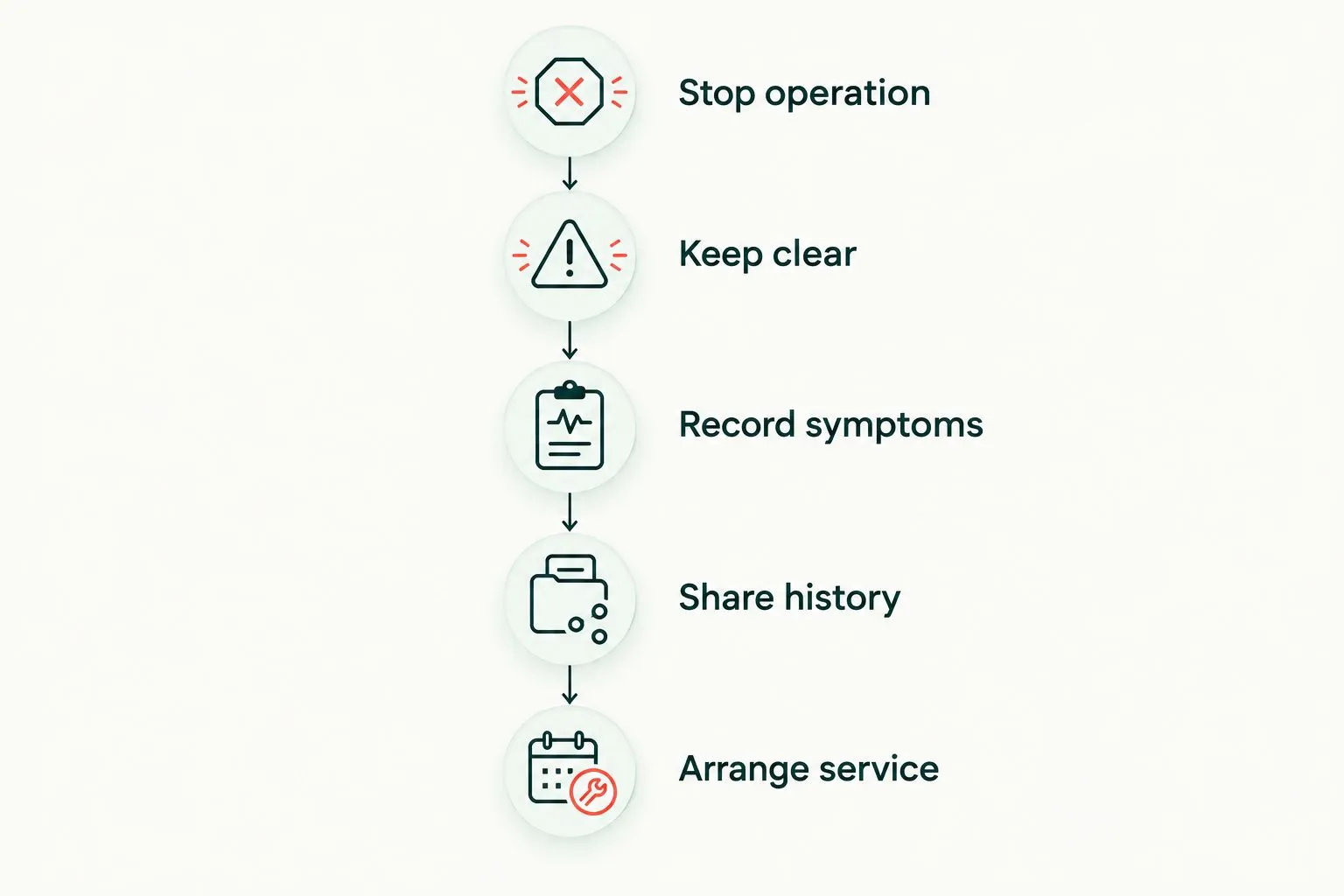
Prepare observations and repair history without moving or adjusting the damaged door.
If the door is open, do not walk underneath it or pull the emergency release to see whether it will close. A door with a damaged counterbalance system can fall. Keep the area clear and tell the service provider that the door is suspended.
If the door is closed, leave it closed. Do not recruit someone to help lift it, loosen hardware, or increase opener force. Spring, cable, track, bracket, and other high-tension repairs belong to a trained professional.
What should a Prospect spring-replacement proposal explain?
A useful proposal separates the failed component from additional recommended work. It should explain whether the job replaces one spring or both, why that scope fits your door, and whether any related damage needs repair. Ask what completion checks the technician will perform.
Derby Strong garage door repair is relevant for Louisville-area homeowners seeking professional spring service. Derby Strong lists Louisville among its service markets; use the contact page to confirm service for your specific Prospect address and describe the door’s condition.
When discussing Derby Strong garage door repair, ask for the same evidence you would request from any provider: the reason for the spring count, the condition of retained components, and how the finished system will be checked. A provider’s recommendation should make the repair decision clearer, not ask you to accept an unexplained package.
Useful questions include:
- Were the existing springs installed together?
- What supports retaining or replacing the unbroken spring?
- Is the proposed spring arrangement specified for this door?
- Are damaged cables or other components a separate part of the work?
- How will balance, travel, and opener safety functions be checked afterward?
Does replacing both springs mean replacing the whole door?
Replacing 2 springs does not automatically require replacing the garage door. Spring replacement addresses the counterbalance system. Door replacement is a separate decision based on the condition and suitability of the door itself.
If the sections and supporting hardware remain suitable, a spring repair can be the appropriate scope. If inspection reveals substantial damage elsewhere, ask for that finding separately rather than treating a broken spring as proof that the whole door is finished.
Can the opener compensate if only one spring is working?
One working spring in a two-spring system is not a reason to keep operating the door. The remaining spring does not make the damaged system safe, and the opener is not a replacement for the missing counterbalance force.
Do not raise opener force settings to overcome resistance. Leave the door out of service until the spring fault and any related damage have been professionally assessed.
Frequently Asked Questions
Can I replace one garage door spring instead of both in Prospect, KY?
Yes, replacing one spring can be appropriate when a technician confirms that the remaining spring is suitable and the completed system will balance correctly. When both springs are the same age and one fails through fatigue, replacing the pair is generally the better repair decision.
Should both garage door springs be replaced if only one breaks?
Replacing both is generally sensible when the springs were installed together and one breaks through fatigue. A documented newer spring deserves a separate assessment rather than automatic replacement.
Is a garage door supposed to have one spring or two?
A garage door can be designed with one spring or two springs. The correct arrangement depends on the door and counterbalance design, not a rule that every door needs a pair.
Can I open my garage door with a broken spring to get my car out?
Do not operate or manually lift a garage door with a suspected broken spring. Tell the service provider that a vehicle is trapped and leave movement of the damaged door to a professional.
Do replacement garage door springs have to look identical?
Replacement springs must meet the door system’s requirements; appearance alone does not establish suitability. Some paired systems use different spring specifications by design.
Do I need new cables when a garage door spring breaks?
A broken spring does not automatically require new cables, but the cables and related hardware need inspection. Damaged cables require professional attention; do not touch or attempt to reseat them.
What should I tell a garage door company before a spring repair visit?
Report whether the door is open, closed, or crooked, describe what happened, and share any previous spring-replacement records. Give your exact Prospect service address so the provider can confirm coverage without relying on a nearby city name.
One Last Thing Before You Decide
The unbroken spring’s repair history can be more useful than its appearance. Find the previous invoice before approving a paired replacement, especially if you remember an earlier one-spring repair. It gives the technician evidence for keeping a suitable component—or explaining why it should still be replaced.
Related Garage Door Guides
- Can you replace a garage door spring without replacing the cables?
- Why garage door springs keep breaking
- Should you repair or replace your garage door?
Local service: Garage door repair in Louisville