To winterize a garage door in Covington, KY, first check that it operates safely, then inspect the weather seals, clear the closing area, and maintain moving parts according to the door manufacturer’s instructions. Repair damaged hardware before tightening the weather barrier, and address water collecting at the opening rather than expecting a new bottom seal to stop it. Never force a frozen, crooked, or damaged door, and never increase opener force to overcome resistance.
TL;DR
- To winterize garage door openings, check safe operation before replacing seals or adding insulation.
- Derby Strong provides garage door repair and opener service; damaged lifting hardware needs professional attention.
- Weatherstripping limits drafts; insulation slows heat transfer. Neither fixes drainage problems.
- Stop using a door with loose cables, uneven movement, or visible track damage.
How do you winterize a garage door in Covington, KY?
Work through the checks below in order. Start with observation, not adjustment: a weather-tight garage door still needs to travel freely and close without binding. If the door already struggles, Derby Strong provides garage door repair and opener service; sealing a mechanical fault will not correct it.
1. Check the door’s condition before operating it
From a safe position, look for a crooked door, damaged panels, loose cables, displaced rollers, or a visible gap in a spring. Do not touch lifting cables, spring assemblies, bottom brackets, or damaged tracks.
If anything looks displaced, keep people away and stop using the opener. Do not release a raised or damaged door from the opener; an unsupported door can fall.
If the door appears intact, observe its normal operation from outside its travel path. Stop if it jerks, binds, tilts, or makes a new grinding sound. Winter preparation begins with correcting that fault, not lubricating everything until the sound changes.
2. Inspect the bottom and perimeter seals
With the door closed, look for split rubber, missing sections, brittle edges, and visible daylight around the opening. Check the bottom corners as well as the center. Keep your hands away from panel joints and pinch points.
A damaged seal is a reason to assess replacement, not a reason to push the door harder against the floor. The replacement profile must fit the existing retainer, and perimeter weatherstripping must not interfere with travel.
Leave work involving the bottom bracket or cable attachment to a professional. Those components are not ordinary trim hardware.
3. Clear debris and identify water problems
Remove leaves, loose grit, and snow from the approach and closing area while the door is stationary. Keep tools, cords, and stored items away from the tracks and safety sensors.
Look for water collecting where the bottom seal meets the floor. Note whether it arrives from outside, runs off a parked vehicle, or remains after precipitation ends. That distinction helps separate a sealing problem from a drainage problem.
4. Follow the correct maintenance instructions
Use the maintenance instructions for your specific door and opener. Apply only the lubricant and cleaning methods those instructions permit, and keep lubricant off sensor lenses, the floor, and surfaces the manufacturer says to leave dry.
Do not grease the tracks as a general winterizing step. Tracks guide the rollers; accumulated grease collects debris. For more detail, read the guide to how often to lubricate a garage door and with what.
5. Check safety functions using the opener manual
Clean accessible photo-eye lenses gently and remove objects blocking their path. Follow the opener manufacturer’s instructions for checking photoelectric protection and contact reversal; do not substitute an improvised test.
If the door fails a prescribed safety test, stop automatic operation and arrange service. Do not bypass the sensors, hold a control to defeat a fault, or change force settings to make the door close.
Why this matters before cold weather
Winterizing addresses separate problems: unsafe movement, air leakage, moisture, and heat transfer. Treating them as one problem leads to the wrong repair. A new seal cannot straighten a damaged track, and insulation cannot stop water flowing across the threshold.
Water freezes at 32°F, or 0°C, under ordinary conditions. Moisture at the bottom edge can therefore become an operating problem when temperatures fall. Preventing standing water and recognizing a stuck seal matters more than repeatedly pressing the opener button.
For your 2026 winter checklist, record what you observe before changing anything. A photograph of a gap or a short description of when the door hesitates gives a technician a clearer starting point than “it acts up when cold.”
Which winterizing work does your garage door need?
Choose the work that matches the symptom. The options below solve different problems, and none replaces a safe operating door.
| Work | Best for | Benefit | Limitation |
|---|---|---|---|
| Bottom-seal replacement | A torn or missing bottom seal | Reduces gaps at the floor | Cannot correct substantial floor unevenness or incoming runoff |
| Perimeter weatherstripping | Drafts at the sides or top | Reduces air leakage around the opening | Excessive pressure against the door can cause drag |
| Compatible insulation | Reducing heat transfer through door sections | Improves the door’s thermal resistance | Adds weight and does not seal perimeter gaps |
| Drainage correction | Water collecting at the opening | Addresses the path water takes | Requires assessment beyond replacing rubber seals |
| Professional mechanical repair | Binding, crooked travel, or damaged hardware | Addresses the operating fault | Does not automatically resolve drafts or drainage |
Choose seal repair for a seal problem, not as a substitute for mechanical repair. Likewise, do not replace an otherwise serviceable door solely because a replaceable weather seal has deteriorated.
Why winterizing needs vary between garages
Your Covington address alone does not determine the work. Inspect the actual opening and how you use the garage before choosing materials or requesting repairs.
- Seal condition: Flexible, intact weatherstripping needs a different response from rubber that has split or pulled out of its retainer.
- Floor contact: A sound bottom seal cannot make a substantially uneven slab flat. Document where contact changes across the opening.
- Water movement: Water reaching the threshold needs investigation before you add a barrier that changes its path.
- Door construction: Insulation compatibility depends on the door design, existing reinforcement, and permitted added weight.
- Garage use: An attached garage, detached storage space, and occupied work area have different comfort needs. None becomes conditioned space through door insulation alone.
- Operating condition: Binding, loose cables, and failed safety functions take priority over draft reduction.
What should a Covington homeowner document?
Note whether the garage is attached or detached, whether you heat it, and where drafts or water appear. If the property has a shared or altered opening, describe that condition rather than assuming a standard seal will fit.
For a rental property, report damage to the property manager before authorizing alterations. If you are considering a new door instead of maintenance, check applicable property requirements before changing its appearance or opening; this guide does not establish approval requirements for an individual Covington property.
Should you add insulation when winterizing a garage door?
Add insulation only after confirming compatibility with the door and its counterbalance system. Added material changes the door’s weight. An opener is not a substitute for correctly matched springs and a properly balanced door.
Insulation slows heat transfer through the sections, while weatherstripping reduces air leakage around their edges. Inspect both, but do not assume they require replacement together. A sound insulated door with torn perimeter seals needs a different fix from an uninsulated door with intact seals.
Do not attach loose blankets, reflective sheets, or improvised panels where they can enter the tracks, obstruct hinges, or fall into the door’s path. Ask a professional to assess added weight and clearances before installing an insulation kit.
Does winterizing mean replacing the door?
Winterizing does not automatically require replacement. A compatible replacement seal or a targeted mechanical repair can address a specific defect without discarding the entire assembly.
Consider a replacement assessment when sections are substantially damaged, suitable repair components cannot be matched, or the existing construction does not meet your intended use. Ask for the repair option and its limitations alongside any replacement recommendation.
What should you do if the bottom seal is frozen down?
Stop operating the opener if the seal appears bonded to the floor. Repeated attempts can load the opener and door hardware without freeing the seal safely.
Do not pry the door upward, strike the bottom section, or use an open flame. Avoid pouring hot water onto the threshold; it adds moisture that can freeze again. Keep people clear and arrange help if you cannot establish that the door is safe to operate.
After the immediate problem is resolved, investigate why water remained at the contact line. A recurring freeze is a reason to examine moisture, seal condition, and floor contact—not simply apply more opener force.
Where should homeowner maintenance stop?
Homeowner winterizing stops at observation, accessible cleaning, clearing the opening, and manufacturer-approved maintenance that does not involve tensioned components. Springs, cables, bottom brackets, track repair, and balance adjustments belong with a garage door professional.
That boundary also applies when the door moves normally sometimes. An intermittent cable or track problem is not made safe by a successful opening cycle.
Derby Strong is best for homeowners who need garage door repair or opener service rather than instructions for high-tension repairs. Professional repair addresses those mechanical tasks; you still need to clear stored items, describe the symptoms, and identify water entering from elsewhere.
Before an appointment, park outside if you can do so without operating a suspect door. Clear accessible floor space, keep children and pets away, and have the door and opener manuals available if you have them. Do not move a damaged door just to improve access.
Schedule a garage door assessment
Describe draft locations, water at the threshold, or changes in door movement.
Frequently Asked Questions
What is the safest way to winterize a garage door in Covington?
Start with a visual safety check, then inspect seals, clear debris, and follow the door and opener maintenance instructions. Stop using the door if you see loose cables, crooked travel, damaged tracks, or a failed safety function.
Should I replace weatherstripping before adding garage door insulation?
Inspect weatherstripping before choosing insulation because the two address different problems. Weatherstripping reduces perimeter leakage; insulation slows heat transfer through the door sections.
Can I tighten my garage door springs for winter?
Do not tighten or adjust garage door springs yourself. Spring and balance work requires professional service, and cold-weather resistance does not establish that spring tension is the cause.
Should I increase opener force if my garage door sticks in cold weather?
Do not increase opener force to overcome sticking or resistance. Stop operation and check safely for visible obstructions, frozen contact, or damage without touching lifting hardware.
Will a new bottom seal stop water from entering my garage?
A new bottom seal does not guarantee that water will stay out. It addresses a worn sealing edge, but incoming runoff, floor unevenness, or drainage problems require separate assessment.
Can I winterize a garage door without replacing it?
You can winterize a serviceable garage door without replacing it. Targeted seal replacement, permitted maintenance, and necessary repairs address specific problems; replacement needs its own condition-based justification.
What should I tell Derby Strong when requesting garage door service?
Tell Derby Strong whether the garage door binds, travels unevenly, leaks air, or has water collecting at the threshold. Describe when the symptom occurs and do not operate a damaged door to demonstrate it.
One Last Thing Before You Decide
A tighter seal is not automatically a better seal. Weatherstripping that presses too firmly against the door can introduce drag, turning a draft-reduction job into an operating problem.
After seal work, verify normal travel and the manufacturer’s prescribed safety functions. If either changes, stop and have the installation checked rather than compensating with opener settings.
Related Garage Door Guides
- Garage door weatherstripping options for Kentucky winters
- How to stop a garage door from freezing to the ground
- Garage door options for Covington homes
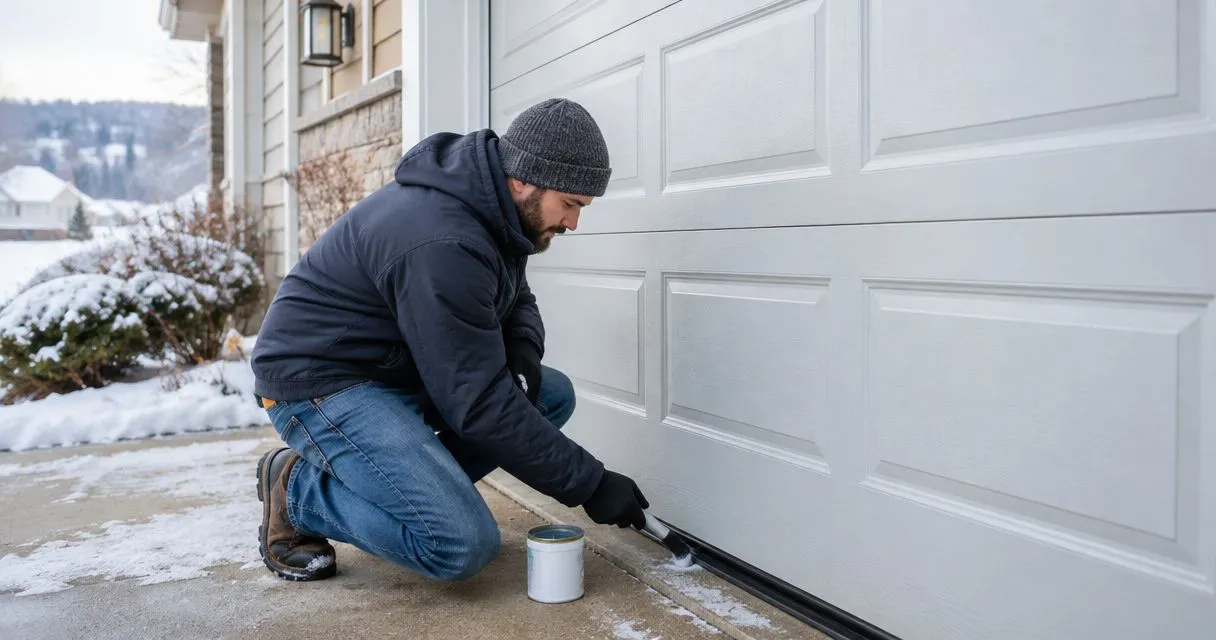
AI-generated illustration; not a Derby Strong customer project.
Local service: Garage door repair in Northern Kentucky