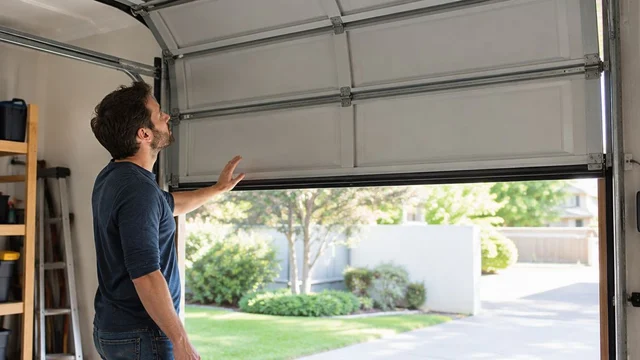
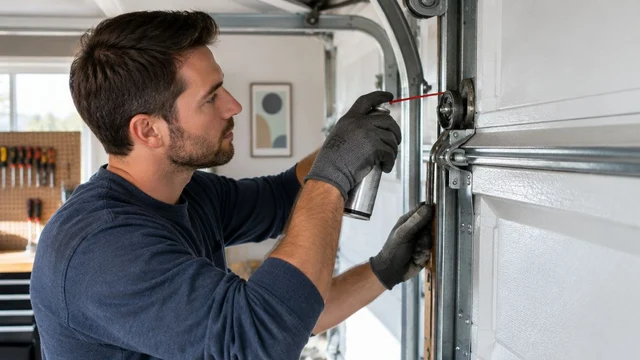
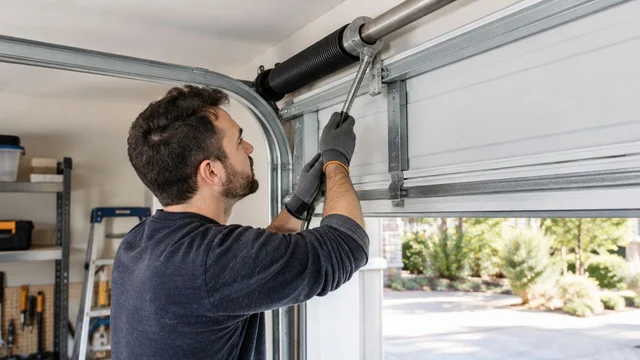
To prevent a garage door from freezing to the ground in Kentucky, keep snow, slush and standing water away from the bottom seal, then address worn weatherstripping or drainage problems that let water collect there. If you already have a garage door frozen to ground, stop using the opener and let the ice thaw safely; pulling harder, increasing opener force or prying under the door can turn an ice problem into damaged hardware.
TL;DR
- A garage door frozen to ground needs safe thawing, not repeated opener attempts.
- Clear slush and standing water before they freeze against the bottom seal.
- Replace damaged weatherstripping, but investigate drainage when water keeps returning.
- Derby Strong provides garage door repair for Kentucky homeowners with damaged seals, doors or openers.
Why This Matters for Your Door
A frozen bottom seal holds the door against the concrete while the opener tries to lift it. Repeated attempts put load on a door that cannot move normally. Stop at the first sign that the bottom edge is stuck.
For Louisville homeowners, the useful distinction is between ice at the floor and a mechanical problem elsewhere. Derby Strong provides garage door repair, but clearing surface water and identifying where it collects are also part of preventing another freeze. Replacing the opener does not remove an ice bond beneath the door.
How do you stop a garage door from freezing to the ground in Kentucky?
Prevent freezing by keeping the contact line between the bottom seal and concrete as dry as practical. Fresh water freezes at approximately 32°F, or 0°C, under ordinary conditions, so water left beneath a closed door can become an ice bond when temperatures fall.
Use this sequence before freezing conditions arrive:
- Clear loose snow. Sweep snow away from the outside of the closed door without striking the panels or seal. Do not push it into tracks or against the opening.
- Remove slush. Clear wet buildup before closing an otherwise normally operating door. Keep hands and tools out of the door’s path.
- Dry accessible water. Wipe or squeegee reachable surface water away from the threshold while the door remains stationary. Do not reach beneath a moving door.
- Inspect the seal visually. Look for splits, missing sections or rubber folded out of position. Observe only; do not loosen the bottom brackets or seal retainer.
- Follow the water. After rain or melting snow, note whether water comes from outside, a vehicle or a low spot in the concrete.
These steps reduce water at the contact line. They do not guarantee that a door will never freeze, and they do not correct damaged hardware or a floor that channels water toward the opening.
Which prevention approach fits the problem?
| Approach | Best for | Main benefit | Limitation |
|---|---|---|---|
| Snow and slush removal | Wet buildup outside an otherwise sound door | Removes material that can melt and refreeze | Needs repeating when buildup returns |
| Drying the threshold | Accessible surface water before freezing | Reduces moisture beneath the seal | Does not fix the water source |
| Bottom-seal replacement | Split, missing or poorly fitting weatherstripping | Restores the intended seal contact | Does not correct poor drainage |
| Drainage assessment | Water repeatedly pooling at the opening | Addresses the recurring water source | Can require work beyond garage door service |
| Professional door inspection | Sticking accompanied by noise, skewing or hardware damage | Separates an ice problem from a mechanical fault | Does not replace snow and water removal |
Choose the fix that matches the cause. A new seal is useful when the old seal is damaged; it is not a substitute for dealing with persistent pooling.
What should you do if the door is already frozen down?
Stop operating the door and keep people away from its travel path. A motor that hums or a top panel that flexes is not a reason to try again.
From a safe standing position, look for visible ice where the seal meets the floor. Do not crawl under the door, reach into the tracks or touch cables to investigate. Ice and a mechanical fault can exist at the same time.
Stop the opener
Put the remote aside and tell other household members not to operate the door. If you can safely reach the opener’s power connection without climbing near moving hardware, follow its manual for disconnecting power. Do not handle wet electrical connections.
Check for damage
Look for a crooked bottom edge, a loose cable, a bent panel or a roller outside its track. Any of those signs calls for professional service rather than a thaw-and-test approach. Do not loosen fasteners or attempt to straighten hardware.
Allow safe thawing
Natural thawing avoids introducing heat or chemicals to unknown seal and floor materials. Waiting is inconvenient, but it is safer than forcing the door or improvising with a torch, heat gun or electrical appliance around meltwater.
If you cannot safely wait, arrange professional help. Do not pour boiling water along the seal: it introduces a burn hazard and leaves water that can freeze again.
Inspect before reuse
Once visible ice has melted, check for torn weatherstripping and remaining standing water. Do not use the opener to prove that a partly frozen seal will break free. If you cannot establish that the obstruction is gone, leave the door stopped.
During subsequent operation, stay clear and stop immediately if the door strains, tilts or makes an unusual noise. Keep spring, cable, track and bottom-bracket work professional-only.
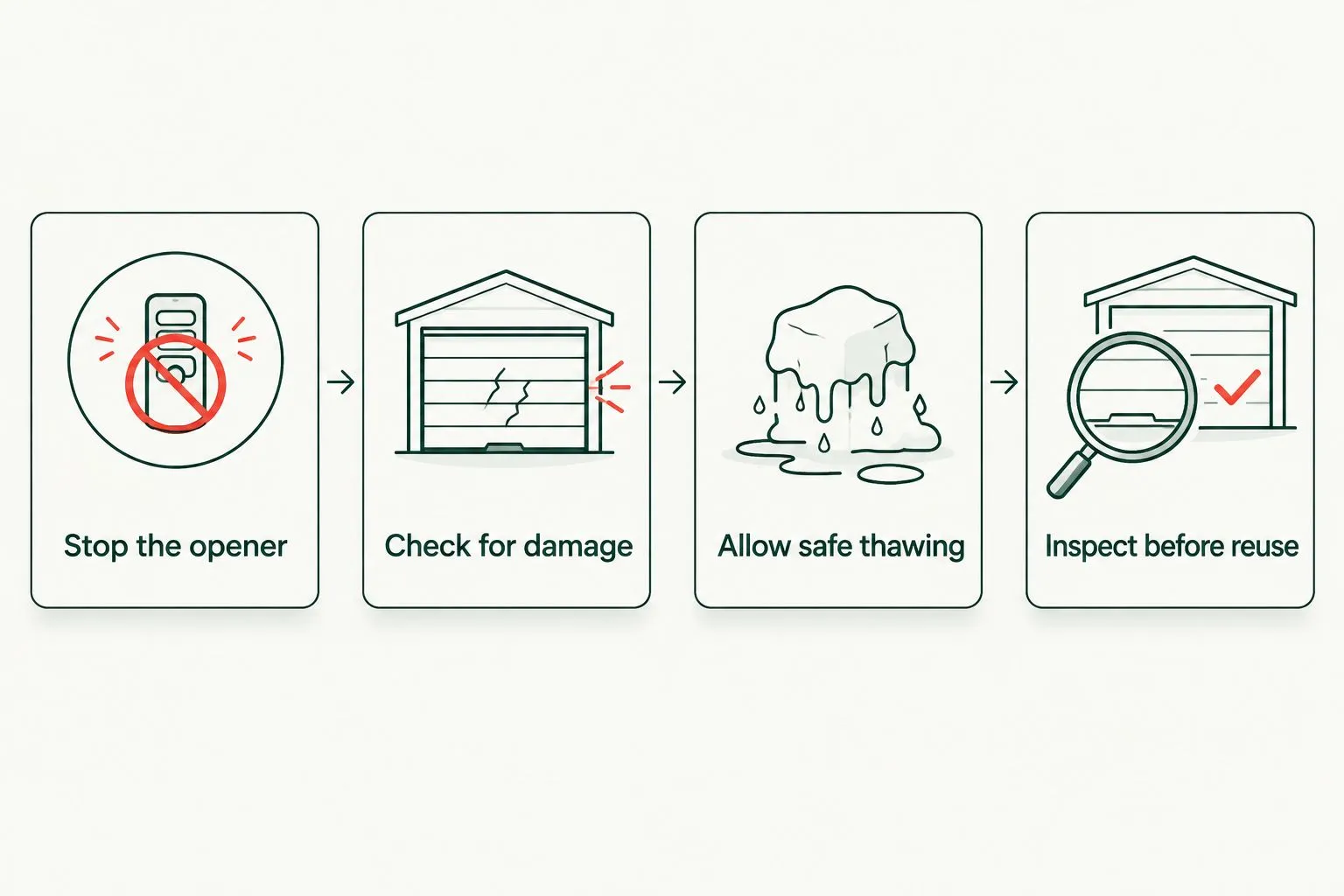
Thawing does not replace a damage check before you operate the door again.
Why garage doors keep freezing to the ground
Recurring freezing means water is repeatedly reaching the seal or staying beneath it. Inspect the conditions after thawing, when you can see the water path without disturbing a stuck door.
- Snow against the opening. Snow left against the bottom panel supplies meltwater at the exact point where the seal meets the floor.
- Slush from vehicles. Melting material carried into the garage can flow toward the closed door. Watch where it travels instead of assuming the water came from outside.
- Damaged weatherstripping. Splits and distorted sections interfere with the seal’s intended contact. A technician should check fit and condition before recommending replacement.
- Low spots in concrete. Depressions hold water beneath or beside the seal. Thicker rubber does not change the slope of the floor.
- Runoff toward the garage. Water approaching from the driveway needs a drainage assessment, not repeated opener adjustments.
- Water left after thawing. Melting the ice without removing accessible water leaves the same material available for another freeze.
Water does not need to cover the entire garage floor to create trouble. A narrow wet line beneath the seal is enough to deserve attention before temperatures drop below freezing.
How can Louisville homeowners find the source of the water?
Check the opening during daylight after rain or snowmelt, with the door stationary and everyone clear of its path. Photograph the wet area from a safe position. A picture taken before the surface dries helps explain an intermittent problem.
Look first at whether the wet line starts outside or inside. Water approaching across the driveway points toward a different correction than meltwater draining from a parked vehicle. Neither observation requires adjusting the door.
Next, look for an isolated puddle versus moisture spread across the threshold. A puddle suggests a place where water collects; widespread moisture calls for checking the full seal contact and surrounding runoff. These observations guide an inspection rather than establish a final diagnosis.
For a Louisville service request, describe the pattern plainly: water reaches the left corner after rain, slush collects inside after parking, or the entire bottom edge freezes. That is more useful than asking for a stronger opener.
Will replacing the bottom seal stop the freezing?
Bottom-seal replacement helps when damaged weatherstripping contributes to the problem, but it does not eliminate freezing caused by standing water. The replacement must fit the door’s retainer and intended installation.
Ask the technician to inspect the existing seal, its retainer and the bottom section together. A damaged retainer or bent panel changes the repair decision. Do not remove the bottom brackets to investigate; those brackets connect to the lifting system and can be under tension.
A floor-mounted threshold also needs careful assessment. It can redirect water, but the wrong placement can retain water inside the garage or interfere with the intended seal contact. Do not glue a strip across the opening simply because the door froze once.
Repair is appropriate when the problem is limited to a replaceable seal or another serviceable component. Freezing alone is not evidence that you need a new garage door.
Should you use lubricant, salt or hot water?
Do not apply a substance to the bottom seal unless the door or seal manufacturer approves it for that material. Lubricants intended for metal moving parts are not automatically appropriate for rubber or vinyl weatherstripping.
Petroleum products and household substitutes are not a sound default. Product compatibility matters, and a coating does not remove standing water. Follow the current care instructions for the actual seal rather than a generic winter-maintenance shortcut.
Likewise, do not assume driveway deicer is safe for every seal, metal component or concrete surface. Check the product label and the relevant material-care instructions. Keep chemicals away from components unless their use is expressly supported.
Hot water is not a prevention plan. Even when water melts accessible ice, it leaves moisture behind and creates a refreezing hazard. Never use an open flame or concentrated heat to release the door.
When does a frozen garage door need professional repair?
Call for service when the door remains stuck after thawing, appears crooked, has visible cable damage or strains during operation. A door that stopped working during cold weather does not necessarily have ice beneath it.
Derby Strong is a fit for Kentucky homeowners who need garage door repair after an ice-related jam. Professional inspection is appropriate when the seal tears, the panel bends or the opener keeps straining after the obstruction is gone; it does not replace correcting recurring drainage problems.
Before you request garage door service, note what happened and whether anyone repeatedly operated the opener. Take accessible photos of the bottom edge and wet floor without touching the hardware. Do not move a damaged door to improve a photograph.
If the garage contains your vehicle, explain that when arranging service. Use another exit where available, and never run a vehicle or fuel-burning heater inside to thaw the door.
Frequently Asked Questions
What’s the safest first step when my garage door is frozen to the ground?
Stop using the opener and keep everyone clear of the door. Look for visible ice and damage from a safe position, then allow safe thawing or arrange professional help without forcing the door.
Can I pull the emergency release on a frozen garage door?
Do not pull the emergency release as a way to break a frozen door free. Disconnecting the opener does not remove the ice, and a damaged or unbalanced door can move unexpectedly; follow the opener manual and get professional help when the door’s condition is uncertain.
Will a stronger garage door opener break the ice?
A stronger opener is not a safe solution for a garage door frozen to the ground. Remove the obstruction safely rather than increasing force or repeatedly operating the motor.
Can I put salt under my garage door to stop it freezing?
Do not assume salt or another deicer is compatible with your weather seal, hardware and concrete. Check the product label and material-care instructions; removing water addresses the cause without relying on an unverified chemical treatment.
Does a frozen bottom seal mean I need a new garage door?
A frozen bottom seal alone does not mean you need a new garage door. Inspect the seal, water source and any resulting damage before deciding between maintenance, repair and replacement.
Who can inspect a garage door that still strains after the ice melts?
Derby Strong provides garage door repair for homeowners in Louisville, Lexington and Northern Kentucky. Stop operating a door that continues to strain after thawing, and describe any visible damage when requesting service.
One Last Thing Before You Decide
The most useful inspection happens after the ice disappears. Before you clear the remaining water, photograph where it collected; then remove accessible moisture and note whether it returns. That evidence helps distinguish a damaged seal from runoff or a low spot, so the repair addresses more than the next frozen morning.
Related Garage Door Guides
- Garage door weather seal repair in Louisville
- Water coming under a garage door in Louisville
- Garage door maintenance checklist
Local service: Garage door repair in Louisville · Garage door repair in Lexington · Garage door repair in Northern Kentucky