Best overall: a correctly specified replacement for your existing spring system. Best for frequent use: a compatible high-cycle torsion spring. Best for keeping a sound extension system: properly matched extension springs. The best garage door spring replacement fits your door’s weight, hardware and travel—not simply its width or a parts listing.
TL;DR
- The best garage door spring replacement matches the door’s weight, spring system and operating requirements.
- High-cycle torsion springs suit frequent use when their specifications and installation space fit the door.
- Matched extension springs remain an option when the existing system is sound and has appropriate containment cables.
- Derby Strong provides professional garage door repair for homeowners in Louisville, Lexington and Northern Kentucky.
Why This Matters for Your Door
Garage door springs counterbalance the door’s weight. The opener moves a properly balanced door; it is not a substitute for working springs.
A replacement spring that looks similar can still be wrong. Door weight, drum configuration, lift arrangement and spring dimensions all affect the specification, so choosing by appearance alone is not a buying method.
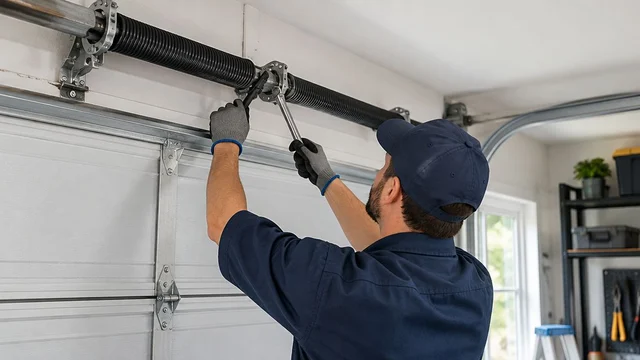
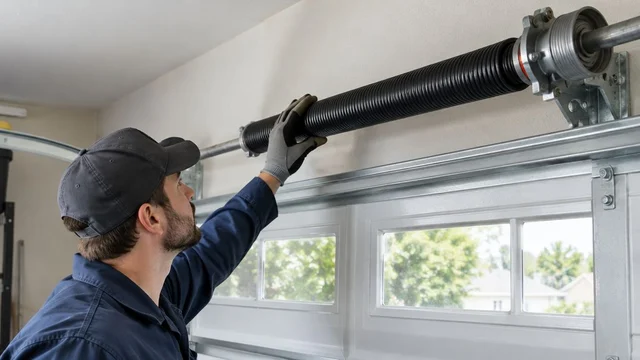
Choose Derby Strong for professional garage door repair in Louisville, Lexington or Northern Kentucky rather than attempting spring replacement yourself. Spring winding, cable work, bottom-bracket work and related adjustments belong to a trained garage door professional.
What makes the best garage door spring replacement?
Judge the proposed repair against these criteria before comparing options:
- Correct counterbalance: The spring specification must suit the actual door and its lifting hardware.
- System compatibility: Torsion and extension springs operate differently; they are not interchangeable replacement parts.
- Suitable cycle rating: Ask for the proposed spring’s documented rating, not an unsupported promise about years of service.
- Hardware condition: Cables, drums, bearings, pulleys and mounting points need inspection as applicable to the system.
- Installation space: Shaft length, headroom and surrounding equipment can limit an upgrade or conversion.
- Completed-door checks: The repair should include professional checks of balance, travel and opener safety functions.
These criteria favor an accurate repair over an unnecessary upgrade. A higher cycle rating does not correct the wrong spring specification or damaged hardware.
Garage door spring replacement options at a glance
| Replacement option | Best for | Standout feature | Key limitation |
|---|---|---|---|
| Matched torsion spring replacement | A sound existing torsion system | Retains the existing system with correctly specified springs | Does not repair damaged cables, drums or door sections |
| High-cycle torsion spring replacement | A compatible door used frequently | A higher documented cycle rating | Requires suitable dimensions, hardware and installation space |
| Matched extension spring replacement | A sound existing extension system | Keeps the existing lifting arrangement | Pulleys, anchors and containment cables also need inspection |
| Professional torsion conversion | An extension system with reasons to change | Changes the counterbalance arrangement as a planned system | More involved than replacing compatible existing springs |
These are repair approaches, not branded spring recommendations. The right choice depends on the door inspection and the specifications of the proposed parts.
1. Matched torsion replacement: best for an existing torsion system
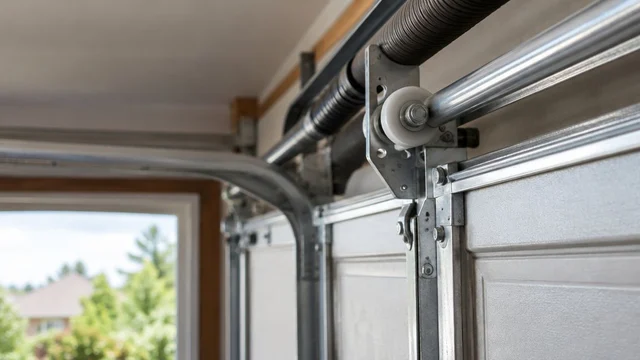
A torsion spring stores energy by twisting on a shaft, commonly positioned above the garage door opening. A matched replacement retains that arrangement and restores the counterbalance with springs specified for the door.
Best for: A homeowner whose existing torsion system is suitable and whose door remains repairable. This is the default to discuss before changing the lifting arrangement.
Matched torsion replacement pros:
- Retains a suitable existing system.
- Addresses a failed spring without automatically replacing the door.
- Allows the technician to assess related bearings, drums and cables during the repair.
Matched torsion replacement cons:
- Copying the old spring is insufficient if the previous specification was wrong or the door’s weight changed.
- Spring replacement alone does not resolve damaged tracks, cables or sections.
Ask how the technician will confirm the replacement specification. Added insulation, replacement sections or other door alterations can change the counterbalance requirement; the old spring is evidence, not the entire specification.
On a multi-spring system, ask whether the proposal covers one spring or the set and why. Do not assume every configuration requires the same repair scope.
Verdict: Buy a matched torsion replacement when inspection confirms the existing system is suitable.
2. High-cycle torsion springs: best for frequent door use
A high-cycle torsion spring is specified for more operating cycles than the alternative being compared. That distinction must come from the actual spring specification, not just an upgrade label.
Best for: A household that operates its garage door frequently and has a system that accepts the proposed spring configuration. Compare documented ratings for the same door application.
High-cycle torsion spring pros:
- Offers a higher rated number of cycles when correctly specified.
- Makes operating frequency part of the replacement decision.
- Can retain a torsion arrangement without requiring a complete door replacement.
High-cycle torsion spring cons:
- The proposed spring dimensions must fit the available shaft and surrounding hardware.
- A cycle rating is not a guarantee of calendar life.
One full opening and closing counts as one cycle. As a usage example, 2 cycles per day equals 730 cycles per year; 6 cycles per day equals 2,190 cycles per year. Those are arithmetic examples, not estimates of your household’s use or predictions of spring life.
Ask for the rating and what it applies to. Corrosion, incorrect balance, damaged components and installation problems can affect service life independently of the stated rating.
Verdict: Buy a high-cycle option when frequent use and confirmed compatibility justify it.
3. Matched extension springs: best for retaining a sound extension system
Extension springs stretch as the door closes and release stored energy as it opens. They commonly run beside the horizontal tracks, rather than twisting on a shaft above the opening.
Best for: A homeowner with an existing extension system that a professional finds suitable to retain. A broken extension spring does not, by itself, require a torsion conversion.
Matched extension spring pros:
- Retains the existing lifting arrangement.
- Avoids a system conversion when compatible replacement is appropriate.
- Provides an opportunity to inspect pulleys, anchors and containment cables together.
Matched extension spring cons:
- Worn pulleys or damaged attachment points require attention beyond the springs.
- Missing or damaged containment cables are a safety concern that needs professional correction.
Containment cables run through extension springs to help restrain a broken spring. They are different from the lifting cables that transmit force through the door system; both need the correct installation and condition.
Do not order replacements solely by spring color. Identification marks can help a technician, but door weight, spring characteristics and the actual hardware still determine suitability.
Verdict: Buy matched extension springs when inspection supports keeping the existing system.
4. Torsion conversion: best when changing the system solves a problem
A torsion conversion replaces an extension arrangement with a compatible torsion counterbalance system. It involves assessing the whole arrangement, including mounting support, shaft, drums, cables and available clearance.
Best for: A homeowner whose professional inspection identifies a specific reason to change the existing extension system. The proposal should explain that reason plainly.
Torsion conversion pros:
- Allows the counterbalance arrangement to be specified as a complete system.
- Offers an alternative to retaining an unsuitable extension setup.
- Creates an opportunity to evaluate compatible cycle-rating choices during planning.
Torsion conversion cons:
- Requires more system changes than a direct compatible replacement.
- Available headroom, mounting conditions and nearby equipment can limit feasibility.
Ask what the conversion solves that a proper extension-spring repair would not. A useful answer identifies a condition on your door, rather than treating every extension system as defective.
A conversion also does not repair damaged door sections or unsuitable tracks automatically. Those issues need their own assessment.
Verdict: Hold until the technician documents the reason for conversion and confirms the installation will fit.
How to choose without buying the wrong upgrade
Start with the condition of the existing system, then consider use and compatibility. Do not begin with a spring brand or a claim that the strongest spring must be best.
- Existing torsion: Ask for a correctly specified direct replacement first.
- Frequent use: Compare a compatible higher-cycle specification against the proposed replacement.
- Existing extension: Ask whether the hardware and containment arrangement are suitable to retain.
- System conversion: Require an explanation of the problem the change solves.
A written recommendation from Derby Strong should make the proposed repair understandable. Ask which spring arrangement is being retained or changed, which related components need work, and how the completed door will be checked.
How these options are ranked
This ranking prioritizes correct fit, retaining suitable equipment, documented cycle ratings and a safe completed system. It is not a laboratory comparison of spring manufacturers.
Matched torsion replacement comes first for a suitable existing torsion system. Frequent use, a sound extension arrangement or a documented need to change systems leads to a different choice—not a universal runner-up.
What can you safely check before service?
Observe the door without operating it again if you suspect a broken spring. Do not pull the emergency release on an open or partly open door with a suspected counterbalance failure; the door can fall.
From a safe position, note:
- Whether the door is fully closed, partly open or visibly crooked.
- Whether a visible torsion spring has a gap in its coil.
- Whether a cable appears loose or displaced.
- Whether the problem began with a loud bang or sudden failure to lift.
Do not climb to inspect springs, touch loose cables, loosen brackets or attempt a balance test on a damaged door. Do not increase opener force or repeatedly press the remote to overcome resistance.
For service preparation, keep people and pets away from the opening and clear accessible floor space without walking beneath an unstable door. Tell the technician if a vehicle is trapped, but do not force the door to retrieve it.
What should the replacement proposal explain?
A useful proposal connects the parts to the problem. Ask these questions before authorizing the work:
- What caused the reported failure, and what else needs inspection?
- Is the existing spring system suitable to retain?
- What spring specification and cycle rating are proposed?
- Which cables, bearings, pulleys or other components need replacement, and why?
- How will balance, travel and opener safety functions be checked afterward?
Keep spring repair separate from automatic door replacement. A broken spring alone does not establish that the entire door needs replacing; damaged sections, structural problems or incompatible alterations require a separate explanation.
When you are ready for professional assessment, schedule garage door service. Describe the symptoms and the door’s current position rather than trying to identify replacement dimensions yourself.
Which garage door spring replacement should you choose?
Choose a correctly specified replacement within the existing system when that system is sound. Consider high-cycle torsion springs for frequent use, retain suitable extension systems, and reserve conversion for a clearly explained need.
For Kentucky homeowners, the useful question is not which spring is universally strongest. It is which spring arrangement correctly balances this door and leaves the complete system operating safely.
Frequently Asked Questions
What is the best garage door spring replacement for a Kentucky home?
The best garage door spring replacement is correctly specified for the door’s weight, lifting hardware and operating requirements. Retain a suitable existing system unless an inspection identifies a reason to change it.
Are torsion springs always better than extension springs?
No, torsion springs are not automatically the right replacement for every extension-spring door. A sound extension system can remain appropriate; conversion requires assessment of clearance, mounting support and compatible hardware.
Are high-cycle garage door springs worth choosing?
High-cycle springs are worth considering for frequent use when the proposed specification fits the door. Compare documented cycle ratings rather than accepting an upgrade label or a promised number of years.
Can I replace a garage door spring myself?
Garage door spring replacement belongs to a trained professional because springs and connected hardware store dangerous energy. Do not wind springs, loosen brackets, adjust cables or force a damaged door.
Does a broken spring mean I need a new garage door?
A broken spring alone does not mean the garage door needs replacing. A professional should assess the sections, tracks and lifting system before recommending a repair or a complete replacement.
Can I keep using the opener if a spring is broken?
Stop using the opener when you suspect a broken spring. The opener is not a substitute for the counterbalance system, and repeated operation can strain equipment or move an unstable door.
Does Derby Strong handle garage door repairs in Kentucky?
Derby Strong provides garage door repair for homeowners in Louisville, Lexington and Northern Kentucky. Describe the symptoms and the door’s current position when arranging professional service.
One Last Thing Before You Decide
A spring described as stronger is not automatically safer or better. Too much counterbalance is also a mismatch: the goal is a properly balanced door, not the largest spring that fits.
Ask the technician to explain the specification and the completed-door checks. That answer is more useful than a spring color, an upgrade name or an unsupported lifespan promise.
Related Garage Door Guides
- How long does garage door spring replacement take?
- How long does a garage door torsion spring last in Kentucky?
- Garage door spring types ranked by lifespan
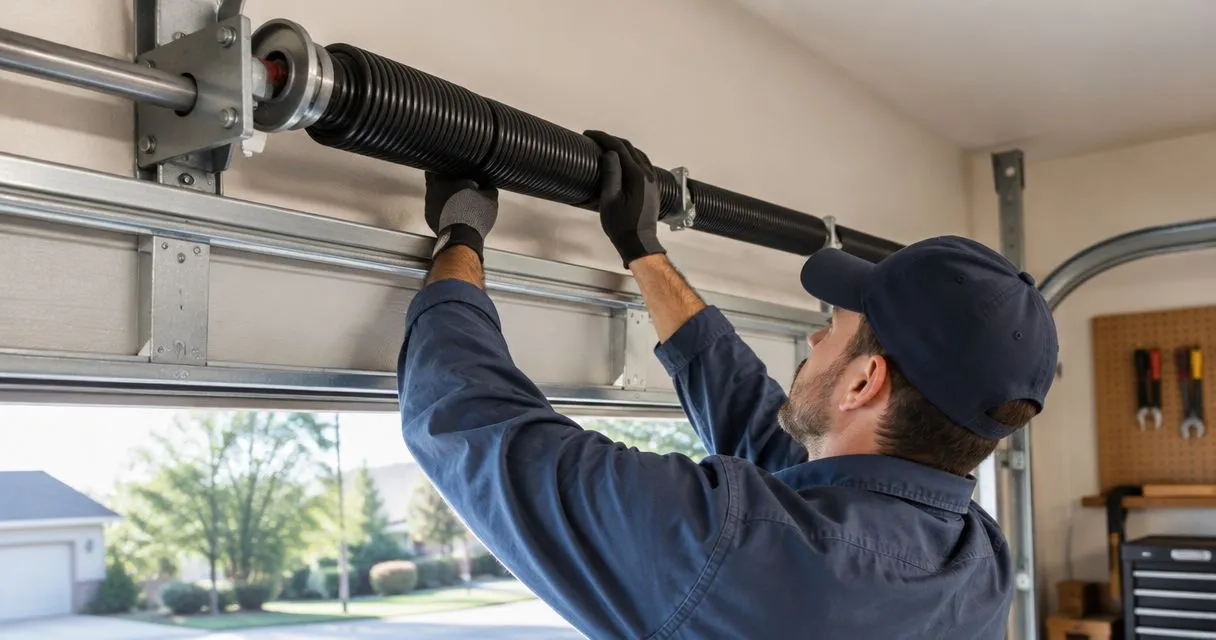
AI-generated illustration; not a Derby Strong customer project.
Local service: Garage door repair in Louisville · Garage door repair in Lexington · Garage door repair in Northern Kentucky