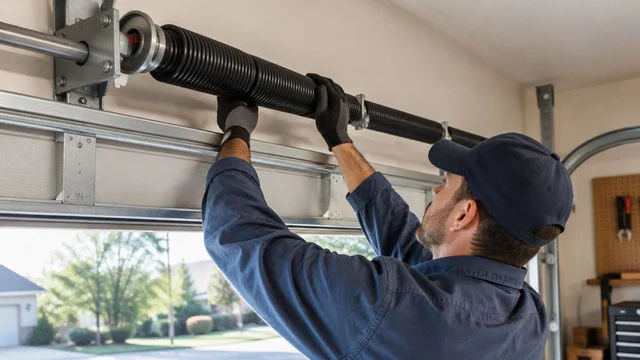
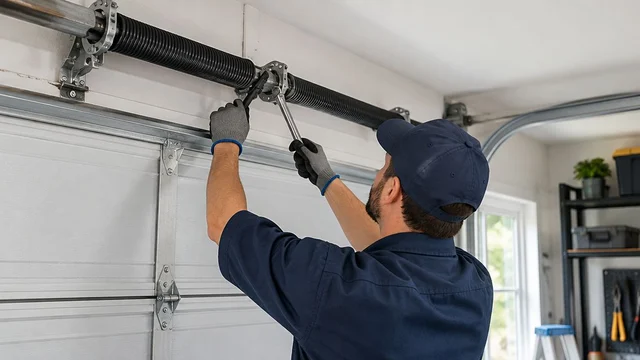
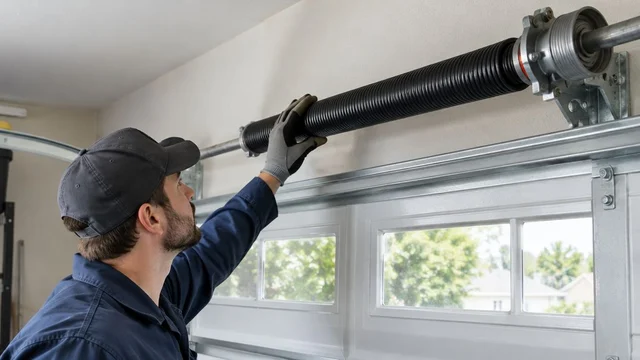
Best overall for quiet operation: properly matched nylon rollers with sealed bearings. Best for a maintained residential door: nylon rollers with serviceable bearings. Best for a commercial door that specifies steel: manufacturer-approved steel rollers. For Kentucky homeowners, the best garage door rollers reduce rolling noise without compromising fit or the door’s load requirements.
TL;DR
- The best garage door rollers for quiet residential operation are properly matched nylon rollers with sealed bearings.
- Choose rollers by door compatibility and bearing construction, not bearing count alone.
- Derby Strong provides garage door repair for Louisville homeowners who need professional help with noisy doors.
- Roller replacement will not correct bent tracks, damaged hinges or opener vibration.
- Leave roller replacement and all bracket, cable, spring and track adjustments to a garage door professional.
Why this matters for a noisy Louisville garage
Nylon wheels generally produce less rolling noise against steel tracks than steel wheels. But a quiet wheel cannot compensate for a roller that binds, a damaged hinge or a door that is out of alignment.
For Louisville homeowners comparing parts, diagnose the noise before choosing a replacement roller. Derby Strong provides residential garage door repair and installation, along with commercial overhead door service. A repair decision should start with the door’s condition, not a package labeled quiet.
If you are still identifying the sound, start with this guide to garage door rollers making noise in Louisville. This buying guide answers the next question: which roller construction fits the job once rollers are confirmed as the problem?
What makes the best garage door rollers?
Use these criteria before comparing roller types:
- Correct fit: Wheel dimensions, stem dimensions and hinge compatibility must match the door system. A similar-looking roller is not proof of compatibility.
- Suitable load rating: The roller must meet the door manufacturer’s requirements. Wheel material alone does not establish capacity.
- Quiet rolling surface: Nylon separates the steel track from a metal rolling surface, helping reduce wheel-on-track noise.
- Bearing construction: Sealed and serviceable bearings have different maintenance requirements. Follow the specific roller’s documentation.
- Installation condition: Damaged hinges, worn roller carriers and bent tracks require attention alongside the rollers.
- Documented maintenance: Choose a part with identifiable specifications and care instructions rather than unsupported claims about silence or lifespan.
Bearing count is not a complete quality rating. It does not tell you whether a roller fits, supports the application or has effective protection against contamination.
Garage door rollers at a glance
The comparison below ranks constructions, not individual products. Confirm the exact replacement against current documentation for your door and the proposed roller.
| Rank and roller type | Best for | Standout feature | Key limitation |
|---|---|---|---|
| 1. Nylon rollers with sealed bearings | Quiet-focused residential repair | Nylon rolling surface with enclosed bearings | Sealing does not make the entire door maintenance-free |
| 2. Nylon rollers with serviceable bearings | Residential doors with a defined upkeep routine | Quiet rolling surface and bearings maintained as directed | Requires attention to the specified maintenance instructions |
| 3. Manufacturer-approved steel rollers | Commercial overhead doors specifying steel rollers | Compatibility with the specified commercial application | Metal-on-metal rolling is less suited to a noise-first choice |
| 4. Bearingless polymer rollers | Exact-match repairs where the door specifies this construction | Simple construction without a separate ball-bearing assembly | Not the default upgrade for quiet, smooth operation |
1. Sealed-bearing nylon rollers: best for quiet residential operation
Nylon rollers with sealed bearings are the strongest starting point when quiet operation is your main residential goal. The nylon wheel rolls against the track, while the bearing allows the wheel to rotate around its stem.
The seal helps protect the bearing assembly from contamination. It does not repair track damage or eliminate the need to inspect the rest of the door.
Sealed-bearing nylon roller pros:
- Nylon reduces metal-on-metal rolling contact at the track.
- Sealed bearings limit direct exposure of the bearing assembly.
- This construction suits a quiet-focused upgrade when the specifications match.
Sealed-bearing nylon roller cons:
- Incorrect dimensions or an inadequate rating make an otherwise suitable construction the wrong part.
- A sealed bearing does not prevent noise from hinges, loose hardware or the opener.
Best for: Homeowners whose existing rollers are worn and whose door is otherwise suitable for repair.
Ask the installer to identify the replacement roller and explain why it fits your door. Verdict: Buy when compatibility and the cause of the noise are confirmed.
2. Serviceable-bearing nylon rollers: best for planned upkeep
Nylon rollers with serviceable bearings retain the noise advantage of a nylon rolling surface. Their bearings require care according to the specific product’s instructions.
This is a practical choice when you have a defined maintenance routine. Do not assume that every exposed bearing needs the same lubricant or treatment.
Serviceable-bearing nylon roller pros:
- Nylon avoids a steel wheel rolling directly against the track.
- Serviceable bearings can receive the maintenance their design calls for.
- The construction gives you a clear reason to request written care instructions.
Serviceable-bearing nylon roller cons:
- Neglected maintenance can undermine smooth operation.
- Incorrect lubrication introduces a maintenance problem instead of solving one.
Best for: Homeowners who will follow the roller manufacturer’s maintenance directions or include that work in professional upkeep.
Have the installer distinguish between maintenance you can safely perform and work requiring a technician. That distinction matters more than a generic promise of long life. Verdict: Buy if the part fits and its upkeep requirements suit you.
3. Steel rollers: best for commercial doors that specify steel
Steel rollers remain a valid choice where the door manufacturer specifies them. For a commercial overhead door, application requirements take priority over a residential noise preference.
Do not infer that every steel roller is heavy-duty or that every nylon roller is unsuitable for commercial use. The documented rating and door requirements decide that question.
Steel roller pros:
- Steel rollers meet the intended application when the manufacturer specifies the selected part.
- They preserve the specified construction in an exact-match repair.
- Their suitability can be checked against the door’s technical requirements.
Steel roller cons:
- Steel-on-steel rolling contact is a disadvantage when quiet operation is the primary goal.
- Steel construction alone proves neither capacity nor service life.
Best for: Commercial overhead doors whose documentation calls for the selected steel roller.
Derby Strong provides commercial overhead door service, but a commercial roller recommendation still depends on the actual door. Verdict: Buy for the specified application; skip as an automatic residential noise upgrade.
4. Bearingless polymer rollers: best for a specified like-for-like repair
Bearingless polymer rollers use a wheel construction without a separate ball-bearing assembly. They belong in this comparison because a nonmetal wheel is not automatically equivalent to a bearing-equipped nylon roller.
If quiet, smooth operation is the goal, evaluate the bearing arrangement as well as the wheel material. A package that says nylon leaves important questions unanswered.
Bearingless polymer roller pros:
- The construction is mechanically simple.
- The wheel avoids steel-on-steel contact at the track.
- A documented exact-match part preserves the door’s specified configuration.
Bearingless polymer roller cons:
- A polymer wheel alone does not establish smooth operation or durability.
- This construction is not the default recommendation for a quiet-focused upgrade.
Best for: Doors whose manufacturer specifies a particular bearingless replacement.
Ask why this construction is appropriate rather than selecting it solely because the wheel is not metal. Verdict: Hold until the exact application is verified.
Match the roller before choosing the material
A roller connects a moving door section to its track through the hinge or roller carrier. Each part has to work with the others; changing the wheel material does not remove that requirement.
Have a professional confirm these details without removing parts yourself:
- Wheel fit: The roller must suit the track profile and clearance.
- Stem fit: The stem must suit the hinge or carrier and the intended installation position.
- Load rating: The selected part must meet the application’s requirements.
- Bearing care: The maintenance instructions must match the actual bearing construction.
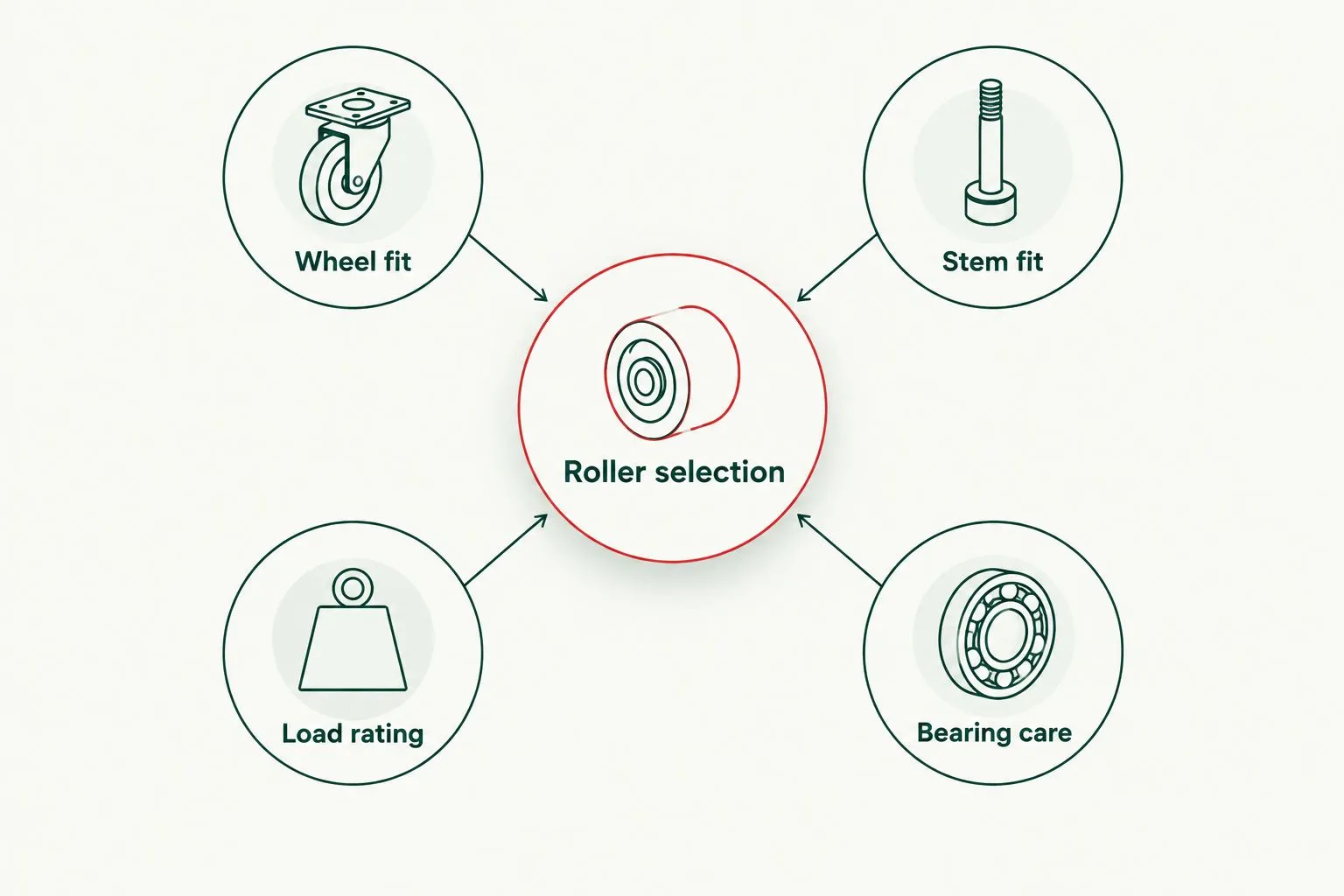
Quiet operation starts with a compatible roller, not wheel material alone.
Do not remove a roller to obtain measurements. Photos of accessible labels and visible components can help a technician prepare, but final selection requires confirming the door’s specifications and condition.
Will new rollers actually stop the noise?
Replace worn rollers, not every component that happens to be near a sound. Different faults can produce overlapping symptoms, so the table below is a guide to what to report—not a diagnosis or a reason to keep cycling a damaged door.
| What you have noticed | What to tell the technician | Why rollers alone are not the answer |
|---|---|---|
| Rumble while the door travels | Whether it occurs throughout travel or at one position | Tracks and hinges also influence movement |
| Squeak near a section joint | The approximate location, observed from a safe distance | A hinge or another moving contact could be involved |
| Vibration from the ceiling-mounted opener | Whether the sound centers on the motor or rail | Rollers do not repair an opener or its mounting |
| Scraping at one side | Whether the door looks crooked or contacts the track | Alignment or damaged hardware needs inspection |
| A bang followed by abnormal movement | What happened immediately before operation changed | Spring or other mechanical damage requires professional assessment |
If the door is crooked, a roller is outside the track, a cable is loose or a spring appears broken, stop using the door. Keep people clear and arrange professional service.
What to request before approving roller replacement
Ask for a repair recommendation that identifies the failed parts and separates necessary work from optional changes. A useful explanation connects the roller choice to your door rather than relying on a quiet-operation label.
Ask these questions:
- What evidence shows that the rollers need replacement?
- What roller construction and specifications will be installed?
- Are the hinges and tracks suitable for continued use?
- Does the door have a separate balance or opener problem?
- What maintenance does the replacement roller require?
Derby Strong is best for Louisville homeowners seeking professional garage door repair rather than do-it-yourself roller replacement. Describe the symptom when requesting service; you do not need to diagnose the failed part first.
Schedule a garage door inspection
Describe the noise and ask whether rollers, tracks, hinges or the opener need attention.
Keep roller replacement professional-only
Roller replacement involves components that guide and support a heavy moving door. Bottom brackets connect to the lifting cables and can be under spring tension; removing or loosening them is dangerous.
Do not bend tracks open, loosen brackets, disconnect cables or adjust springs. Never increase opener force to push a binding door through a fault.
Before service, clear the approach without entering beneath an unstable door. Keep pets and children away, leave the door in its current position if operation is unsafe, and tell the technician about any impact or sudden change.
How the roller types rank
This ranking prioritizes quiet rolling contact, correct fit, documented application requirements and manageable upkeep. It is a construction comparison, not a measured noise test or a claim that one unnamed product outlasts another.
Sealed-bearing nylon leads for quiet residential repair. Manufacturer-specified compatibility overrides that preference whenever the door requires a different part.
Which garage door rollers should you choose?
Choose correctly rated nylon rollers with sealed bearings for a quiet-focused residential repair, after confirming that worn rollers are the problem. Choose serviceable-bearing nylon when its maintenance requirements fit your upkeep plan.
For commercial overhead doors, follow the door manufacturer’s component requirements. Keep a sound door in service when an appropriate repair addresses the fault; roller noise alone is not a reason to replace the entire door.
Frequently Asked Questions
What are the best garage door rollers for quiet operation?
Properly matched nylon rollers with sealed bearings are the best starting point for quiet residential operation. Confirm wheel fit, stem fit and the required load rating before selecting a replacement.
Are nylon garage door rollers quieter than steel rollers?
Nylon rollers generally produce less rolling noise against steel tracks than steel rollers. They do not eliminate noise caused by damaged hinges, misaligned tracks or opener vibration.
Does a higher bearing count mean a better garage door roller?
A higher bearing count alone does not establish roller quality or suitability. Compare compatibility, load rating, bearing protection and maintenance instructions instead.
Can I replace garage door rollers myself?
Leave garage door roller replacement to a professional. Rollers interact with tracks and brackets, and bottom brackets connect to lifting cables under spring tension.
Do sealed-bearing garage door rollers need lubrication?
Follow the specific roller manufacturer’s instructions for sealed-bearing rollers. Do not assume the bearing needs added lubricant or that sealed bearings eliminate maintenance elsewhere on the door.
Should I replace the whole garage door if the rollers are noisy?
Noisy rollers alone do not justify replacing the whole garage door. Have a professional assess the rollers, tracks, hinges and overall door condition before choosing repair or replacement.
Can quieter rollers fix a loud garage door opener?
Quieter rollers do not repair a noisy opener motor, drive or mounting. Ask the technician to distinguish door-travel noise from opener noise before approving parts.
One Last Thing Before You Decide
A wheel can look intact while its bearing is worn, and a new wheel can still run badly in a damaged track. Ask what caused the noise and what evidence supports the repair—not just which roller is being installed.
Related Garage Door Guides
- Garage door track and roller options ranked by durability
- How often should you lubricate a garage door, and with what?
- Garage door opener drive types ranked by noise level
Local service: Garage door repair in Louisville · Garage door repair in Lexington · Garage door repair in Northern Kentucky