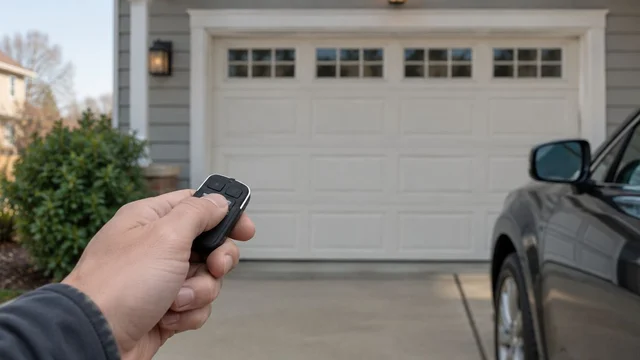
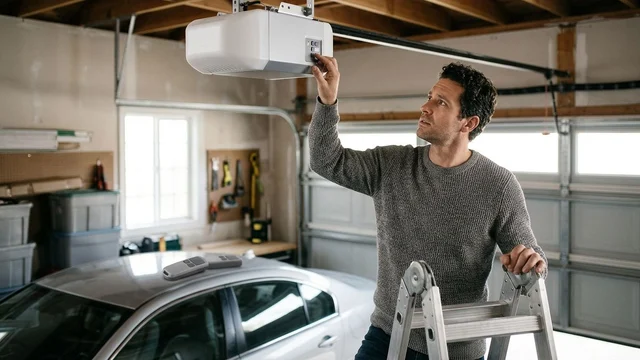
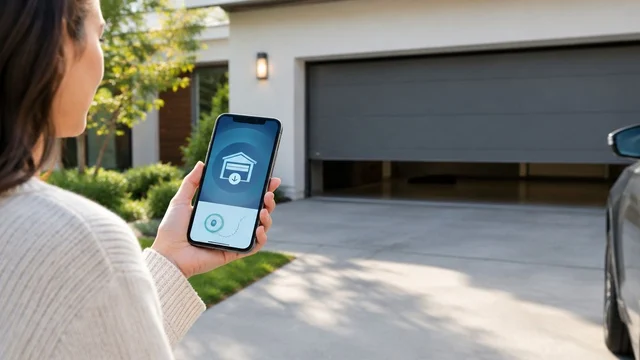
No—one standard residential garage door opener should not run two separate garage doors in Northern Kentucky; each door needs its own compatible operator for powered movement. One compatible remote can control both operators through separate buttons, but sharing a remote does not mean sharing a motor. If your goal is less ceiling clutter or fewer controls, address those needs without mechanically linking the doors.
TL;DR
- One opener, two garage doors: Northern Kentucky homeowners need separate operators for independent powered operation.
- A compatible multi-button remote can control separate garage door openers without connecting the doors mechanically.
- Derby Strong provides garage door opener service in Northern Kentucky; equipment selection starts with each door’s condition.
- Never join door arms, bypass safety sensors, or increase opener force to move a damaged door.
Why This Matters for Your Door
The word opener often means two different things: the motor that moves the door and the handheld remote that sends a command. That distinction determines whether you need equipment work or simply compatible controls.
For Northern Kentucky homeowners, the practical setup is one operator per powered door, with shared handheld control only when the equipment supports it. Derby Strong provides garage door repair, installation and opener service; you can find the company through Derby Strong.
A second door does not automatically mean replacing your existing opener. First establish whether that opener remains suitable for the door it already serves, then evaluate the other opening separately.
Can one opener run two separate garage doors in Northern Kentucky?
No—not with a standard residential opener installed to move one door. Two separate doors need independent mechanical connections, travel settings and safety protection. A remote can send commands to multiple compatible operators, but it does not supply lifting power.
| Arrangement | Best for | Benefit | Limitation or safety boundary |
|---|---|---|---|
| Separate operator for each door | Independent powered operation | Each door has its own movement and settings | Requires suitable equipment and installation at each opening |
| Separate operators with one compatible remote | Fewer handheld controls | You can select either door from one remote | Compatibility and separate button assignments need verification |
| One powered door and one manual door | Keeping a second opening manual | Avoids adding an operator to an infrequently used door | Manual operation still requires a sound, properly balanced door |
| One standard operator mechanically linked to both doors | Not recommended | Intended to reduce equipment | Falls outside an ordinary single-door installation; do not improvise it |
These arrangements solve different problems. If you want independent operation, choose separate operators. If you only want fewer remotes in your car, investigate control compatibility before buying replacement motors.
A garage with two openings is also different from a garage with one wide door. One suitable operator can serve a single wide door when the door and operator meet the manufacturer’s requirements; that does not establish suitability for two separate moving assemblies.
Two powered doors: separate operators
Each garage door has its own weight, spring balance, track alignment and travel path. Even matching doors need individual assessment because their condition and adjustment are not necessarily identical.
An operator moves a door that its spring system properly counterbalances. It is not a substitute for correcting a broken spring, loose cable, binding roller or damaged track.
Separate operators allow the installer to set and verify each door’s movement independently. They also let you open one bay while leaving the other closed, without relying on an improvised connection between them.
The trade-off is additional equipment to install and maintain. That is a reason to check the existing operator carefully—not a reason to make it pull a second door outside its documented application.
Keep a working, suitable operator when professional assessment supports it. Adding power to the other opening does not, by itself, justify replacing both units.
Two operators, one remote: check compatibility
A compatible multi-button remote can provide separate commands for separate operators. Assign one button to one door and another button to the other, following the instructions for the exact equipment.
The benefit is convenience without mechanically connecting the doors. The limitation is compatibility: a remote that works with one operator does not automatically work with another, even when the units look similar.
Before shopping, record the operator manufacturer’s name and model information from a safely accessible label. Do not remove covers, climb on unstable objects or touch wiring to identify the equipment.
Ask these questions before buying a shared remote:
- Does the remote’s current compatibility documentation list each operator?
- Can separate buttons be assigned to the two doors?
- Does either operator require a manufacturer-approved accessory?
- What instructions apply to removing old or unwanted remote permissions?
Follow the current manufacturer documentation rather than a generic button sequence. Programming procedures vary, and an erase command can remove controls you intended to keep.
One powered door, one manual door: a valid alternative
You do not have to automate both doors simply because both openings exist. Keeping an infrequently used door manual is an option when the door is sound, balanced and suitable for safe manual use.
The benefit is a simpler equipment arrangement. The drawback is that you must operate that door by hand, and manual operation becomes a poor choice when you struggle to move it comfortably.
Do not use a manual setup to postpone a mechanical repair. A door that drops, sticks, hangs unevenly or has a visible loose cable needs professional attention whether an opener is attached or not.
Ask the technician to explain the safe operating procedure for that specific door. Do not pull an emergency release on an open or damaged door to experiment with its balance.
Why the right opener arrangement varies
The answer about sharing a standard motor stays the same, but the right installation differs from garage to garage. These factors determine what should be assessed:
- Your actual goal. Fewer remotes, independent movement and less ceiling clutter require different solutions.
- Each door’s condition. Spring balance, cable condition, roller movement and track alignment affect safe operation.
- Available clearance. Rails, door travel, overhead storage and structural obstructions influence placement.
- Operator compatibility. The exact operator, door configuration and manufacturer instructions determine suitable equipment.
- Control compatibility. Existing receivers and remotes determine whether shared handheld control is possible.
- Your use of each opening. A regularly used vehicle bay and an occasional storage opening do not necessarily need the same convenience features.
For an Erlanger homeowner keeping two separate openings, the useful starting point is a description of how each bay is used—not a request to connect both doors to one motor. Provide the property location and photos of both openings so the assessment concerns the actual garage.
What if your Northern Kentucky garage has limited ceiling space?
Limited ceiling space is a layout question, not a reason to join two doors to one opener. A professional needs to assess the door travel, overhead clearances and equipment compatibility at each opening.
A wall-mounted operator is a possible category to discuss, but it is not a universal substitute for a ceiling-mounted unit. Suitability depends on the door’s hardware, shaft arrangement, clearances and the selected manufacturer’s requirements.
Do not assume that moving a motor off the ceiling eliminates every space constraint. The door still needs its full travel path, and its tracks and supporting hardware must remain correctly installed.
If ceiling clearance prompted your question, start with the guide to whether a low-ceiling Northern Kentucky garage can fit a new door. Separate the door-fit decision from the choice of controls.
How should you prepare for an opener assessment?
You can gather useful information without testing a suspect door or touching high-tension hardware. Observe the installation; leave mechanical diagnosis and adjustment to a professional.
- Describe the goal. Say whether you want fewer remotes, powered operation for the second door or more overhead room.
- Identify the equipment. Photograph safely readable operator labels and note which remote controls which door.
- Document each opening. Take wide photos showing the closed doors, overhead layout and visible obstructions from a safe position.
- Report existing faults. Describe noises, uneven movement, reversals or control failures you have already observed; do not recreate a fault for a video.
- Request separate findings. Ask what each door needs, which existing equipment can remain and which controls are compatible.
A clear assessment distinguishes a door problem from an operator problem and a remote problem. That prevents a request for simpler controls from turning into unnecessary replacement work.
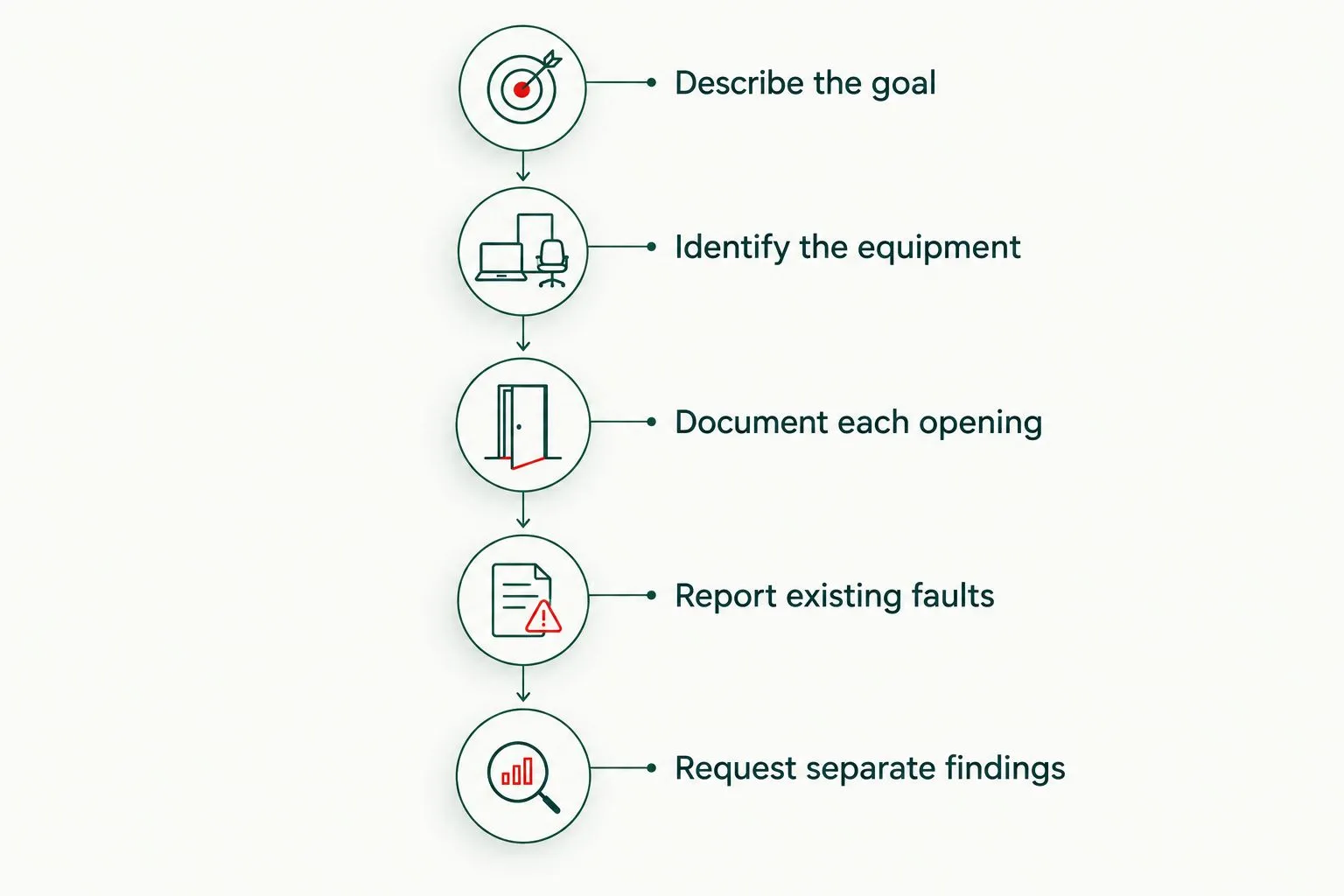
Prepare information about both doors without adjusting their hardware or recreating a fault.
Derby Strong’s garage door opener service is relevant for Northern Kentucky homeowners deciding how to power two separate doors. Ask for a door-by-door recommendation, including an explanation of why any existing operator needs replacement.
What should you never change to make one motor pull both doors?
Do not connect the door arms, fabricate a shared linkage or wire controls together based on a general online diagram. An improvised arrangement does not establish that either door will stop and reverse correctly.
Never bypass a photoelectric sensor or hold a control to defeat a known safety fault. Do not increase opener force to overcome a heavy, binding or damaged door.
Spring, cable, track, bottom-bracket and other high-tension repairs are professional-only work. If a door sits crooked, a cable hangs loose or a spring appears broken, stop operating it and keep people away from the opening.
Also avoid pulling the emergency release while a damaged door is open. An unsupported or poorly balanced door can fall; a professional should determine how to secure it before disconnecting the operator.
Do you need to replace both openers if only one fails?
No—one failed operator does not automatically require two replacements. The other unit needs its own condition and suitability assessment, not replacement simply to make the equipment match.
Matching controls can be convenient, but convenience is a separate decision from mechanical necessity. Ask whether compatible controls can meet your needs while retaining the working unit.
If an operator is blamed for poor movement, have the door checked too. Installing a new motor does not correct damaged hardware or improper spring balance.
Can one button open both garage doors at once?
One button should not be assumed to operate both doors safely. A shared command is different from a remote with separate buttons, and any simultaneous-operation feature requires explicit support in the equipment documentation.
For ordinary independent use, separate buttons make the intended door clear. If opening both together is essential, explain that requirement before equipment selection rather than asking for improvised wiring afterward.
Frequently Asked Questions
Can one garage door opener motor lift two separate doors?
A standard residential garage door opener should not be used to lift two separate doors. Each powered door needs its own compatible operator, installed and adjusted for that opening.
Can I use one remote for two different garage door openers?
Yes, when a compatible multi-button remote supports both operators. Verify each exact model against current manufacturer documentation and assign separate buttons according to the instructions.
Does a stronger opener make it safe to connect two garage doors?
No, a stronger motor does not make a shared-door arrangement suitable. Motor capacity alone does not address independent travel, door balance, mechanical connections or safety protection.
Do both garage doors need the same brand of opener?
Two separate garage doors do not inherently need matching opener brands. Each operator must suit its own door, and shared remote compatibility needs a separate check.
Can I keep one garage door manual and automate the other?
Yes, one door can remain manual while the other uses an operator. The manual door still needs sound hardware, proper balance and a safe operating procedure.
Will one opener work if I replace two doors with one wide door?
One suitable operator can serve one wide garage door when the equipment meets the manufacturer’s requirements. Changing two openings into one is a separate structural and door-installation decision, not a way to connect two existing doors.
What should I tell a Northern Kentucky garage door technician before a visit?
Explain whether you want fewer remotes, power for a second door or more ceiling clearance. Provide safely accessible model information and report existing faults without operating a damaged door.
One Last Thing Before You Decide
You can solve a two-door control problem without buying two new openers. First separate the decisions: whether each door works safely, whether each needs powered operation and whether compatible controls can simplify daily use.
Before approving work, ask for a written scope that identifies which door each operator will serve and what existing equipment stays. That makes the proposal easier to evaluate than a general recommendation to replace everything.