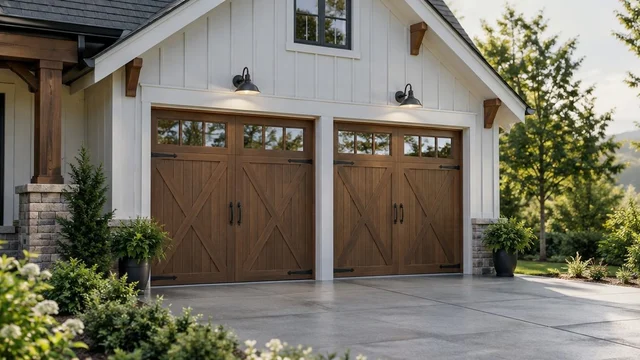
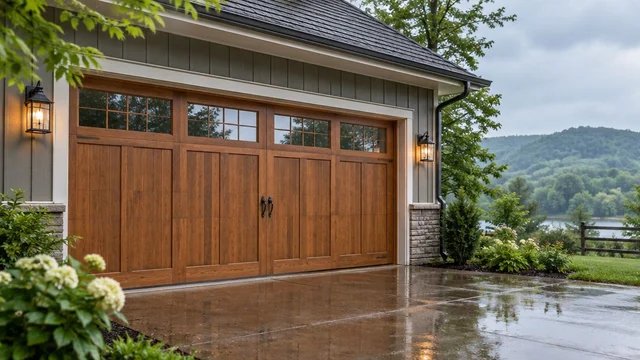
The main garage door parts are sections or panels, hinges, rollers, tracks, springs, lift cables, brackets, seals, and the opener system. This guide explains garage door parts names by location and function so you can describe a problem accurately; identifying a part does not make spring, cable, track, or bracket work safe to attempt yourself.
TL;DR
- Garage door parts names describe separate systems: sections form the door, tracks guide it, and springs counterbalance its weight.
- Derby Strong provides garage door repair and opener service for homeowners in Louisville.
- The opener rail is not the door track, and lift cables are not electrical wires.
- Identify damaged parts from a safe distance; leave spring, cable, track, and bracket repairs to a professional.
Why This Matters for Your Door
A damaged panel and a damaged roller need different evaluations, even when both make the door noisy. Knowing the correct name helps you explain what you see without repeatedly operating a door that is already struggling.
For a Louisville homeowner looking at a dented horizontal section, the useful question is whether the damage affects just that section or the surrounding hardware. This guide to replacing a bent garage door panel in Louisville addresses that separate repair decision.
Name the part, describe the symptom, and let the inspection establish the cause. A sound alone does not identify a failed component.
What are the parts of a garage door called?
On a typical sectional garage door, the horizontal sections connect through hinges and travel on rollers inside metal tracks. Springs counterbalance the door, while lift cables transfer force through the lifting system. The opener is a separate powered assembly that moves a properly balanced door.
Use this reference from inside the garage, with the door stationary. Do not open a damaged door just to expose a component.
| Part name | Where to look | What it does or how to recognize it |
|---|---|---|
| Sections | Across the moving door | Horizontal assemblies that make up the door |
| Panels | On the door face | A term used for sections or the smaller designs within them |
| Hinges | Between adjacent sections | Let sections pivot as the door follows the track curve |
| Rollers | Along the door edges | Wheels with stems that guide the door through its tracks |
| Vertical tracks | Beside the opening | Guide the rollers during vertical travel |
| Horizontal tracks | Extending into the garage | Support and guide the open sectional door |
| Torsion springs | Usually above the opening | Counterbalance the door by twisting |
| Extension springs | Usually beside the horizontal tracks | Counterbalance the door by stretching |
| Lift cables | Along the sides of the door | Connect the door to its counterbalance system |
| Cable drums | At the ends of a typical torsion shaft | Collect and release lift cable as the shaft turns |
| Bottom brackets | At the bottom corners | Carry the bottom roller and commonly anchor lift cables |
| Top fixtures | At the upper corners | Position the top rollers |
| Reinforcement struts | Across the inside face | Stiffen sections where the door design requires them |
| Bottom seal | Along the door’s bottom edge | Helps close the gap against the floor |
| Perimeter weatherstripping | Around the opening | Helps seal the top and sides |
| Opener rail | Above the center of many doors | Guides the opener trolley; it is separate from the tracks |
| Photoelectric sensors | Near the bottom of the opening | Detect an interruption in the beam across the doorway |
Not every door has every component listed here. Rolling commercial doors, enclosed spring assemblies, and wall-mounted openers use different layouts.
What are garage door panels, sections, and hinges?
Sections and panels
A section is a horizontal portion of a sectional door. The sections stack vertically when the door is closed and pivot at their joints as it opens.
People also call these pieces panels. However, a panel can mean a smaller decorative or construction element within a section, so the term alone is not always precise.
When reporting damage, describe its position: bottom section, section with windows, or upper section near the opener attachment. A photograph taken from outside the travel path is more useful than guessing a replacement part name.
Hinges and reinforcement struts
Hinges connect adjacent sections. End hinges also commonly support roller stems, while center hinges connect sections away from the edges.
A reinforcement strut is the long stiffening member running across the inside of a section. It is not a hinge, track, or handle. Report a bent strut or torn hinge attachment without loosening the hardware; the section and its attachments need evaluation together.
What are garage door rollers and tracks?
Rollers are the wheels; tracks are the channels those wheels follow. A roller includes a wheel and a stem that fits into a hinge or fixture.
Vertical tracks sit beside the opening. On a standard-lift sectional system, curved portions lead into horizontal tracks extending overhead. Track hangers and mounting brackets secure that assembly to the building.
Track alignment, roller condition, and door balance work together. A roller outside its track is not a reason to push the door back into place: a cable or structural problem can also be involved.
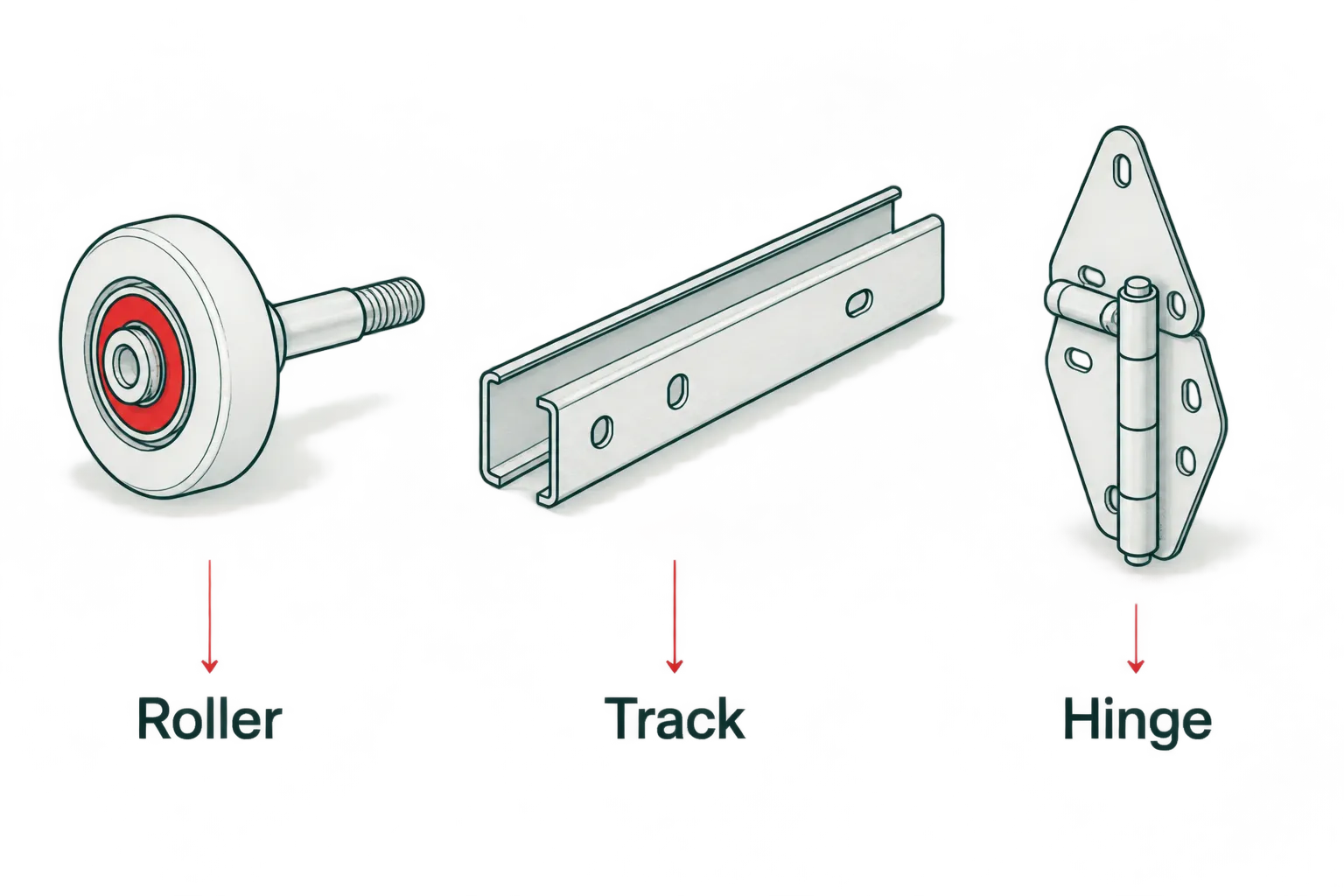
The roller moves inside the track; the hinge connects adjacent door sections.
You can report whether a roller appears displaced or a track looks bent from a safe viewing position. Do not straighten tracks, remove rollers, or loosen track brackets yourself. Keep people away from a crooked or partly suspended door.
What are garage door springs, cables, and drums?
Torsion springs
A torsion spring works by twisting. On a common exposed system, you can see the spring mounted around a shaft above the opening, with cable drums toward the shaft ends.
The shaft, springs, drums, bearings, and lift cables form a connected counterbalance assembly. Do not touch winding cones, set screws, spring anchors, or cable drums to investigate a problem.
Extension springs
Extension springs work by stretching and contracting. On many residential systems, they run beside the horizontal tracks and operate with pulleys and cables.
A safety containment cable, where fitted, passes through an extension spring. It is different from the lift cable that helps raise the door. Do not assume an unfamiliar cable is unnecessary or remove it because it appears separate from the lifting path.
Lift cables and bottom brackets
Lift cables are steel cables near the sides of the door. They are mechanical lifting components, not opener wiring.
Bottom brackets commonly anchor these cables and hold the bottom rollers. Never remove a bottom bracket or its fasteners. Cable tension and the door’s weight make this a professional-only repair area, including when the visible problem looks like a loose screw.
A slack or frayed cable calls for inspection, not another opening cycle. Do not pull the emergency release on a raised door with suspected spring or cable damage.
What are the parts of a garage door opener called?
The opener moves the door through a drive mechanism. It does not replace the counterbalance system, and increasing opener force is not a repair for a binding or unbalanced door.
| Opener part | Plain-language identification | Important distinction |
|---|---|---|
| Powerhead | Motor housing on a ceiling-mounted system | The housing contains more than just the motor |
| Drive mechanism | Chain, belt, or screw on applicable systems | Transfers the opener’s movement |
| Rail | Member extending from a ceiling-mounted opener | Separate from the tracks carrying door rollers |
| Trolley or carriage | Moving assembly on the rail | Connects to the door through the opener arm |
| Door arm | Link between trolley and door attachment | Not a reinforcement strut |
| Emergency release | Manual disconnect mechanism | Does not make a damaged door safe to lift |
| Wall control | Fixed operating control | Different from a wireless keypad or handheld remote |
| Photoelectric sensors | Paired devices near the opening’s bottom | Part of the closing safety system |
A wall-mounted opener sits beside the door rather than using the familiar central ceiling rail. Its layout does not mean the door lacks tracks or springs.
If you can read the opener model label safely from the floor, record it. Otherwise, leave model identification to the technician rather than climbing beside a damaged door.
What are the rubber pieces around a garage door called?
The flexible strip attached to the bottom of the moving door is the bottom seal, also called a bottom weather seal. A retainer holds it on door designs that use a replaceable insert.
Perimeter weatherstripping attaches around the opening and contacts the door along its sides and top. A threshold is different: it sits on the floor beneath the closed door.
| Component | Best for identifying this problem | Limitation |
|---|---|---|
| Bottom seal | A torn strip on the moving door’s lower edge | Replacing it does not correct a crooked door |
| Perimeter weatherstripping | A visible gap along the sides or top | It does not repair damaged sections or framing |
| Threshold | A floor-mounted strip beneath the door | It is not a substitute for drainage or door alignment work |
These parts help manage gaps, but they do not solve every water or air leak. Before requesting a seal replacement, describe where the gap appears and whether the door sits level when closed.
Why garage door parts names and layouts vary
The name of a part is only the starting point for identifying a replacement. These design differences explain why similar-looking doors do not necessarily use interchangeable hardware:
- Door construction: Sectional doors use hinged sections; rolling doors use a curtain that coils above the opening.
- Spring system: Torsion and extension arrangements use different counterbalance hardware.
- Lift configuration: Standard-lift, high-lift, and vertical-lift arrangements change track and lifting layouts.
- Opener position: Ceiling-mounted and wall-mounted operators connect to the door differently.
- Manufacturer and model: Attachment details, section profiles, seals, and hardware specifications differ.
- Door size and weight: Counterbalance components must match the actual door rather than its appearance alone.
Do not order a spring, cable, roller, or section solely because a listing photo looks right. Matching the system is part of the repair assessment.
How should you describe a damaged garage door part?
Give the service team observations rather than a diagnosis. For a Louisville repair request, a clear description helps establish what needs inspection without asking you to handle dangerous hardware.
- State the position. Say whether the door is closed, partly open, crooked, or stuck overhead. Do not move it for the report.
- Locate the visible issue. Describe the left or right side as viewed from inside the garage, then name the component if you recognize it.
- Describe what happened. Report a bang, scraping noise, impact, reversal, or opener movement without door movement.
- Share safe photographs. Include an overall view and a closer view only if both are possible without approaching unstable parts.
- Explain any obstruction. Tell the service team whether a vehicle is trapped or the opening cannot be secured. Do not force clearance.
Derby Strong is a garage door service option for Louisville homeowners who need a repair assessment rather than DIY tension adjustments. Use the contact page to describe the condition and request service.
Derby Strong also provides opener service, so distinguish a remote-control problem from visible door damage when explaining the issue. Neither description proves which part has failed.
Is the garage door opener the same as the spring system?
The opener and spring system are separate assemblies with different jobs. Springs counterbalance the door’s weight; the opener supplies controlled movement through its drive and connection to the door.
A running opener with a stationary door does not prove the motor needs replacement. A disconnected trolley, damaged drive component, or door-system fault requires different checks.
What is the metal bar above a garage door called?
The metal bar above a garage door is often the torsion shaft when it carries springs and cable drums. A long member attached across the door itself is more likely a reinforcement strut.
Location matters more than the word bar. Describe whether the part stays above the opening or moves with the door, without operating a damaged system to find out.
Frequently Asked Questions
What are the main garage door parts names I should know?
The main garage door parts names are sections, hinges, rollers, tracks, springs, lift cables, brackets, seals, and opener components. Use the part’s location and visible condition to make your description more precise.
What are the wheels on a garage door called?
The wheels are called rollers. Their stems fit into hinges or fixtures, and their wheels travel inside the tracks.
What is the difference between a garage door panel and a section?
A section is a horizontal assembly of a sectional garage door, while panel can mean that assembly or a smaller element within it. Describe the position and share a safe photograph to avoid confusion.
What are the cables beside my garage door called?
The steel lifting cables beside the door are called lift cables. Do not pull, reconnect, or adjust a loose cable; stop using the door and arrange professional inspection.
What is the rubber strip on the bottom of a garage door called?
The rubber or flexible strip is called the bottom seal or bottom weather seal. It is separate from weatherstripping around the opening and any threshold attached to the floor.
Can I remove the bottom garage door bracket to replace a roller?
No—leave bottom bracket and roller work to a garage door professional. Bottom brackets commonly anchor lift cables and can be under dangerous tension.
Are commercial overhead door parts named the same as residential parts?
Commercial sectional overhead doors share terms such as sections, rollers, tracks, springs, and operators. Rolling commercial doors use a different assembly, including a curtain, guides, and a barrel above the opening.
One Last Thing Before You Decide
The most useful detail is often where a part sits, not what you call it. A stationary rail over the center of the garage and a track beside the door perform different jobs, even though both look like long metal channels.
When you contact Derby Strong about a garage door problem, describe the location, the symptom, and the door’s current position. Leave an uncertain part unnamed rather than moving or dismantling anything to identify it.
Related Garage Door Guides
- Can you replace a garage door spring yourself?
- Off-track garage door safety in Northern Kentucky
- Garage door weatherstripping in Louisville’s Highlands
Local service: Garage door repair in Louisville · Garage door repair in Lexington · Garage door repair in Northern Kentucky