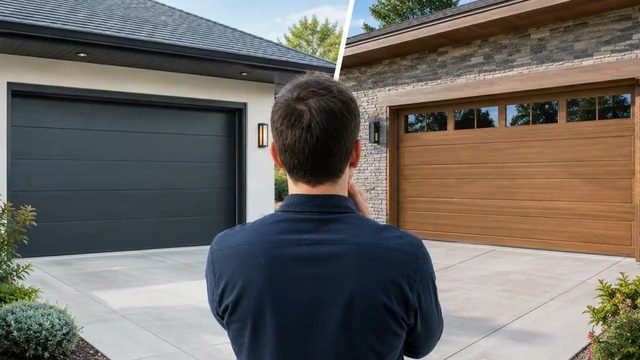
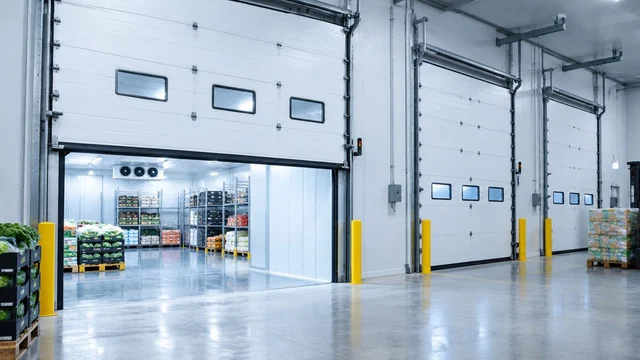
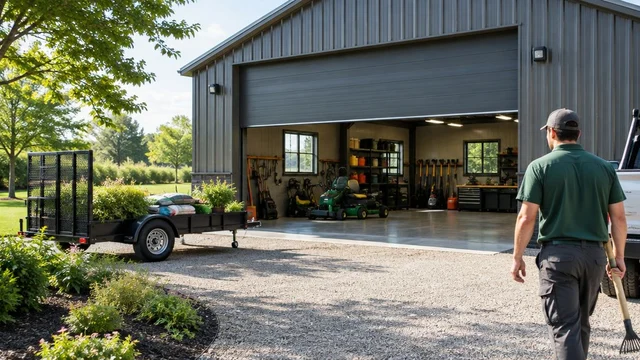
Best overall: insulated sectional steel doors for enclosed boat and RV storage. Best for limited ceiling-track space: rolling steel service doors. Best for basic, unconditioned individual bays: sheet roll-up doors. Best for covered, unconditioned drive-through buildings with clear overhead space: non-insulated sectional steel doors. This guide compares the door types by vehicle clearance, building layout, operating demands and maintenance—not appearance alone.
TL;DR
- Insulated sectional steel doors are the default recommendation for enclosed Kentucky boat and RV storage garage doors.
- Rolling steel service doors keep horizontal tracks out of the storage bay but need verified coil clearance.
- Sheet roll-up doors suit basic unconditioned bays; confirm opening dimensions and operating requirements before choosing.
- Derby Strong provides commercial overhead door installation and repair; request a site-specific assessment before ordering.
Why This Matters for Your Door
A boat trailer or RV needs more than an opening that looks tall enough. Roof equipment, trailer guides, mirrors, approach slope and the door’s fully open position all affect usable clearance. A door that fits the wall opening can still interfere with the vehicle.
Derby Strong provides commercial overhead door installation and repair for homeowners and businesses in Louisville, Lexington and Northern Kentucky. Derby Strong is a fit for Kentucky storage operators who need commercial overhead door installation or repair. The right selection starts with the building and its intended vehicles, not a residential-door catalog.
What makes the best boat and RV storage garage doors?
Use these criteria to compare door assemblies before selecting a type:
- Usable clearance: Check the clear passage with the door fully open, including hardware and operator interference.
- Building fit: Confirm headroom, side room, backroom, structural support and the proposed door’s installation requirements.
- Thermal needs: Match insulation and perimeter sealing to whether the building is conditioned or unconditioned.
- Operating demand: Specify expected opening frequency, manual or powered operation and who operates each bay.
- Serviceability: Compare access for inspection, component replacement and work around stored vehicles.
- Site exposure: Require appropriate documented wind-load performance and address water entry separately from insulation.
Do not treat “commercial” as a complete specification. The selected assembly must suit the actual opening, building structure and operating pattern.
Boat and RV storage doors at a glance
| Door type | Best for | Standout feature | Key limitation |
|---|---|---|---|
| Insulated sectional steel | Enclosed storage with thermal-control needs | Insulated panels with configurable track arrangements | Tracks and the open door occupy interior space |
| Rolling steel service | Buildings where horizontal tracks conflict with storage | Curtain coils above the opening | Coil, guides and supporting structure need verified space |
| Sheet roll-up | Basic unconditioned individual bays | Compact curtain storage above the opening | Insulation, operating method and durability depend on the selected assembly |
| Non-insulated sectional steel | Unconditioned drive-through buildings with clear overhead space | Sectional operation without insulated panel construction | Does not provide insulated-panel thermal performance |
These are construction categories, not interchangeable specifications. Rolling steel service doors and sheet roll-up doors both coil above the opening, but their curtain construction differs. Compare the actual drawings and documentation rather than assuming similar appearance means equivalent performance.
1. Insulated sectional steel: best for enclosed storage
Insulated sectional steel doors use hinged panels that travel on tracks. They are the strongest starting point when you want enclosed boat or RV storage with thermal control and a finished door assembly.
Insulation does not condition a building or prevent condensation by itself. Assess the roof, walls, ventilation, drainage and perimeter seals alongside the door.
Insulated sectional steel pros:
- Insulated panels support a building’s thermal-control plan.
- Different track arrangements accommodate different interior layouts when properly specified.
- Sectional construction allows individual damaged sections to be assessed for replacement, subject to compatibility and overall condition.
Insulated sectional steel cons:
- Horizontal tracks and the raised door occupy space inside the building.
- Springs, cables, rollers and hinges create multiple inspection and maintenance points.
- Panel insulation alone does not establish whole-door thermal performance or airtightness.
Best for: Enclosed storage bays where temperature control matters and the building can accommodate the track system.
Ask the installer to show the door’s open position on the building drawing. Check it against roof-mounted RV equipment, boat towers, lighting, structural members and any planned storage above the vehicle.
Verdict: Buy insulated sectional steel when thermal control matters and the full track layout fits.
2. Rolling steel service: best for ceiling-track conflicts
A rolling steel service door uses a curtain of interlocking slats that coils above the opening. This arrangement keeps horizontal sectional-door tracks out of the bay, making it useful where overhead tracks would interfere with storage or building equipment.
That space advantage is not unlimited. The coil, hood, guides and operator still need room and suitable support.
Rolling steel service door pros:
- The curtain stores above the opening rather than extending back into the bay.
- The layout avoids horizontal tracks across the storage area.
- Insulated and non-insulated constructions exist, allowing selection around the building’s intended use.
Rolling steel service door cons:
- Coil and operator space can conflict with limited headroom or structural members.
- Inspection and repair require access to the guides and overhead assembly.
- Thermal and air-leakage performance require assembly-specific documentation.
Best for: Boat and RV storage buildings where horizontal tracks create a confirmed layout conflict.
Do not approve a rolling door from the opening size alone. Require a drawing that identifies clear opening, hood projection, guide location, operator placement and maintenance access. Keep shelving and stored equipment out of those service areas.
Verdict: Buy rolling steel service doors when the coil layout solves a documented space problem.
3. Sheet roll-up: best for basic unconditioned bays
A sheet roll-up door uses a corrugated sheet curtain that rolls above the opening. It belongs on the shortlist for individual storage bays that do not require an insulated sectional assembly.
Do not assume every storage-style roll-up door suits a large RV opening. Confirm the proposed door’s permitted dimensions, wind-load documentation and operating requirements.
Sheet roll-up door pros:
- The curtain rolls above the opening, leaving the bay without horizontal tracks.
- The construction suits straightforward individual-bay layouts.
- Manual operation is an option where supported by the selected assembly and operating demands.
Sheet roll-up door cons:
- A basic sheet curtain does not provide the same construction as an insulated sectional panel.
- Curtain damage can affect operation; repair options depend on the specific door.
- A manually operated large door requires an operating assessment, not an assumption that every tenant can use it safely.
Best for: Unconditioned individual boat-storage bays with compatible opening dimensions and manageable operating requirements.
Ask how users will open, close and secure the door from its normal operating position. If powered operation is needed, specify a compatible complete system rather than planning an unspecified operator addition later.
Verdict: Buy sheet roll-up doors for simple unconditioned bays; skip them when the documented limits do not fit.
4. Non-insulated sectional steel: best for unconditioned drive-through buildings
Non-insulated sectional steel doors use hinged steel sections without insulated panel construction. They suit unconditioned buildings where sectional-door operation fits and overhead tracks do not obstruct the intended vehicles.
A drive-through layout still needs a separate assessment at each opening. Different approaches, interior obstructions or structural details can change the usable passage.
Non-insulated sectional steel pros:
- The sectional layout works with different track arrangements when properly designed.
- Individual sections can be evaluated for repair or replacement after localized damage.
- The construction avoids specifying insulated panels where the building has no corresponding thermal-control requirement.
Non-insulated sectional steel cons:
- The door does not provide insulated-panel thermal performance.
- The raised door and tracks occupy interior overhead space.
- Perimeter seals do not make the opening waterproof or eliminate condensation.
Best for: Unconditioned drive-through boat and RV storage buildings with verified overhead clearance.
Do not reject an existing serviceable sectional door solely because it lacks insulation. First decide whether the building actually needs thermal improvement and whether the door is the relevant weak point.
Verdict: Buy non-insulated sectional steel when the building is unconditioned and the track layout fits.
Check the vehicle path before ordering
Record the actual vehicles the facility intends to accommodate. Include fixed roof equipment, mirrors, trailer guides and other projections in the assessment. Do not rely on a vehicle’s model name or an owner’s estimate.
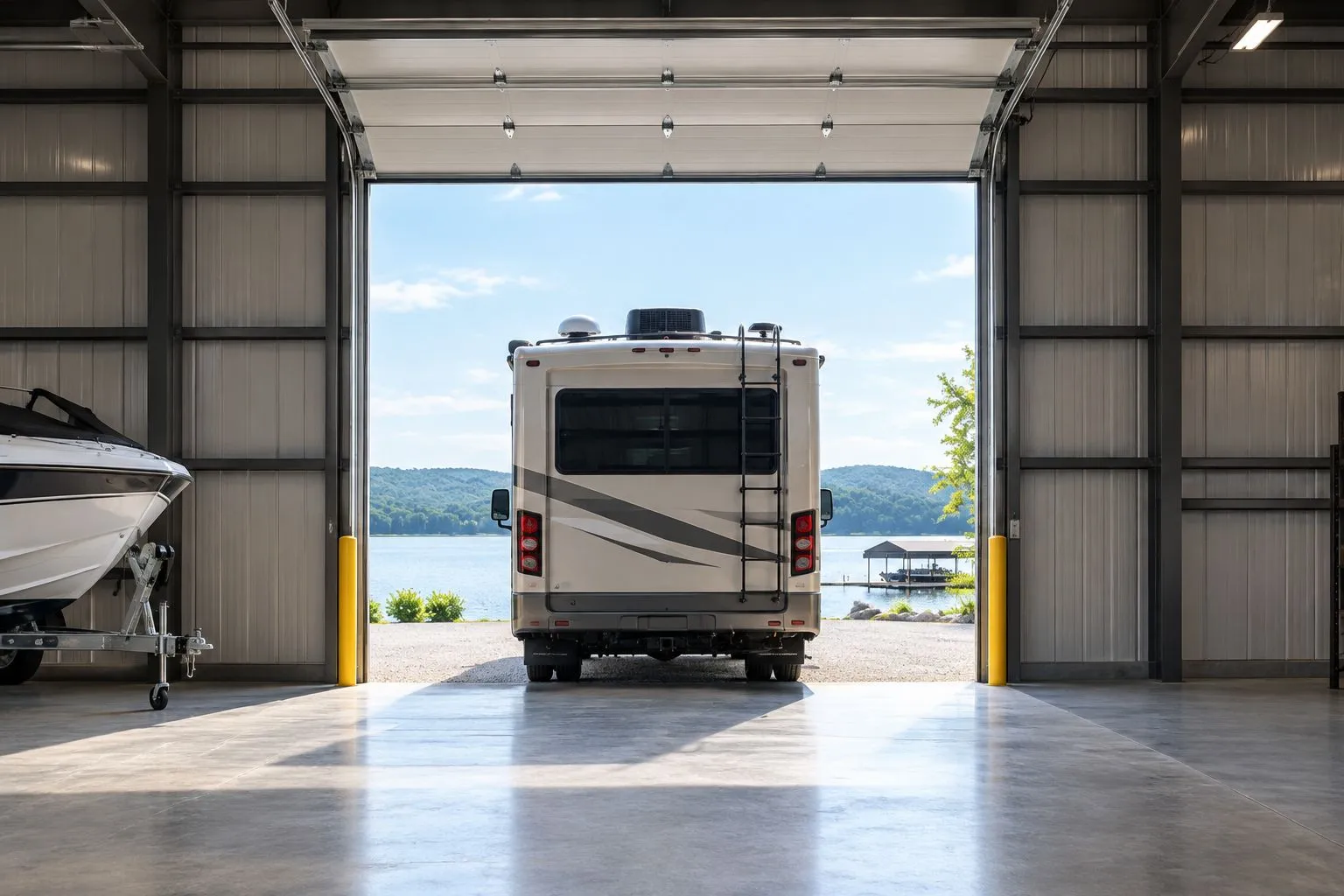
Illustrative image: assess roof equipment and the raised door together when checking vehicle clearance.
Give the installer these observations:
- Vehicle envelope: Overall height and width in the configuration used to enter the bay.
- Approach: Slope changes, turning space and alignment with the opening.
- Door position: The lowest obstruction when the door is fully open, including attached hardware.
- Interior route: Lights, beams, piping, tracks and anything else above or beside the vehicle.
- Future use: Whether the bay is intended for one known vehicle or a changing range of customer vehicles.
A sloped approach changes the vehicle’s relationship to the opening as it moves. Have the actual approach assessed rather than adding an arbitrary clearance allowance.
For a Lexington project, the guide to measuring a garage door opening explains the measurements to prepare. Final commercial-door dimensions and structural requirements belong with the installer and the applicable construction documents.
Specify operation, safety and service access
A storage door must suit its users as well as its opening. Tell the installer whether each bay serves one tenant, rotating customers or staff-controlled storage, and describe expected daily operation.
For powered doors, have the installer specify compatible controls and required entrapment-protection equipment. Do not assume a residential opener is suitable for a commercial assembly simply because it can move the door.
Keep springs, cables, brackets, guides and track adjustments professional-only. If a door hangs crooked, has a loose cable, leaves its track or fails to stay supported, stop using it. Keep people and vehicles clear; do not force it or increase operator force to overcome the fault.
Also plan how a technician will reach the assembly when the bay contains a boat or RV. A storage layout that blocks service access creates a problem before any component fails. Ask for the manufacturer’s inspection and maintenance requirements for the selected door and operator.
How the ranking works
This ranking puts enclosed storage with thermal-control needs first, then separates the alternatives by their strongest use case: ceiling-track conflicts, basic individual bays and unconditioned drive-through buildings.
It is a construction-type comparison, not a tested ranking of named manufacturer models. Final selection depends on approved dimensions, structural support, documented performance and operating requirements for the specific assembly.
Which garage door should you choose?
Start with insulated sectional steel for enclosed boat and RV storage, then change the selection only for a specific building or operating reason. Choose rolling steel service doors when horizontal tracks conflict with the bay. Consider sheet roll-up or non-insulated sectional steel where the space is unconditioned and their limitations fit.
Derby Strong can assess commercial overhead door installation or repair needs. Bring the vehicle information, opening photographs and building plans so the discussion addresses the actual storage problem.
Plan your storage door installation
Discuss opening dimensions, vehicle clearance and commercial overhead door requirements.
Frequently Asked Questions
What’s the best garage door for enclosed boat and RV storage in Kentucky?
Insulated sectional steel is the default recommendation when the building needs thermal control and can accommodate the track layout. Confirm clear vehicle passage, structural support, sealing and operating requirements before selecting an assembly.
Are rolling steel doors better than sectional doors for RV storage?
Rolling steel doors are better when horizontal sectional tracks would obstruct the bay. They still require adequate coil, guide, operator and service space, so they are not an automatic solution to limited headroom.
Can a sheet roll-up door work for a boat storage unit?
A sheet roll-up door can suit an unconditioned boat-storage bay when its documented dimensions and operating requirements fit. Check the boat and trailer together, including guides and other projections.
How tall should an RV storage garage door be?
The required clear height depends on the actual vehicle, roof equipment, approach and fully open door position. Have the installer assess those conditions rather than selecting a universal height from the vehicle category.
Does an insulated garage door prevent condensation in boat storage?
An insulated garage door does not prevent condensation by itself. Moisture, surface temperatures, ventilation and the rest of the building enclosure also affect condensation.
Can I keep an existing overhead door when converting a building to RV storage?
Keep an existing overhead door only if its condition, usable clearance, operating system and documented application fit the new use. A repair or configuration assessment should come before an automatic replacement decision.
Who can assess commercial overhead doors for Kentucky storage facilities?
Derby Strong provides commercial overhead door installation and repair services in Louisville, Lexington and Northern Kentucky. A project assessment should address the actual opening, intended vehicles, building constraints and operating needs.
One Last Thing Before You Decide
Specify the usable opening with the door fully open—not just the framed opening. A correctly sized wall opening does not guarantee that the raised door, operator or other hardware clears an RV’s roof equipment. Put the required vehicle passage on the project documents before ordering.
Related Garage Door Guides
- Commercial overhead door options for Kentucky warehouses
- Commercial overhead door installation timelines
- High-lift door conversions in Northern Kentucky
Local service: Garage door repair in Louisville · Garage door repair in Lexington · Garage door repair in Northern Kentucky