Garage door weatherstripping replacement time in Shively, KY, depends on which seals need replacing, whether the replacement fits the existing door, and whether the door closes correctly. A seal-only job and a job involving a damaged retainer or uneven closing need different appointment plans. Ask for an on-site work estimate after the seal and door condition are identified, and distinguish that estimate from the appointment date.
TL;DR
- Garage door weatherstripping replacement time in Shively, KY, depends on seal fit, attachment condition, and door operation.
- Bottom seals and perimeter weatherstripping require different checks; identify the gap before scheduling.
- Derby Strong provides garage door repair for homeowners who need sealing and operating problems assessed together.
- Do not loosen bottom brackets, adjust cables, or increase opener force to close a gap.
How long does garage door weatherstripping replacement take in Shively, KY?
The useful estimate is for your specific seal replacement, not a standard time assigned to every garage door. Before confirming the work window, the technician needs to identify the seal, inspect its attachment, and determine whether the door reaches the floor evenly.
A photograph of a cracked strip does not show every condition that affects the job. A bent retaining channel, damaged mounting surface, or door that stops unevenly changes the scope beyond replacing flexible material.
Describe the gap when arranging garage door weather seal repair, rather than requesting a generic weatherstripping appointment. Say whether you see daylight beneath the door, along the sides, across the top, or at a corner.
| Work identified | Best for | What the work involves | Limitation that affects planning |
|---|---|---|---|
| Bottom-seal replacement | Worn or torn material beneath a correctly closing door | Identify the profile, inspect the retainer, replace the compatible seal, and check contact | A damaged retainer or uneven floor needs separate assessment |
| Side or top weatherstripping replacement | Gaps around the exterior perimeter | Inspect the mounting surface, fit the strip, and check door clearance | Loose or deteriorated mounting material changes the work |
| Seal and retainer repair | A seal that cannot stay attached correctly | Assess the channel or mounting arrangement before fitting new material | Retainer work can involve components near high-tension hardware |
| Door-operation diagnosis | A crooked, binding, or reversing door | Find the operating fault before deciding what sealing work is appropriate | Weatherstripping alone does not correct the underlying fault |
Use this comparison to ask what the appointment includes. It separates a straightforward sealing task from work that requires diagnosis before installation begins.
Why the timing question matters
An inaccurate scope creates an inaccurate schedule. If you expect a strip replacement but the actual problem is a door that closes crooked, the technician first needs to assess the operating fault.
For your Shively appointment, explain whether the garage must remain accessible during the visit. Also ask whether the estimated work window includes removal, fitting, cleanup, and final operating checks. Those questions are more useful than comparing completion promises that describe different jobs.
Keep appointment timing separate from installation time. The scheduled visit, identification of a compatible part, and time spent working at the opening are different parts of the process; confirm each before arranging your day.
Bottom-seal replacement: check the attachment first
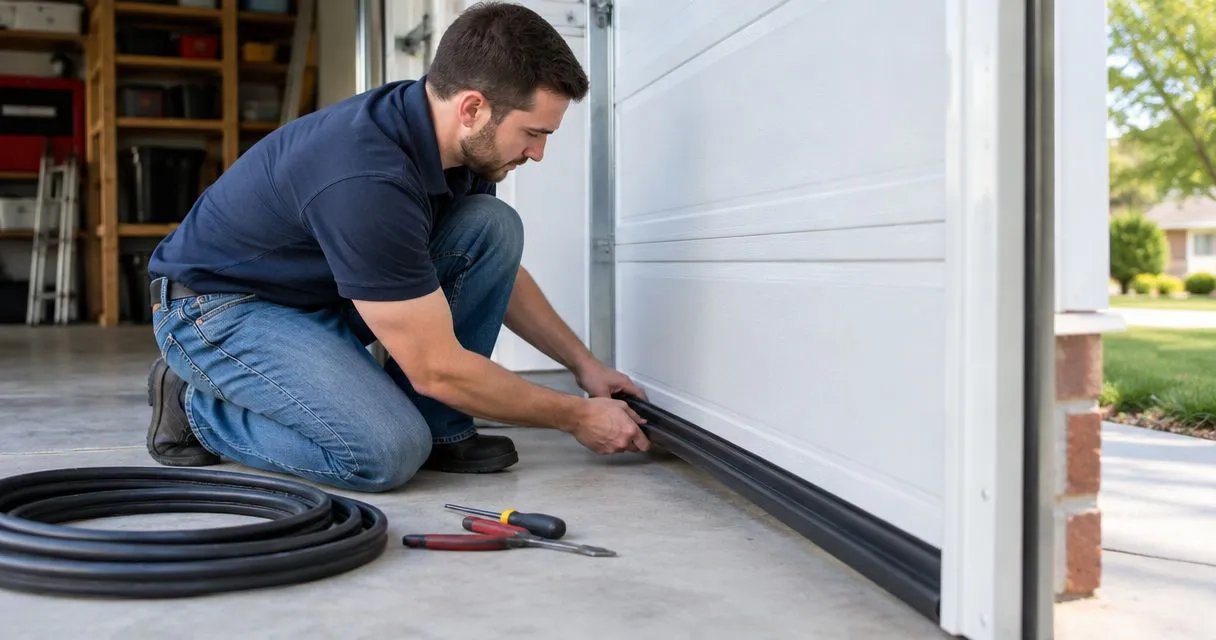
Bottom-seal replacement is appropriate when the flexible material is damaged and the door otherwise closes correctly. The replacement must suit the existing attachment system, not merely resemble the old strip from the driveway.
Some bottom seals slide into a retaining channel. Other arrangements use different attachments, so a universal-looking replacement is not proof of compatibility. Share the door identification label if you can photograph it safely with the door closed.
The retaining channel matters because damaged or corroded sections can obstruct installation or prevent the seal from staying seated. Tell the technician if the old seal repeatedly pulls out, hangs loose, or has already been patched.
A thicker seal is not automatically a better choice. The door must close without binding or requiring added opener force, and the new material must suit the door’s intended operation.
Side and top weatherstripping: check the mounting surface
Perimeter weatherstripping addresses gaps between the closed door and the surrounding opening. It does not replace the bottom seal, and it does not fix a door that sits out of alignment.
The technician needs to inspect both the flexible strip and the material holding it in place. A loose mounting strip or deteriorated surface changes the job from simple removal and replacement to attachment repair.
Fit also matters during movement. Weatherstripping should make the intended contact without dragging so heavily that the door binds. The final check needs to cover operation as well as the appearance of the closed door.
If you want only the visibly damaged section replaced, ask whether the remaining sections still make contact. Localized repair is a reasonable discussion when the rest of the sealing system remains serviceable; full replacement should follow condition, not habit.
Why garage door weatherstripping replacement time varies
The physical condition of the opening determines the work. These factors explain why a photograph-based estimate needs clear boundaries:
- Seal profile: The replacement must match the attachment and intended use. Door width alone does not identify the correct part.
- Retainer condition: Bent, blocked, or corroded channels need assessment before new material goes in.
- Mounting surface: Side and top strips need secure attachment. Deteriorated material beneath them changes the scope.
- Door operation: Uneven travel, binding, or reversal requires diagnosis rather than a tighter seal.
- Floor contact: A gap caused by the relationship between the door and slab is different from a torn strip.
- Final verification: The job includes checking fit and operation, not just attaching new material.
Ask the technician which factors apply to your door and which remain uncertain until inspection. That gives you a usable explanation for the proposed work window without treating every possible complication as necessary work.
What can you safely check before the appointment?
Observe the closed door; do not dismantle it to identify a seal. Keep fingers out of section joints, tracks, and the space beneath the bottom edge. Stop using the door if it appears crooked or has visibly damaged lifting hardware.
- Locate the gap. From a safe standing position, note whether daylight appears at the bottom, sides, top, or corners. Do not reach beneath the door.
- Photograph the seal. Take an overall closed-door photo and a closer view of visible damage without removing covers or fasteners.
- Record the behavior. Report whether the door closes normally, stops short, reverses, scrapes, or sits unevenly. Do not repeatedly cycle a malfunctioning door.
- Clear the opening. Move loose belongings away from the work area while leaving door hardware untouched.
- Explain access needs. Tell the scheduler if a vehicle is inside or if the garage is your usual entrance.
Leave bottom brackets, cables, springs, and track adjustments to a professional. Never increase opener force to press a new seal against the floor or overcome an existing closing problem.
Does a gap under the door always mean the seal needs replacing?
A gap under the door does not always mean the bottom seal has failed. The strip can be intact while the floor profile, door position, or damaged attachment prevents even contact.
Tell the technician whether the gap follows the full width or appears only in one place. A localized opening and a continuous gap present different diagnostic questions; neither observation alone establishes the repair.
If the door recently became uneven, treat that change as an operating concern. Do not attempt to level the door by adjusting a cable or moving track hardware. Replacing flexible material before diagnosing the change can leave the original fault unresolved.
Will new weatherstripping insulate the whole garage door?
New weatherstripping addresses gaps around the opening; it does not add insulation throughout the door panels. That distinction matters when deciding whether the work answers your actual complaint.
If your main concern is daylight or a draft at an edge, inspect the sealing system. If your concern is the door’s overall thermal construction, insulated garage doors address a different part of the opening than replacement weatherstripping. A discussion about panel insulation should not displace a needed seal repair.
Neither change makes the garage a conditioned room by itself. Walls, ceilings, other openings, and heating or cooling arrangements also affect indoor conditions. Keep the recommendation tied to the problem you reported rather than accepting replacement as the default response to a worn strip.
What should you confirm before scheduling in Shively?
Ask for a scope that identifies the location of the failed seal and the work proposed. Then ask how the estimate changes if the technician finds a damaged retainer or an operating fault.
Useful questions include:
- Does the appointment cover the bottom seal, perimeter strips, or both?
- What information is needed to identify a compatible replacement?
- Does the work estimate include removal and final operating checks?
- Will attachment damage be assessed before additional work is proposed?
- What access is needed around the door?
- What happens if inspection identifies a problem beyond weatherstripping?
Derby Strong provides garage door repair and installation in the Louisville market. For a Shively request, use the contact page to describe the seal location and any operating symptoms, then confirm the address and appointment arrangements directly.
A clear description is simple: the bottom strip is torn, daylight appears at one corner, and the door either closes normally or shows a specific fault. That gives the scheduler more usable information than saying the garage is drafty.
What should be checked before the job is finished?
A finished seal replacement needs both a fit check and an operating check. New material should remain attached and make the intended contact without creating a new obstruction.
Ask the technician to explain any remaining gap. If the floor or another part of the opening prevents consistent contact, understand that limitation before treating the sealing work as complete.
Also confirm whether any cleanup or follow-up instruction applies to the materials actually installed. Do not assume every strip uses adhesive, requires curing, or needs the same aftercare. Follow the relevant product instructions rather than a generic waiting period.
Derby Strong’s garage door repair services are relevant when worn weatherstripping appears alongside an operating problem. Ask for the sealing issue and the operating issue to be identified separately so you can understand what each proposed repair accomplishes.
Frequently Asked Questions
How long should I allow for garage door weatherstripping replacement in Shively?
Allow the work window confirmed for your door after the seal type, attachment condition, and operating condition are assessed. Ask whether that window includes removal, fitting, cleanup, and final checks.
Can garage door weatherstripping be replaced without replacing the door?
Garage door weatherstripping can be replaced independently when the door and its attachment surfaces remain suitable. Worn sealing material alone does not establish a need for a new door.
Does replacing the bottom seal take the same work as replacing the side strips?
Bottom-seal replacement and side-strip replacement involve different attachment checks. The bottom seal must fit its attachment system, while perimeter strips also depend on the surrounding mounting surface.
Can I keep opening the door if the weatherstripping is torn?
Do not operate the door if loose material catches, the door binds, or the door travels unevenly. Report those symptoms before using the opener again.
Will a thicker bottom seal fix an uneven gap?
A thicker bottom seal is not a reliable fix for an uneven gap. The technician needs to assess the floor contact, seal compatibility, and door position before selecting a repair.
Should I adjust opener force after new weatherstripping is installed?
Do not increase opener force to overcome resistance from new weatherstripping. Have the fit and door operation checked against the applicable manufacturer instructions.
What should I send when requesting weatherstripping service?
Send a closed-door photo, a safe close-up of the damaged strip, and a description of any closing problem. Include your Shively service address privately when arranging the appointment.
One Last Thing Before You Decide
The best completion check is not whether the new strip looks straight; it is whether the door seals as intended and still operates correctly. Ask what any remaining daylight means before the technician leaves.
Keep the explanation with your service record. A documented limitation, such as an uneven floor contact, is more useful than repeatedly replacing a strip that was never the underlying problem.
Related Garage Door Guides
- Garage door weatherstripping in Louisville Highlands
- Water coming under a garage door in Louisville
- Garage door maintenance checklist
AI-generated illustration; not a Derby Strong customer project.
Local service: Garage door repair in Louisville