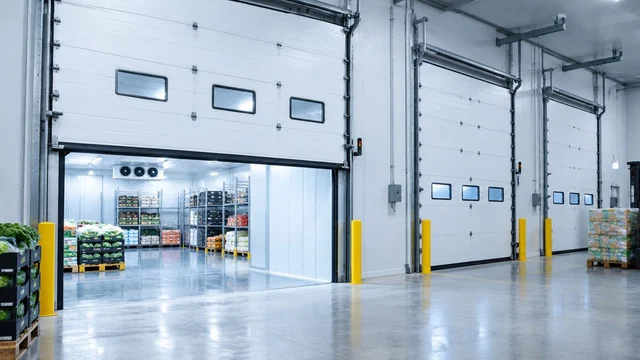
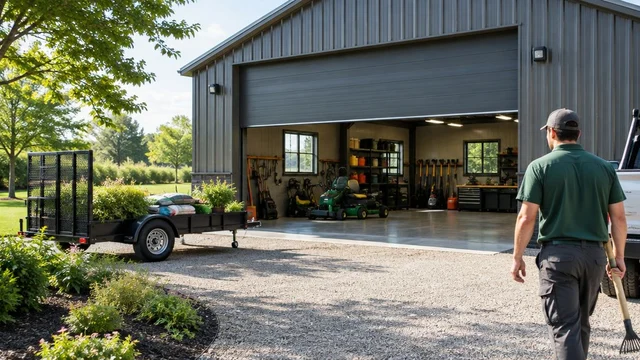
Best overall for Kentucky distilleries and breweries: insulated steel sectional. Best for high-humidity cellars: fiberglass-faced sectional. Best for frequent forklift traffic: high-speed fabric roll-up.
TL;DR
- Insulated steel sectional doors are the best overall overhead door for Kentucky distilleries and breweries in 2026.
- Fiberglass-faced doors resist corrosion best in high-humidity barrel-aging rooms.
- High-speed fabric roll-up doors suit loading bays with frequent forklift traffic.
- Sanitation needs in brewing areas favor smooth, easy-to-clean surfaces over textured panels.
- Clearance and insulation requirements should be confirmed before ordering any door type.
Why This Matters for Your Door
Kentucky is home to roughly 95% of the world’s bourbon supply according to the Kentucky Distillers’ Association, and the state’s brewery count has grown steadily under the Kentucky Guild of Brewers. Distilleries and breweries run overhead doors through conditions most commercial buildings never see: constant humidity from barrel aging (often referred to as the “angel’s share” environment), temperature swings between barrel rooms and loading docks, and frequent equipment traffic. The wrong door type corrodes, warps or slows production inside a year.
What makes the best overhead door for a distillery or brewery
- Humidity and corrosion resistance — barrel aging rooms run consistently humid, often at 60-80% relative humidity depending on the rickhouse design.
- Sanitation compatibility — brewing floors need surfaces that clean easily and don’t trap residue, a consideration also shaped by FDA food-contact-adjacent facility guidance for beverage production areas.
- Clearance and cycle speed — loading docks need doors that open fast without blocking forklift paths.
- Insulation value — temperature-controlled aging spaces need a tighter thermal seal.
- Durability under repeated cycling — doors used dozens of times a day need heavier-duty tracks and springs rated for high-cycle commercial use.
At a glance
| Door type | Best for | Standout feature | Key limitation |
|---|---|---|---|
| Insulated steel sectional | General distillery and brewery use | Balance of durability and insulation | Slower cycle speed than roll-up |
| Fiberglass-faced sectional | High-humidity barrel rooms | Corrosion resistance | Higher upfront cost |
| High-speed fabric roll-up | Loading docks, forklift traffic | Fast open/close cycling | Less insulating than steel |
1. Insulated steel sectional: best overall for distilleries and breweries
An insulated steel sectional door is the standard choice for general production and storage areas because it balances thermal performance with a manageable price point. Sectional steel doors remain the most widely installed commercial door type nationally according to Door & Access Systems Manufacturers Association (DASMA) data, largely due to their serviceability and parts availability.
Insulated steel sectional pros:
- Strong insulation value for temperature-sensitive aging areas
- Durable under daily cycling
- Available in a range of clearance configurations
- Replacement panels and parts are widely stocked, minimizing downtime
Insulated steel sectional cons:
- Cycles slower than a dedicated roll-up door
- Standard steel faces can corrode in constant humidity without a protective coating
Best for: general production, storage and equipment bay openings.
2. Fiberglass-faced sectional: best for high-humidity cellars
Barrel-aging rooms and cellar spaces hold humidity levels that accelerate corrosion on untreated steel. A fiberglass-faced sectional door resists that corrosion far better over the life of the door, which matters given that a single rickhouse can hold tens of thousands of barrels and sit at elevated humidity for years at a time.
Fiberglass-faced sectional pros:
- Resists corrosion in constant-humidity environments
- Smooth surface supports sanitation requirements
- Holds up longer in barrel-aging conditions than painted steel
Fiberglass-faced sectional cons:
- Higher upfront cost than standard steel
- Fewer insulation core options than steel sectionals
Best for: barrel-aging cellars and consistently humid storage spaces.
3. High-speed fabric roll-up: best for frequent forklift traffic
Loading docks that see constant forklift movement benefit from a roll-up door’s faster open and close cycle, which keeps traffic moving and reduces the time the opening sits exposed. High-cycle roll-up doors are commonly rated for tens of thousands of cycles per year, well above what a standard sectional door is built to handle.
High-speed fabric roll-up pros:
- Opens and closes significantly faster than sectional doors
- Reduces conditioned-air loss during high-traffic periods
- Lower wear on tracks from frequent cycling
High-speed fabric roll-up cons:
- Less insulating value than a solid steel sectional
- Fabric panels need periodic inspection for tears
Best for: loading docks and bays with continuous forklift or cart traffic.
How we ranked
Each door type was compared against humidity resistance, sanitation compatibility, cycle speed and insulation value — the four factors that most affect uptime in a working distillery or brewery.
Safety and compliance considerations
Beyond material choice, distilleries carry additional fire and vapor-management considerations because ethanol vapor from the aging process is combustible; OSHA’s general industry standards for combustible environments (29 CFR 1910) inform how some facilities specify fire-rated or vapor-rated door assemblies for certain rickhouse openings. Confirm with your door supplier whether a given opening requires a fire-rated assembly before finalizing a spec, and loop in your facility’s safety officer on any door serving a classified area.
Maintenance in a working distillery or brewery
High-humidity and high-cycle environments accelerate wear on springs, rollers and seals well beyond what a typical commercial building sees. A proactive maintenance schedule — generally quarterly inspections in these environments versus annual for a standard warehouse — catches corrosion and hardware fatigue before it causes unplanned downtime during a production run.
Which overhead door should you choose?
For most Kentucky distilleries and breweries in 2026, an insulated steel sectional door is the safest default for general openings. Move to fiberglass-faced sectional doors specifically for barrel-aging cellars, and reserve high-speed roll-up doors for loading docks where cycle speed matters more than insulation. Contact Derby Strong for a site-specific commercial assessment before ordering.
Frequently Asked Questions
What is the best overhead door for a Kentucky distillery?
An insulated steel sectional door is the best overall choice for general distillery openings in 2026, with fiberglass-faced sectionals preferred specifically for humid barrel-aging rooms.
Do brewery overhead doors need special sanitation features?
Yes, brewing floor doors benefit from smooth, easy-to-clean surfaces that don’t trap residue, which favors fiberglass or coated steel over textured panels.
Why do barrel-aging rooms need corrosion-resistant doors?
Barrel-aging rooms hold consistently high humidity, often 60-80% relative humidity, which accelerates corrosion on untreated steel doors over time.
Are roll-up doors better than sectional doors for loading docks?
Roll-up doors cycle open and closed faster than sectional doors, which suits loading docks with frequent forklift traffic, though they insulate less than steel sectionals.
How much clearance do distillery overhead doors need?
Clearance requirements depend on forklift and equipment size on site and should be measured and confirmed before ordering a door.
Can one overhead door work for both the loading dock and the barrel room?
Generally no — loading docks favor fast-cycling roll-up doors while barrel rooms favor insulated, corrosion-resistant sectional doors suited to constant humidity.
Do distillery overhead doors need fire-rated assemblies?
Some openings in areas with combustible ethanol vapor may require fire-rated or vapor-rated assemblies under general industry safety standards; confirm this with your door supplier and facility safety officer before specifying.
One Last Thing Before You Decide
Before ordering any overhead door for a distillery or brewery in 2026, confirm the clearance against your tallest forklift mast height with the load raised — not just the vehicle’s resting height.
Related Garage Door Guides
- Compare repair vs. replace costs for commercial overhead doors
- See why a commercial overhead door won’t open
- Check commercial overhead door installation time
Local service: Garage door repair in Louisville · Garage door repair in Lexington · Garage door repair in Northern Kentucky